The beauty industry is entering a new phase of transformation driven by science, technology, and evolving consumer expectations. As brands race to adopt new beauty innovation trends, the ability to translate innovation into measurable marketplace performance is becoming increasingly important. Firms such as beBOLD Digital, a full service Amazon agency specializing in beauty marketplace growth, have observed that innovation alone does not guarantee success. The brands that scale fastest are those that combine breakthrough formulations with structured marketplace strategy.
This shift is happening at the same time that the broader beauty ecosystem is expanding rapidly. The global beauty tech market was valued at about $66.16 billion in 2024 and is projected to reach nearly $172.99 billion by 2030 as brands integrate AI, personalization, and connected devices into their product ecosystems.
Understanding how emerging ingredients, product formats, and technology-driven experiences intersect with digital commerce will define which beauty brands grow in 2026 and beyond.
1. AI-Driven Personalization
AI has quickly become one of the most influential beauty innovation trends shaping product discovery and customer engagement.
Machine learning tools now analyze skin conditions, ingredient compatibility, and environmental factors to recommend personalized skincare routines. This technology is expanding rapidly. The AI in beauty and cosmetics market is expected to grow from $4.38 billion in 2025 to $5.3 billion in 2026 and could exceed $10.86 billion by 2030 as personalization tools and virtual try-on experiences become standard across the industry.
From a marketplace perspective, AI also enables brands to identify which product claims resonate most strongly with specific consumer segments.
2. Biotech Actives
Biotechnology is redefining modern skincare ingredients.
Instead of relying solely on traditional botanical extracts, brands are increasingly formulating with biotech actives such as bioengineered peptides, fermented compounds, and lab-derived molecules designed to replicate the skin’s natural biological processes.
These innovations allow formulators to develop targeted treatments that address inflammation, skin barrier health, and collagen production with higher precision.
3. Wellness-Centric Formulas
The growing connection between skincare and overall well-being continues to shape product development.
Consumers increasingly seek formulas that support both visible results and holistic wellness. Products containing adaptogens, probiotics, and microbiome-supporting ingredients are gaining traction because they address stress, environmental exposure, and long-term skin resilience.
This shift reflects a broader consumer mindset in which beauty products are expected to contribute to both self-care and health.
4. Sensory Beauty
Texture and application experience are becoming strategic differentiators.
Sensory beauty products emphasize tactile and emotional engagement through unique textures, temperature-activated ingredients, and aromatherapeutic elements. Gel-to-oil cleansers, encapsulated serums, and whipped moisturizers are examples of products designed to elevate the daily skincare ritual.
Brands that successfully combine sensory experiences with functional ingredients are seeing higher repeat purchase rates.
5. Smart Beauty Devices

Professional treatments are increasingly moving into the home.
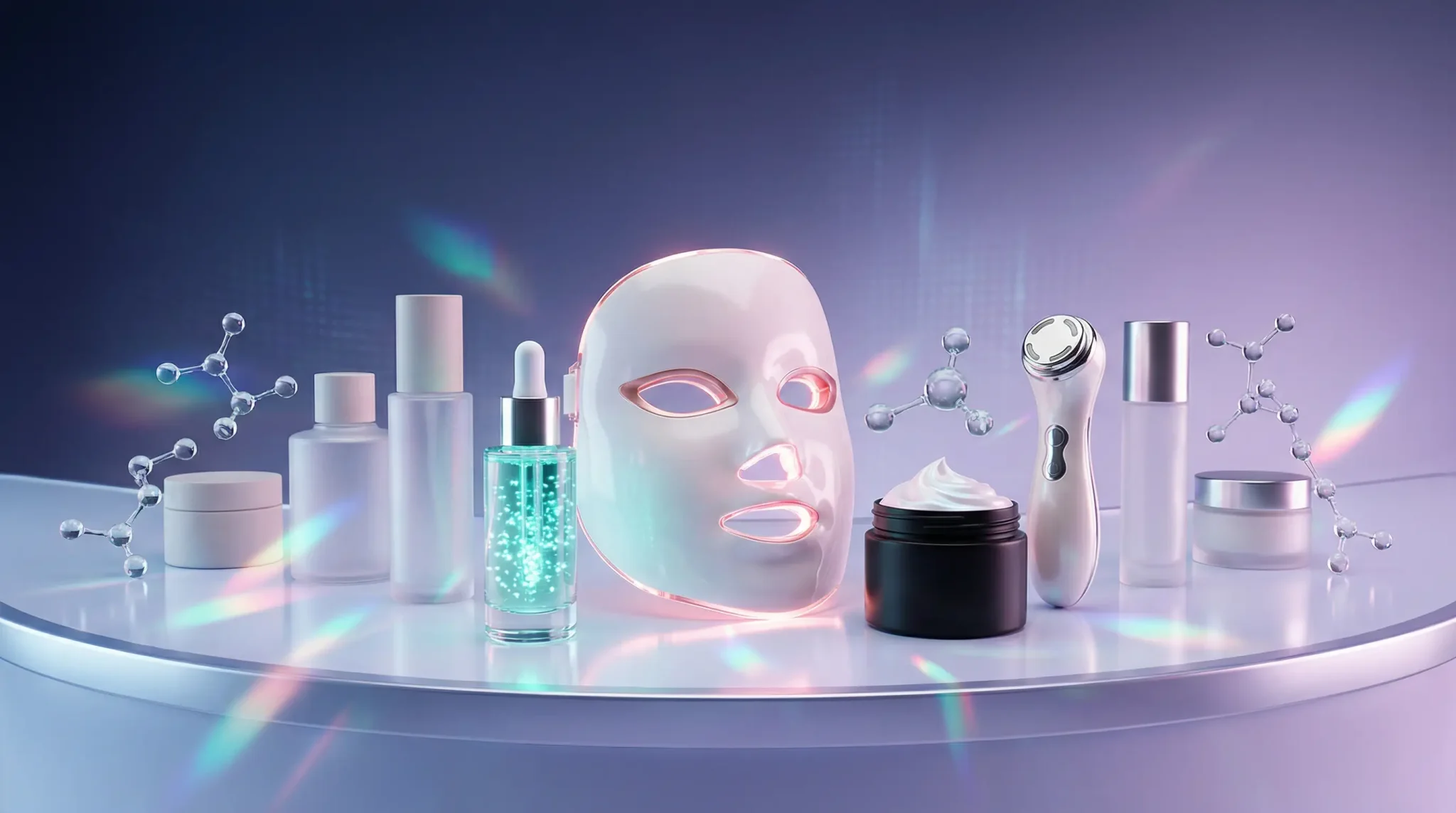
Smart beauty devices such as LED masks, microcurrent tools, and AI-enabled skincare analyzers allow consumers to perform clinical-style treatments independently. This trend aligns with the rapid expansion of the beauty tech sector, which continues to grow as companies integrate artificial intelligence and connected technologies into their products.
6. Microbiome-Focused Skincare
The skin microbiome has become a focal point for research and formulation innovation.
New skincare products increasingly include prebiotics, probiotics, and postbiotics designed to maintain microbial balance and strengthen the skin barrier. This science-driven approach reflects a deeper understanding of how beneficial microorganisms influence skin health.
7. Sustainable Ingredient Innovation
Environmental responsibility is pushing brands to rethink ingredient sourcing.
Biotechnology allows companies to produce ingredients through fermentation rather than traditional agricultural extraction. This approach reduces environmental impact while maintaining consistency and efficacy.
Sustainable ingredient innovation is becoming a major competitive advantage in beauty product development.
8. Hybrid Skincare and Makeup
The distinction between cosmetics and skincare is increasingly blurred.
Hybrid products that combine treatment benefits with color cosmetics are gaining popularity. Foundations infused with skincare ingredients and lip treatments that double as color products are examples of this multifunctional approach.
Consumers are drawn to these products because they simplify routines while delivering performance benefits.
9. Ingredient Transparency
Consumers now expect full visibility into product ingredients and their functions.
Brands that clearly explain ingredient sourcing, formulation science, and clinical testing are building stronger trust with informed consumers. Educational content around active ingredients has become an important part of product storytelling.
10. Data-Driven Product Development
Beauty companies are increasingly using consumer data to guide product innovation.
By analyzing search trends, product reviews, and social media conversations, brands can identify emerging ingredient preferences and unmet consumer needs.
This insight allows companies to develop products that align with real consumer demand rather than relying solely on trend forecasting.
11. Social Commerce Discovery
Social media continues to shape how beauty products gain visibility.
Short-form video platforms and influencer content have become primary discovery channels for new products. Viral product demonstrations often drive significant spikes in online demand.
As a result, digital discovery and marketplace conversion strategies must work together to capture consumer attention.
12. Marketplace-Driven Innovation
Innovation does not end at product development. It also includes how products are positioned and sold online.
According to insights from beBOLD Digital, brands that combine product innovation with structured marketplace strategy outperform competitors when launching new skincare concepts.
For example, a mid-sized skincare company launching a probiotic moisturizer saw strong social media engagement but struggled to convert traffic into Amazon sales. After restructuring its listings, ingredient storytelling, and advertising strategy with guidance from the team behind strategic amazon beauty marketing agency services from beBOLD Digital, the brand increased its conversion rate and improved product visibility within several months.
The scenario reflects a common pattern. Innovative formulations often generate early interest, but marketplace optimization determines whether that interest translates into sustained revenue.
Data-Driven Insight
Based on marketplace performance data, recommends that beauty brands launching new products focus on aligning ingredient innovation with search behavior. When consumers search for skincare products online, they often use ingredient-based queries rather than brand names.
This means that the way biotech actives, wellness-centric formulas, and emerging ingredients are communicated within product listings can significantly influence discovery and conversion.
Strategic Takeaway on Beauty Innovation Trends
Beauty brands entering 2026 face a unique opportunity. The industry is expanding rapidly, with global cosmetics revenues projected to grow from about $375.62 billion in 2026 to more than $644 billion by 2034.
However, growth will increasingly favor companies that combine formulation science, digital consumer insights, and marketplace strategy.
From biotech actives to sensory beauty experiences, the innovations outlined above highlight how product development is evolving. The brands that succeed will be those that treat beauty innovation trends not only as product concepts but also as integrated strategies that connect formulation, consumer education, and digital commerce.