Living with multiple dogs can bring great joy, but it can also lead to moments of stress and conflict between pets who share the same space. Tension between household dogs is a common problem that many pet owners face, and it often stems from competition for resources, disputes over social hierarchy, or changes in the home environment. The good news is that with the right approach and consistent effort, owners can reduce conflict and help their dogs coexist more peacefully.
This guide offers practical strategies that address the root causes of tension and provide clear steps to improve relationships between dogs in the home. From establishing separate areas where each dog can feel secure to managing how they interact around food and toys, these methods focus on prevention and positive behaviors. The goal is to create a calmer household where all dogs feel safe and respected.
Create Separate Safe Spaces for Each Dog to Retreat and Relax
Each dog needs their own area where they can escape tension and feel secure. These spaces give dogs a chance to decompress without worrying about conflicts with other pets in the home. A safe space can be as simple as a quiet corner with a comfortable bed or a separate room where the dog can retreat when stress levels rise.
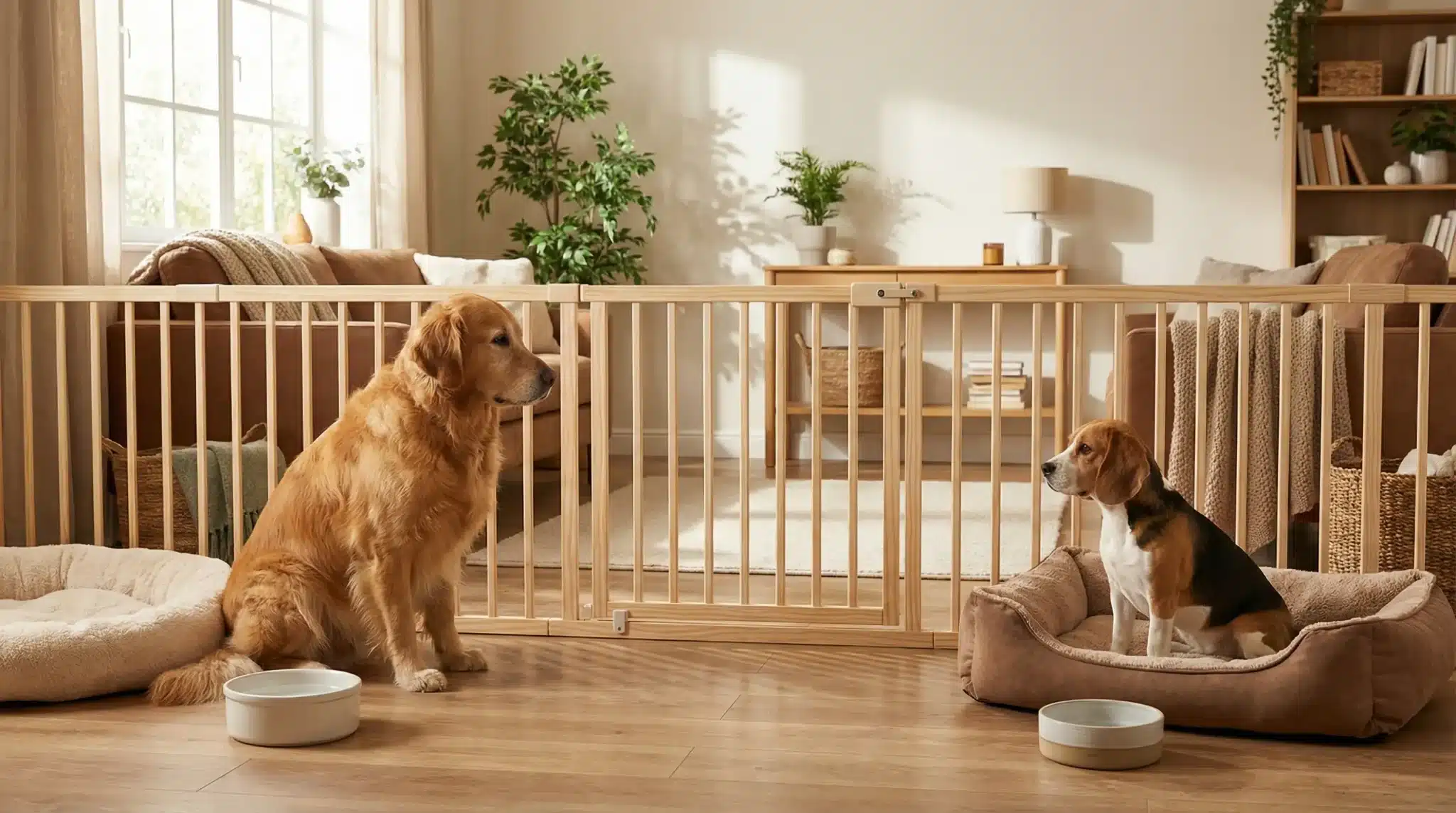
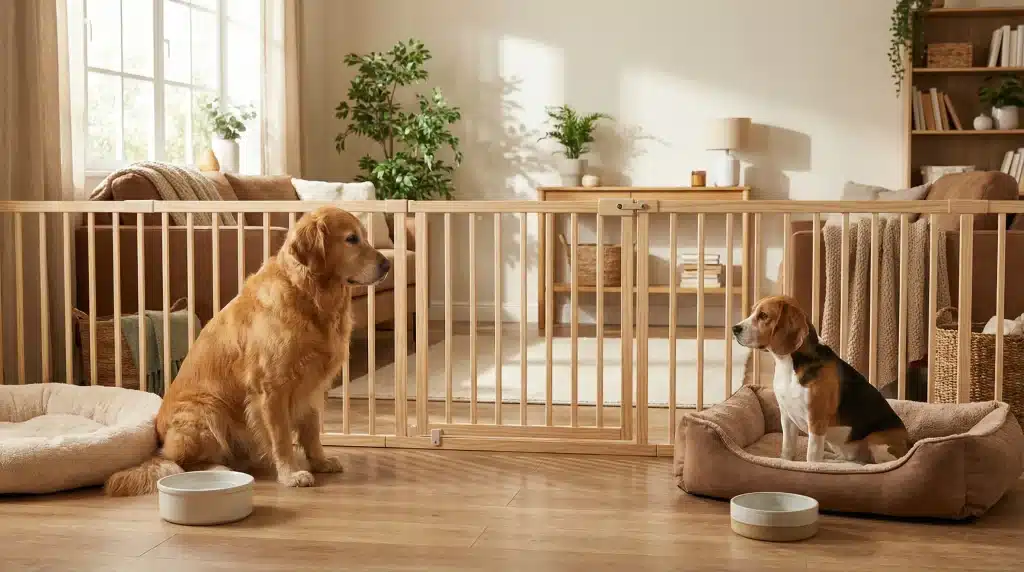
Setting up these areas requires some thought about location and accessibility. Each space should be in a different part of the home so dogs can avoid each other when needed. The areas should include a bed, a water bowl, and a few favorite toys. Barriers such as baby gates can help maintain separation between the safe spaces. This allows each dog to relax without visual contact with the other, which often reduces stress. The key is to make these areas positive places where dogs choose to go, rather than places they feel trapped.
Use Various Calming Tools and Treatments
When multiple dogs share a space, using calming tools can help reduce tension. Pheromone collars provide personal, continuous support for each dog, while pheromone diffusers create a soothing atmosphere for the whole room. Calming sprays offer quick relief during stressful moments, like introductions or feeding time. Combining these methods ensures constant and situational support. A calming collar for dogs of all ages is particularly useful because it works for dogs of any size or life stage, helping promote harmony and reduce anxiety throughout the shared environment.
Use Baby Gates or Barriers to Limit Direct Interaction Initially
Baby gates provide a simple way to create safe spaces for dogs who need time apart. These barriers allow the animals to see and smell each other without the risk of a physical confrontation. Pet owners can place gates in doorways or hallways to separate dogs into different rooms while they adjust to each other’s presence.
The gradual exposure that barriers provide helps reduce stress for both animals. Dogs can observe one another from a distance and become familiar with each other’s scent and behavior patterns. This controlled environment prevents the dogs from feeling overwhelmed or threatened by too much contact too soon.
Gates work well because they offer flexibility as the relationship between the dogs develops. Owners can remove the barriers for short periods once the animals show calm behavior around each other. This step-by-step approach gives each dog the space they need to feel secure in their home environment.
Implement Positive Reinforcement With Treats During Calm Interactions
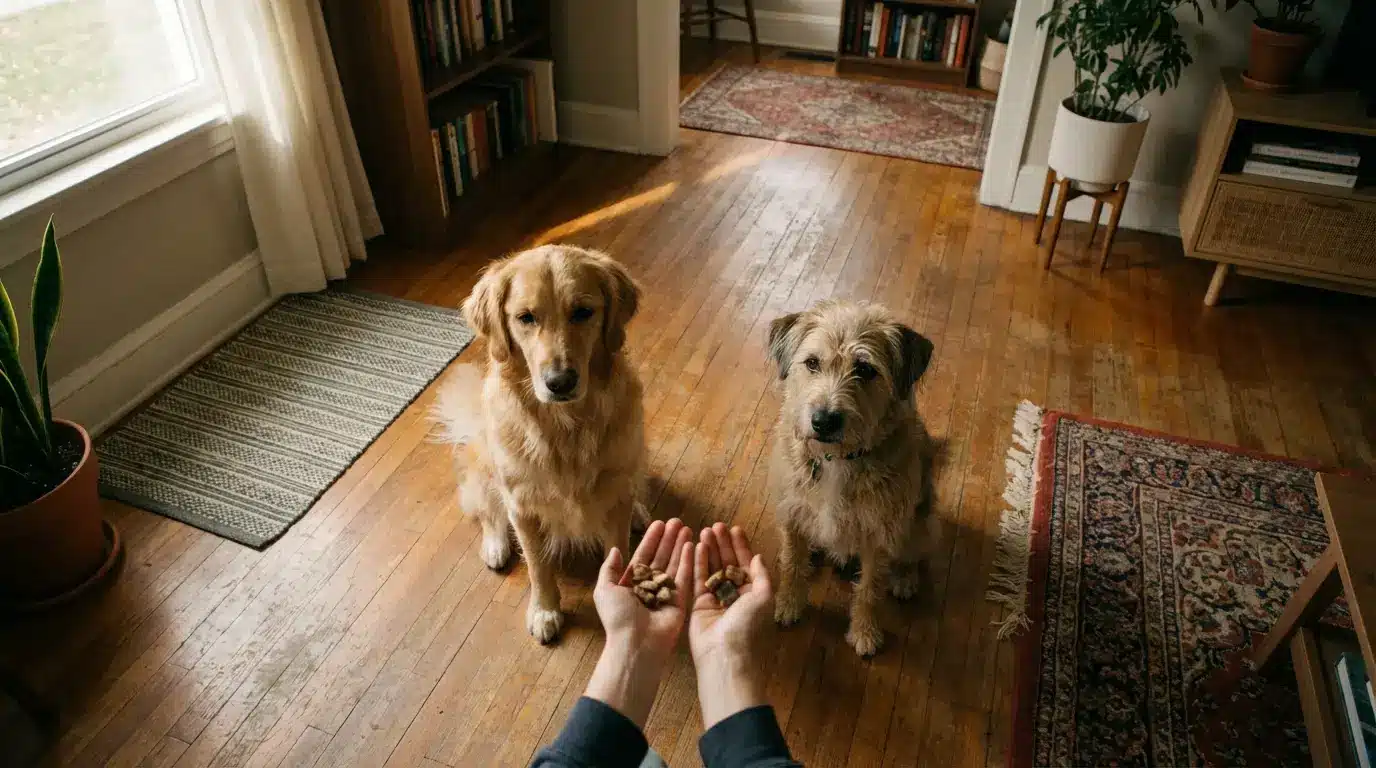
Positive reinforcement works as a powerful tool to reduce tension between dogs that share the same home. Dog owners should offer high-value treats to both dogs the moment they remain calm around each other. This approach helps the dogs connect peaceful behavior with rewards, which makes them more likely to repeat that behavior in the future.
The treats need to come immediately after the dogs display calm body language. For example, if both dogs sit quietly in the same room without stares or tense postures, the owner should provide treats right away. This quick reward system creates a clear link between the peaceful moment and the positive outcome.
Consistency matters because dogs learn through repetition. The owner should reward every calm interaction at first, then gradually reduce treat frequency as the dogs improve. However, praise and affection can continue even after treats become less frequent. This method creates positive experiences that replace fear or competition between the dogs.
Monitor and Interrupt Signs of Resource Guarding Promptly
Resource guarding happens quite often in multi-dog homes and requires quick attention to prevent conflicts. Dogs may protect their food bowls, toys, beds, or even favorite spots on the couch. Pet owners should watch for early warning signs such as stiff body posture, hard stares, or low growls near valued items.
The key is to notice these behaviors before they turn into serious aggression. A dog might freeze over their food or position their body between another dog and a toy. Some dogs curl their lips or show their teeth as a warning signal.
Owners should calmly interrupt these tense moments before they escalate. However, direct confrontation often makes the problem worse rather than better. Instead, pet owners can redirect their dogs’ attention with a calm voice or by creating distance between the animals.
The goal is to reduce tension without punishment. Dogs need to learn that good things happen around other pets rather than feel they must defend their possessions at all costs.
Provide Individual Feeding Areas to Reduce Competition
Food can trigger intense reactions between dogs who otherwise get along well. Creating separate spaces for each dog to eat helps prevent tension and protects mealtime from turning into a stressful event. This simple change addresses one of the most common sources of conflict in multi-dog homes.
Pet owners should set up distinct feeding stations in different rooms or quiet corners of the house. Each dog needs their own bowl in a space where they feel secure and unbothered. The distance between stations matters because it allows dogs to focus on their food without feeling threatened by another pet nearby.
Feeding all dogs at the same time in their assigned areas works best for most households. This approach prevents one dog from finishing early and attempting to steal from another. Dogs who eat at different speeds need physical barriers like baby gates or closed doors to keep them fully separated during meals.
A regular schedule helps dogs know what to expect and reduces anxiety around food. Consistency with timing and location makes mealtimes calmer for everyone in the home.
Conclusion
Tension between dogs in the same home can be resolved with patience and the right approach. The five strategies covered in this article provide pet owners with practical tools to create a calmer household. By addressing the root causes of conflict and applying these methods consistently, most dogs can learn to coexist peacefully. However, severe cases may require professional help from a certified dog trainer or veterinary behaviorist. With time and effort, a harmonious multi-dog household is within reach for most families.