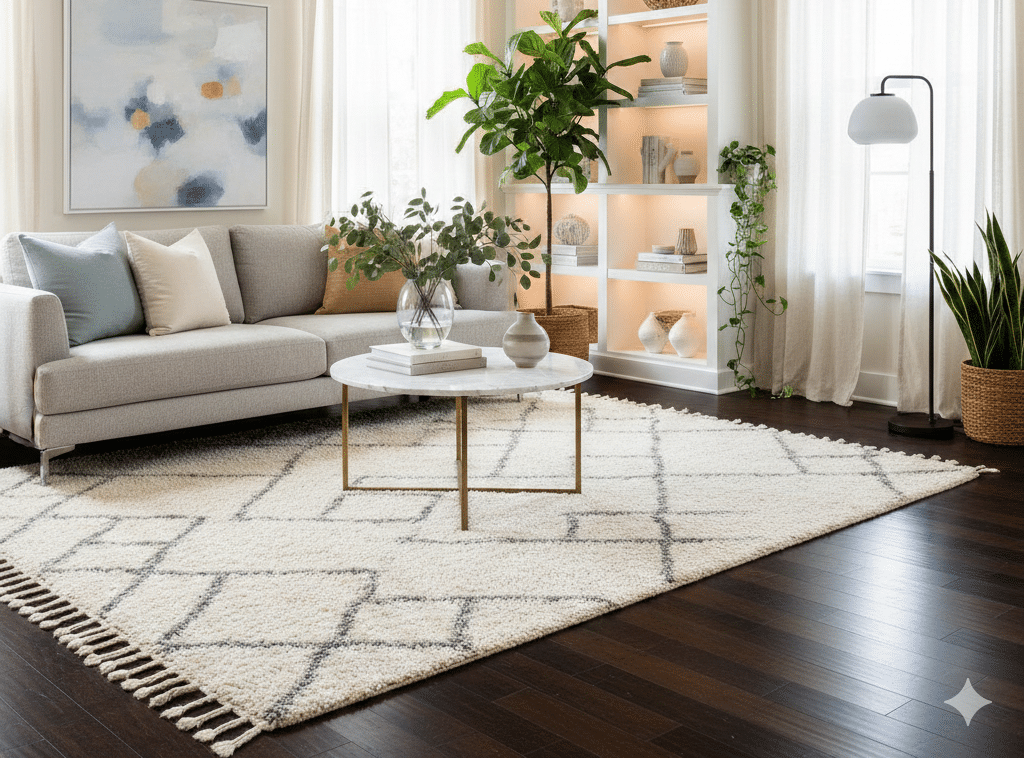
Dark floors can be stunning. They feel rich, grounded, and intentional. But let’s be honest. They can also feel intimidating. A lot of people worry they’ll make a room feel smaller, heavier, or harder to style.
If that sounds familiar, you’re in good company. Designers hear this concern all the time. The good news is that dark flooring isn’t the problem. Balance is.
Once you understand how to work with darker floors instead of against them, they become one of the most versatile design features in your home. Let’s walk through nine practical, designer-approved ways to make dark floors feel natural, comfortable, and beautifully balanced in any space.
1. Start With Lighter Walls That Lift the Room
Think of dark floors as the anchor. Your walls are what lift everything up.
Lighter wall colors help counter the visual weight at floor level. This doesn’t mean your walls have to be stark white. Soft neutrals, warm creams, pale grays, or muted tones work just as well and often feel more inviting.
The goal is contrast without harshness. When the walls are noticeably lighter than the floor, the room feels taller and more open. That simple shift can change everything.
2. Let Natural Light Do Its Thing
Natural light is one of the best partners dark floors can have.
Sunlight brings out the depth and variation in darker materials, whether it’s wood, laminate, or tile. If your room gets decent daylight, dark floors will often look richer and more dimensional instead of heavy.
Keep window treatments light and simple when possible. Sheer curtains or shades that pull fully out of the way allow light to wash across the floor. Even small changes, like trimming back heavy drapes, can make a noticeable difference.
3. Layer Your Lighting, Not Just the Ceiling

Overhead lights alone rarely do dark floors any favors.
Designers almost always rely on layered lighting. That means a mix of ambient light, task lighting, and softer accent lights around the room. Floor lamps, table lamps, wall sconces. They all help distribute light more evenly.
This is where broader design tips for dark flooring really come into play. Good lighting isn’t just about brightness. It’s about reducing shadows and softening contrast so the floor feels intentional, not dominant.
4. Choose Furniture That Feels Visually Light
Furniture has a huge impact on how dark floors read.
Pieces with legs, space underneath, or slimmer profiles allow the eye to move freely across the room. That keeps the space from feeling weighed down. Low, boxy furniture that sits flat on the floor can make dark flooring feel heavier than it needs to be.
You don’t have to avoid darker furniture entirely. Just balance it. Pair heavier pieces with lighter ones. Mix materials. Let the floor breathe.
5. Use Area Rugs Thoughtfully, Not Automatically

Rugs can help, but only when they’re used with intention.
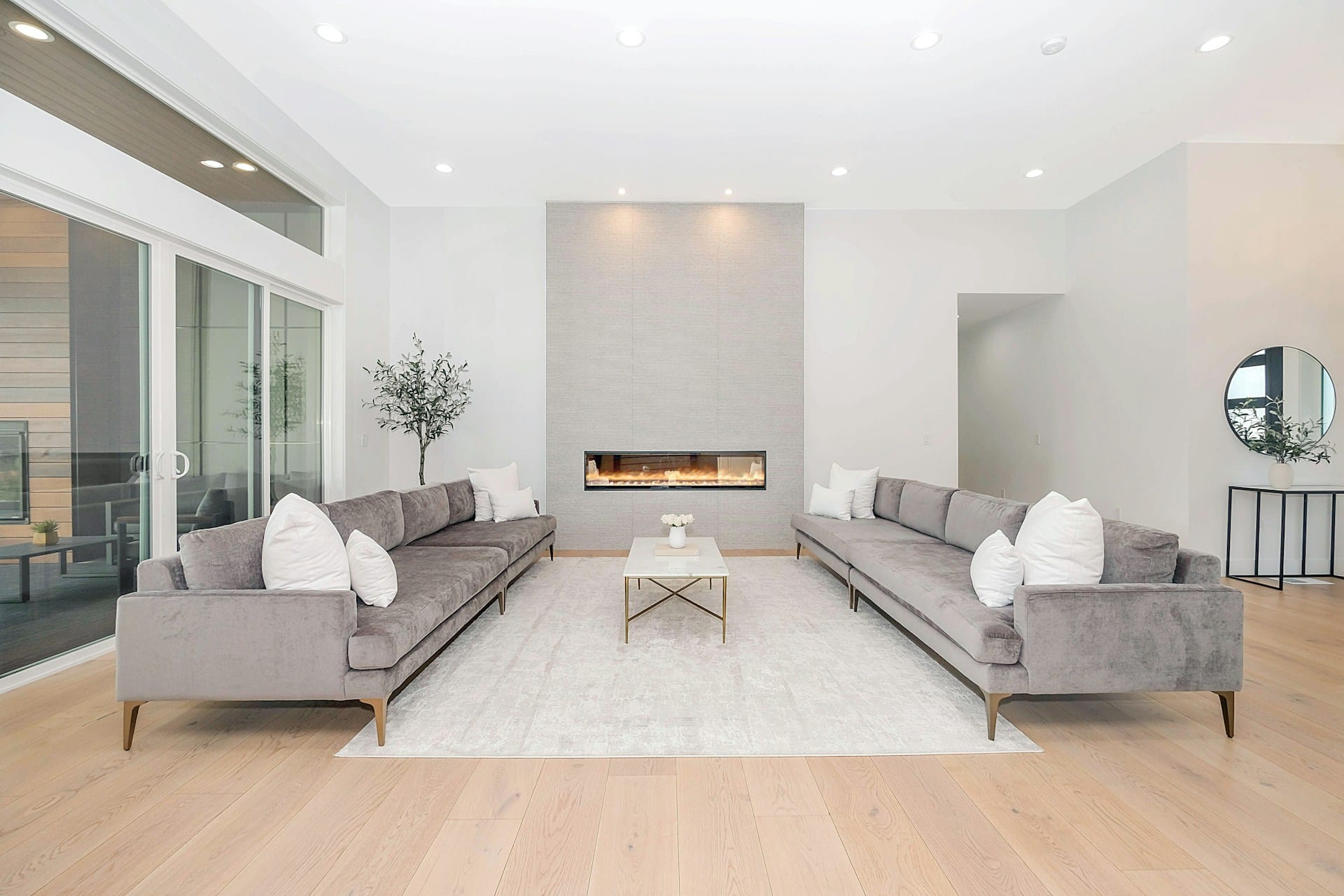
In some rooms, especially larger ones, an area rug can break up visual weight and add softness. Lighter rugs or those with subtle patterns tend to work best on dark floors.
In smaller rooms, though, skipping a rug altogether can actually make the space feel bigger. Showing more of the continuous floor helps the room feel open and cohesive. There’s no rule that says every room needs a rug.
6. Keep Materials and Finishes Working Together
Dark floors already make a statement. Too many competing finishes can turn that statement into noise.
Pay attention to how wood tones, metals, and fabrics interact. You don’t need everything to match, but you do want things to relate. Warm floors usually pair better with warm metals and textiles. Cooler floors often feel more cohesive with cooler accents.
Consistency creates calm. Calm makes dark floors feel deliberate instead of overpowering.
7. Don’t Forget the Ceiling and Upper Half of the Room
Balance isn’t just about what’s under your feet.
Ceilings and upper walls play a big role in how grounded or heavy a room feels. Lighter ceilings help counter dark floors by pulling the eye upward. Even subtle details, like crown molding or lighter trim, can help frame the space.
Artwork, shelves, or vertical elements also draw attention upward, which keeps the room from feeling bottom-heavy.
8. Use Contrast With Intention, Not Everywhere
Contrast is powerful, but too much of it can be overwhelming.
Instead of spreading bold contrasts throughout the room, choose one or two focal points. Maybe it’s a light sofa against a dark floor. Or a statement light fixture above a grounded base.
When contrast is controlled, dark floors feel purposeful. When everything competes, the room feels chaotic.
9. Edit Before You Add More
This one sounds simple, but it’s often overlooked.
Clutter shows up more clearly against dark floors. Extra furniture, too many accessories, or busy layouts can make the space feel crowded fast.
Before adding something new, try removing a few things instead. Simplifying the layout often does more to balance dark floors than any new purchase ever could.
Bringing It All Together
Dark flooring doesn’t need to be “fixed.” It needs to be supported.
When walls are lighter, lighting is layered, furniture feels breathable, and materials work together, dark floors become a strength. They ground the room. They add depth. They make everything else feel more intentional.
If you’re working with dark floors now, or thinking about adding them, don’t overthink it. Focus on balance, not brightness. Make choices that work together instead of in isolation.
That’s when dark floors stop feeling risky and start feeling right.