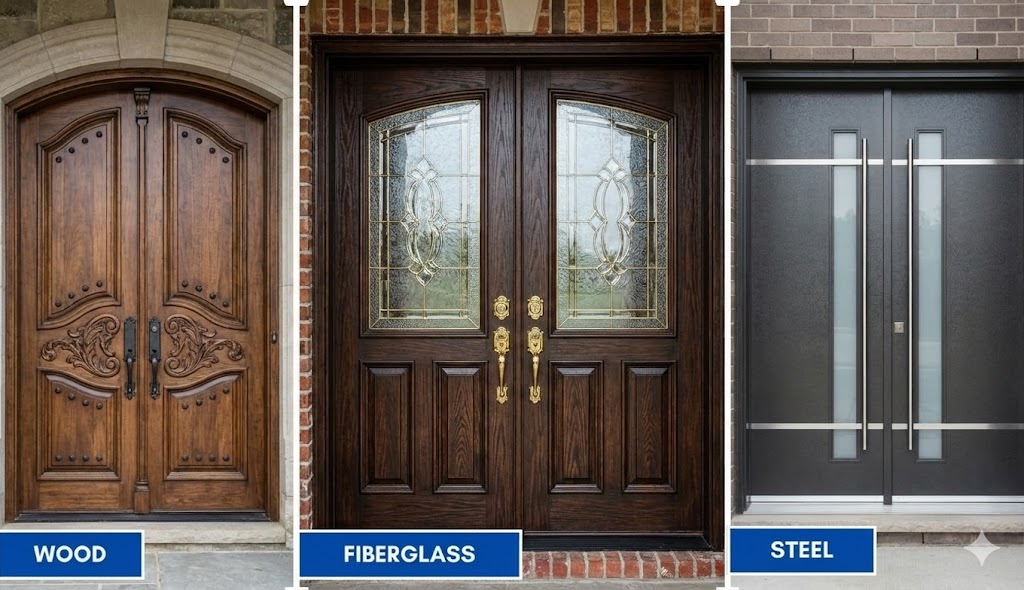
Thinking about replacing your front doors?
Double doors are a standout upgrade. They make the entry feel bigger, bring in more daylight, and make it easier to move large items in and out. But in Toronto, the material you choose matters just as much as the design.
Most homeowners end up comparing three options: wood, steel, and fiberglass.
All three can look great. But if you want the best mix of durability, insulation, and long-term performance, fiberglass double doors usually come out on top.
Toronto Weather and Why Door Material Matters
Start with what your doors go through every year.
Toronto puts exterior doors through the full stress test: freezing temperatures, wind-driven moisture, salt in the air near roads, then heat, humidity, and strong sun once summer hits. Those constant swings can expose the weaknesses in certain materials fast.
Wood Has a Moisture Problem
Wood doors are classic. They can look premium and feel warm.
But wood naturally reacts to moisture and temperature changes. In humid weather it can swell; in dry, cold stretches it can shrink. Over time, that can mean seasonal sticking, small gaps, and drafts when you least want them.
And to keep wood looking sharp (and protected), you’re often dealing with regular refinishing or resealing, especially on entries exposed to sun, rain, or snow.
Steel Feels Strong, But Comes With Tradeoffs
Steel doors can be a good value, and they’re solid from a security standpoint.
But steel can show wear in everyday life. Dents happen. Scratches and chips can become a bigger issue because once the protective finish is compromised, moisture can start working on the surface.
Steel is also more prone to feeling cold in winter conditions, and that temperature difference can contribute to condensation around the door area if the entry isn’t well sealed and insulated.
Fiberglass Holds Up Better
Fiberglass doors are built for climate swings.
It doesn’t absorb moisture, it won’t rust, and it stays dimensionally stable through freeze–thaw cycles and humid summers. That consistency matters even more with double doors, where alignment and sealing are everything.
Maintenance Comparison: Fiberglass vs. Wood vs. Steel
Let’s talk about the part nobody loves: upkeep.
You want doors that keep opening smoothly and keep looking good, without becoming a recurring project.
Wood Needs Ongoing Care
Wood double doors can look amazing, but they typically require the most attention.
Between sun exposure, moisture, and temperature changes, the finish can wear down over time. If water gets into the wood grain, you can start seeing swelling, cracking, or peeling, especially around edges and panels.
Steel Isn’t “Zero-Maintenance”
Steel is lower-maintenance than wood, but it isn’t maintenance-free.
If the surface gets dented or scratched, repairs can be more noticeable, and areas with chipped paint can become vulnerable over time if they’re not addressed properly.
Fiberglass Is the Low-Hassle Option
Fiberglass is one of the easiest materials to live with.
It won’t rot, it won’t rust, and it’s far less likely to have seasonal movement issues. You can paint it, stain it (depending on the finish), or keep it factory-finished, without constantly chasing touch-ups.
Strength, Security & Functionality in Double Doors
With double doors, strength isn’t just about the panel. It’s also about stability.
Two doors mean more hardware, more joints, and more chances for misalignment if the material is heavy or reactive.
Wood double doors can become a hinge-stress situation over time, especially if one panel is used more often than the other. Sagging, rubbing, and uneven gaps are common complaints as the doors age.
Steel is structurally strong and resists forced entry well, but it can dent from hard impacts (moving furniture, accidental kicks, etc.).
Fiberglass tends to hit the balance most homeowners want for double door setups:
- It doesn’t sag like wood.
- It doesn’t dent as easily as steel.
- It stays stable, which helps keep seals tight and alignment clean.
Many fiberglass systems also support multi-point locking, which is especially valuable on double doors because it reinforces the full height of the entry, not just the deadbolt area.
Energy Efficiency and Insulation Performance
This is where fiberglass often pulls ahead in everyday comfort.
Toronto winters are long, and drafts around the entry are one of the first things people notice. Insulated fiberglass doors are designed to reduce heat loss, typically using insulated cores and tight weatherstripping systems.
In general, insulated fiberglass (and insulated steel) doors can deliver several times the insulation value of a same-size wood door, depending on the build and glass options.
Fiberglass doors also pair well with energy-efficient glass inserts and better perimeter seals, important details for double doors, where you have an extra seam down the middle.
Style & Customization Flexibility
Your entry isn’t just functional. It sets the tone for the whole home.
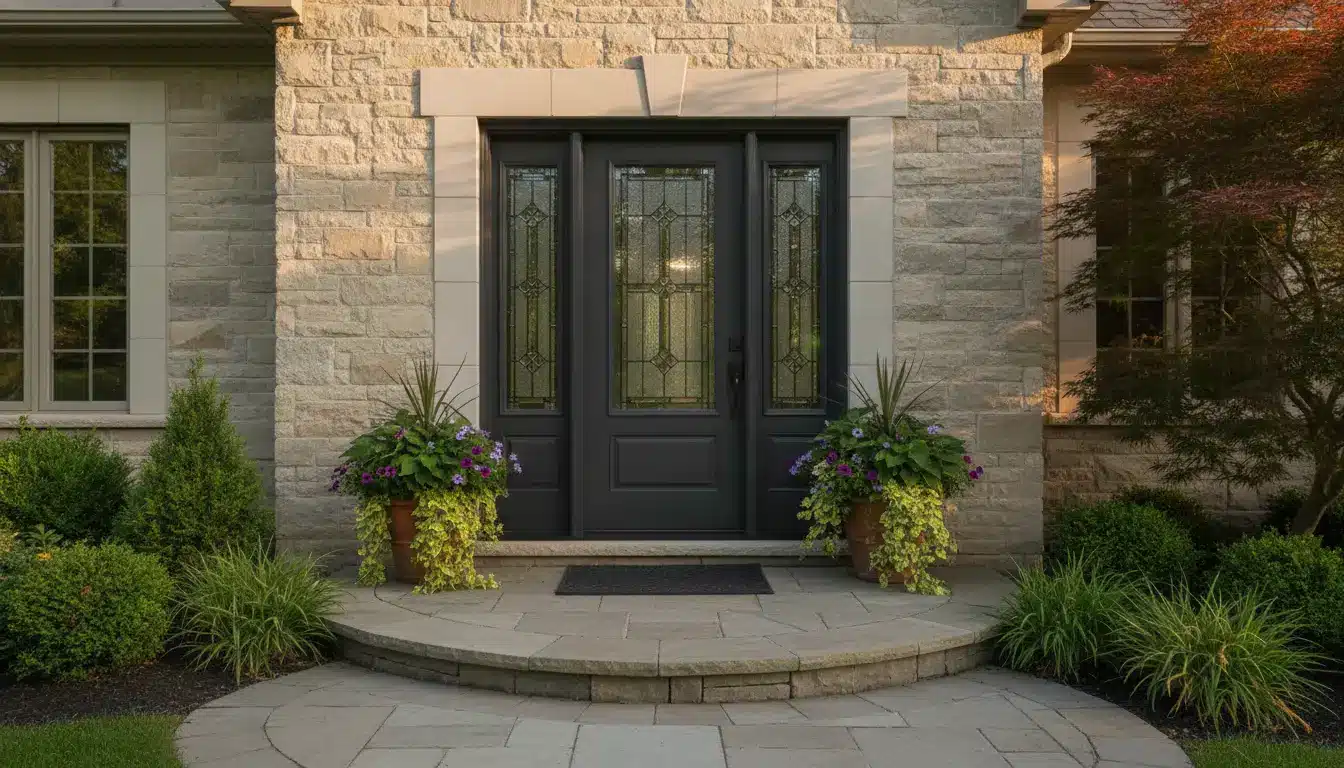
This is another area where fiberglass stands out, because you get a lot of design freedom without taking on the maintenance burden of real wood.
With fiberglass double doors, you can go in almost any direction:
- Want a rich wood look (oak, mahogany, walnut tones)? Fiberglass can replicate wood grain extremely well.
- Prefer a clean, modern entry? Smooth panels with frosted or minimal glass keep it sleek.
- Like traditional or heritage styling? Grids, arches, sidelites, and classic profiles are all easy to match.
You can also configure double doors in multiple ways:
- One active door + one fixed panel
- Two active doors
- Sidelites and transoms
- Full-lite, half-lite, or ¾-lite glass designs
Cost vs. Long-Term Value
Fiberglass isn’t always the lowest upfront price.
But the real comparison is what you spend (and don’t spend) over the next 10–20 years: refinishing, repairs, energy loss, and premature replacement.
Fiberglass tends to win on long-term value because it combines:
- Fewer maintenance costs over time
- Strong insulation for seasonal comfort
- Long service life with less weather-related wear
And curb appeal upgrades like entry doors are consistently highlighted as strong ROI projects in Cost vs. Value reporting.
Verdict
If you live in Toronto (or anywhere in the GTA), your doors have to handle real weather, daily use, and constant seasonal changes, while still looking great year after year.
Here’s the quick reality check:
Wood looks beautiful, but it’s high-maintenance and more sensitive to moisture and temperature swings.
Steel is strong, but it can dent and the surface can become vulnerable if the finish is damaged.
Fiberglass delivers the best overall balance for double doors:
✔ Weather-resistant
✔ Low-maintenance
✔ Energy-efficient
✔ Strong and secure
✔ Highly customizable
✔ Built to last
At Delco Windows & Doors, we help homeowners across the GTA select, customize, and install double entry doors that are made for Canadian conditions, installed by our in-house team, with warranty-backed peace of mind.