Most adult game night advice comes from people who’ve hosted maybe twice. The tips look great on Instagram. In reality? Everyone’s uncomfortable, snacks get ignored, and the “fun” dies around 9:30.
Here’s what actually works after hosting game nights weekly for three years. Not the Pinterest version. The real version where people show up, stay engaged, and ask when the next one is.
The Space Setup
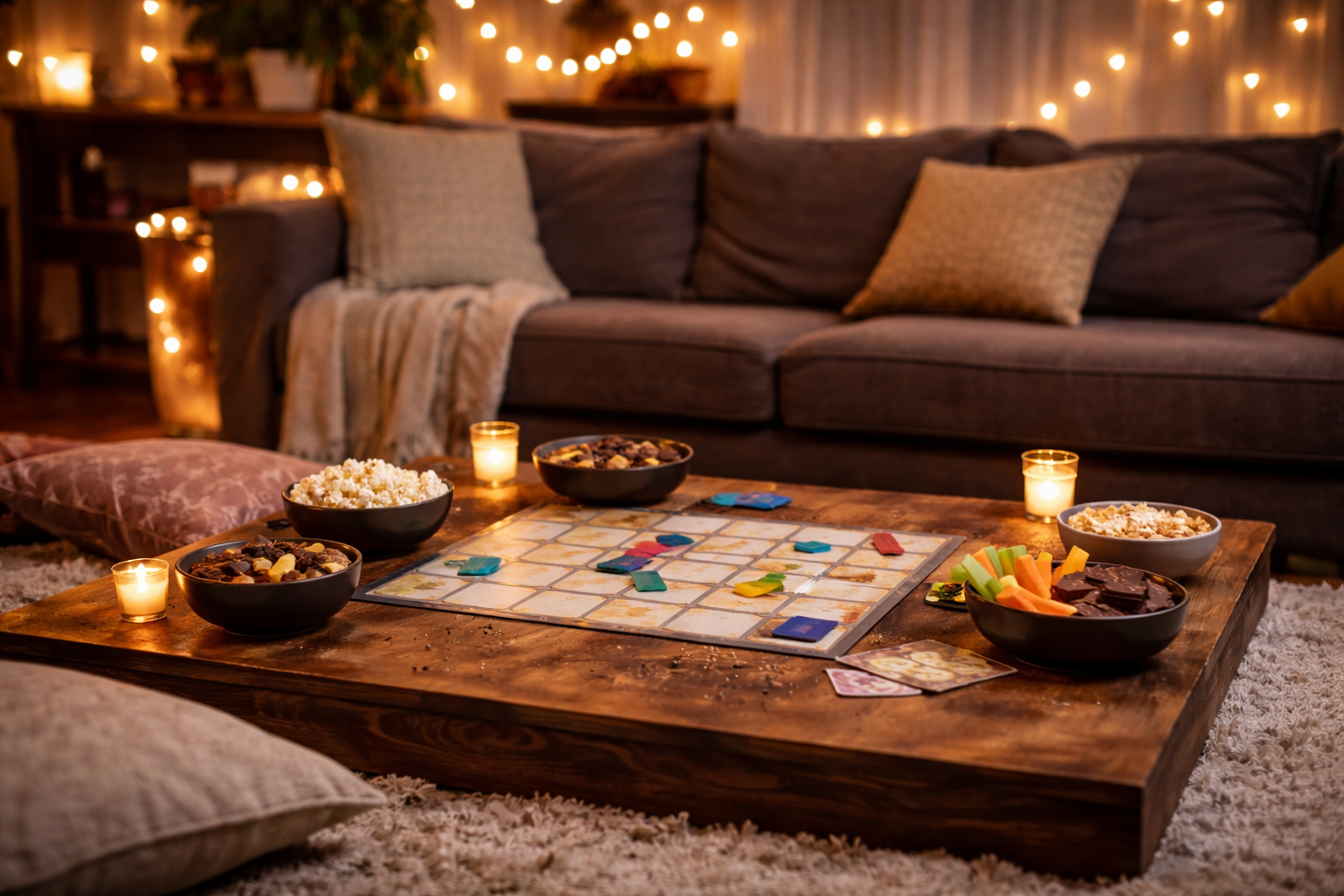
Forget the dining table. It’s too formal, seats are uncomfortable after an hour, and half the group can’t see the board properly.
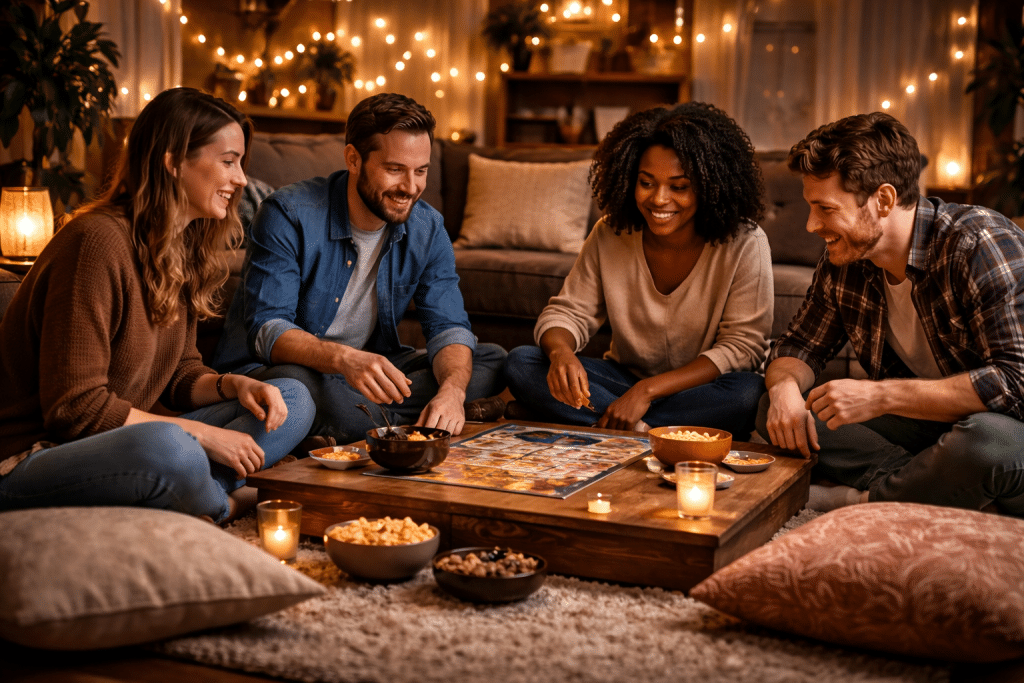
Living room floor works better. Big area rug, throw pillows, low coffee table. People can shift positions without disrupting gameplay. You’re not stuck in a chair for three hours getting a dead leg.
Lighting matters way more than you’d think. Overhead lights are harsh and create glare on cards. Floor lamps in corners with warm bulbs work better. String lights if you want ambiance without darkness. You need to read cards and see faces without squinting.
Temperature control’s crucial too. Eight adults in a room generate heat. Keep it cooler than feels comfortable when you’re setting up. By hour two, it’ll be perfect.
Sound check: Background music at conversation level, not louder. Spotify has decent instrumental playlists. Anything with lyrics gets distracting during strategy games.
The Snack Strategy
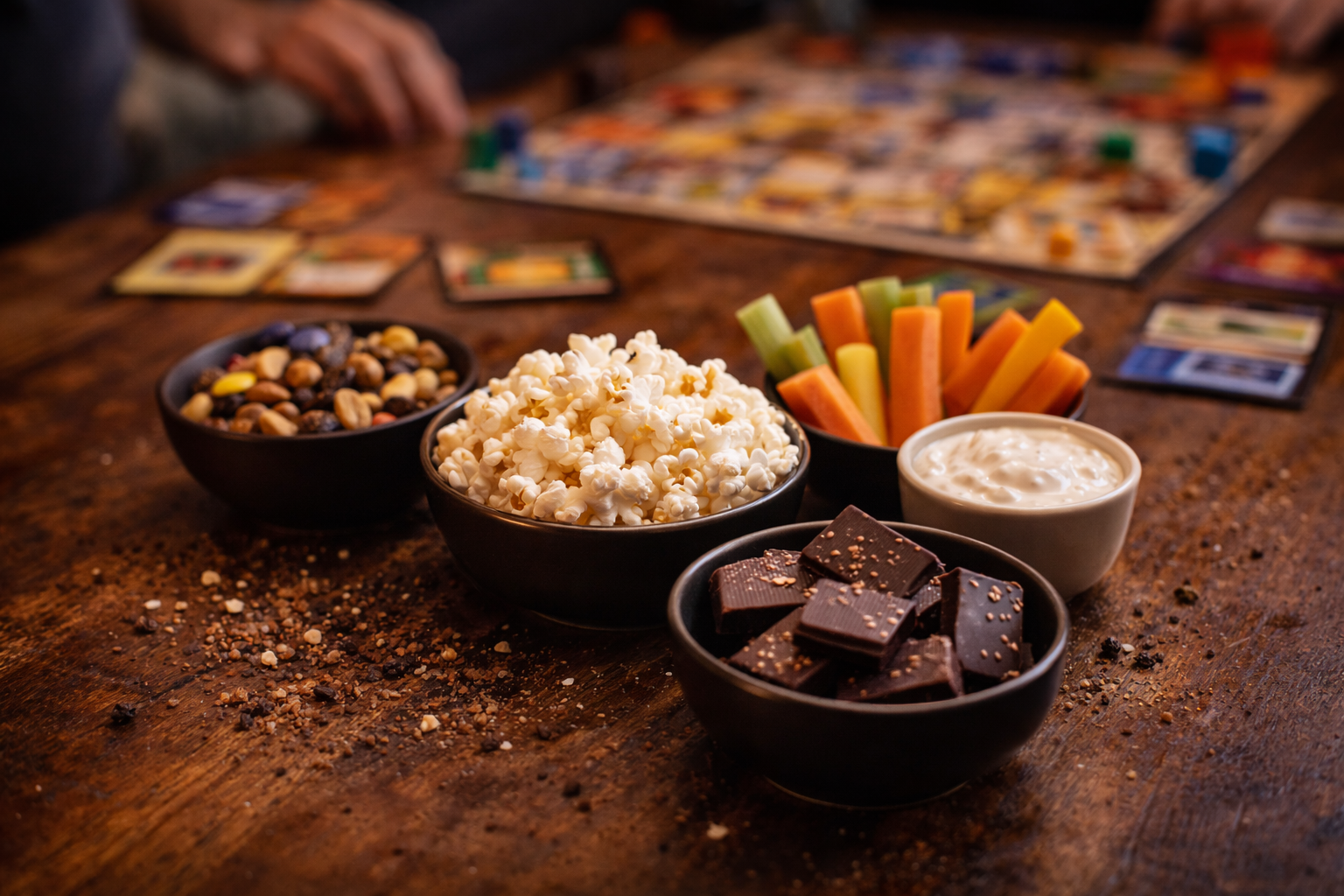
Chips and dip sounds simple until someone needs both hands for cards and there’s nowhere to put their plate.
Individual snack situations, like mini beef jerky sticks, solve this. Small bowls for each person. Finger foods that don’t require utensils or plates balanced on knees. Things you can grab one-handed without looking.
Trail mix variations work. Popcorn in individual containers. Vegetable sticks with small dip cups. Cheese cubes. Those fancy crackers from Trader Joe’s.
For something more interesting, infused chocolate has become pretty standard at our game nights. Dark chocolate squares, peanut butter bites, stuff like that. People who want a relaxed vibe without drinking appreciate having options beyond just beer and wine. Plus, chocolate doesn’t require plates or create a mess on game boards.
Drinks need their own station. Not on the game table. Small side table within reach but separate. Spilled beer ruins $60 board games real fast.
People who want a relaxed vibe without drinking appreciate having options beyond just beer and wine, such as a coconut lemonade or even kombucha. Plus, chocolate doesn’t require plates or create a mess on game boards.
Games That Keep People Engaged
Complicated strategy games work for dedicated game groups. Mixed groups with varying interest levels? You need something else.
Codenames keeps everyone involved even when it’s not their turn. Wavelength creates good conversations. Telestrations gets people laughing. Coup plays fast enough that eliminated players aren’t waiting forever.
Avoid games with player elimination early on. Nothing worse than being out in round one of a 90-minute game.
Time limit matters. Games over two hours lose people. Even good games. Attention spans are real. Plan for 60-90 minute games max.
The rotation mistake: Don’t plan five different games for one night. Pick two, maybe three max. Constant setup and explanation kill momentum.
Reading the Room
Here’s what separates okay hosts from good ones – knowing when to pivot.
Energy drops happen. Usually around the 90-minute mark. You’ll notice people checking phones more, bathroom breaks getting longer, someone suggesting “maybe one more round” in that tone that means they’re done.
That’s your cue for a break. Ten minutes. People grab snacks, stretch, and check messages. Don’t fight it.
When you come back, switch game types. If you just finished something strategic and brain-heavy, go lighter. If everyone’s been quiet and focused, pick something that gets people talking and laughing.
Watch for the person who’s not having fun. Quiet’s fine – some people just observe. But if someone’s actively disengaged, phone out, clearly bored? That game’s not working. Wrap it early. “Should we try something different?” saves the night.
Group dynamics shift as the evening goes on. Early games can be competitive. Later ones should be collaborative or silly. People get tired of winning and losing. They just want to laugh.
The unspoken thing: Some nights just don’t click. The group’s off, games aren’t landing, energy’s weird. That’s when you cut it short. “Let’s call it early tonight” beats forcing three more hours of awkward gameplay.
What Kills Game Nights
Phones everywhere. Establish the phone basket early or just accept people will check Instagram between turns.
Too many rules explanations. If setup takes 20 minutes, pick a different game. Watch a tutorial video beforehand if you’re teaching something new.
Competitive people who take party games too seriously. This fixes itself – they stop getting invited.
Starting too late. 7pm start means actual gameplay by 7:30. 9pm start means people are tired before you finish one game.
Not having backup plans. Someone always shows up late or leaves early. Have games that work with different player counts.
The First-Time Host Reality Check
Your first game night will be awkward. That’s normal. Second one’s better. By the third, you’ve figured out your group’s preferences.
Start small – four to six people. Fewer personalities to manage, easier to keep engaged.
Don’t overthink the food. Simple stuff done well beats elaborate spreads nobody touches.
Have a planned end time. Open-ended nights drag. “We usually wrap by 11” gives people permission to leave without being rude.