Housekeeping a contemporary house should not imply rushing down to the cellar whenever you want to turn up or down the heating or the water. When we need to be comfortable in our homes with the help of such systems as floor heating and irrigation in the garden, it is a colossal burden to operate the archaic manual valves, especially when it is the middle of the night or you are having a family dinner. It just is not feasible in a hectic, intelligent home.
Electric ball valves transform the game to ensure the entire plumbing and heating in your home are automated. These valves provide you with complete, accurate, and effort-free control over your water and HVAC systems as opposed to fumbling with manual levers. They protect your family, cut your energy expenses and ensure that your house runs smoothly without supervision. The upgrade is a simple update that will transform the basic plumbing into something really intelligent and you will have one less thing to be concerned about.
Understanding Electric Ball Valves for Family Homes
Imagine that an electric ball valve is an intelligent feature of the plumbing in your home. A normal valve will have you turn a handle manually, which this one will have a little motor to do it with. On the inside, it has a small ball with a hole through it, and when you send a signal to the motor of this smart home – through a timer, or a smart phone App – the motor turns the ball 90 degrees, which opens the water on or turns it off immediately.
It would be a savior of busy families as it does the dirty job automatically. No need to crawl over in tight corridors and go to a chilly basement and switch the light. These electronic ball valves can make your house safer and much easier to operate whether it is through controlling your sprinklers in your garden or through controlling the floor heating and even turning off water when a leak is detected automatically.
How Electric Ball Valves Work: Smart Control for Family Comfort
An electric ball valve integrates mechanical reliability with electrical automation:
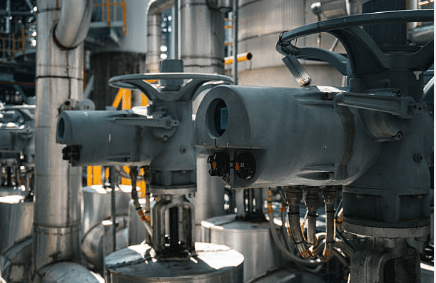
Electric Actuator Receives Control Signal Electrical signals (typically 24V DC, 110V AC, or 220V AC) are sent to the electric actuator from a smart home system, thermostat, timer, or control panel. This signal tells the actuator to open, close, or position the valve at a specific angle.
Motor Drives Gear Mechanism The actuator contains an electric motor that activates a gear reduction system, converting high-speed, low-torque motor rotation into low-speed, high-torque output sufficient to operate the valve even under household water pressure.
Ball Rotates to Control Flow The actuator shaft connects directly to the ball valve stem. As the motor turns, the ball rotates 90 degrees. In the open position, the bore aligns with the pipeline for unrestricted flow. In the closed position, the solid side of the ball blocks flow completely.
Position Feedback Confirms Status Quality electric ball valves include limit switches or position feedback sensors that confirm the valve is exactly where it should be (open, closed, or partially open). This information feeds back to your control system, ensuring reliable performance and status monitoring.
Family Home Examples:
- Automatically adjust radiant floor heating zones based on room occupancy and temperature
- Control irrigation systems on schedules that adapt to weather and soil moisture
- Manage whole-house water filtration backwash cycles during off-peak hours
- Automatically shut off water supply when leaks are detected, protecting your home from damage
- Control pool heating and filtration systems remotely from your smartphone
Why Electric Ball Valves Enhance Family Home Design
Manual valves and raw controls are no more, and electric ball valves are conveniences which are changing the family life:
They offer automation without complex pneumatic systems needed, can be operated remotely (anywhere in your house, or not), have good flow control to provide maximum comfort and efficiency, and can be easily integrated with current smart home systems and building automation systems.
Benefits for Your Family Home:
- The integration of heating, cooling and water systems aims at total automation which does away with manual adjustments.
- Thermostat, smart home application, and control panel remote control.
- Very specific temperature and flow controls maximize comfort in your house.
- Eliminates requirements of family members to access utility areas that may be dangerous.
- Saves energy and water but controls with precision and timing.
- Comes with smart home compatibility, thermostats and home automation.
- Automatic emergency shutoff will help in ensuring that your home is not damaged by water.
- Reacts to variation in family schedule within seconds and not minutes.
- Delivers performance that is predictable and dependable.
- Safeguards children and older members of the family because it gets rid of manual valve operation in dangerous areas.
Types of Electric Ball Valves for Family Homes
Electric ball valves come in a number of types that are applicable in various applications in the family home:
2-Way Electric Ball Valves These are basic types, usually used in one inlet and one outlet with one pipeline being controlled. The ideal zone isolation and on/off flow in normal home plumbing, heating, and irrigation.
3-Way Electric Ball Valves These are three-port (usually L-port or T-port design) that can be used to divert the flow or mix it. Necessary in applications where there is a need to change the direction of flow, e.g. heating/cooling system changeover, or mixing hot and cold water in a radiant heating system.
Full Port vs. Reduced Port Full port valves have a pipe that is the same size, which enables unrestricted flow and minimal pressure drop – best in main water lines and high flow work. Reduced port valves are smaller, which are appropriate when minor flow restriction is not very important, and cost is important.
Brass and Stainless Steel Electric Ball Valves The valves are used in the common home water, heating, and irrigation services and are relatively cheap and dependable. Stainless steel (304 or 316) offers greater resistance in case of harsh water conditions, pool systems, coastal and seafront homes or well water applications.
Actuator Voltage Options
- 24V DC: Family house safe, can use low-voltage control and battery supply.
- 110 V AC: North American residential standard of most residential applications.
- 220 V AC: It is applied in larger domestic systems that need more torque.
Control Signal Options
- On/Off Control: Basic open/close control using switch, timer or smart home relay.
- 0-10V or 4-20mA Modulating: Precise flow positioning of sophisticated systems.
- Smart Home Protocols: Wi-Fi, Zigbee, Z-Wave Smart home integration.
Choosing the Right Electric Ball Valve for Your Family Home
Identifying the right electric ball valve will make your systems of the home comfortable, safe, and efficient:
1. Calculate Pipe Size and Flow Requirements Find your pipeline size home applications are usually done between 1/2 inch and 2 inches and some larger homes may require 3 inch or larger as the main line. Adjust the size of the valve to the size of your pipe to prevent limitation of the flow. Divide your flow rate to make sure that your highest demand is within the flow rate capacity of the valve.
2. Determine Your Application and Fluid Different home systems are made of diverse needs. Brass valves are suitable in the normal potable water, heating systems, and irrigation. Pool chemicals, aggressive well water, seacoast water, or corrosive water of homes will require stainless steel. Check operating pressure and temperature- make sure that your valve is rated higher than the maximum pressure and temperature of your system.
3. Simple 2-position actuators Control Type Simple Simple 2-position actuators are ideal with simple on/off control (isolation valves, zone controls, irrigation valves). In applications where modulation of flow through an actuator is needed, or there is a need to have the ability to control actuators proportional to any signal (4-20mA or 0-10V) to achieve flow control, use modulating actuators, which can open or close the valve to any position between 0-100 percent open.
4. Incorrect Voltage and Power Select the actuator voltage to your home power supply and control. As an example, there is AC vs. DC: DC actuators are easy to integrate with low-voltage smart homes and can run on battery backup in critical scenarios, such as emergency water shutoff.
5. Check Torque Requirements The larger the valve and pressure the greater operating torque is needed. Compare these torque specifications with those of the manufacturer and make sure that your electric actuator has at least 20-30% the torque that the manufacturer claims as a minimum operating torque under all conditions.
6. Consider Fail-Safe Position Determine how to act in case of a power outage. Functioning automatically, spring return actuators are necessary to operate to a safe position (open or closed) when power fails – required when the system is to safeguard your home. Non-spring return actuators stay in their final position, which is not as critical as it is with spring return actuators.
7. Test Feedback and Home Control Check Valves Check to make sure that the valve position is confirmed to your control system by having valves with position feedback (limit switches or analog position transmitters). Manual override, visual position indicators, and weather resistant enclosures (IP67/IP68) are guaranteed to be reliable in basement, crawl space and outdoor applications.
Family Home Applications for Electric Ball Valves
Automated comfort and protection Electrical ball valves offer safety and comfort in millions of domestic uses:
Home Heating & Cooling Systems:
- Radiant floor heating zone control, where various temperature levels are permitted in bedrooms, living rooms and basements.
- Automated hot water heating system circulation.
- Multi-season climates Seasonal heating-cooling changeover.
- Driveways and walkways snowmelt system control.
- The heating system- the heat recovery ventilation system.
Smart Home Water Management:
- Automated water shutoff of the entire house in the incident of leakage.
- Regeneration of water softener at low use times.
- Wholesale filtration system backwash cycle control.
- Vacation homes or seasonal properties will have automatic drain-down.
- Environmentally friendly greywater systems.
Garden & Landscape Irrigation:
- Lawns, gardens and landscaping watering automation.
- Plant water needs based on zone-based irrigation control.
- Connecting to the weather stations to avoid watering after it rains.
- Vegetable garden drip irrigation control.
- Travelling with remote control to keep your landscape healthy.
Pool & Spa Systems:
- Automated temperature-based and schedule-based pool heater control and control.
- Automation of the filtration system to achieve maximum quality water.
- Safe balanced water by chemical dosing system control.
- Activation of heating in the spa before family use.
- Automation of winterization and spring startup.
Domestic Hot Water:
- Recirculation pump control in order to save energy and have instant hot water.
- Child safe water temperature automation by temperature mixing valve.
- The control of a solar hot water system.
- Optimization of heat pump water heaters.
- Vacation mode to save on energy during absence.
Electric Ball Valve vs. Manual Ball Valve vs. Smart Home Valve Comparison
|
Feature |
Electric Ball Valve |
Manual Ball Valve |
Pneumatic Ball Valve |
|---|---|---|---|
|
Operation |
Automated via electrical signal |
Manual hand operation |
Requires compressed air |
|
Family Convenience |
Remote/scheduled control |
Must access physically |
Needs air compressor |
|
Response Time |
5–30 seconds |
Instant (if accessible) |
2–10 seconds |
|
Smart Integration |
Excellent compatibility |
None |
Limited |
|
Power Required |
Standard home electrical |
None |
Compressed air system |
|
Child Safety |
Remote locking/control |
Accessible to children |
Complex installation |
|
Maintenance |
Low (motor, gears) |
Minimal |
Higher (air supply, seals) |
|
Typical Cost |
$100 – $800 |
$20 – $150 |
$300 – $1,200 |
|
Best For |
Smart homes & automation |
Simple isolation & budget |
Professional installations |
Installation Tips for Family Home Electric Ball Valves
When installed ball valves properly the use life is many years of safe and dependable efficiency:
You must prepare the System: Clean and deburr pipes, and install them. Flush lines to flush debris which might dislodge valve seals. You should make sure that pipes are supported correctly to avoid straining the valve body particularly in houses where the pipes could be forced out of their position with time.
Install in Proper Orientation: The majority of electric ball valves have no restrictions on which way they should be installed, but specific manufacturers have their preferences. It is important to make sure that the flow arrow on the valve body is in your direction of flow. Install the actuator in such a way that it is available to do the occasional maintenance but not to suffer damage.
Install the right Connections: Apply right thread sealant or PTFE tape to threaded joints- do not get the sealant into the body of the valve. In the case of soldered connections, one must take off the actuator first to avoid heat damage. Make sure that the stress of the pipes does not pass to the valve body which may leak after some time.
Install the Actuator: Secure the wiring at the correct installation diagram- wrong wiring may cause damage to the actuator. Hook power wires to the appropriate terminals (they may be labeled L-N in case of AC or +/- in case of DC). Connect control signals to special terminals. Ground the actuator housing correctly to avoid electric shocks in your house.
Test Before Full Operation: Manually test the movement of the valves by the manual override. Fill up electrically and check without loading. Leaks are to be checked and system pressure is to be gradual. Before incorporating the valve into your home automation system, test the valve with a number of full cycles.
Smart Home Integration: Signal matching (voltage or current) should be done correctly when connecting to smart home systems. Long signal runs should be run using shielded cables to avoid any interference. Configure your smart home controller or thermostat to the logic you want to use in your application, heating zones, watering schedules, leak sensor reaction, and so on.
Maintenance Tips for Long-Lasting Performance
Having your electric ball valves maintained in great condition means many decades of quality family home service:
Periodic Operation: Clean a cycle every month even when the application is infrequently used to ensure the cycle does not stick the seats and there is no loss of seal. This is especially so with emergency shut off valves which are not actively used most of the time.
Test Electrical Connections: Test wire connections quarterly: Check wire connections by tightness, corrosion or damage- particularly in damp basement installations or outdoor installations. Weak links lead to irregular operation and failure.
Pay attention to unusual noises during the operation: Actuator Operation. The noise of grinding or hammering shows a mechanical problem which needs to be addressed before the total failure.
Check Position Indication: Check periodically position indicators against actual valve position. Limit switch adjustment may be required or the beginning of mechanical issues.
Check Leaks: Check around the valve stem at the presence of leaks. Small leakages can only need to be packed, whereas big leakages necessitate the replacing of their seals, which is a simple issue to fix, and it avoids the incidence of water damage.
Test Manual Override: Test the manual override periodically. This is your backup in case there is a power outage, you will have control when it will be critical.
Clean off Actuators: Clean the outside of the actuator. Eliminate dust and debris that might get inside via unsealed holes and into internal parts- this is especially crucial in dust filled basements or outdoor installations.
Safety Considerations for Family Homes
Electric ball valves can save your family, systems, and your home:
Never Exceed Pressure Ratings: It can lead to disastrous failures in the operation of the valve, leakages or breakdown of the actuators, and this is when the pressure is exceeded by upper rates. Never operate with zero margins, particularly in high water pressure houses.
Ground Properly: Ungrounded actuators may cause hazards in terms of shock, and may be difficult to control. Make sure that all electrical installations are compliant with the local codes and are properly grounded.
Choose the Right Materials: Materials that do not match your fluid created corrosion, contamination or failure. Check chemical compatibility- especially in relation to pool chemicals, well water treatments and specialty home systems.
Install Emergency Shutoffs: The installation must always have manual override or emergency power cut-off capabilities to regulate the valves when there is a malfunction or emergency in the system.
Resistant to the Environment: Even the IP67-rated devices should be installed properly. Seal cable entries and ensure that actuators are not submerged unless it is specifically designed to be submerged.
Child Safety: Position control panels, switches as well as manual overrides that are inaccessible to children when they are not under supervision. Smart homes enable parental restrictions and access.
Adhere to Lockout/Tagout Practices: When performing maintenance, turn off, via electrical methods, power flow through the circuit and apply appropriate lock out devices to avert the possibility of accidental activation of a valve, thus causing injury or damaging the system.
Common Mistakes to Avoid
Installation in No Flow direction: It is necessary to have the right flow direction of ball valves. Backward installation leads to the damages of seats and leaks. Always check the flow arrow.
Small Actuator Torque: Small actuators will not be able to work under pressure and will be slow, overheated, and wear out prematurely. Torque requirements should always be checked.
Incorrect Wiring: DC polarity on actuators inverted or incorrect phase connections on A-phase actuators does not allow actuators to function or results in component damage. Before turning on anything, remove any connections that may be present.
No Pressure Relief: Sections that have closed valves are isolated and present serious thermal expansion pressure. Install relief valves, particularly in heating engines.
Disregard of Ambient Conditions: Ambient temperatures too cold (freezing or over 140F) or high temperature (extreme) without special actuator enclosures will result in failures. Check the ambient temperature rating of the basement, attic and outdoor installation.
Voltage Mismatches: When 220 V is connected to a 110 V actuator, the actuator is immediately destroyed. Check voltage rating before connecting power- this is the most prevalent and the easiest failure to avoid.
Installation Energizing : Never energize actuators when installing piping. Seldom found parts movement can break seals and mechanisms during soldering or threading or welding.
Conclusion:
Investing in quality electric ball valves transforms your home into a responsive, intelligent environment. Whether managing heating zones, landscape irrigation, or pool systems, these valves replace manual effort with automated precision.
From protecting your property with leak detection to ensuring comfort for your family, electric ball valves are essential for the modern smart home. By selecting the right size and voltage, you ensure your home systems perform flawlessly for decades. The future of residential design is automated and safe and electric ball valves are the foundation making it possible today.