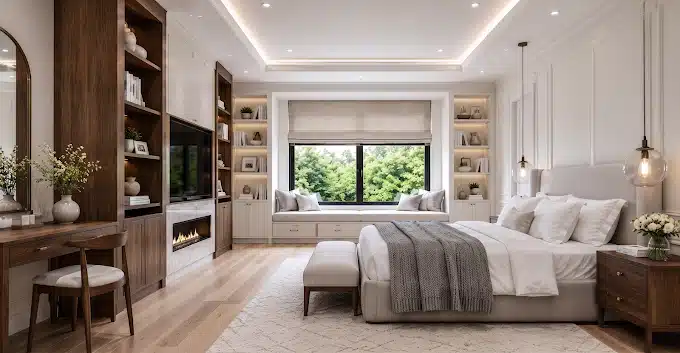
The living room is a very important part of our homes. It’s the spot where we relax, watch movies, and spend time with family and friends.
To make this space comfortable and useful, we need a good layout. The layout is simply the way we arrange our furniture, like the sofa, chairs, and tables.
Figuring out where everything should go can seem hard, but I have some easy tips to make it simple.
We will look at how to pick a main spot for the room, how to keep clear paths for walking, and how to place seats so talking is easy.
My goal is to help you turn your living room into the best room in the house!
Let’s get started and plan your perfect space.
Basics of a Functional Living Room Layout
A functional living room layout comes down to three simple things: good traffic flow, comfortable seating arrangements, and practical furniture placement.
Seating should be placed close enough to chat comfortably but with enough space so the room doesn’t feel cramped.
A practical placement means everything has a purpose and a spot.
When these basics work together, your living room naturally becomes a space where people want to spend time.
I Recently Played Around with My Cousin’s Living Room Layout, and This is How it Turned Out
Layout Style: The Fireplace-First Layout
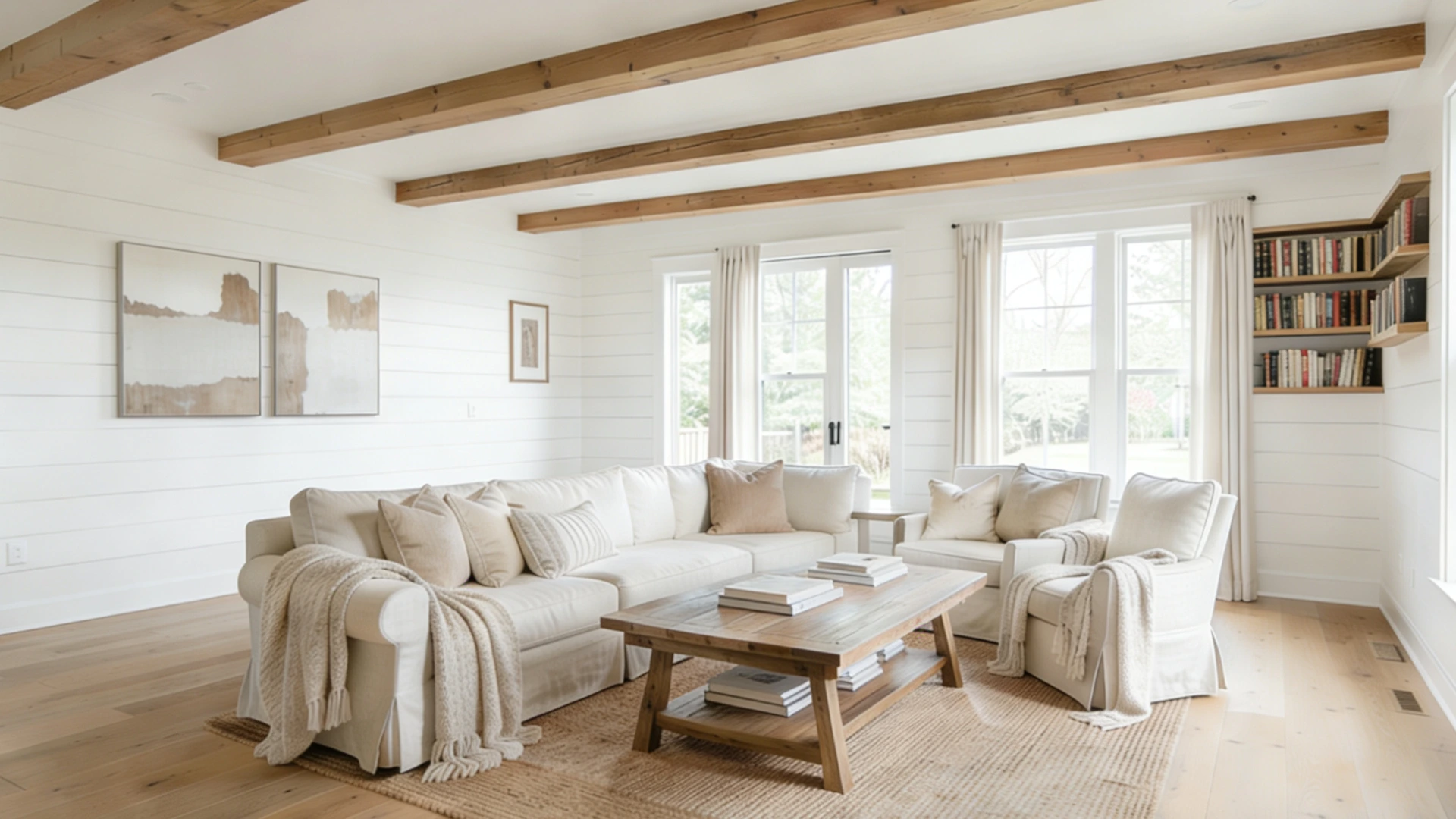
My cousin wanted a cozy modern farmhouse feel, so we went with the fireplace-first approach.
We positioned a neutral linen sofa directly facing the brick fireplace, then added two cream armchairs angled on each side.
A reclaimed wood coffee table anchors the space.
The result? A warm, inviting gathering spot that perfectly balances rustic charm with clean, simple lines.
Everyone naturally gravitates toward this setup.
How to Plan and Arrange Your Layout Step-by-Step
Here’s a simple process to get your layout right from the start.
Step 1: Measure and Map Your Room
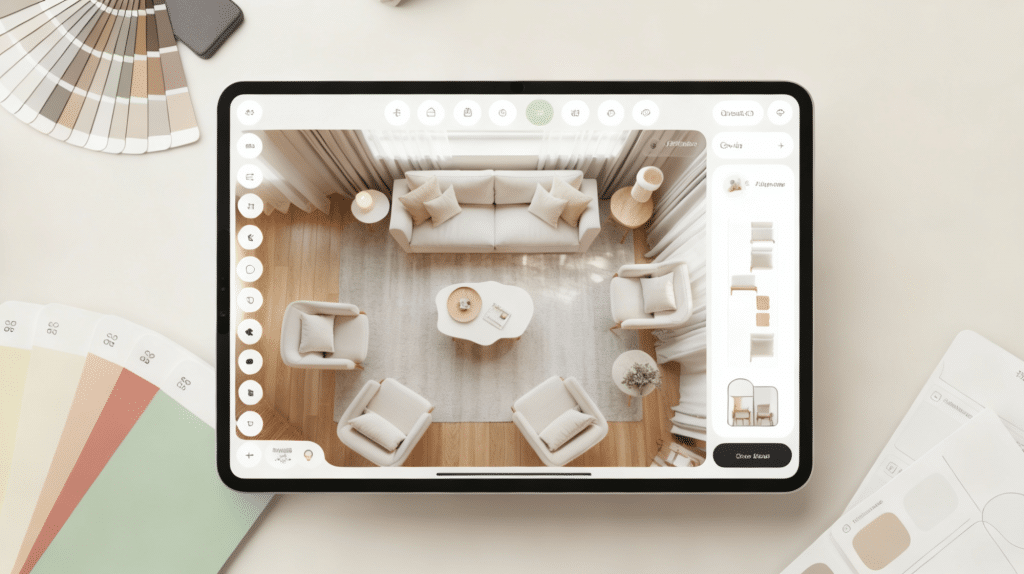
Write down your room dimensions and note where doors, windows, and outlets are located. Sketch a basic floor plan on paper or use a free online room planner.
Step 2: Define Your Priority Activity
Decide what matters most in this space: family movie nights, entertaining guests, or quiet reading time.
Step 3: Start With Your Anchor Piece
Place your largest furniture item first, usually the sofa. Position it so it faces your room’s main feature, then build the rest of your arrangement around it.
Step 4: Add and Adjust
Bring in additional seating, tables, and storage one piece at a time. Sit in different spots and walk through the space.
Step 5: Live With It Before Finishing
Use your basic setup for at least a week. Make small adjustments based on how you actually move through and use the room daily.
Popular Living Room Layout Ideas for Every Type of Space
Finding the right layout can transform how you use your living room. I’ve pulled together practical ideas that work for different spaces and lifestyles.
Let’s walk through them.
1. The Classic Symmetrical Layout
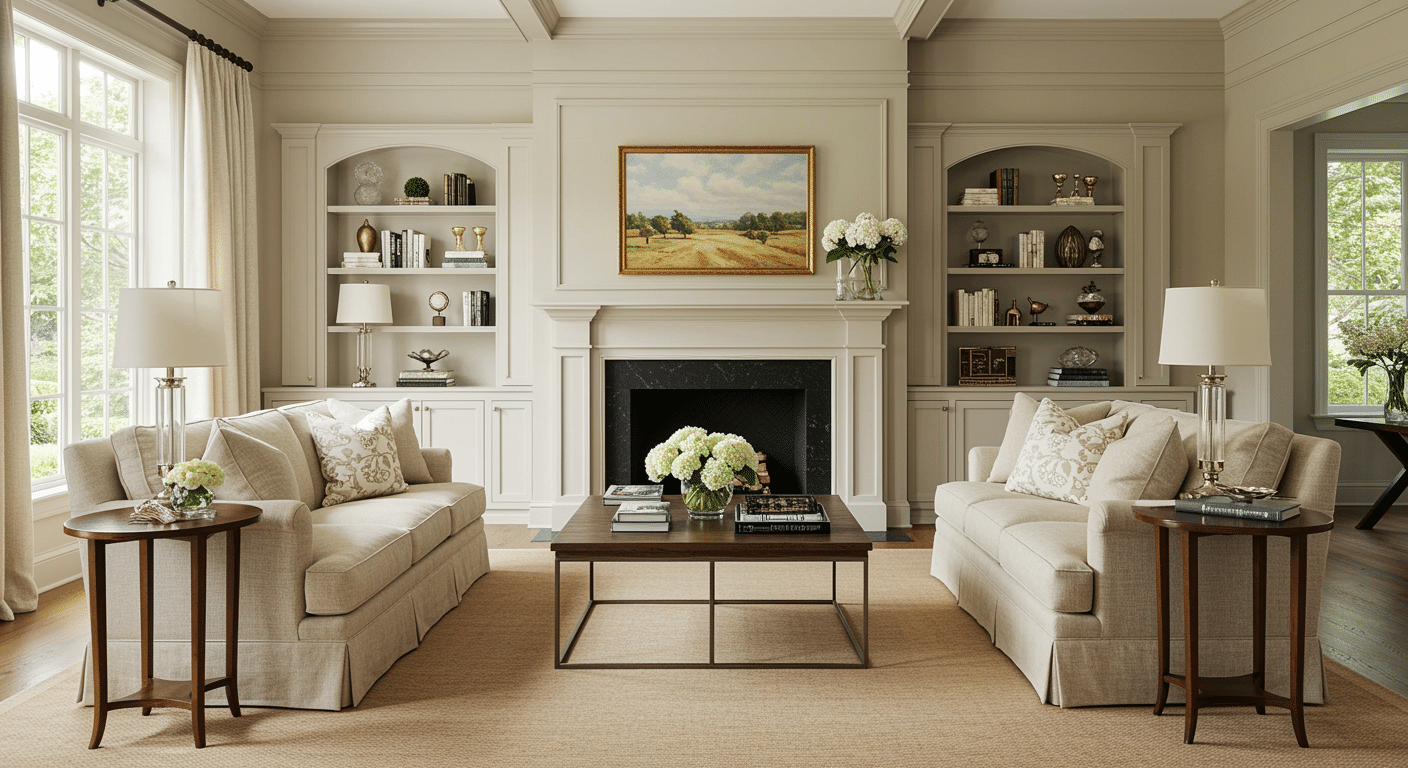
This suits well for traditional spaces. Place identical chairs on either side of a fireplace or window, with a centered sofa facing them.
It creates instant balance and works beautifully in formal living rooms.
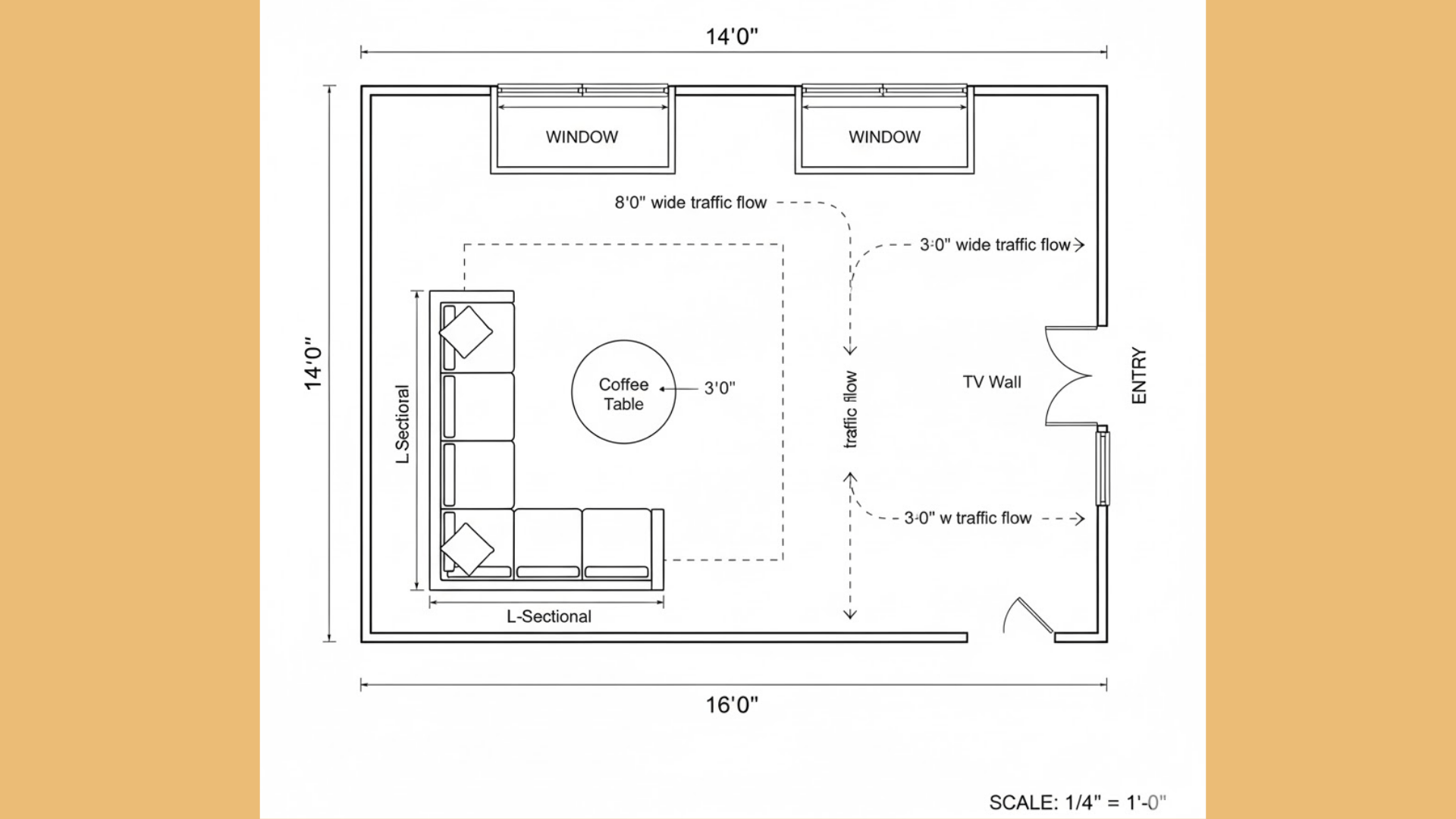
2. The L-Shaped Sectional Corner
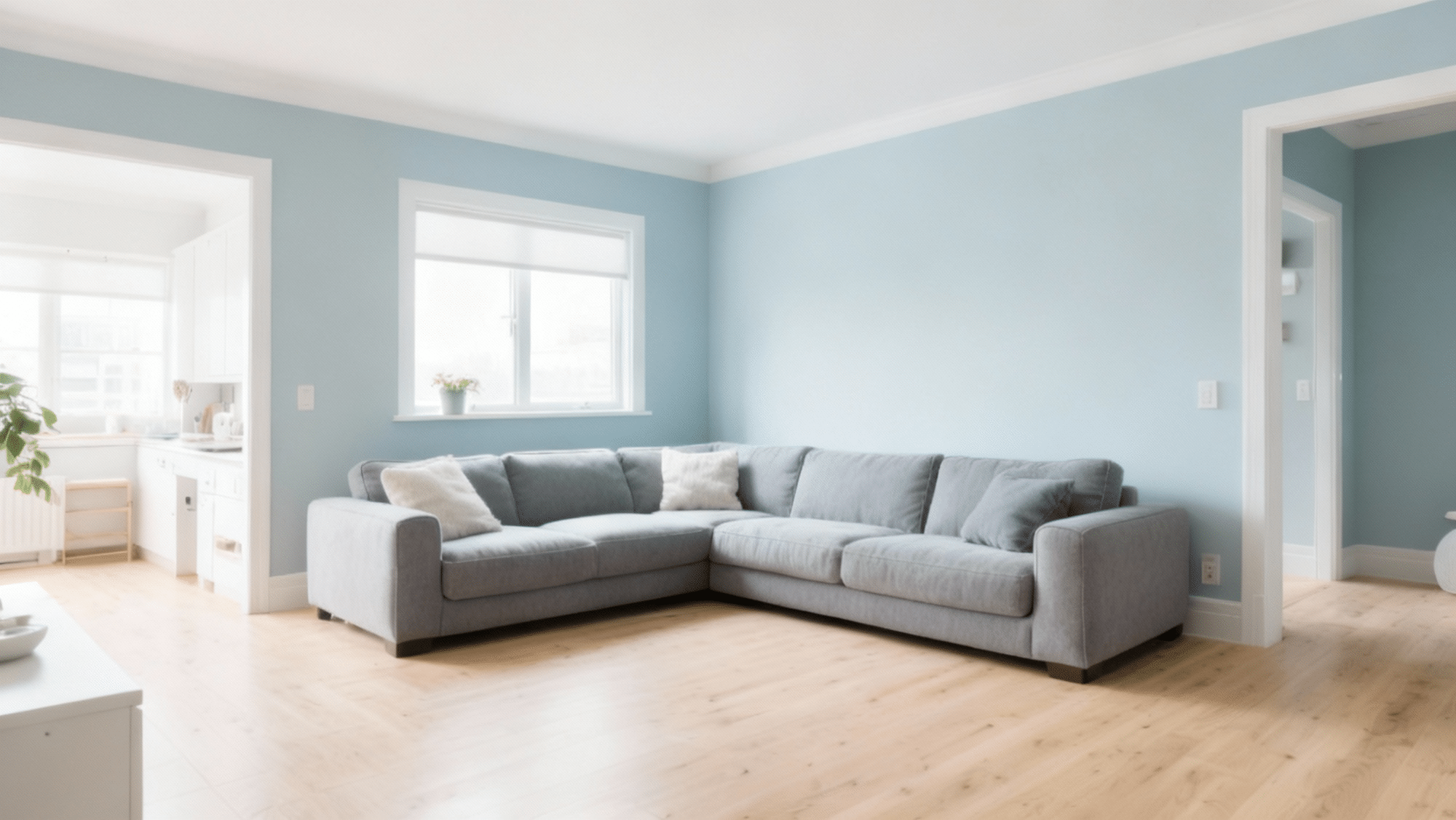
This is ideal for families who need floor space. Tuck a sectional into one corner, facing into the room.
This provides plenty of seating while leaving the center open for kids to play or for traffic to flow easily.
3. The Floating Furniture Arrangement
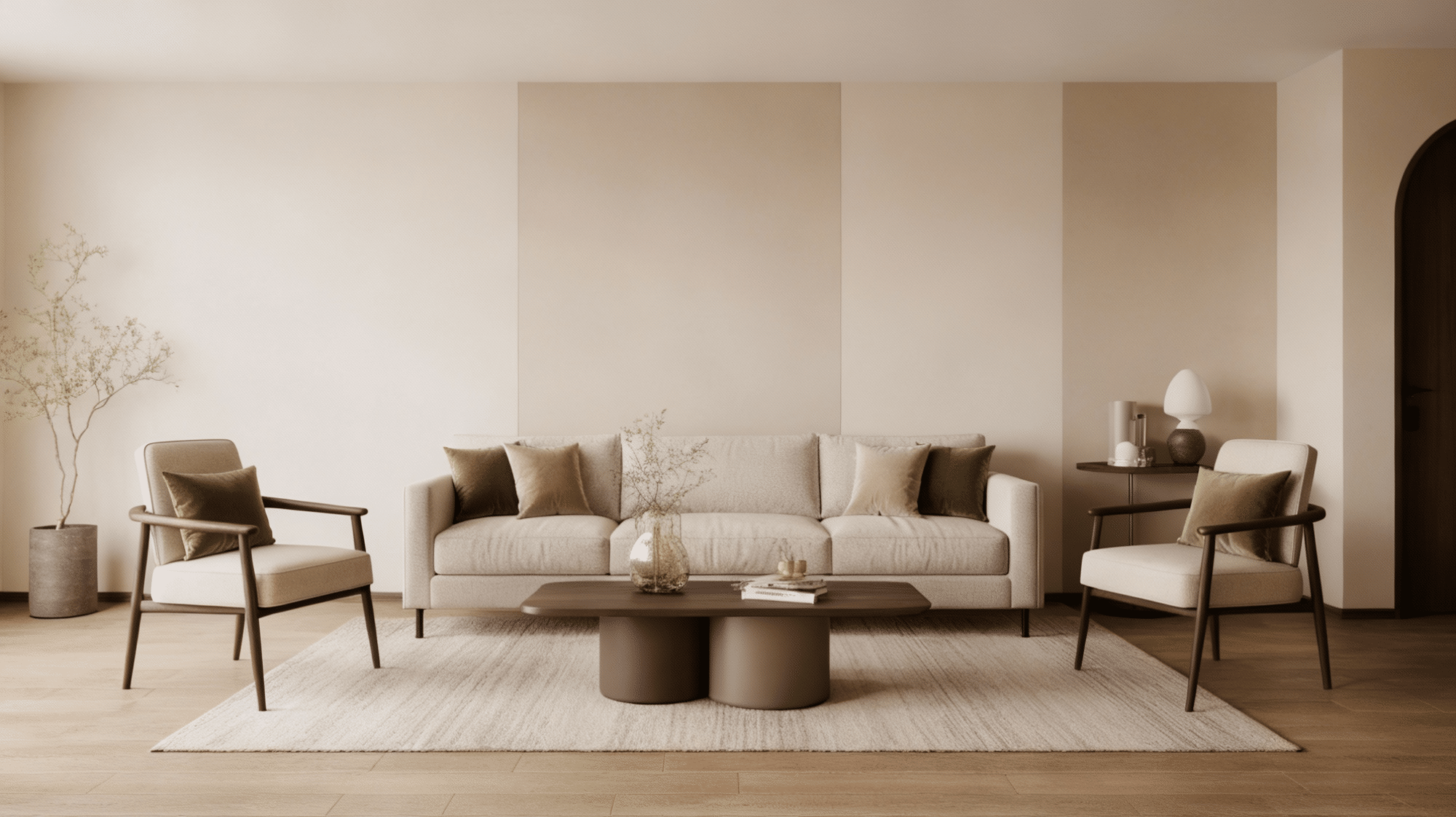
Pull the sofa away from the wall.
Floating it about 2-3 feet from the wall makes the room feel bigger, not smaller. Use an area rug to anchor everything together and create a cozy conversation zone.
This setup also allows for lamps or console tables behind the sofa for added function.
4. The TV-Centered Layout
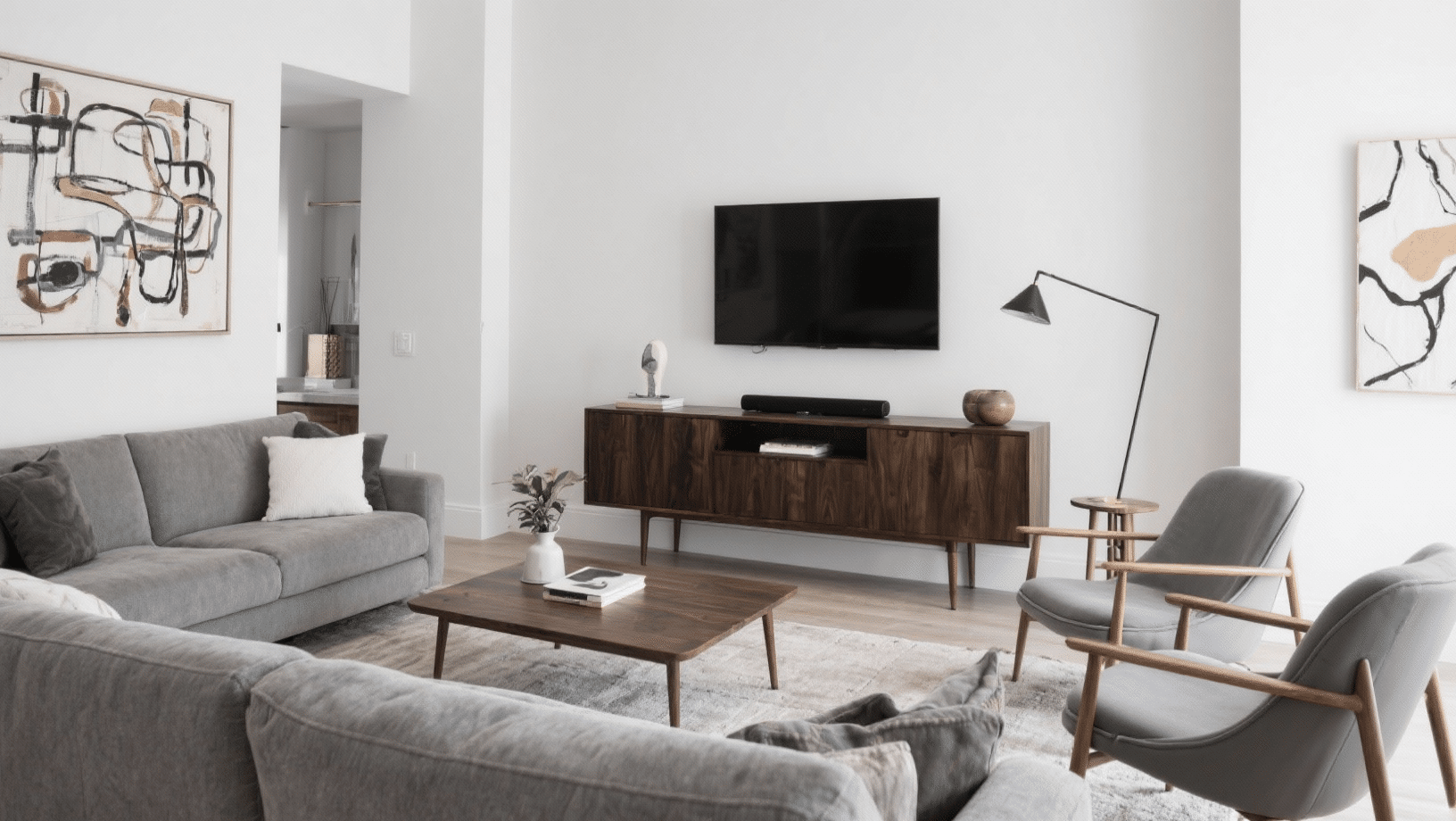
Most people watch TV in this room. Point the main seating directly at the screen, keeping it 6-8 feet away for comfortable viewing.
Add angled chairs on the sides so the room doesn’t feel like a theater.
5. The Conversation Circle
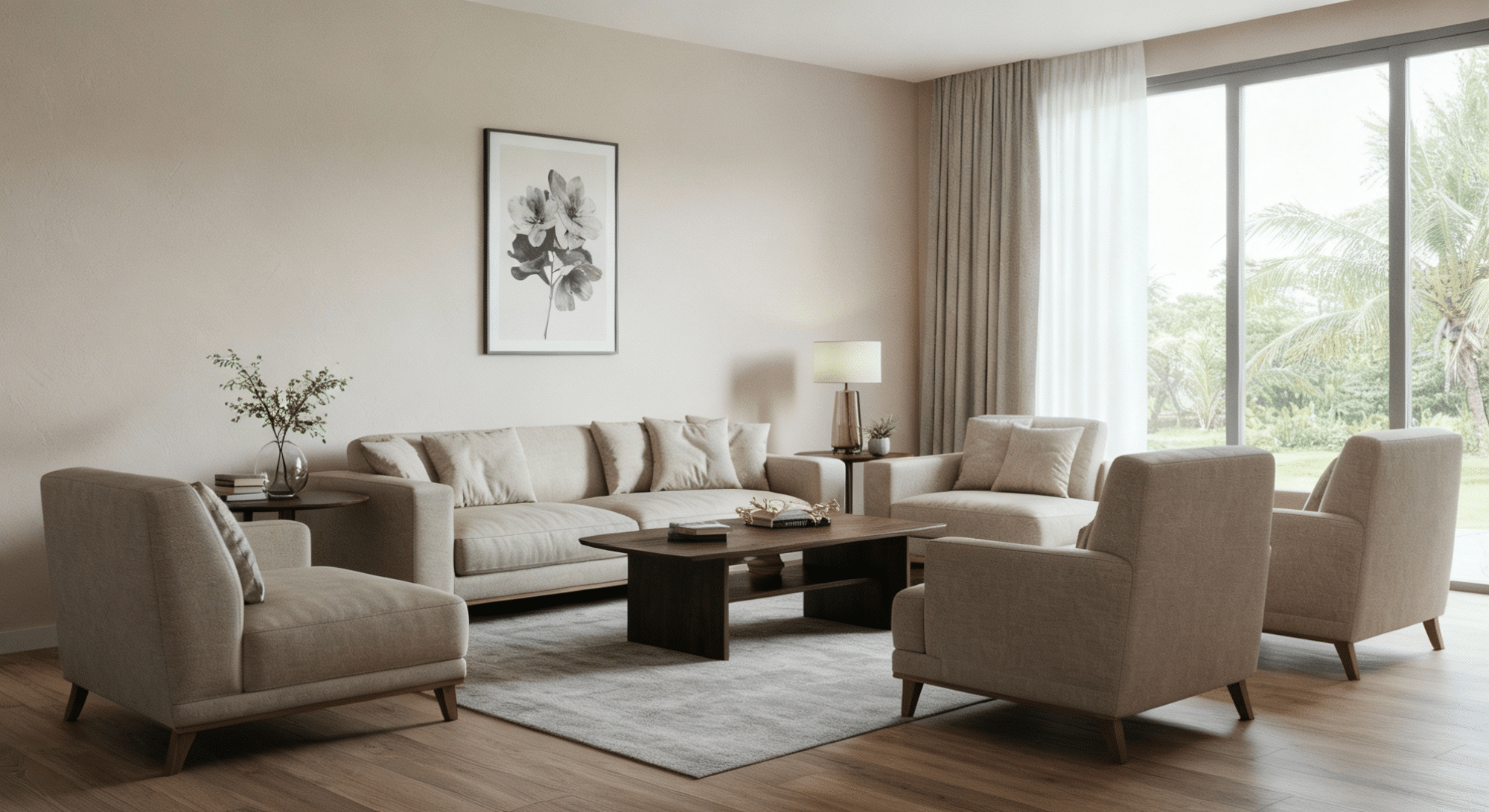
Arrange seating in a loose circle or U-shape when hosting matters most.
Keep pieces 8-10 feet apart, maximum, so people can chat without shouting. A coffee table in the center gives everyone a place for their drinks.
6. The Split Room Layout
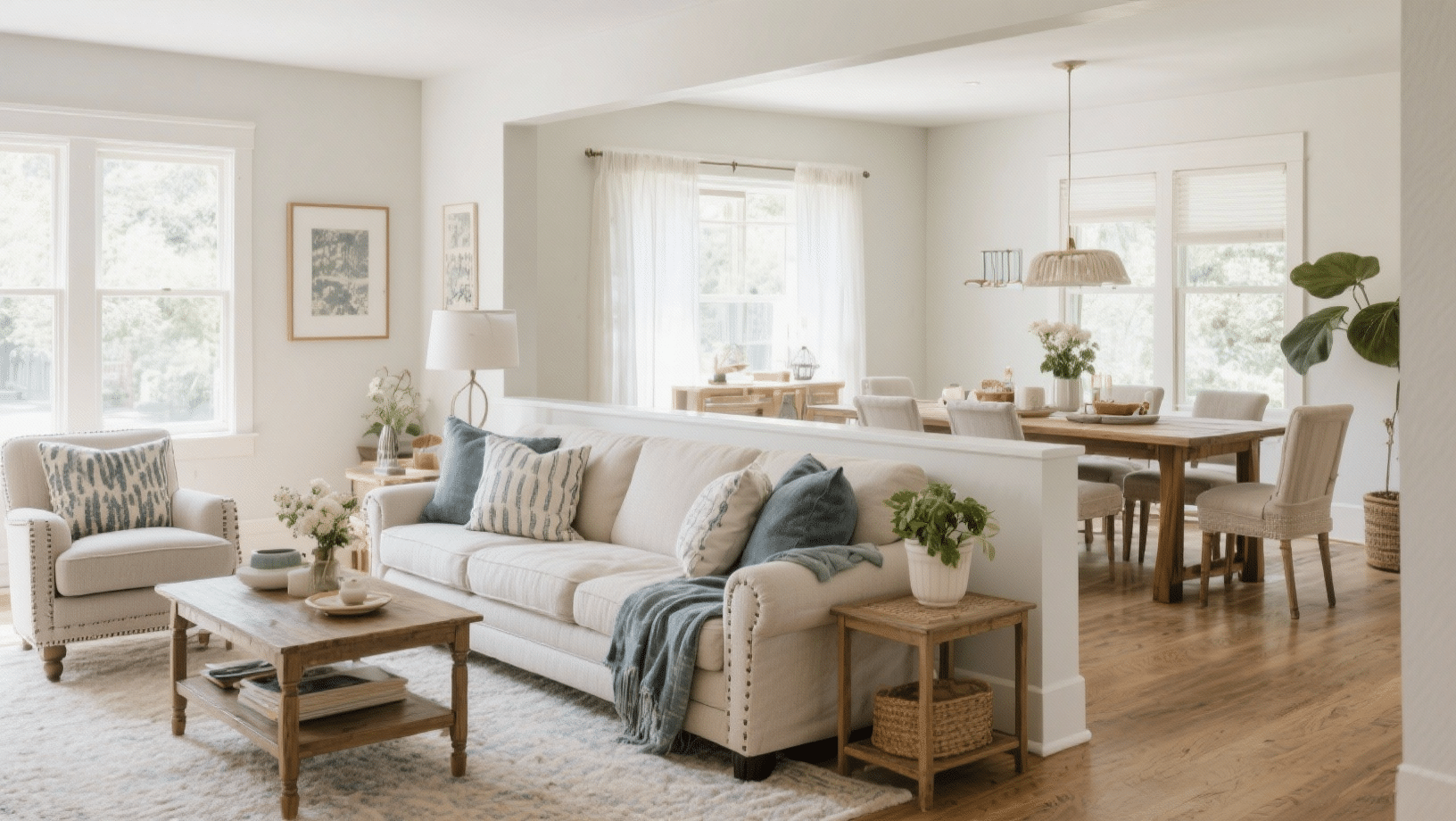
For open floor plans, use furniture to divide the space.
The back of the sofa separates the living area from the dining zone.
It defines each space without blocking light or making the room feel chopped up. A bookshelf or console table behind the sofa can strengthen this division.
7. The Window-Focused Arrangement
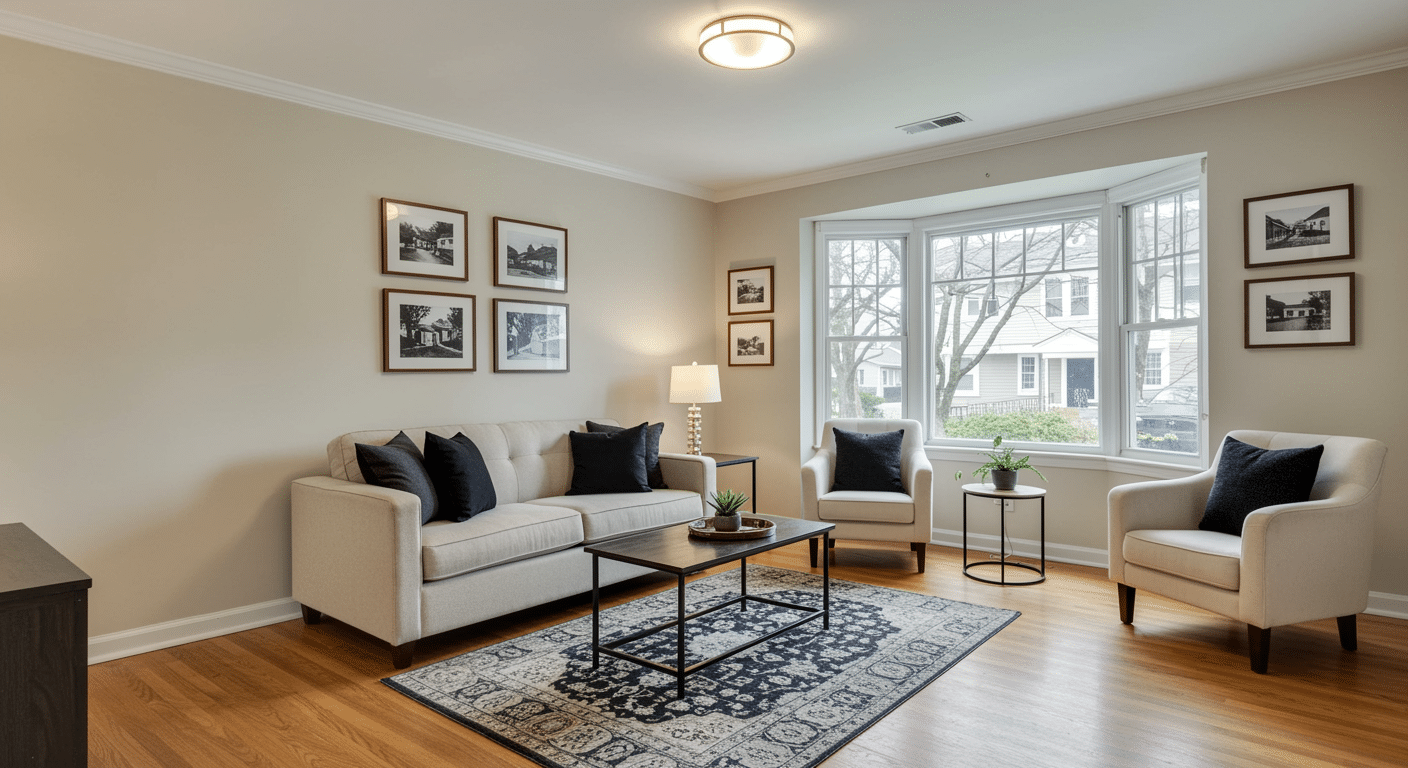
Having a great view means facing seating towards the window instead of the TV.
Place the sofa perpendicular to the window to enjoy the scenery while still having a functional conversation area.
8. The Fireplace-First Layout
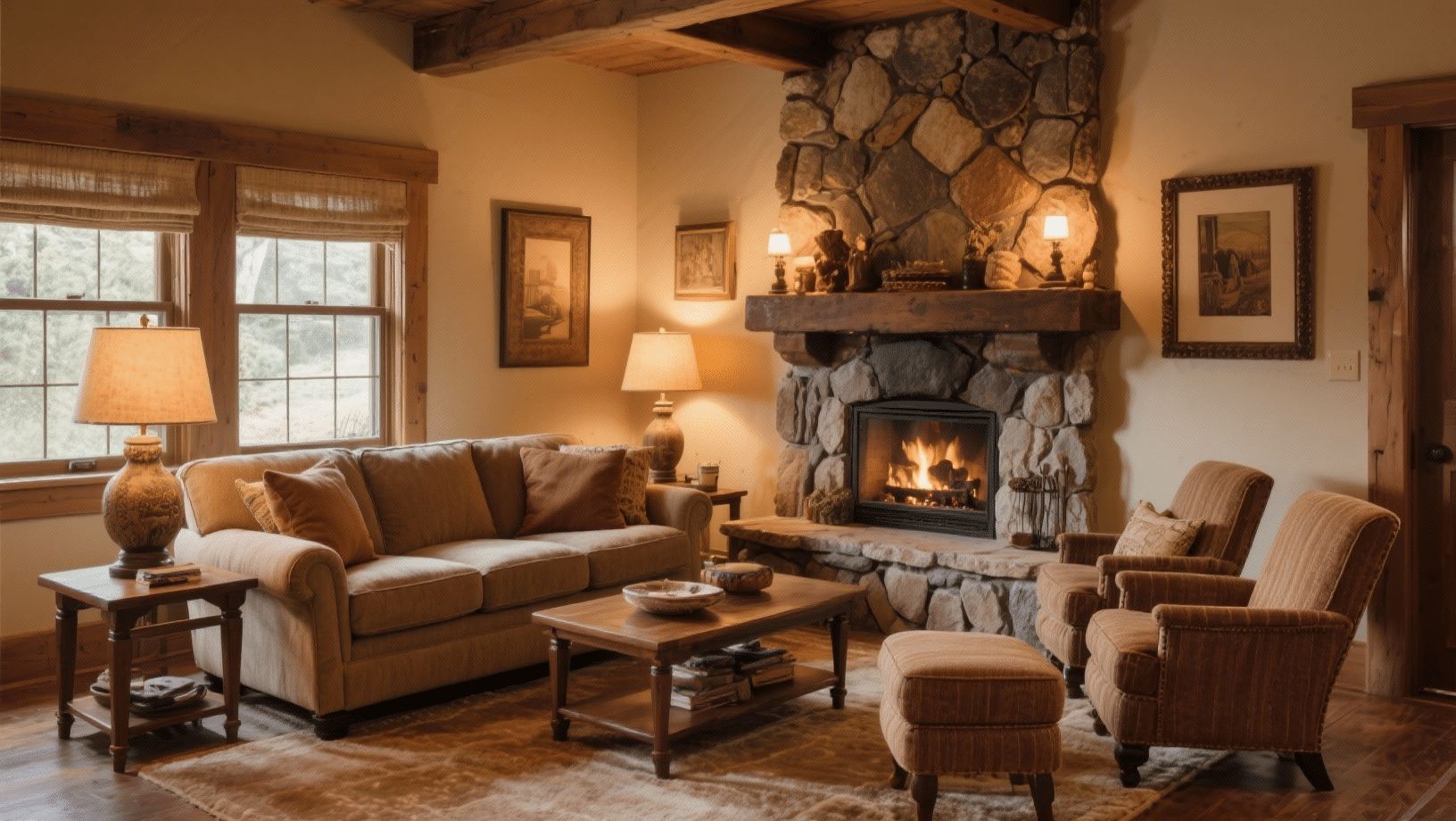
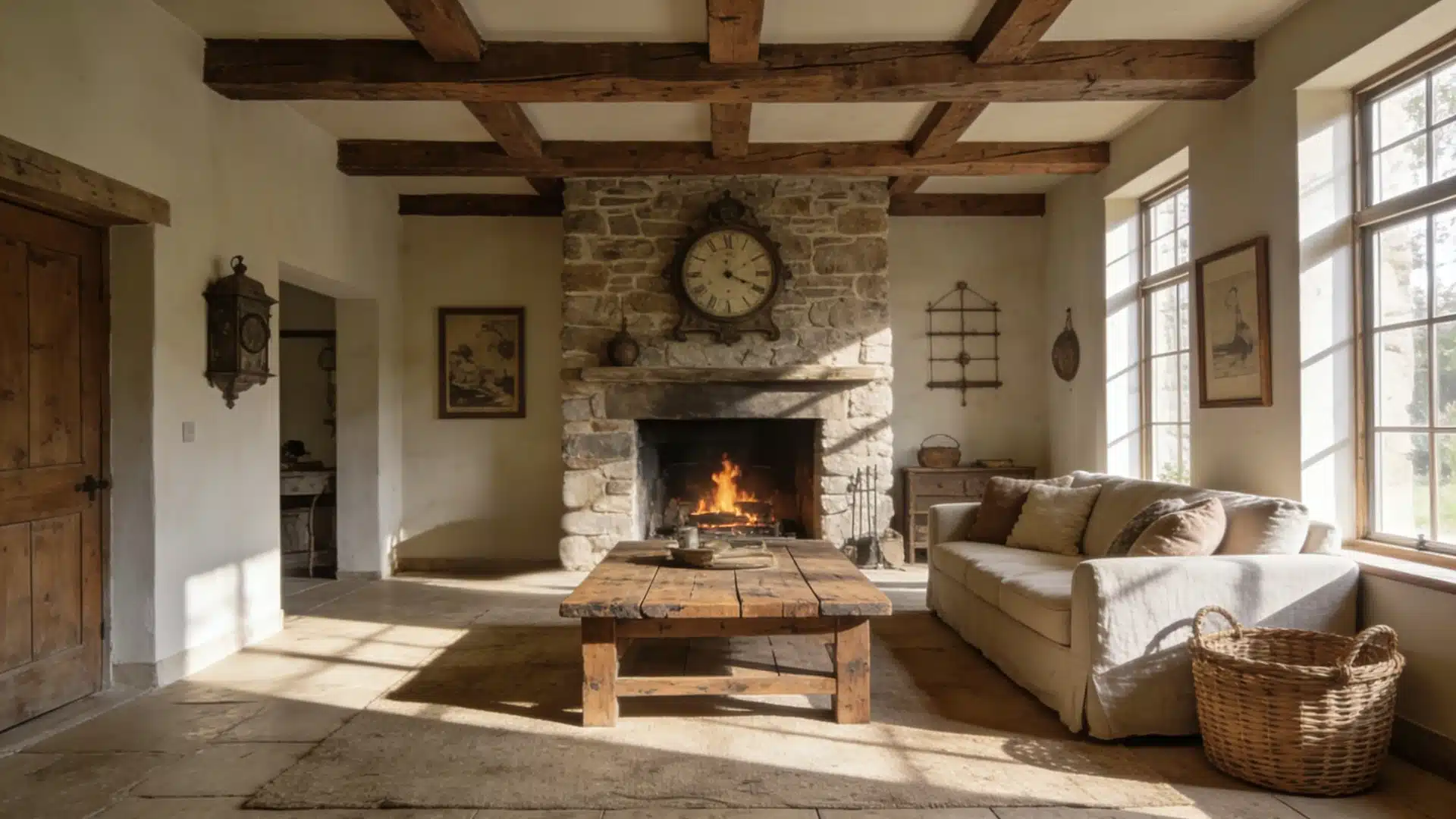
When there’s a fireplace, make it the star.
Arrange the main seating to face it directly, with additional chairs angled to enjoy both the fire and conversation.
It becomes the natural gathering spot, especially in winter.
9. The Small Space Efficiency Layout
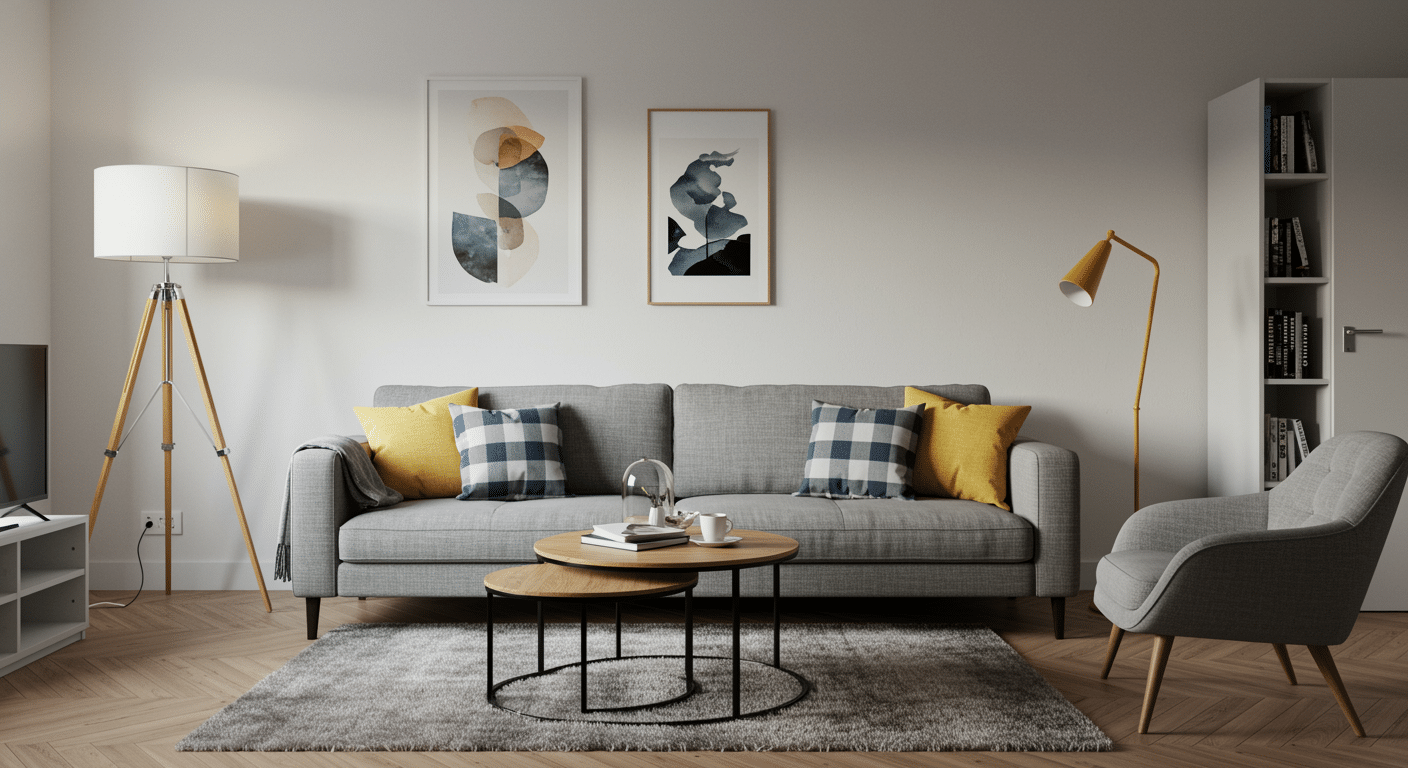
In tiny apartments, skip the coffee table and use nesting tables instead.
A loveseat replaces a full sofa, and armless chairs take up less visual space.
Wall-mounted shelves keep the floor clear while providing storage.
10. The Dual-Purpose Work-Living Layout
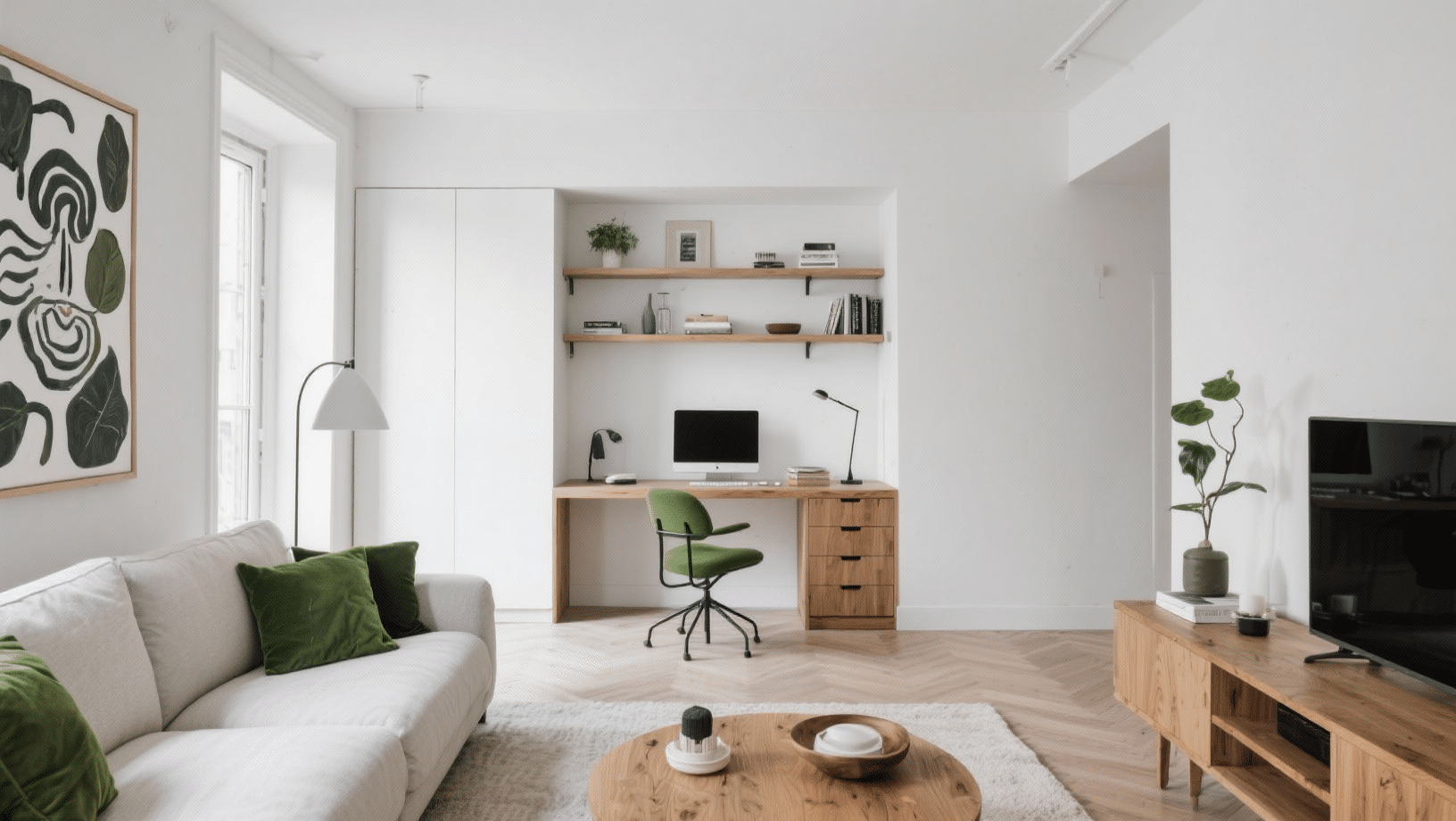
Carve out a desk area behind the sofa for working from home. The couch back acts as a room divider, creating separate zones without walls.
A bookcase on the side adds storage and further defines the workspace.
11. The Angled Furniture Approach
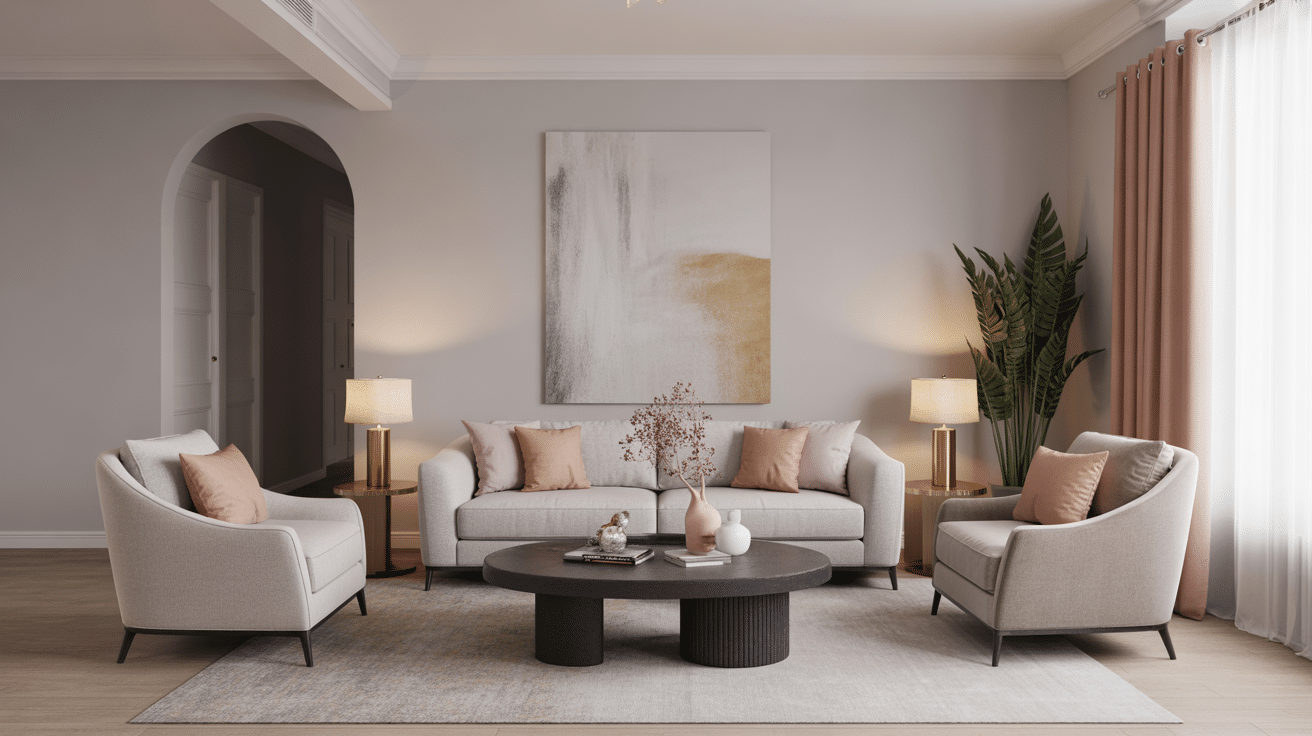
Instead of keeping everything parallel to the walls, angle chairs slightly.
It adds visual interest and actually improves conversation flow. This makes square rooms feel less boxy and more lively.
12. The Back-to-Back Seating
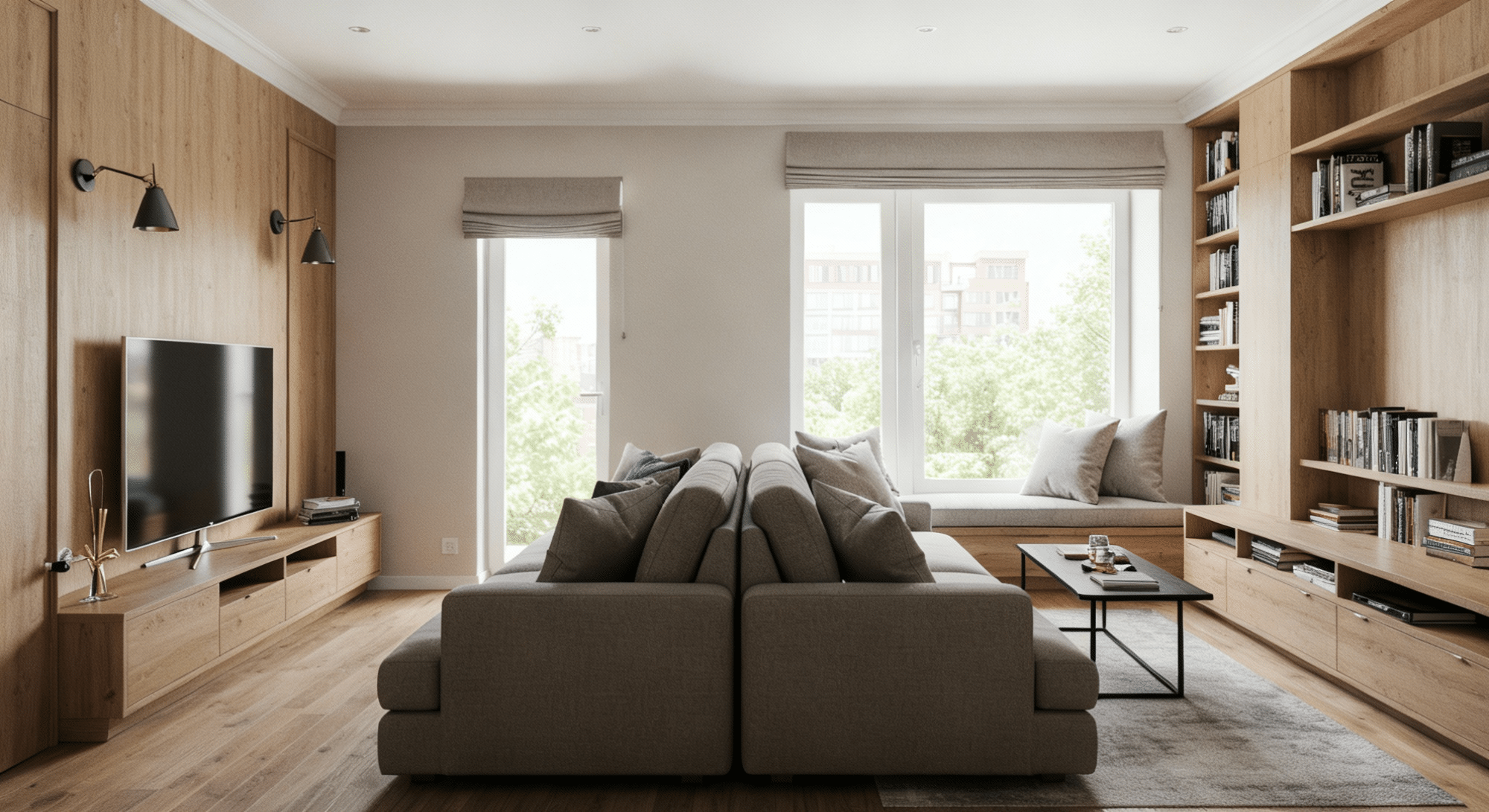
In long, narrow rooms, place two seating areas back-to-back. One faces the TV, the other creates a reading nook by the window.
It’s like having two small rooms in one without building any walls.
This works particularly well in studio apartments or loft spaces.
13. The Minimalist Open Layout
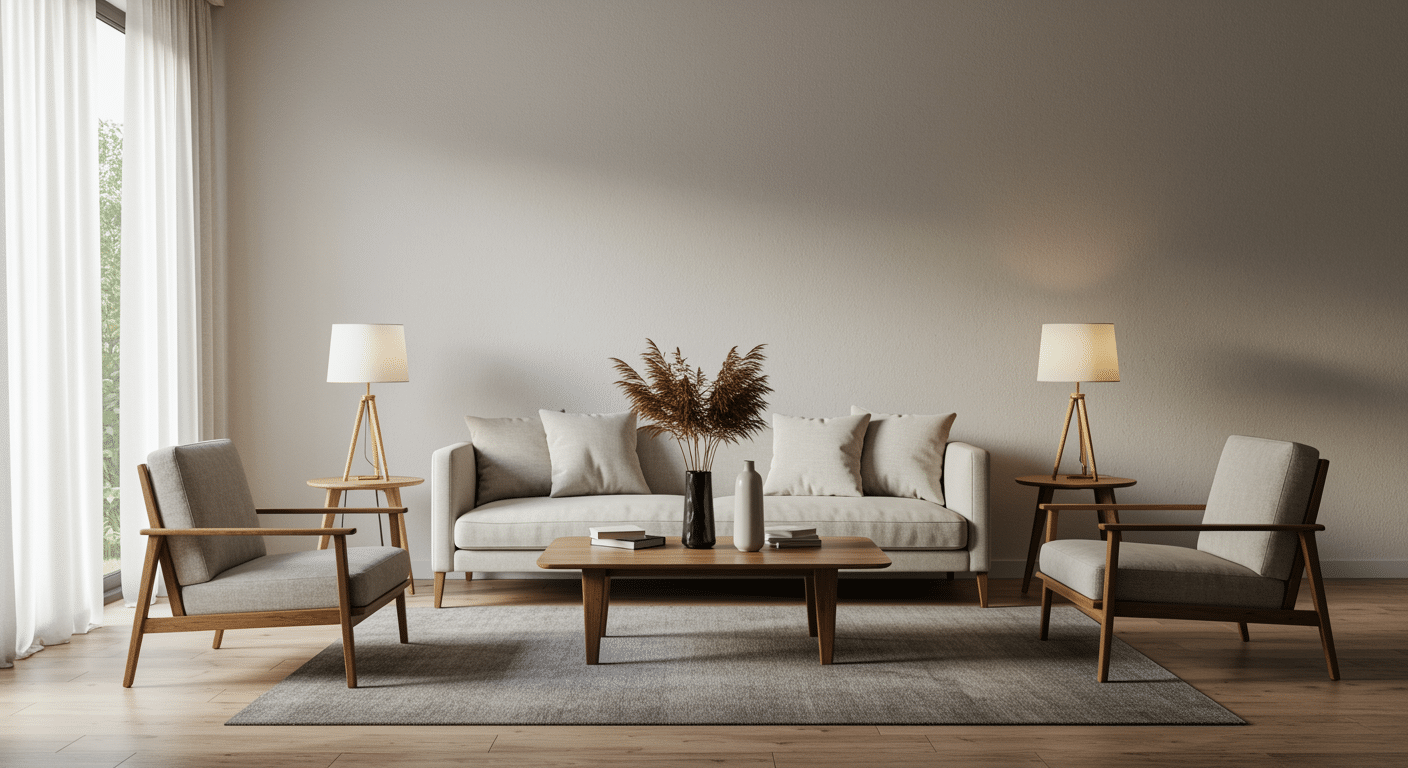
Keep furniture to the essentials: one sofa, two chairs, and one coffee table. Plenty of open floor space makes the room feel airy and calm.
This works great for practicing yoga or needing room for kids to play.
14. The Entertainment Hub Layout
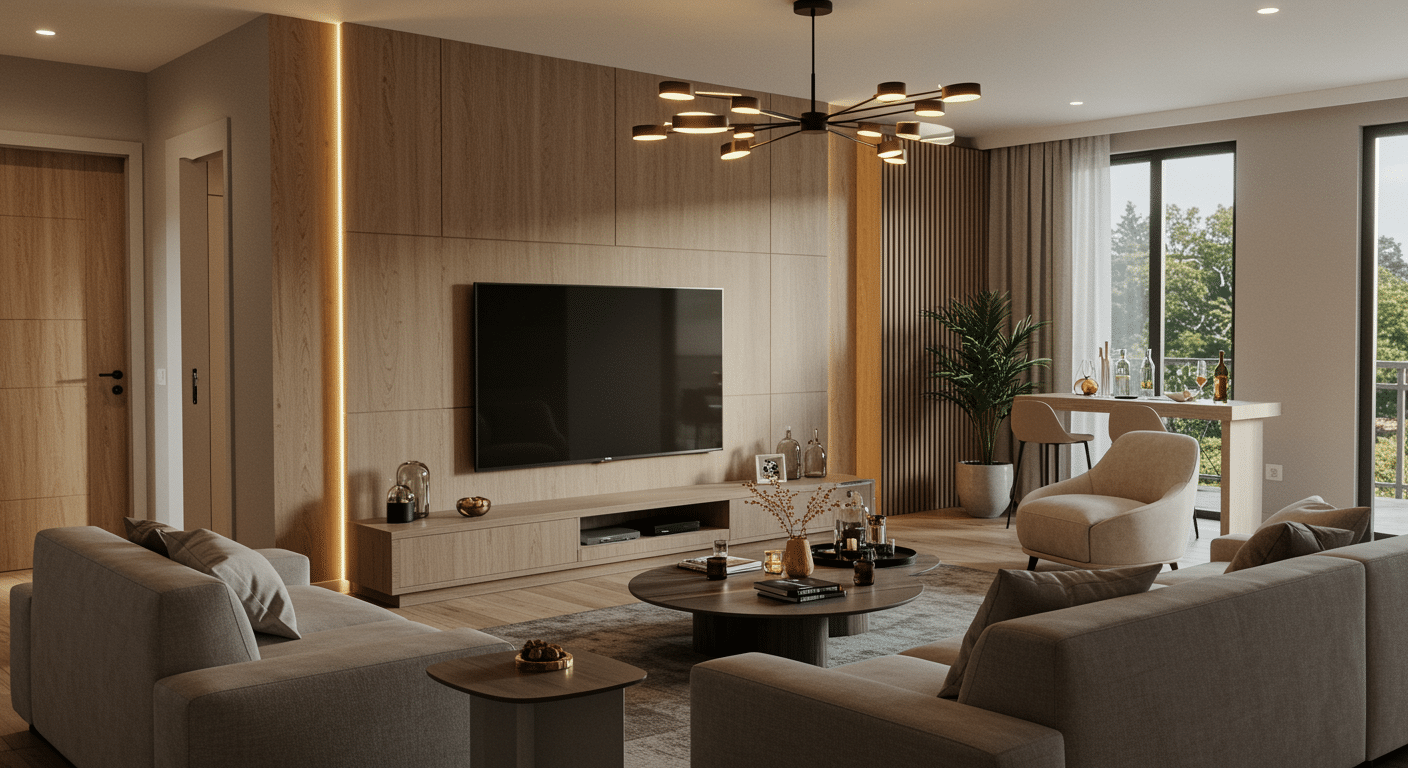
A media console anchors one wall with the TV, gaming systems, and speakers.
Seating wraps around in a gentle arc, so everyone gets a good view. Add a bar cart in the corner for movie night snacks.
15. The Reading Nook Addition
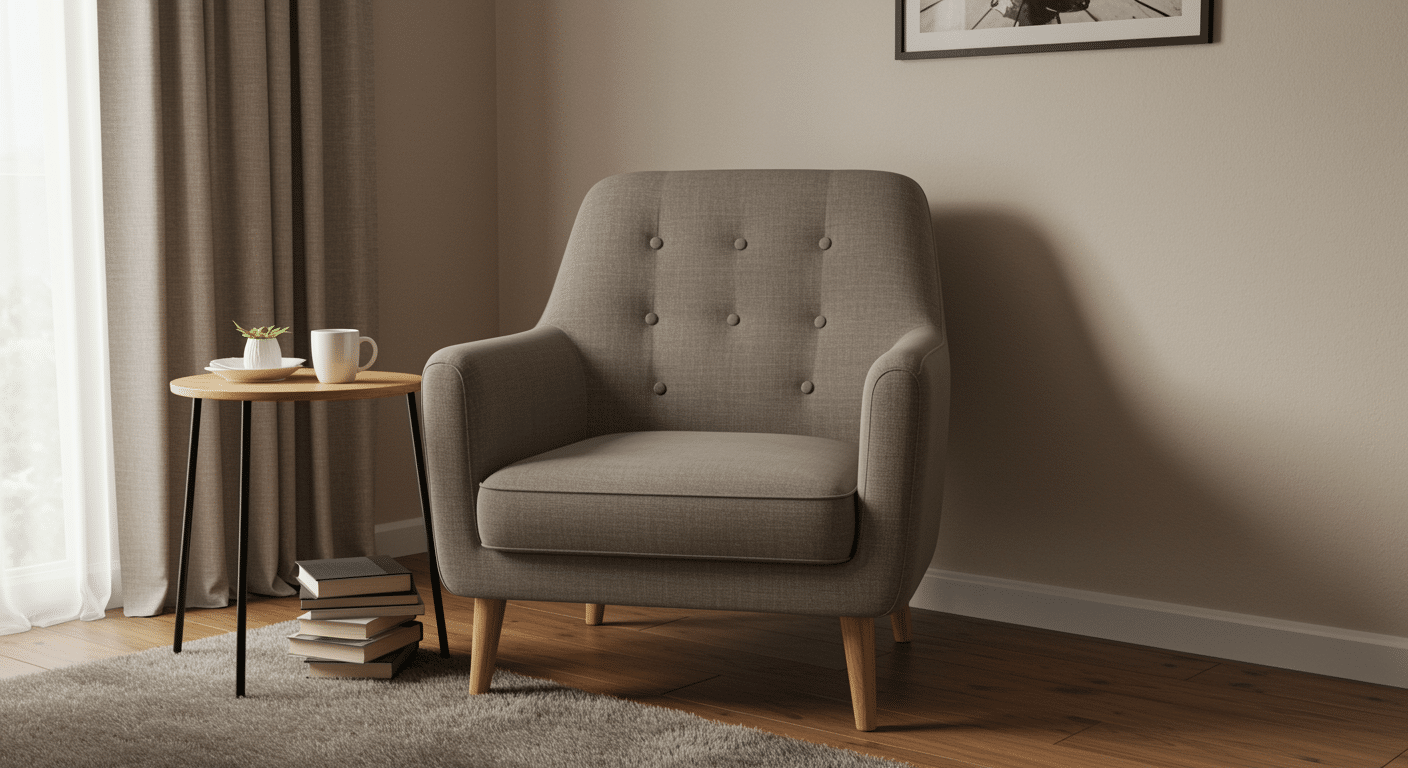
Tuck a comfy chair and floor lamp into an unused corner. Add a small side table for coffee, and there’s a perfect reading spot.
It uses dead space and adds an extra function to the room.
16. The Kid-Friendly Layout
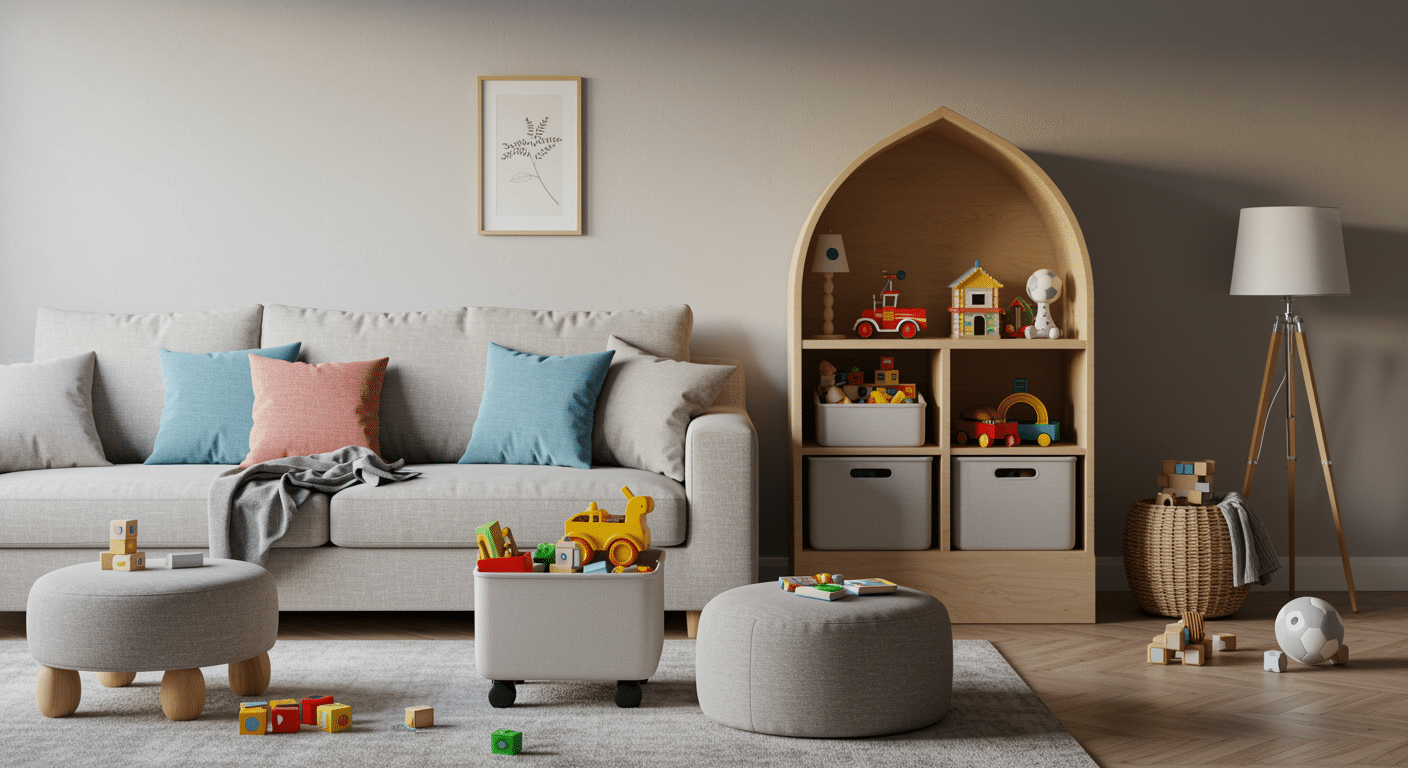
Push the sofa against the wall to maximize play space. A storage ottoman holds toys and doubles as seating.
Durable fabrics mean no stress when juice spills happen. Rounded edges on furniture keep little ones safe during playtime.
17. The Grand Conversation Pit
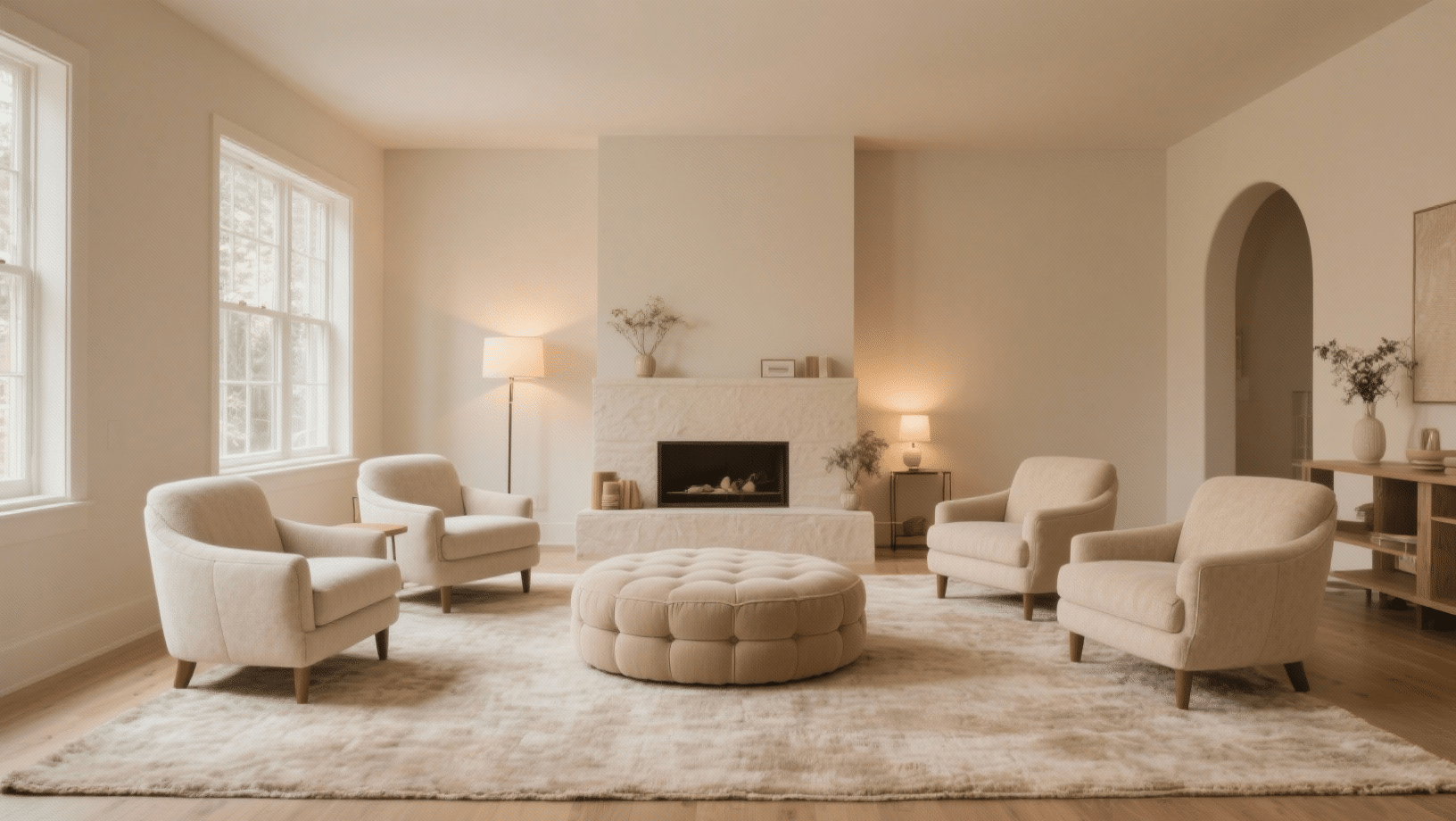
In large living rooms, create an intimate seating area in the center.
Four chairs face each other with a large ottoman in the middle. It feels like a cozy room within a room.
18. The Multi-Seating Variety Layout
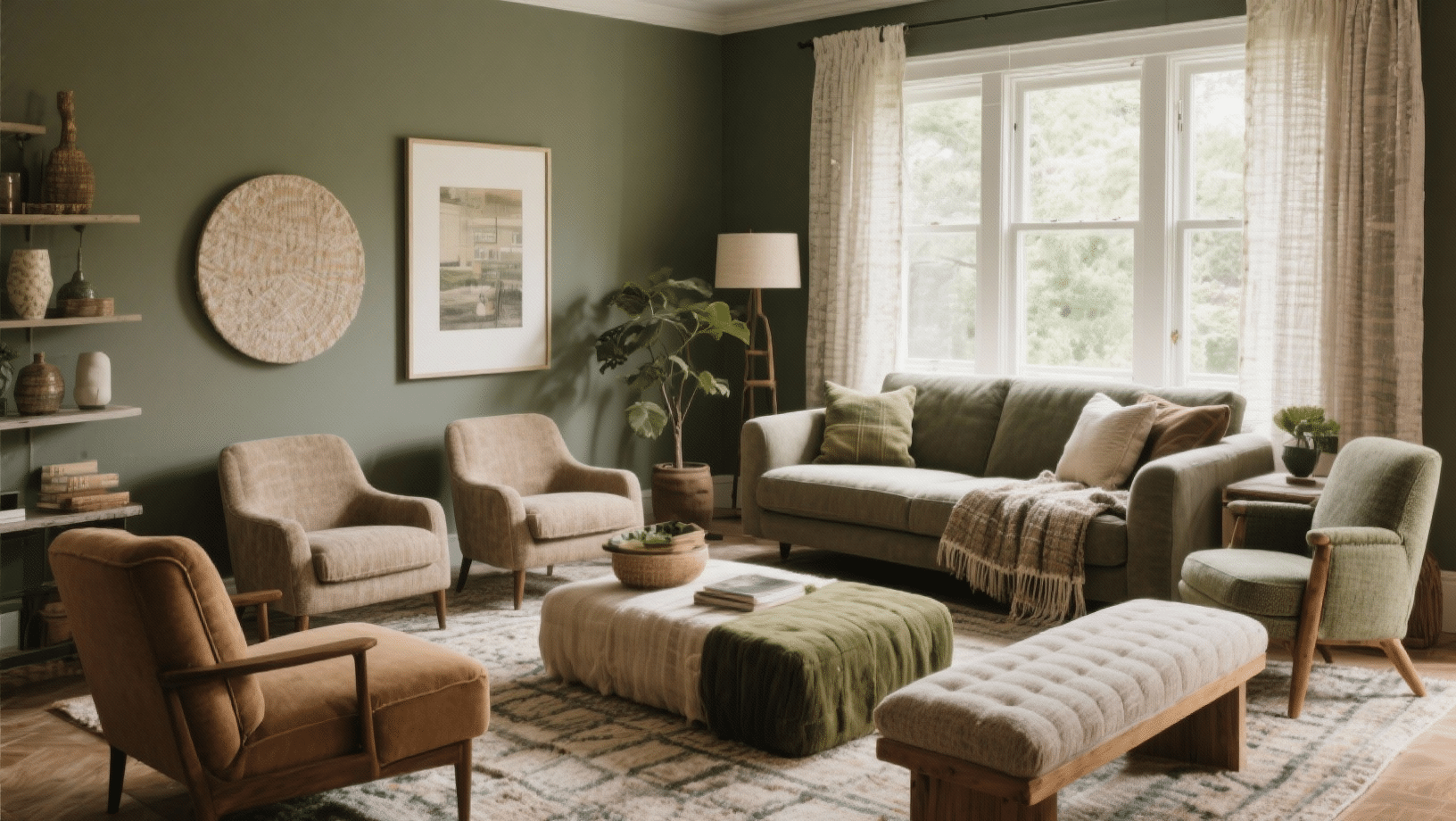
Mix different seating types: a sofa, two armchairs, and a bench. It gives guests options and adds visual interest.
Some people like sinking into a sofa; others prefer chairs with more support.
19. The Gallery Wall Focal Point
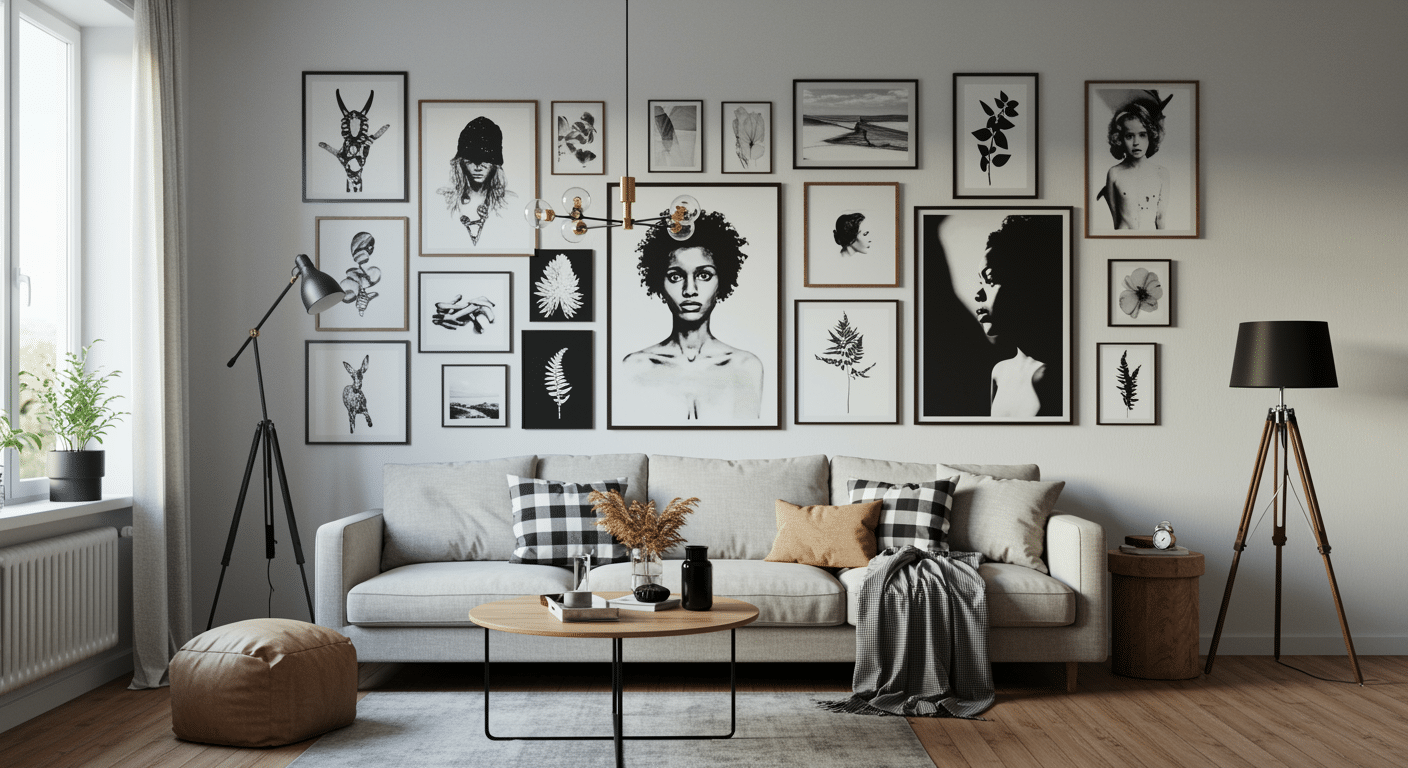
When the room lacks a natural focus, create one with a large gallery wall. Arrange seating to face it, making the art the centerpiece.
It gives the layout direction and adds personality.
20. The Outdoor-Indoor Flow Layout
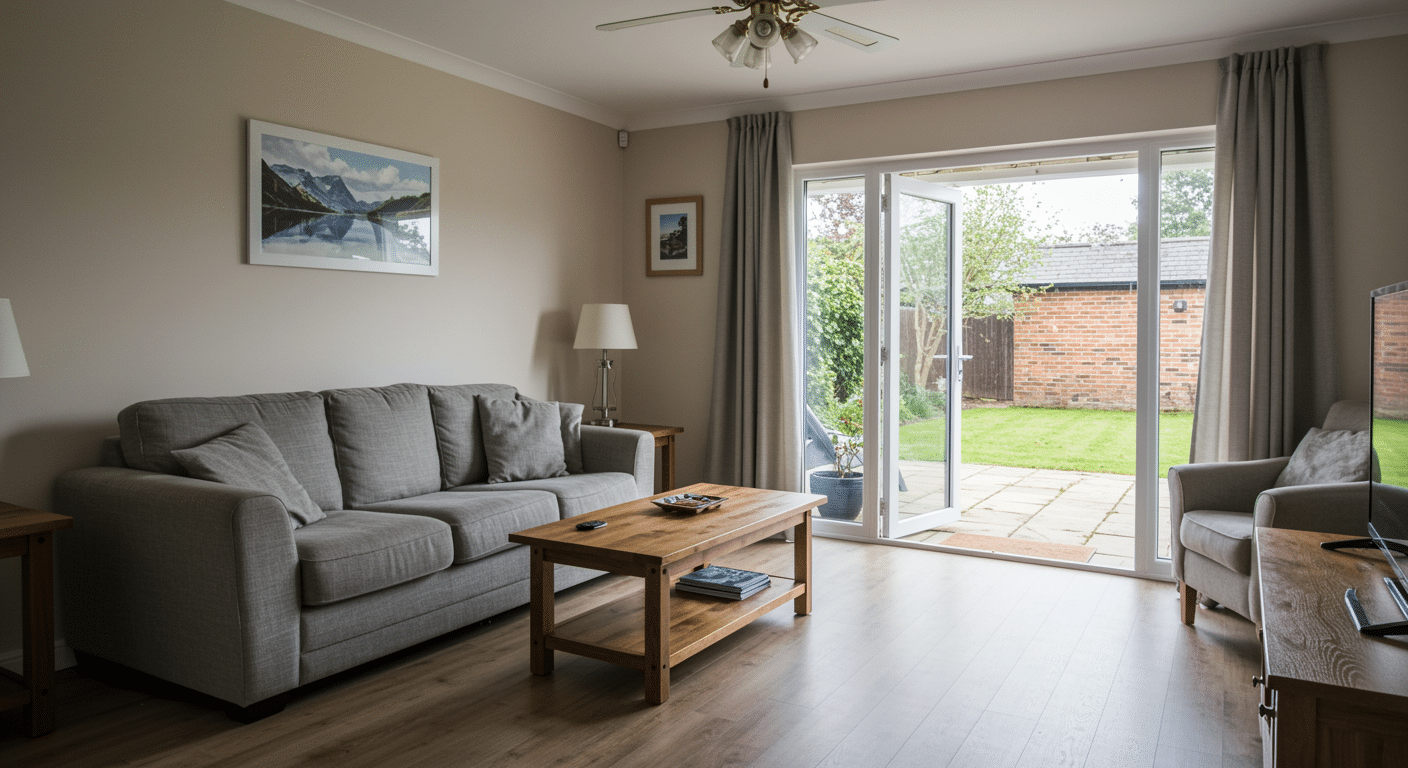
Position furniture to face the patio doors, connecting inside and outside.
In nice weather, open the doors wide, and the living room extends into the yard.
It makes both spaces feel bigger.
21. The Adaptable Modular Layout
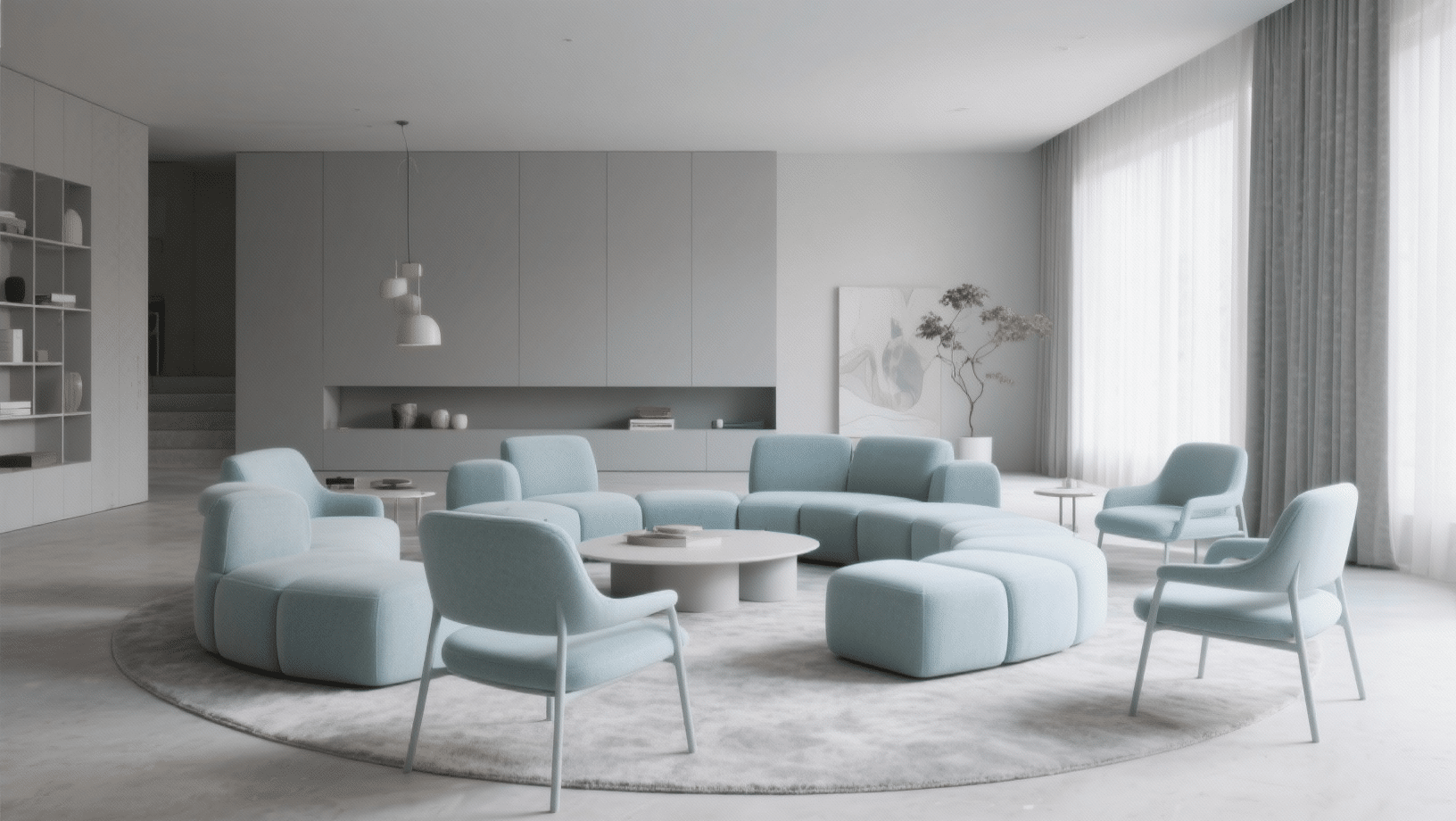
Use lightweight chairs and modular seating that can be rearranged easily. For game night, pull everything into a circle.
For movie night, it all faces the TV. The flexibility means the room works for whatever is needed.
Common Mistakes to Avoid
You’ve seen the layout ideas. Now let’s talk about what not to do.
- Ignoring your room’s shape: What works in a square room won’t work in a narrow rectangle. Adapt layouts to fit your actual space.
- Blocking windows and doors: Furniture shouldn’t fight against how people naturally enter and exit the room.
- Putting all the light on the ceiling: One overhead fixture isn’t enough; you need lamps at different heights throughout the room.
- Making narrow walkways: If you’re turning sideways to get through, the path is too tight; maintain at least 2-3 feet.
- Overcrowding with too much furniture: More isn’t better sometimes; removing a piece makes the whole room work.
- Leaving poor sight lines to the TV: Everyone should see the screen without craning their neck or squinting.
Plan Your Living Room Layout Online (Interactive Tools to Try)
Planning your layout digitally saves time and prevents costly mistakes. Here are the best free tools to try.
- Planner 5D: Drag-and-drop interface with 2D and 3D views, plus a huge furniture catalog to visualize your exact space.
- Roomstyler 3D Home Planner: Design in your browser with real furniture brands, then see your layout in realistic 3D.
- Floorplanner: A simple floor plan creator that lets you add exact measurements and furniture dimensions quickly.
- HomeByMe: Create detailed layouts with accurate room dimensions and walk through your design virtually.
- IKEA Home Planner: specifically for IKEA furniture, it helps you arrange pieces and check whether they fit your space.
- Havenly: Combines online planning tools with optional designer advice for your specific layout challenges.
Final Thoughts
These layout tips help make any space work better.
A good floor plan makes your room feel bigger and more comfortable. Remember to measure first, then place your largest pieces. Leave space for people to walk around easily.
What’s your next step? Start by measuring your room today. Move one piece at a time until it feels right.