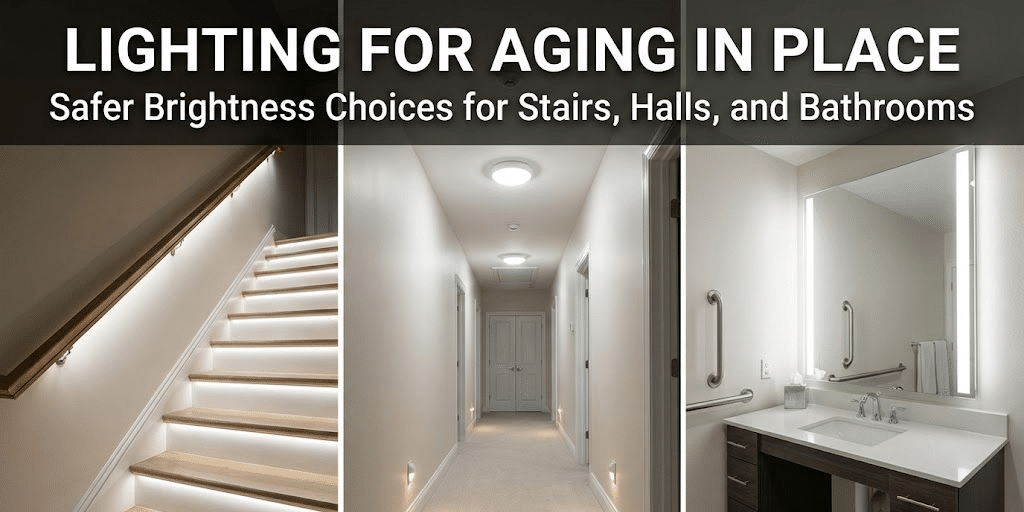
“Aging in place” often starts with small, practical updates that reduce fall risk and make daily routines easier. Lighting is one of the fastest improvements because it affects every step you take, especially on stairs, in hallways, and in bathrooms where slips and missed steps are more likely.
This guide focuses on safer brightness choices and simple lighting setups that work in typical U.S. homes, without turning the house into a hospital-like space. The goal is clear visibility, low glare, and consistent light where it matters most.
Why Lighting Needs Change as We Age
As people get older, they often need more light to see the same detail, especially in low-contrast areas like beige stairs, light tile, or matte floors. But adding “more light” the wrong way can create glare, which makes vision worse.
Safer lighting for aging in place is about three things:
- Even coverage: fewer dark gaps and harsh shadows
- Glare control: no exposed bulbs in direct sightlines
- Night-friendly guidance: gentle path lighting instead of sudden bright blasts
The “Comfort-Safe” Brightness Rule (A Simple Starting Point)
A practical way to plan safer light levels is to think in lumens per square foot:
- Hallways and stairs: about 10–20 lumens per square foot, with extra emphasis on step edges
- Bathrooms: about 20–40 lumens per square foot, especially at the vanity and shower zone
- Night paths: low-level, steady light that guides movement without waking you fully
These are ranges, not strict formulas. The best results come from layering multiple softer sources instead of one extremely bright bulb.
Stairs: The Most Important Place to Remove Shadows
On stairs, shadows can hide step edges and change how deep each step appears. Good lighting should make the tread and nosing easy to read.
Safer stair lighting approaches
- Wall lights along the stair run: gives consistent visibility without relying only on a ceiling fixture.
- Step or low wall lights: creates a clear path and makes each step edge more obvious.
- Indirect lighting: uplighting or diffused sconces reduce harsh contrast.
Common stair lighting mistakes
- One bright light at the top that leaves the middle steps dim.
- Exposed bulbs that glare when looking up or down the staircase.
- No lighting on landings, where turns and transitions happen.
Quick fix that helps immediately
Add a night-safe path light option (low-level lights or dimmed sconces) so the stairs are never fully dark.
Hallways: Avoid Bright “Pools” With Dark Gaps Between
Hallways often feel safe in the daytime but become risky at night due to uneven lighting. The goal is consistent illumination so there are no surprise dark zones.
Hallway lighting that improves safety
- Multiple smaller fixtures spaced for continuity rather than one bright center light.
- Wall sconces with diffusers to soften light and reduce glare.
- Motion or occupancy sensors so lights come on automatically when someone enters.
Brightness and glare tips
- Use diffused shades or frosted covers so the light source is not directly visible.
- Keep color temperature consistent along the hallway so it does not feel visually confusing.
Bathrooms: Safe Light Where Slips Actually Happen
Bathrooms are high-risk zones because of water, tile reflections, and quick transitions between bright mirror light and darker corners. Many people think they need “daylight” bulbs, but overly cool light can increase glare in mirrors and on shiny surfaces.
Vanity area (face lighting)
- Use lighting that reduces shadows on the face, not only an overhead light.
- Choose diffused fixtures so mirror glare is minimized.
- A dimmer helps you shift from bright grooming to softer nighttime use.
Shower and toilet zones (visibility)
- Make sure corners are not left dim, especially near grab bars and thresholds.
- Use sealed, bathroom-rated fixtures where moisture is present.
Nighttime bathroom trips
A gentle, low-level light is often safer than blasting the overhead fixture at 2 a.m. Path lights, toe-kick lighting, or a dimmed sconce can guide movement without disorienting the eyes.
Color Temperature: What Looks Clear Without Feeling Harsh
For aging in place, a balanced white light often works best: clear enough to see detail, warm enough to reduce the “institutional” feel.
- Many homes: 2700K–3000K for halls and stairs
- Bathrooms: often 3000K–3500K for clarity without strong blue cast
Consistency helps. If your hallway is warm and your bathroom is extremely cool, the transition can feel uncomfortable at night.
Controls That Make Safety Automatic
The safest lighting is the lighting you do not have to remember to turn on.
Control upgrades that help aging in place
- Motion or occupancy sensors: hallways, bathrooms, stair entries
- Smart dimmers: create a “night mode” that turns on at low brightness
- Timed schedules: keep pathway lights on during typical sleep hours
A Simple “Safer Night Path” Plan for Most Homes
- Add low-level guidance lighting from bedroom to bathroom (hallway path lights or dimmed sconces).
- Ensure stair lighting covers the full run including landings, not only the top.
- Upgrade bathroom mirror lighting so faces are evenly lit without harsh glare.
- Use controls that switch on automatically so darkness is never a surprise.
These changes can make a home feel more secure right away, and they also make daily routines easier for everyone, not only older adults.
Choosing Fixtures That Support a Safer Home
If you are planning updates for stairs, halls, bathrooms, or other everyday pathways, it helps to choose fixtures that provide diffused light, comfortable brightness, and a cohesive look throughout the home. You can start your lighting search at Seus Lighting to explore options for chandeliers, ceiling lights, and wall lighting that can be layered into a safer, more practical setup.