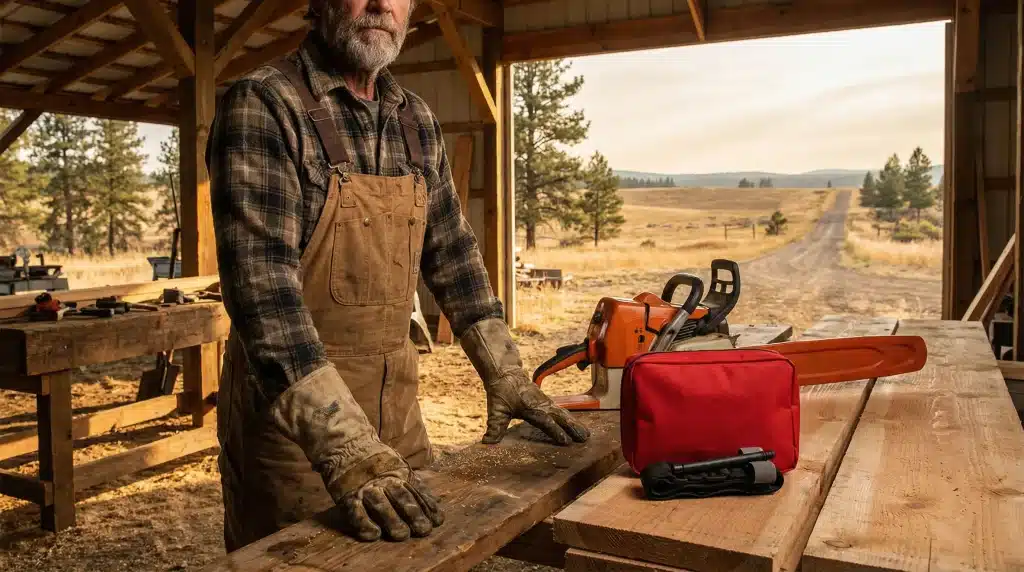
Homesteading and massive rural DIY projects offer an incredible sense of freedom. Building your own outbuildings, milling your own lumber, or simply managing a large piece of acreage brings a deep, tangible sense of accomplishment. However, choosing to live off the beaten path fundamentally changes your relationship with emergency services. When you are operating heavy power tools miles away from the nearest urban trauma center, you can no longer rely solely on a 911 dispatch. True self-reliance means being your own immediate medical provider. For families and agricultural co-ops managing rural properties, participating in comprehensive group first aid training is a non-negotiable aspect of the homesteading lifestyle. It ensures that when a severe accident happens, the people living on the property have the physical capability to save a life before an ambulance ever navigates the backroads.
The Brutal Math of Rural Response Times
In a city, the standard medical response protocol is straightforward: call 911, apply some pressure to the wound, and wait the seven or eight minutes it takes for the paramedics to arrive. In a rural homesteading environment, that timeline completely evaporates.
If a severe accident happens on a sprawling property outside of Calgary, emergency responders must navigate unpaved concession roads, unmarked driveways, and potentially severe weather conditions just to reach your gate. A thirty to forty-five-minute response time is a highly realistic expectation.
During a severe trauma event, biology does not pause to wait for the sirens. The medical community refers to the “Golden Hour”—the critical sixty-minute window following a traumatic injury where medical and surgical intervention is most effective at preventing death. If an ambulance takes forty minutes to arrive, the entire Golden Hour is consumed by logistics. In cases of severe arterial bleeding, a patient can lose a fatal amount of blood in just three to five minutes. Out on the homestead, you are the definitive medical care. The actions you take in the first three minutes will entirely dictate the victim’s chance of survival.
The Reality of Power Tool Trauma
Homesteaders are intimately familiar with heavy machinery. We use chainsaws to clear fallen trees, angle grinders to repair tractor implements, and powerful table saws to process lumber. We respect these tools, but complacency can set in after hundreds of hours of safe use. When an accident does happen with a high-torque power tool, the resulting trauma is rarely a minor scrape.
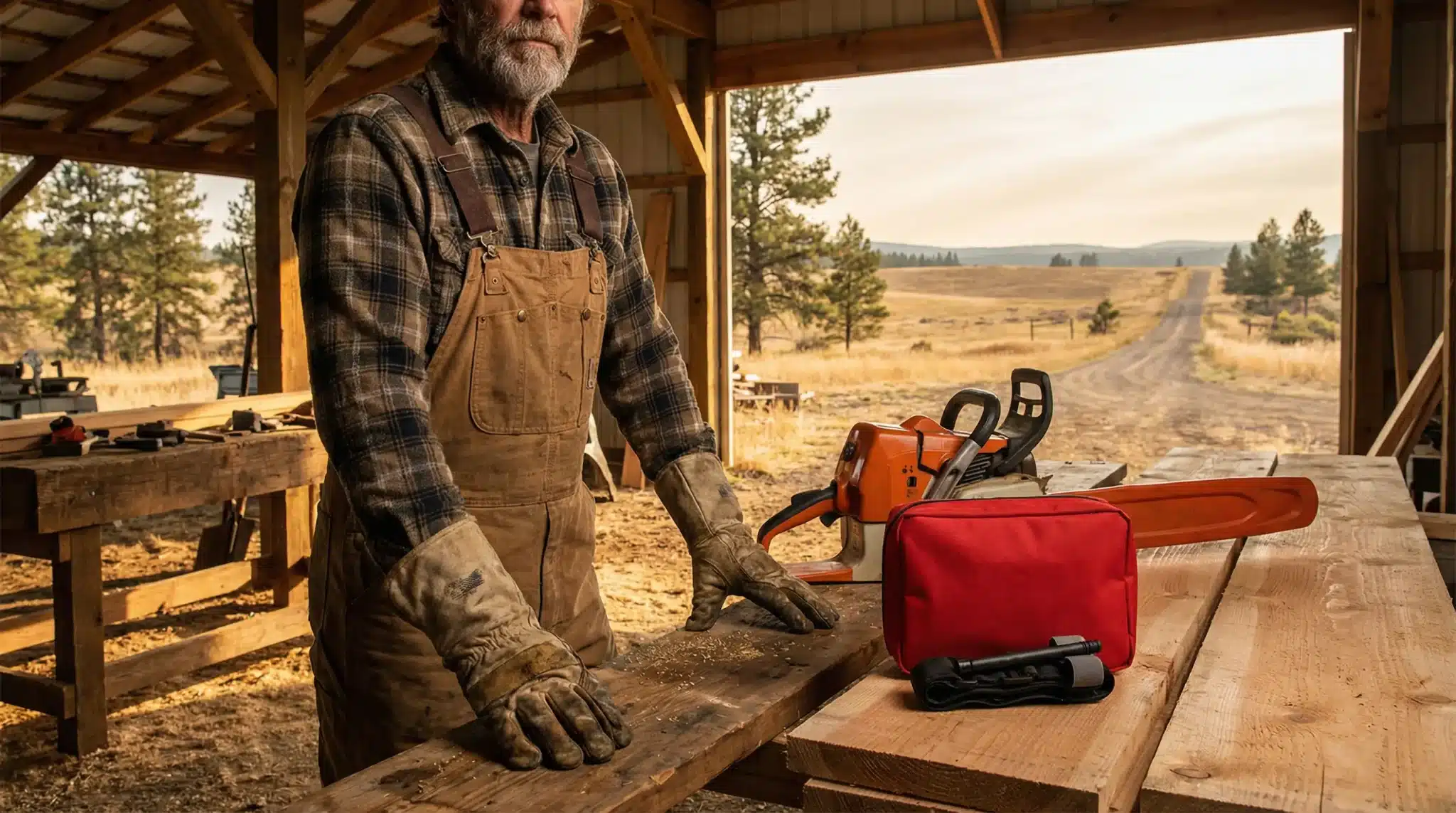
Power tools do not make clean, surgical incisions. A chainsaw kickback or a slip with a wood router causes massive tissue avulsions, severe lacerations, and complex crush injuries. These tools tear through flesh, muscle, and vascular tissue indiscriminately. If a homesteader suffers a severe arterial bleed from a miter saw accident, a standard drugstore bandage is completely useless. The responder must immediately know how to aggressively pack the wound with hemostatic gauze and properly apply a tactical tourniquet “high and tight” on the limb to physically shut off the blood flow.
Why the Entire Household Must Train Together
A common, dangerous mistake in rural households is relying on a single “safety person.” Usually, the person who does the most building or heavy labor is the one who took a safety course a few years ago. But what happens when that exact person is the one who gets injured?
If the primary DIYer severs a finger or suffers a massive head injury from a falling branch, their partner or teenager must instantly step up and take control of the situation. This is why group education is so critical for homesteading families. When the entire household trains together, you establish a unified clinical language. If you yell, “I need the trauma kit and a tourniquet,” your family members know exactly what those items look like, where they are stored, and how to help you apply them. Training together removes the sheer panic of the unknown and replaces it with a structured, shared action plan.
Building a Legitimate Homestead Trauma Kit
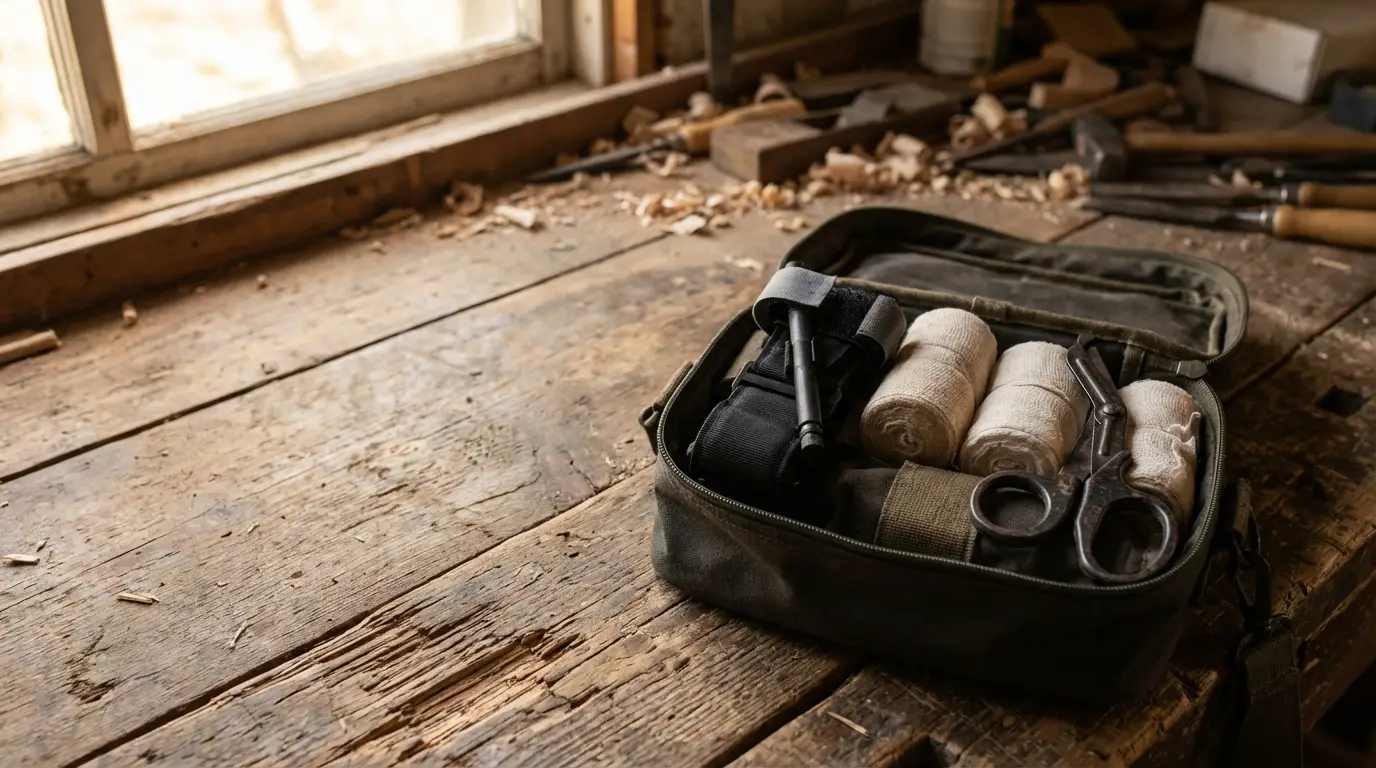
Because rural residents must sustain a patient for a prolonged period, a standard first aid kit is vastly insufficient. A homestead workshop requires a dedicated, highly visible trauma kit designed to manage severe bleeding, airway blockages, and clinical shock.
A medically literate homesteader understands exactly why their workshop wall must feature:
- Tactical Tourniquets: Combat-Application Tourniquets (CAT) are the gold standard for stopping massive limb hemorrhage.
- Hemostatic Gauze: Dressings impregnated with coagulating agents to rapidly accelerate blood clotting in deep wounds where a tourniquet cannot be placed (like the groin or armpit).
- Heavy-Duty Trauma Shears: To quickly cut through heavy canvas work pants or leather jackets to expose a hidden wound.
- Malleable Structural Splints (SAM Splints): To immobilize a crushed or broken limb securely while waiting for a long transport.
- Mylar Thermal Blankets: To trap body heat and prevent the patient from slipping into hypothermic shock following massive blood loss.
Fitting Education into the Farming Schedule
The reality of homesteading is that the chores never stop. Livestock must be fed, gardens must be tended, and weather windows dictate when building projects must be completed. Taking an entire weekend off to sit in a classroom is incredibly difficult for rural families.
To adapt to this reality, modern medical education heavily utilizes the “Blended Learning” model. This format allows homesteaders to complete the heavy medical theory online. You can learn the mechanics of CPR, the signs of a stroke, and the protocols for environmental exposure on your laptop after the evening chores are done. Once the digital threshold is met, the family only needs to travel to a local training facility for a brief, highly intensive practical session to build physical muscle memory on the manikins and practice applying tourniquets.
Homesteading is the ultimate expression of independence. But true independence means taking absolute responsibility for your family’s physical safety when the grid cannot reach you in time.
FAQs About Rural First Aid and Power Tool Safety
1. Is it safe to use a tourniquet if a hospital is an hour away?Yes. Historically, people believed tourniquets guaranteed amputation. Modern medical guidelines emphasize that saving a life takes absolute priority over saving a limb. A properly applied tactical tourniquet can often remain in place for up to two hours without causing irreversible tissue damage.
2. What should I do if a finger or toe is amputated by a saw?First, control the patient’s bleeding with direct pressure or a tourniquet. Then, locate the amputated digit, gently rinse it with clean water (do not scrub), wrap it in a slightly damp sterile gauze, place it inside a sealed watertight plastic bag, and put that bag into a second container filled with ice water. Never place the severed tissue directly on ice.
3. Does first aid training cover crush injuries from heavy equipment?Yes. Standard training covers the identification and management of crush injuries, which are common with tractor rollovers or dropped lumber. It teaches responders to monitor for internal bleeding and the onset of clinical shock.
4. How do I manage a severe eye injury from flying debris?Do not allow the patient to rub the eye. If an object is impaled in the eye, do not remove it. Stabilize the object using rolled gauze or a paper cup taped over the eye, cover the uninjured eye as well (to prevent sympathetic eye movement), and seek immediate emergency care.
5. What is clinical shock, and why is it dangerous on a homestead?Clinical shock occurs when the circulatory system fails to deliver enough oxygenated blood to the body’s tissues, often due to severe bleeding. It is fatal if untreated. Management involves calling 911, laying the patient flat, treating the root cause (stopping the bleed), and keeping the patient aggressively warm to preserve core temperature.
6. Should we keep an Automated External Defibrillator (AED) in our barn?If your homestead is far from municipal EMS, purchasing an AED is an incredibly smart investment. Given the physical exertion required for rural labor, sudden cardiac arrest is a major risk, and an AED is the only tool that can restart a fibrillating heart.
7. Can a standard first aid kit handle a chainsaw injury?No. Standard kits only contain small adhesive bandages and light gauze, which will immediately soak through during an arterial bleed. You must upgrade to a trauma kit featuring hemostatic dressings, pressure bandages, and tourniquets.
8. Are we legally protected if we try to help an injured farmhand?Yes. In Canada and the US, Good Samaritan laws heavily protect individuals who voluntarily provide emergency medical assistance in good faith and without gross negligence.
9. How do you treat a severe burn from a welder or engine exhaust?Remove the patient from the heat source and immediately cool the burn with cool (not freezing) running water for at least 15 to 20 minutes. Do not apply butter, oil, or ice. Loosely cover the burn with a sterile, non-stick dressing to prevent infection.
10. What is “wound packing”?Wound packing is a technique used for deep, high-volume bleeding in areas where a tourniquet cannot be applied (like the neck, shoulder, or groin). It involves aggressively stuffing hemostatic gauze directly into the cavity of the wound until it is full, then applying heavy, sustained downward pressure to physically block the severed artery.