Australia is in the middle of a quiet revolution in how people think about work, travel, and the relationship between the two.
More Australians than ever before are combining remote work with long-term caravan travel, building lives that are no longer anchored to a fixed office or a single suburb, but stretched across the open roads of one of the most beautiful countries on earth.
The Remote Work and Nomad Lifestyle Is No Longer Fringe
What was once considered a niche lifestyle choice, usually associated with younger freelancers or early retirees, has become a mainstream movement spanning age groups, industries, and income levels.
The widespread normalisation of remote work following the disruptions of the early 2020s gave millions of Australians their first experience of working outside a traditional office, and a significant number of them never went back.
For many, that freedom quickly raised a bigger question: if the office can come with me, why am I still living in the same place?
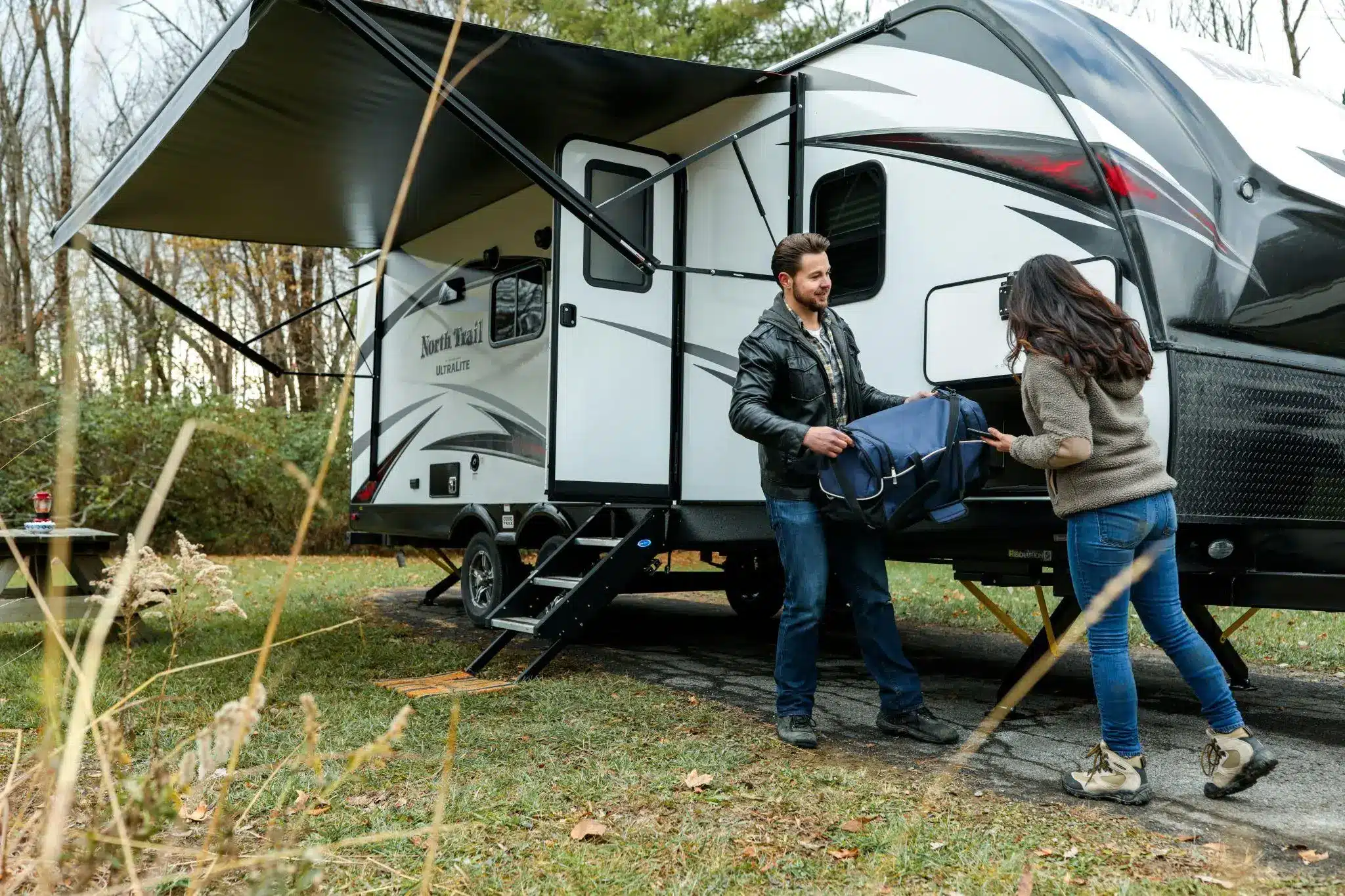
The caravan and motorhome industry has seen a direct reflection of this shift, with record sales, longer average trip durations, and a new wave of travellers who are not on holiday but genuinely working and living on the road full-time.
What Working From the Road Actually Requires
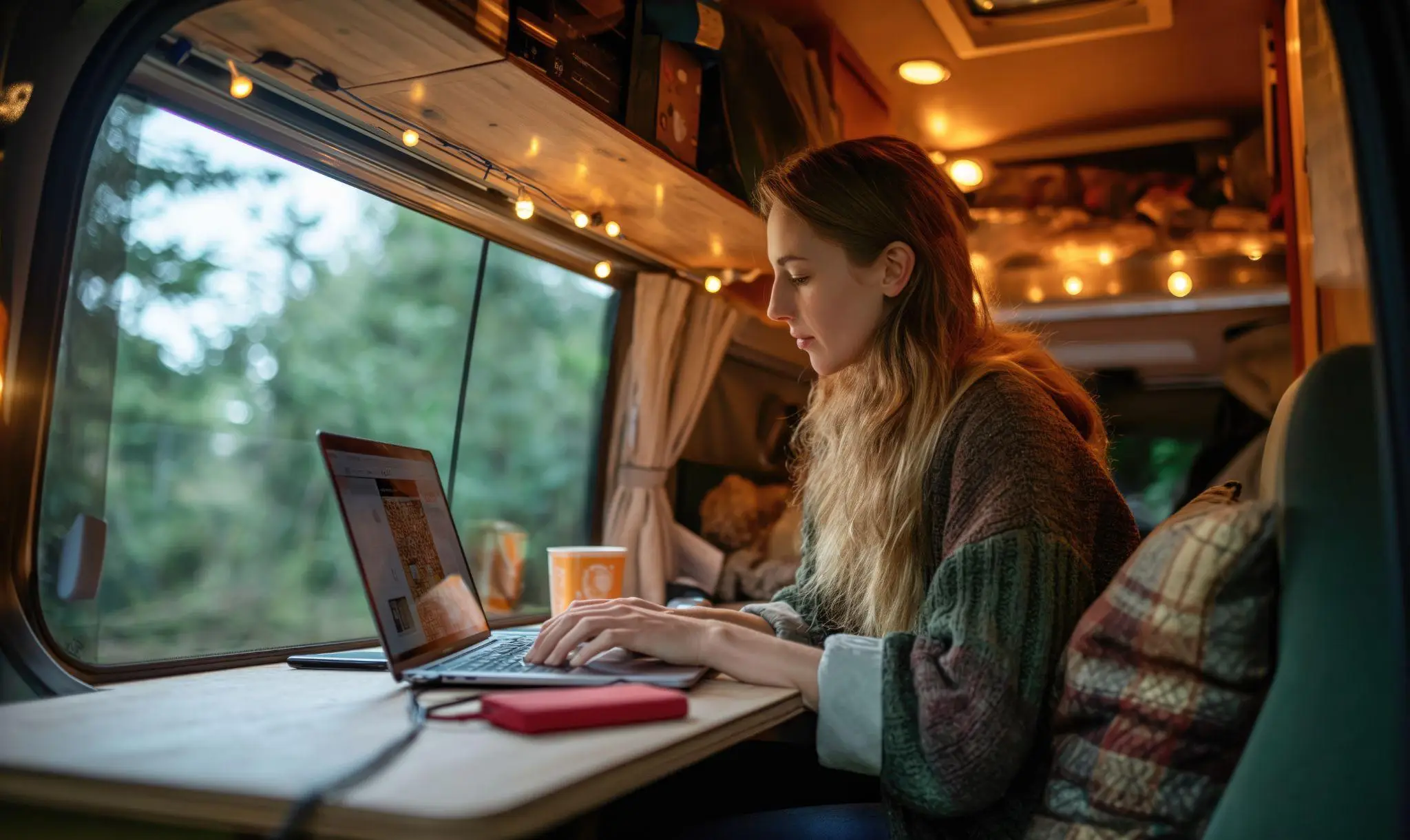
The romantic version of the nomad lifestyle involves a laptop on a picnic table and a perfect sunset, but the reality of sustaining productive, professional remote work from a caravan is more demanding than the Instagram version suggests.
A serious mobile workspace needs reliable internet, a stable and ergonomic place to sit and work for hours at a stretch, and a climate that does not make concentration physically impossible.
That last requirement is the one most people underestimate until they are sweating through their second video call of the morning at a campsite somewhere west of Broken Hill in February.
Building a functional mobile office means solving both the ergonomics problem and the temperature problem, and the solutions available today make both more achievable than ever before.
Setting Up an Ergonomic Workspace Inside a Caravan or at Camp
Spending four to eight hours a day working at a poorly set-up desk is damaging enough in a fixed home office, and the problem is compounded in a compact caravan environment where table heights are rarely designed with long work sessions in mind.
Chronic neck pain, lower back strain, and shoulder tension are among the most common complaints from remote workers who have not prioritised their workspace setup.
A purpose-built adjustable height desk allows workers to customise their surface height to match their body, their chair, and their monitor position, eliminating the awkward compromises that come with using fixed furniture not designed for prolonged computer work.
Electric sit-stand models go a step further by making it easy to alternate between sitting and standing throughout the day, which improves circulation, reduces spinal load, and sustains energy levels across long working sessions in a way that static furniture simply cannot.
Why an Adjustable Desk Makes Sense Beyond the Caravan
Even for remote workers who are not yet travelling full-time, an adjustable height desk is one of the highest-impact upgrades available for a home office.
The ability to shift posture multiple times throughout the day activates different muscle groups, prevents the stiffness that accumulates from hours in a fixed position, and has been shown to reduce the afternoon energy slumps that affect focus and output in the later part of the working day.
Available in sizes from 1400mm to 1800mm and in finishes including white, black, bamboo, and rubberwood, these desks are designed to fit a wide range of spaces and aesthetics without requiring a full office renovation.
Pairing one with a quality ergonomic chair and a monitor arm creates a complete workstation that supports healthy posture and sustained productivity for anyone working long hours from home or on the road.
The Temperature Problem That Every Mobile Worker Eventually Faces
Australia is not a forgiving climate for people who spend significant time in small enclosed spaces, and a caravan in summer becomes an oven remarkably quickly, even with windows and vents open.
For remote workers attempting to concentrate, join video calls, and produce quality work, heat is not just an inconvenience but a genuine productivity and health risk that worsens significantly through the middle months of the year.
This is the point at which a quality caravan air conditioning system stops being a luxury and starts being a prerequisite for anyone serious about working and living on the road through Australian conditions.
Those planning their setup should take time to explore caravan aircons online to compare rooftop units, portable reverse-cycle models, and evaporative options based on the size of their van, their typical destinations, and the power system they are running.
Choosing the Right Unit for Your Travel and Work Style
Rooftop caravan air conditioners such as the Truma Aventa Comfort and the MyCOOLMAN 3kW are popular choices among full-time travellers because they deliver strong, consistent cooling without taking up interior space and are built to handle sustained use in harsh Australian conditions.
For off-grid workers who spend nights away from powered sites, pairing a rooftop unit with a quality lithium battery bank, sufficient solar capacity, and a pure sine wave inverter ensures the system can run reliably through the night without depending on mains power or a noisy generator.
Portable air conditioning units are another option worth considering for those who move between multiple vehicles or need flexibility, as they can be shifted between a van, a tent annexe, or a temporary workspace depending on the situation.
The trade-off is cooling capacity and the need for an external exhaust, but for light to moderate use in drier inland areas, a portable unit can be a practical and cost-effective solution.
The Practical Reality of Building a Life That Works Anywhere
The Australians doing this lifestyle successfully are not winging it; they are making considered, deliberate investments in the tools that make sustained remote work genuinely viable rather than just theoretically possible.
A workspace that supports their body, a climate system that keeps their environment tolerable, reliable power, and strong connectivity are the four pillars of a mobile office that actually functions through the demands of a real working week.
The good news is that all four of these pillars have become significantly more accessible and affordable over the past few years, meaning that the combination of working remotely and exploring Australia is no longer reserved for the independently wealthy or the extremely adventurous.
With the right setup, it is a practical and deeply rewarding way to live that more Australians are discovering every year.