Paint brushes are not cheap. Yet most of us treat them like they are.
We leave them soaking overnight. We rinse them under hot water. We store them bristle-down.
And then we wonder why they fall apart so fast.
A little care goes a long way.
Learning how to wash paint brushes the right way keeps them soft, clean, and working like new for years.
Washing and Cleaning Paint Brushes
The goal is simple: get the paint out, keep the bristles soft, and make the brush last longer.
The method you use depends on one thing: the type of paint you worked with. Water-based and oil-based paints need different approaches.
Most people put it off after a long session. Fair enough.
But paint dries fast, so the longer you wait, the harder it gets to clean. But what if you can just clean it up in just 4 simple steps? Wanna know how? Let’s move ahead then.
How to Wash Paint Brushes: Steps to Follow
Cleaning your brushes right after use is the single best thing you can do. It keeps your brushes working like new for a long time.
Step 1: Scrape Off the Extra Paint
Press the bristles against the inside of the paint can.
Then wipe the brush on a scrap piece of paper.
Get as much paint off as you can before washing. The less paint on the brush, the easier the cleaning is.
Step 2: Rinse the Brush
Hold the brush under cold running water and swirl until the water runs clear. Most people reach for hot water out of habit.
Skip it. Hot water actually sets the paint deeper into the bristles and makes cleanup harder.
Step 3: Wash With Soap
Add a few drops of dish soap to the bristles.
Gently massage the soap in with your fingers. Work it all the way through to the base. Work the soap all the way down to the base of the bristles.
Paint tends to collect near the ferrule, and if it dries there, the bristles start to splay and lose their shape.
Step 4: Reshape and Dry
Squeeze out the extra water with a rag. Reshape the bristles with your fingers. Then lay the brush flat to dry. Never leave it standing upright while wet.
That’s it. In four steps, your brush is clean.
Note: One of the important things is never to leave your brush sitting in water. Soaking a brush for too long damages the ferrule and loosens the bristles.
Cleaning Paint Brushes by Paint Type
Not all paints clean up the same way. The method you use depends on the type of paint you work with.
Water-based paint washes out without much effort.
Oil-based paints need a little more work and the right products.
Water-Based Paints (Acrylic or Latex)
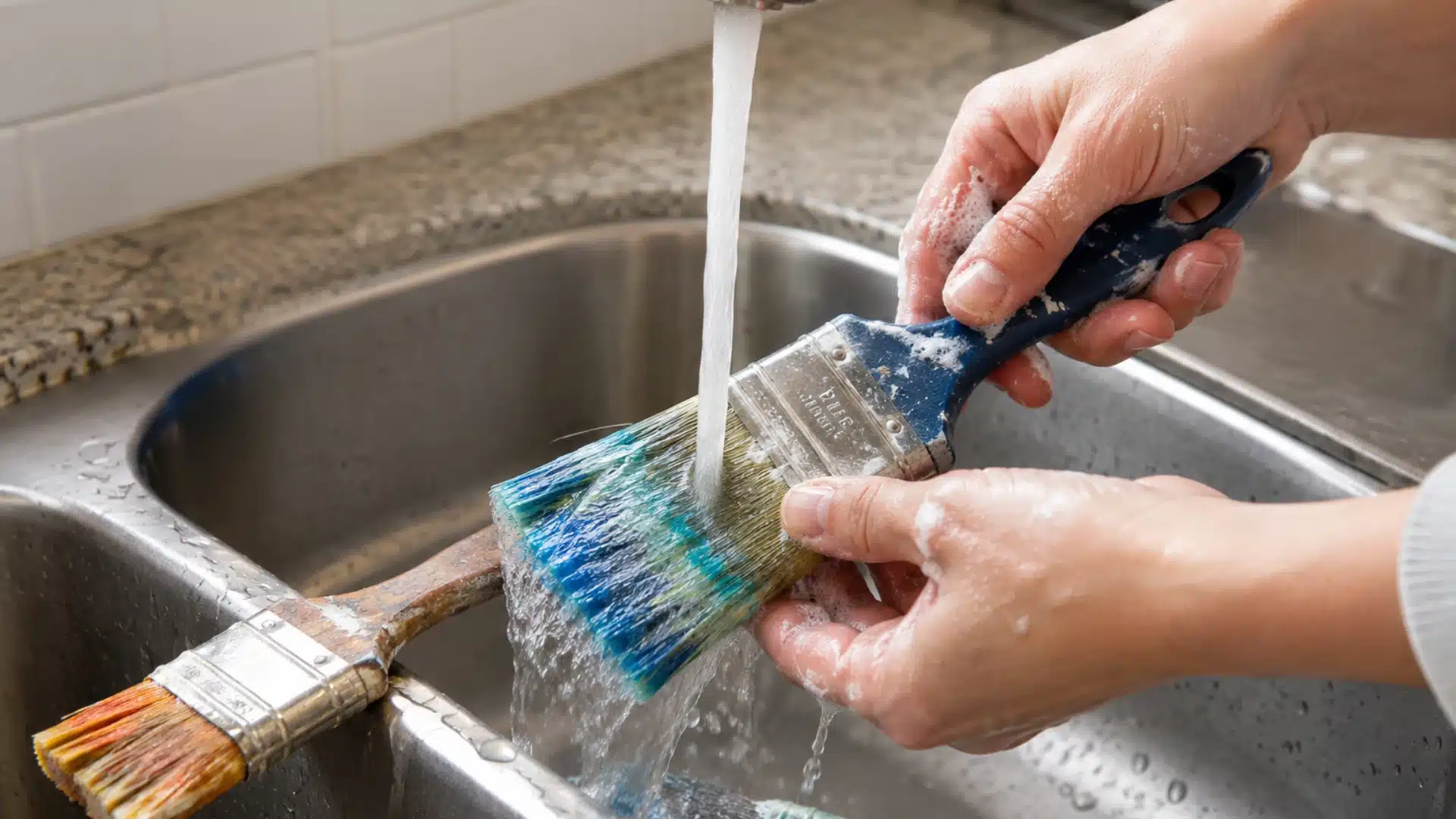
These are the easiest to clean. Soap and cold water do the job well. Use cold water, not hot. Hot water can actually set the paint into the bristles and make things worse.
Work the soap through the bristles with your fingers. Rinse until the water runs clear. Simple as that.
Oil-Based Paints
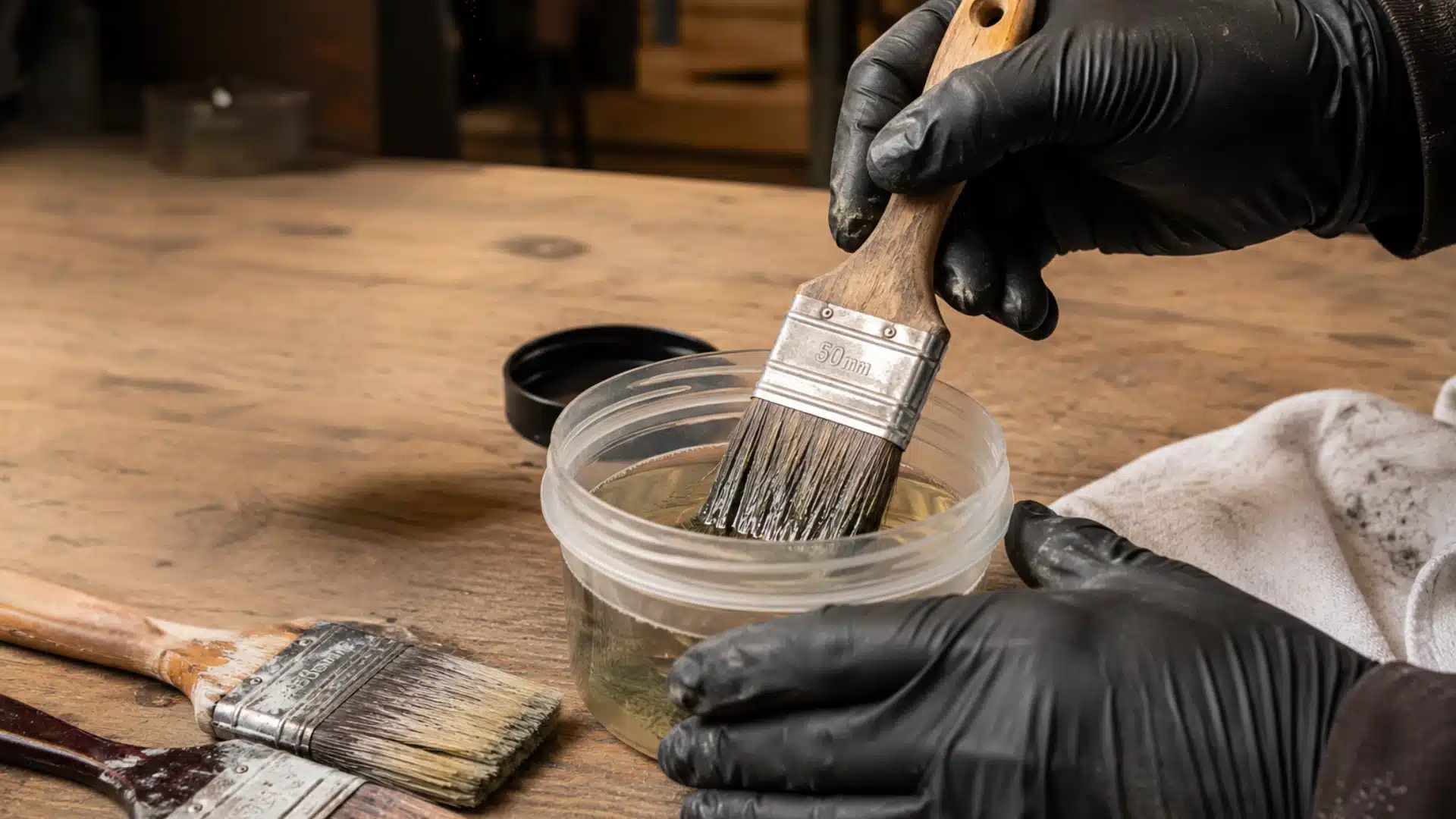
Water alone will not work here.
You need mineral spirits or paint thinner to break the paint down first. Mineral spirits are milder and less harsh on bristles, which makes them a better default for most brushes.
Paint thinner is stronger and better saved for heavily loaded brushes.
Pour a small amount into a container. Swirl the brush around in it. Wipe the bristles clean on a rag.
Repeat until most of the paint is gone.
After that, wash the brush with soap and water to remove any leftover solvent. Always do this step in a space with good airflow.
The Right Water Temperature Matters
Always use cold water when washing acrylic or latex paint brushes.
Hot water sets the paint faster and pushes it deeper into the bristles. That makes your brush stiff and hard to clean.
Cold water keeps the paint loose. It gives you more time to work the soap through before anything dries.
Also, do not let your brush sit in water too long. Even cold water can damage the ferrule, the metal band that holds the bristles together. Read more about it here.
Once that band loosens, bristles start to fan out, and the brush stops holding its shape. At that point, there is not much you can do to fix it.
Once that loosens, the brush loses its shape.
How to Save a Brush with Dried Paint?
We have all been there. You forgot to clean your brush. Now the bristles are stiff and crusty. Do not throw it away just yet.
There are two things you can try at home right now. Both are simple and use products you likely already have.
1. Rubbing Alcohol
This is the best fix for dried paint. Soak the brush for 90 minutes to 2 hours. That is usually enough time for rubbing alcohol to soften dried acrylic or latex paint.
Leaving it overnight can sometimes dry out natural-hair bristles, so check on it after two hours
2. Laundry Detergent
Mix one part detergent with three parts water. Soak the brush for a few hours. Pull at the bristles gently to work the paint out. It takes a little more effort, but it does work.
Final Step: Finish with a regular soap and water wash. It clears out any leftover alcohol or detergent and leaves the bristles soft.
Done Washing? Here is What to do Next
After washing, squeeze out extra water with a rag. Reshape the bristles with your fingers. Then lay the brush flat to dry.
Never leave it standing upright while wet; water drips into the ferrule and weakens it over time.
Once dry, store brushes upright or hang them bristle-side down.
Wrap the bristles in a paper towel if you have no original packaging. And never rest a brush on its bristles. That ruins the shape fast.
Conclusion
Knowing how to wash paint brushes the right way saves you money and keeps your tools in great shape.
Scrape off the extra paint. Rinse with cold water. Wash with soap. Reshape and dry flat.
Four steps, and your brushes are ready for next time. It’s really that simple. The ones you take care of today will still be holding their shape months from now.
Got a tip that works for you? Let us know in the comments!
Frequently Asked Questions (FAQ’s)
1. Can You Clean Paint Brushes in the Sink?
Yes! Use cold water and dish soap for water-based paints. Avoid washing oil-based paint down the sink.
2. How to Clean Stiff Paint Brushes?
Soak them in rubbing alcohol for 90 minutes. The dried paint will soften and come off easily. Finish with a soap and water wash to clean the bristles fully.
3. How Often Should You Clean Your Paint Brushes?
Clean your brushes after every single use. Do not wait for the paint to dry.