Choosing bedroom prints for the space above the bed is less about personal taste and more about proportion. It’s one of the most visible areas in the room, yet it’s often where artwork is either too small, hung too high, or arranged without any real structure. The result is a space that feels slightly off, even if everything else is well considered.
Getting the size and placement right makes a noticeable difference. When the artwork sits in proportion to the bed and is positioned correctly, the whole room feels more settled and intentional.
Why the Space Above the Bed Matters
The wall above the bed acts as the main visual anchor in a bedroom. It’s the first area your eye is drawn to when you walk in. Because of that, it has a strong influence on how the room feels.
Unlike living spaces, bedrooms benefit from a more restrained approach. Too many elements competing for attention can make the space feel unsettled. A well-placed print or set of bedroom prints helps define the room without adding unnecessary noise.
The Correct Size: The 60–80% Rule
Artwork Width = 0.6 – 0.8 x Bed Width
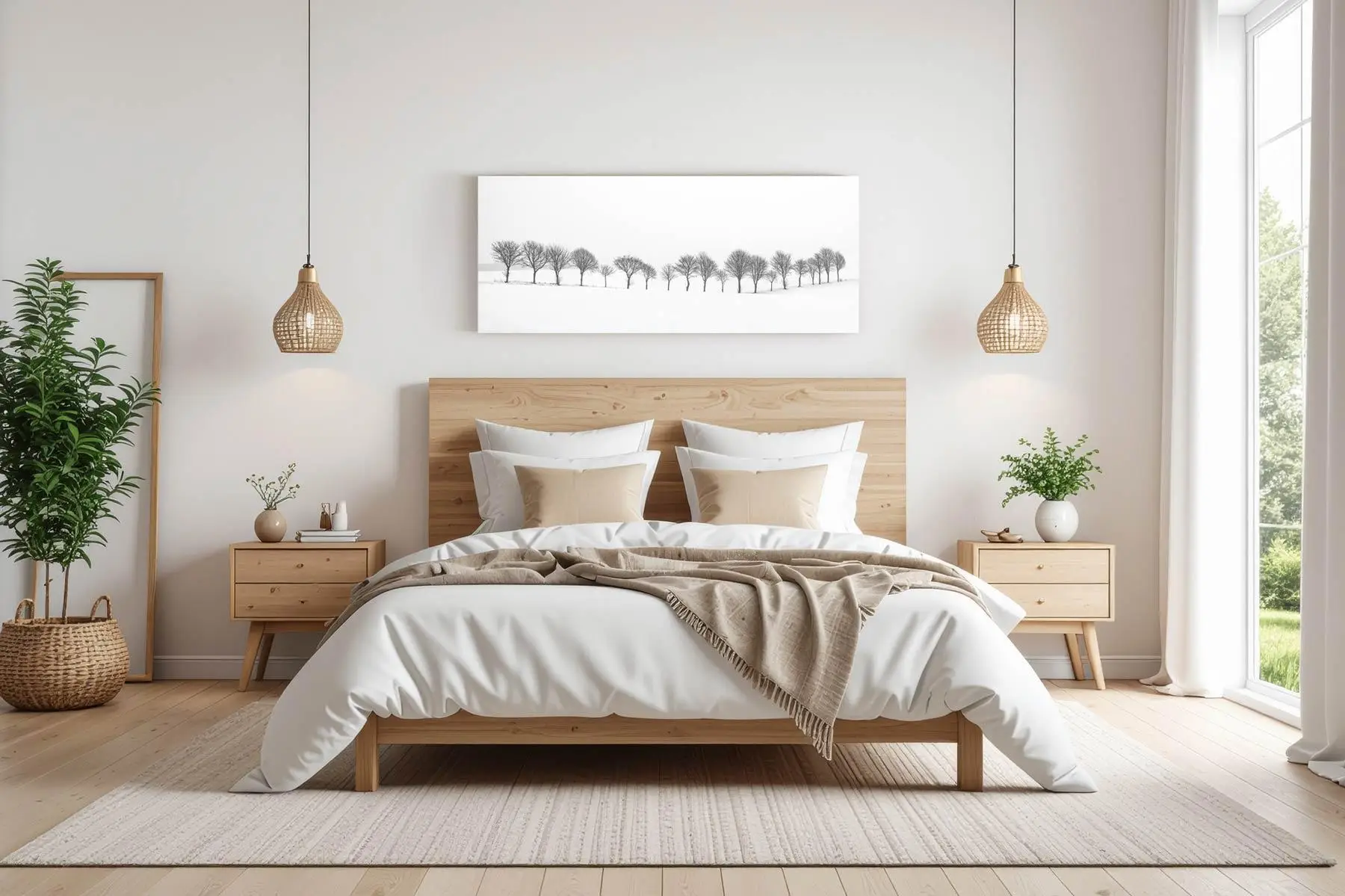
As a guide, the combined width of your artwork should sit at around 60–80% of the width of the bed. This keeps the proportions balanced and avoids the common mistake of choosing something that feels undersized.
In practical terms:
- A double bed works well with a medium-to-large single print, or a pair of smaller prints with spacing
- A king size bed suits a larger statement piece or a structured set of two or three
- A super king bed can carry a wide panoramic print or an oversized single image
If the artwork is significantly narrower than the bed, it tends to look disconnected. If it’s wider, it can overwhelm the space. Staying within that range keeps everything visually aligned.
Layout Options That Actually Work
There’s no single “correct” layout, but some approaches are more reliable than others.
Single Large Print
A single print is the simplest and often the most effective option. It creates a clear focal point without adding complexity. This works particularly well in bedrooms where the aim is to keep things calm and uncluttered.
Two or Three Prints
A pair or a triptych (three part split panel artwork) introduces structure without becoming busy. Spacing is important here — keep gaps consistent and relatively tight so the set reads as one unit rather than separate pieces.
Gallery Wall Use with Care
Gallery walls above beds can work, but only when they’re tightly controlled. A mix of too many sizes, frames, or styles can quickly feel chaotic in a bedroom setting. If you go this route, limit the palette and keep the arrangement balanced. Family photos are great for this.
How High to Hang Prints Above the Bed
Placement is just as important as size. A common mistake is hanging artwork too high, which breaks the connection between the bed and the wall above it.
As a guide:
- Position the bottom of the frame around 15–25cm above the headboard
- Keep the artwork visually linked to the bed, not floating above it
- If there’s no headboard, use the top of the mattress as your reference point
This lower placement helps anchor the artwork and makes the composition feel intentional rather than detached.
Choosing the Right Subject Matter for Bedrooms
What you choose to hang above the bed has a subtle but lasting impact. Bedrooms tend to benefit from artwork that doesn’t demand too much attention. Images that have a relaxing vibe are a definite choice.
Photographic prints work particularly well here. Landscapes, coastal scenes, botanical details, and black and white images tend to hold interest without feeling overwhelming. They offer detail and depth, but in a way that supports a calmer atmosphere.
Highly detailed or high-contrast images can work in other rooms, but in a bedroom they can feel slightly intrusive over time. Simpler compositions usually age better in this setting.
Common Mistakes to Avoid
A few issues come up repeatedly:
- Choosing prints that are too small for the width of the bed
- Hanging artwork too high above the headboard
- Using too many pieces without a clear structure
- Mixing styles or frames without consistency
- Ignoring the relationship between bed size and artwork scale
Most of these come down to proportion rather than style. Once the sizing and placement are right, the rest tends to fall into place more naturally.
Final Thoughts
Above the bed, artwork isn’t just decorative — it defines the balance of the room. A well-sized print, placed at the right height, will always feel more considered than a collection of smaller pieces added without a plan.
In many cases, one carefully chosen piece is enough, such as a wide panoramic canvas print. When the proportions are right, it does the job quietly, without needing anything else around it.