A roof can look fine from the ground while hiding signs of wear in hard-to-see areas. That can make it difficult to know whether it still has years left or needs attention soon.
Many people ask how long a roof lasts when repairs become more common or the roof reaches a certain age. Still, age alone does not always mean replacement is needed.
This blog covers the average lifespan of common roofing materials, the main factors that affect roof life, and the warning signs that should not be ignored.
It also explains when repairs may still make sense and when replacing the roof could be the better choice.
How Long Does a Roof Last?
Different roofing materials have different expected lifespans, so every roof may last for a different amount of time.
Some common roofing materials can last around 15 to 30 years, while others, like metal and slate, may protect a home for much longer with proper care.
However, reaching the average lifespan does not always mean a roof needs immediate replacement.
A well-maintained roof may continue to perform beyond its expected lifespan, while a roof with damage or installation issues may need attention sooner. The roof’s actual condition matters as much as its age.
Signs Your Roof May Need Replacement Instead of Repairs
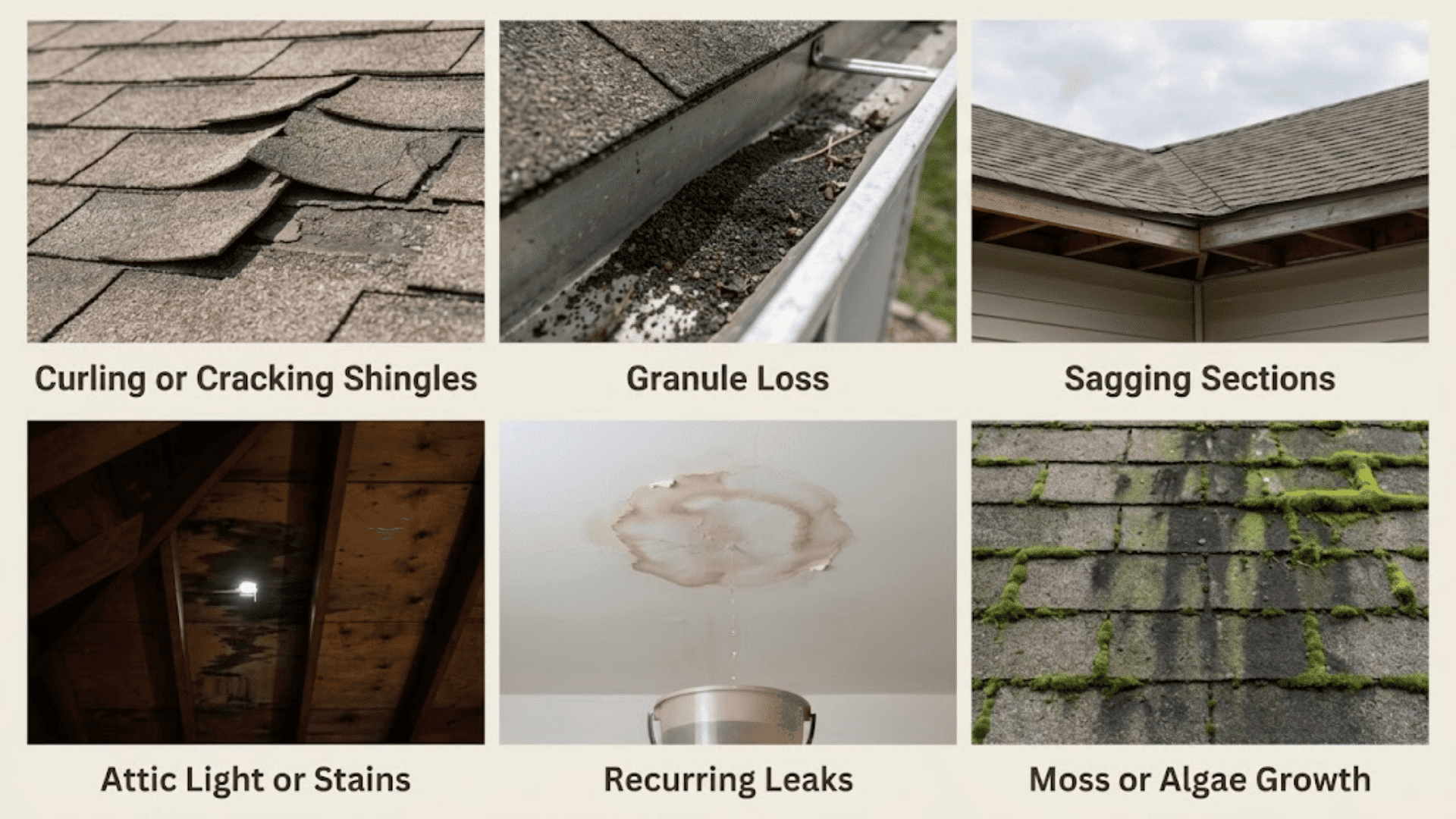
Some roof problems point to more serious damage that a simple repair may not fix for long, and it helps to know the common problems that mean you need a new roof before assuming a patch job will hold.
These signs deserve closer attention.
- Curling or missing shingles: Shingles that curl, crack, or fall off leave the roof exposed to water, wind, and further damage.
- Granules collecting in gutters: Large amounts of shingle granules in the gutters can mean the roof surface is wearing down.
- Frequent leaks: Repeated leaks in different areas may indicate that the roofing system is failing rather than a single small issue.
- Sagging roof deck: A sagging section can indicate trapped moisture, rotting wood, or structural damage that requires prompt attention.
- Moss with underlying damage: Moss can hold moisture against the roof and may hide cracked shingles or weakened roofing materials.
- Daylight visible in the attic: Light coming through the roof boards often indicates gaps, holes, or damaged sections above.
What Owners and Roofers Actually Say About Roof Age?
Manufacturer numbers are one thing, but real decisions rarely follow the chart exactly. Here’s what actual homeowners and roofers have run into.
An inspector recommended replacement with no visible damage
A buyer of a house built in 1998 was told by their inspector to plan on replacing the roof the following year. There were no visible issues at the time of purchase. Multiple insurers still declined coverage based on age alone, before one finally agreed at a higher premium. Bogleheads
Guessing a roof’s age from the shingle type alone
A homeowner unsure of their exact roof age guessed it at around 15 years based on the shingle style used. They asked whether they should start planning a replacement soon. Other members suggested a drone inspection for an objective read instead of guessing from the ground. DIY Home Improvement Forum
A 21-year-old roof that held up 13 more years
A different homeowner bought a house with a roof already 21 years old at the time. Their insurer initially pushed for replacement but still wrote the policy anyway. The roof itself kept performing without issue for another 13 years before it was finally replaced. DIY Home Improvement Forum
Roofers rarely argue against replacing a 20+ year old roof
|On that same Bogleheads thread, another commenter noted that once a roof passes 20 years, most contractors will recommend replacement rather than repair. They suggested getting an independent inspection first to determine how many roofing layers already exist, since local code often caps the number at two before a full tear-off is required. Bogleheads
An inspector, not the contractor bidding the job, gives the more objective read
A widely discussed Quora answer to a homeowner asking about a 20-year-old roof that looked fine argued that looks can be deceiving, since sun exposure damages asphalt from within long before it’s visible. The advice was to pay for an independent licensed inspector rather than relying on the roofing contractor’s own assessment. Quora
Average Lifespan of Different Roofing Materials
Here’s how the common materials stack up once you strip away the marketing. Climate and quality shift these ranges quite a bit.
|
Material |
Typical Lifespan | Pros | Cons |
|---|---|---|---|
|
Asphalt shingles (3-tab) |
15–20 years | Cheapest option, easy to repair | Shortest lifespan, prone to storm damage |
|
Asphalt shingles (Architectural) |
22–30 years | Thicker, better wind resistance | Costs more than 3-tab, still degrades in heat |
|
Metal (Steel, Aluminum) |
30–50 years | Low maintenance, long lifespan | Higher install cost, can dent from hail |
| Metal (Copper, Zinc) | up to 100 years | Extremely durable, minimal upkeep | Very expensive upfront |
|
Clay or Concrete Tile |
50–100 years | Long-lasting, fire-resistant | Heavy, needs reinforced framing |
|
Slate |
up to 150 years | Longest lifespan, low maintenance | Highest cost, requires specialized installers |
How to Make Your Roof Last Longer?
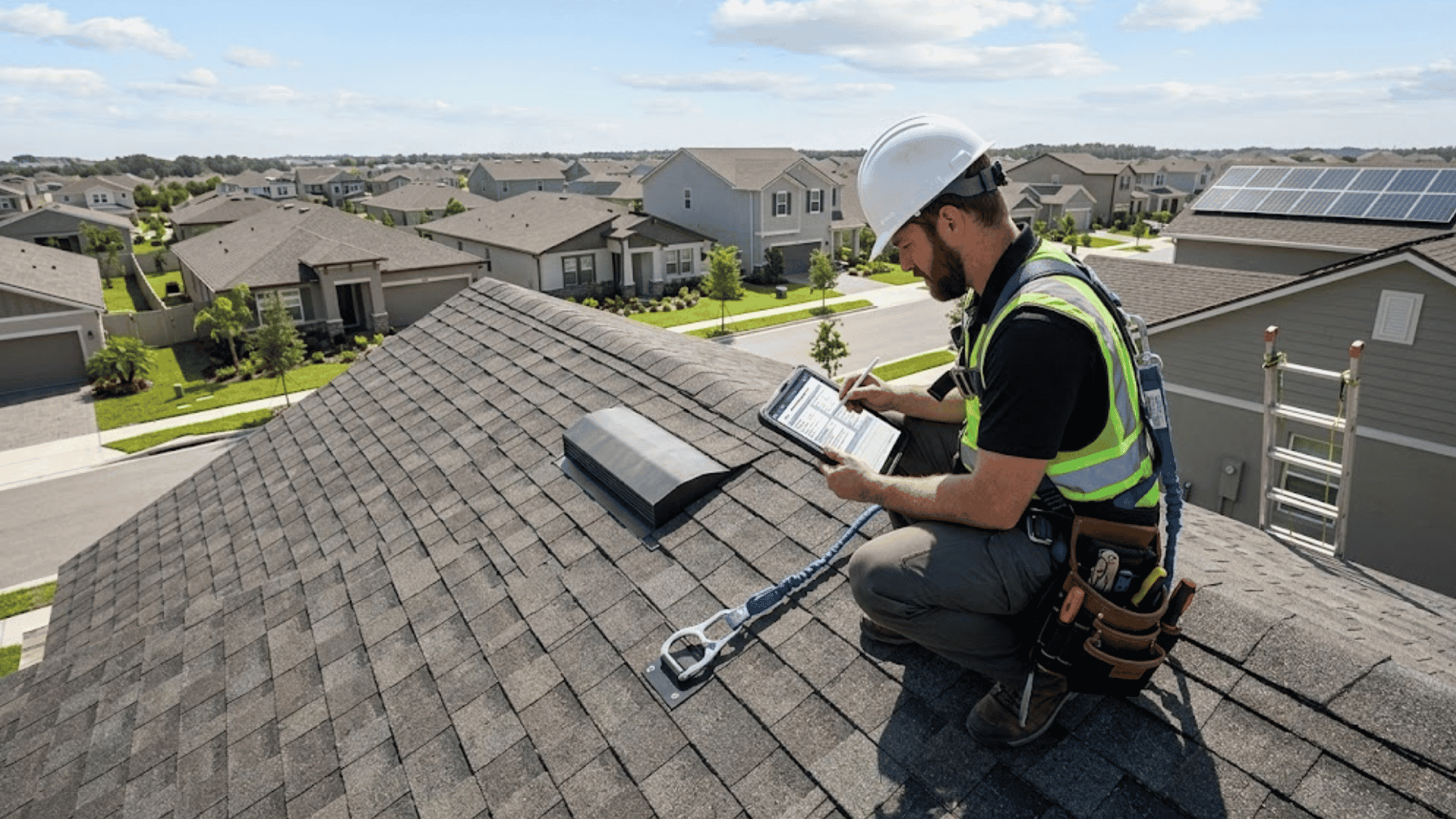
Regular care can help a roof stay in better condition and reduce the risk of early damage. Small maintenance tasks also make it easier to spot problems before they become expensive.
- Clean the gutters: Remove leaves and debris so rainwater can drain away properly.
- Trim nearby trees: Cut back branches that scrape the roof or drop heavy debris.
- Replace damaged shingles: Fix loose, cracked, or missing shingles before water gets underneath.
- Schedule inspections: Have the roof checked regularly, especially as it gets older.
- Balance attic ventilation: Proper airflow helps control heat and moisture under the roof.
- Remove moss safely: Use gentle methods that avoid damaging the shingles.
- Check after storms: Look for missing shingles, dents, leaks, or fallen branches.
Conclusion
A roof’s lifespan depends on its material, installation quality, local weather, ventilation, maintenance, and past storm damage.
These factors can affect how well it holds up over time. When asking how long a roof lasts, age should be treated as only one part of the decision.
An older roof may still be in good shape, while a newer roof may already have hidden problems.
Regular inspections can reveal leaks, loose shingles, moisture, or structural damage before they become worse. This helps homeowners decide between repairs and full replacement.
How old is your roof, and what condition is it in? Share your experience in the comments below.
Frequently Asked Questions
Does a Roof Past its Expected Lifespan Need Immediate Replacement?
Not necessarily. Age is a flag for inspection, not an automatic replacement trigger; condition matters more than the calendar.
Can Regular Maintenance Actually Add Years to a Roof?
Yes. Clearing gutters, trimming overhanging branches, and promptly fixing small leaks are the main things that push a roof toward the high end of its expected range rather than the low end.
Will a Home Insurer Refuse to Cover an Old Roof?
Some will, particularly for asphalt roofs more than 20 years old in states with frequent hail or hurricanes. It’s worth checking with your specific insurer before you assume coverage will continue automatically.