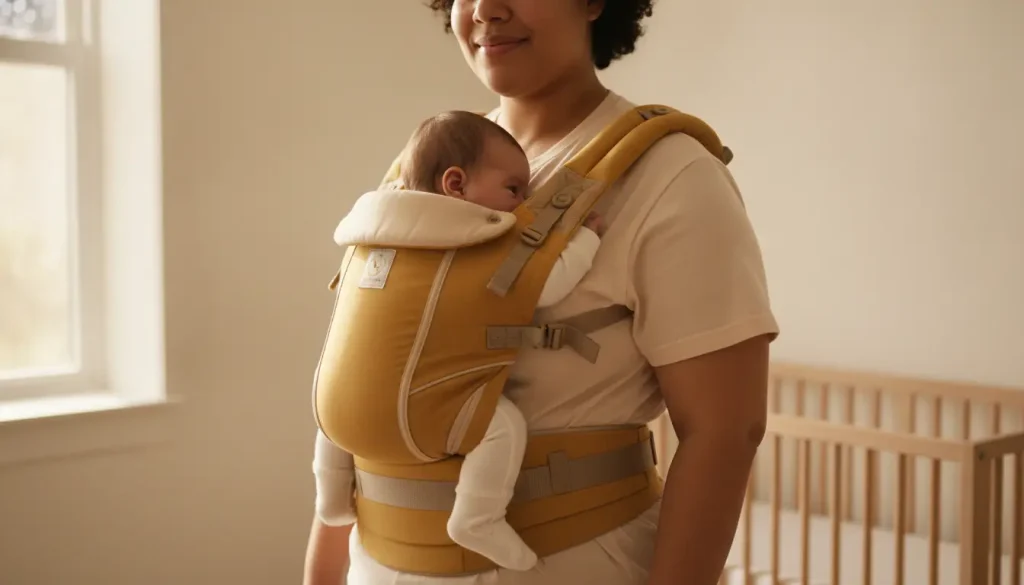
Finding a baby carrier should never require risky improvisation. Yet bigger parents still face short belts and poorly placed buckles.
Many product pages describe one model as fitting everyone. The actual size chart may end near 2X. Other charts provide only one maximum waist measurement. Neither approach explains how the complete harness fits different bodies.
A longer strap can increase the belt circumference. However, it cannot correct every sizing problem around your torso.
True inclusion begins during product development. It cannot be added through one extra strip of webbing.
A Longer Waist Belt Does Not Solve Everything
Some manufacturers treat an extended strap as the complete answer. This approach gives the buckle more distance around your body.
However, several other parts keep their original proportions:
- The padded section may end too early.
- The buckle may land near your back.
- Shoulder anchors may pull toward your neck.
- Adjustment points may become difficult to reach.
- Webbing tails may hang without proper control.
- Chest clips may land at the wrong height.
These problems explain why size-inclusive baby carriers need more than added belt length. Every contact point must match the parent wearing the product.
A buckle placed behind your hip can be hard to inspect. Short padding can also leave narrow webbing pressing against your body. Poor shoulder placement may pull the upper section away from its planned position. None of these issues disappears through a longer belt.
What Pattern Grading Actually Means
Pattern grading changes a product from one size into several sizes. Designers adjust important points across each pattern piece. They do not enlarge every section by one equal percentage.
Cornell describes grading as repeated scaling at each critical fit point. Fashion Institute of Technology courses also teach designers to study body measurements and pattern shapes when developing plus-size products.
A properly graded range from XXS through 6X requires several base measurements:
- Waist circumference at the intended belt position
- Torso depth from front toward the back
- Shoulder width across different body shapes
- Chest depth across several wearer groups
- Distance between shoulder and belt anchors
- Reach needed for every adjustment point
- Buckle position after final tightening
Designers also need real fit models across the range. One smaller model cannot represent every body through computer scaling.
Body shape changes alongside body size. NIST explains that anthropometry studies both size and shape across different body dimensions. A waist number alone cannot describe shoulder width or torso depth.
Bigger Sizes May Need Another Base Pattern
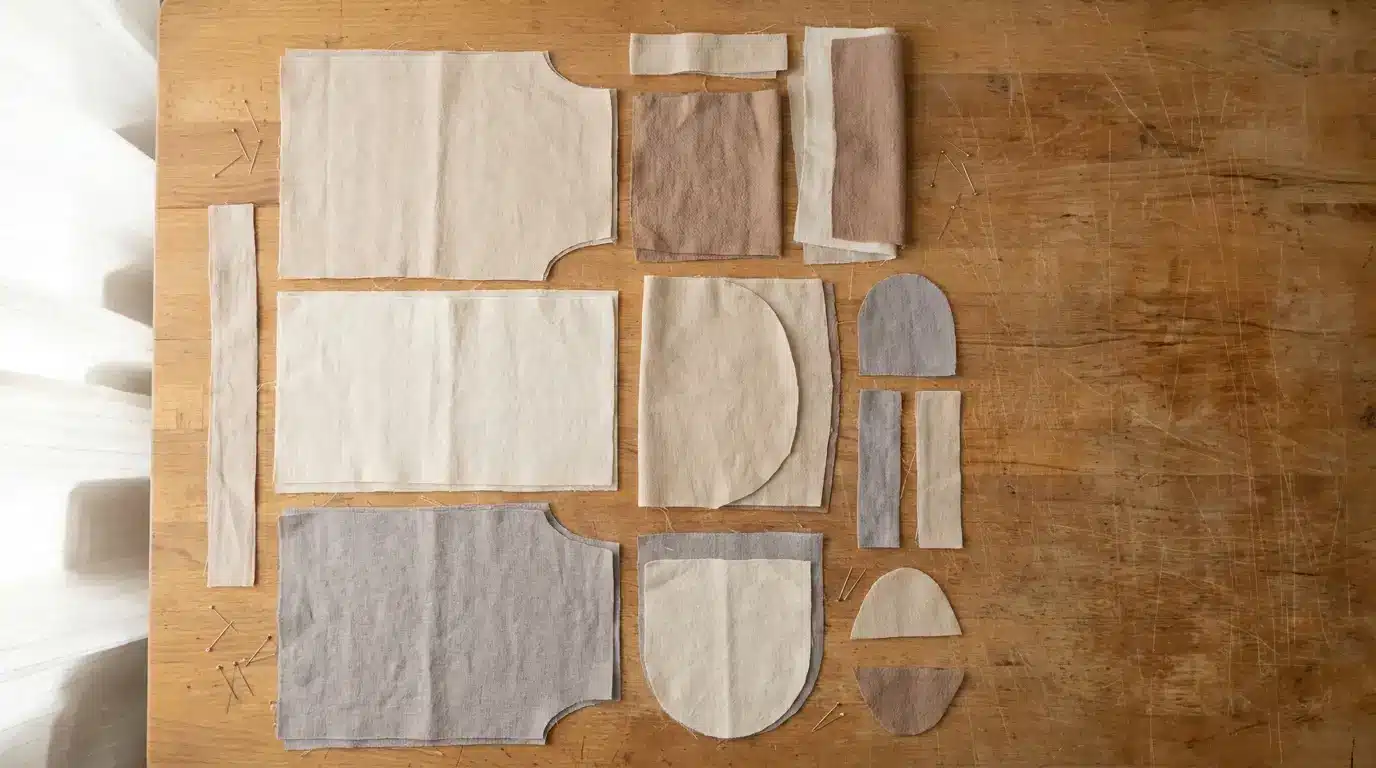
Many clothing ranges use separate pattern blocks for plus sizes. Baby carrier makers should consider the same method.
Starting with one small sample and grading directly toward 6X can distort several sections. Shoulder straps may become excessively long without gaining useful padding. Belt curves may also follow the wrong angle around a fuller abdomen.
A separate larger base pattern gives designers another starting point. They can then grade upward and downward within a smaller range.
For example, one pattern block might cover XXS through XL. A second block could serve 2X through 6X. Both versions can use the same child panel while changing the adult harness.
This distinction is important. The baby section must follow the child’s size requirements. The parent section must match the adult body. A genuine plus size baby carrier should address both systems separately.
Postpartum Bodies Need Better Testing
Parent bodies can change across pregnancy and recovery. Abdominal shape may differ several months after birth. Chest size can also change during feeding periods.
Brands should test products on parents at different postpartum stages. Testing only non-postpartum models misses common fit problems.
Useful trials should include parents with:
- Fuller lower abdomens below the waistline
- Larger chests affecting shoulder strap paths
- Shorter torsos with broader waist measurements
- Longer torsos requiring different anchor placement
- Limited shoulder reach during back adjustments
- Different weight distribution around the hips
Each tester should put on the product independently. A staff member should not complete every buckle and adjustment.
Real parents may use the carrier inside parked vehicles. Others may put it beside a changing table. The adjustment system must work without a showroom assistant.
Why Workarounds Can Introduce Safety Problems
Parents sometimes search for third-party extenders when a belt cannot close. Others fasten the buckle near the final section of available webbing.
Some may place the belt somewhere unintended because another position will not fit. These choices can place the product outside its manufacturer instructions.
The United States carrier standard covers structural integrity and strap retention. It also addresses fasteners and leg openings. Products manufactured after February 22, 2025, must meet ASTM F2236-24 under current CPSC guidance.
However, compliance does not automatically prove adult size inclusion. Safety testing and inclusive grading answer different questions.
Mandatory testing asks whether the product resists specified loads. Inclusive testing asks whether parents across the advertised range can use every feature as directed.
Parents should never need unofficial parts for basic fit. An extender should come directly from the manufacturer. Its use must also be covered within product instructions.
What Inclusive Adjustment Actually Requires
Size inclusive babywearing depends upon reachable controls. Bigger parents should not need help each time the product goes on.
Designers need to study adjustment access from several angles. Pulling downward may work well for one body. Another parent may need a forward pull because the buckle lands farther back.
Dual-direction adjustment can provide another practical option. Longer webbing also needs loops for managing loose ends.
Padding length should change across sizes as well. An extended belt with unchanged padding leaves more webbing against the body.
Shoulder padding deserves the same attention. Longer straps should not place hardware beneath the arms. Strap curves may also need reshaping across larger pattern blocks.
Product Pages Must Provide Useful Measurements
Size labels differ greatly between clothing companies. A 3X customer may therefore learn very little from another 3X label.
A baby carrier for bigger parents needs a detailed sizing page. The page should explain more than the maximum belt length.
Helpful information includes:
- Minimum and maximum usable belt measurements
- Length of the padded waist section
- Total shoulder strap adjustment range
- Suggested buckle position across several sizes
- Parent measurements used during product testing
- Clear front and side photographs across sizes
- Instructions for approved belt extenders
- Guidance for testing fit before placing the baby
Brands should also show larger parents adjusting the product themselves. One carefully posed photograph cannot explain real access.
Videos should include fastening and removal. Back-wearing instructions need larger models as well.
A Practical Fit Check for Parents
Before placing your baby inside, test the empty carrier. Follow every step inside the manufacturer instructions.
Ask yourself several direct questions:
- Can I close each buckle without assistance?
- Does padding cover the planned pressure areas?
- Can I tighten every strap using normal reach?
- Does any buckle press beneath my arm?
- Can I inspect every important connection?
- Are loose webbing ends properly secured?
- Does the product match my current measurements?
Stop when the product cannot be used as directed. Do not assume discomfort requires personal adjustment or practice. Sometimes the product simply lacks proper grading.
Inclusion Must Start Before Manufacturing
Bigger parents do not need another marketing promise. They need products developed around actual body data. True inclusion requires several pattern sizes and repeated fit trials. It also needs reachable buckles and properly scaled padding.
Manufacturers should test the complete advertised range before making broad claims. Parents should receive precise measurements before spending money.
An extended strap can serve a useful purpose. However, it cannot replace pattern development across XXS through 6X. Better sizing begins with one clear principle. The parent’s body should shape the design from the beginning.