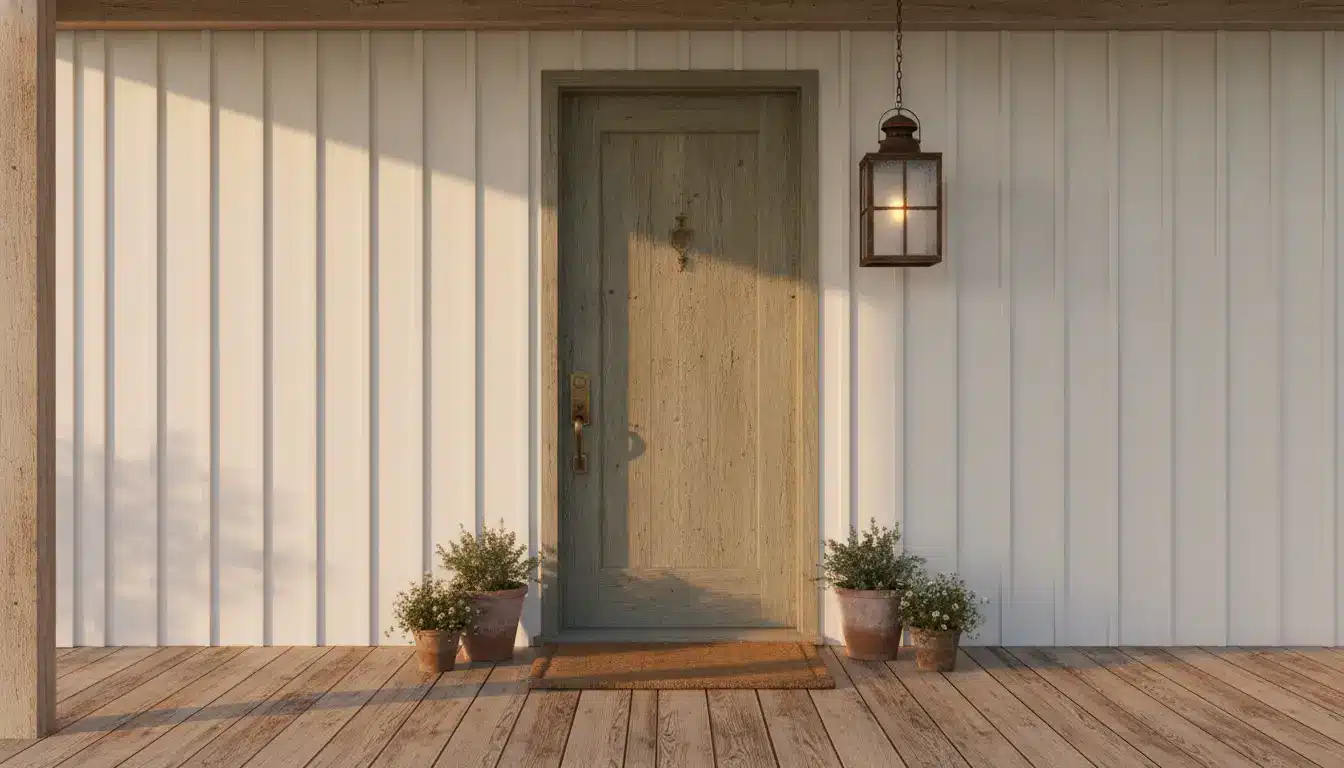
To turn a home decor photo into a 3D model, upload a clear, evenly lit shot to an AI generator like Meshy AI, then hit generate. Roughly a minute later, you get a textured mesh. Export it as GLB for AR, or STL for printing.
Whether it comes back looking like your object or like a melted candle depends almost entirely on what you photographed.
How Does AI Turn a Photo Into a 3D Model?
A neural network trained on millions of shapes infers a whole object from a single view, then wraps it with texture. It is closer to educated guessing than to scanning.
Photogrammetry did this the slow way. You shot 50 or more overlapping frames, and software triangulated real geometry from the overlap. AI skips the frames and leans on priors instead. Objaverse-XL, published by Deitke and colleagues at NeurIPS 2023, holds 10.2 million 3D objects, so a model trained on it has seen enough chairs to produce a convincing chair back.
The front surfaces in your photo are measured. Everything behind them is a statistical bet, which is where most of the trouble starts.
How Should You Shoot the Photo?
Plain background, even light, object centered and filling most of the frame. Those four things decide most of the outcome.
Meshy’s guidance recommends at least 1040 by 1040 pixels for accurate proportions, and its image to 3D model tool takes PNG, JPG, or WebP up to 20 MB. Shoot at eye level with the object rather than down at it because angled-down shots compress depth, and the mesh inherits that distortion.
Watch your shadows. Baked-in shadow reads as geometry to the model, so a dark strip under a bowl can emerge as a groove carved into the mesh.
Which Decor Items Break the AI?
Glass, mirrors, strong symmetry, and hidden backs. Those four account for most of the disappointing generations people end up posting.
Why Do Glass and Mirrored Pieces Fail?
The physics defeats the method. IEEE research on transparent object reconstruction, published in 2023, found that reflections and refractions invalidate the single-viewpoint assumption these models rely on.
A glass vase comes back frosted and solid. A mirrored ornament comes back as a grey lump wearing a reflection of your living room. Prompting differently will not fix it, so either substitute a matte stand-in or accept an opaque approximation.
Why Do Symmetric Vases Go Wrong?
Rotationally symmetric objects give the model too many equally valid answers. The CVPR 2025 paper “Symmetry Strikes Back” showed that symmetric objects admit multiple symmetry planes, which lets texture land on the wrong face.
In practice, a painted pattern rotates 90 degrees or duplicates itself around the body of the vase. A second camera angle removes the ambiguity and usually fixes it outright.
What Happens to Backs You Cannot See?
The model invents them. A 2026 arXiv analysis of reconstruction hallucination describes large models introducing structural outliers, including odd holes and protrusions, in regions they never observed.
Shoot a cushion against a sofa, and you will get a back face that is smooth, wrong, or mirrored from the front. If the back matters to you, photograph the back.
Can You 3D Print the Result?
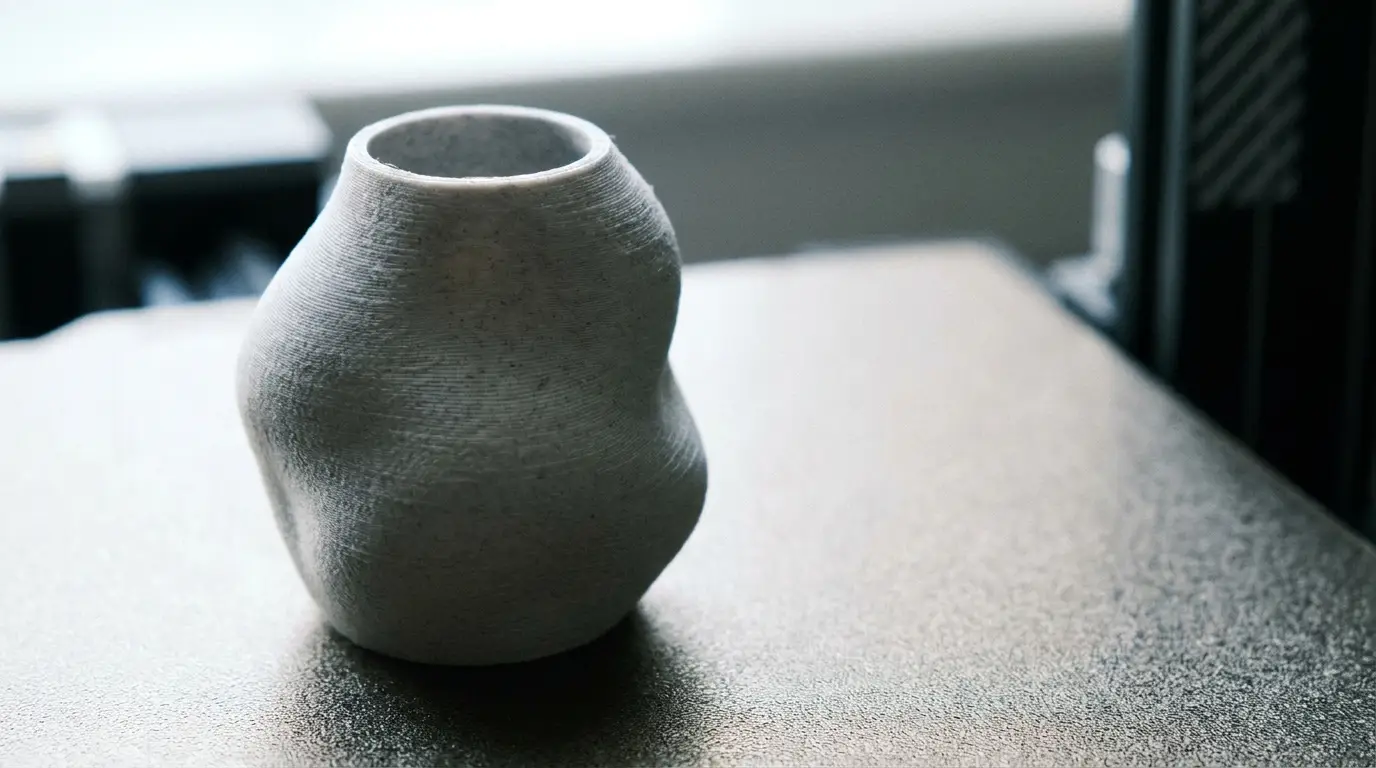
Sometimes, watertightness is what decides it. A printable STL must be manifold, meaning every edge belongs to exactly two faces, with no holes and no self-intersections.
AI meshes fail this test more often than CAD output does. Meshy’s engineering blog gives the reason directly: neural geometry optimizes for visual appearance rather than topological correctness. The company reports a 97% slicer pass rate across 75 character and figurine models in Bambu Studio, and ships a one-click printability check alongside it.
That figure is vendor-run and measured on figurines, which are chunky and forgiving compared with a thin-walled lampshade. Import the file into Bambu Studio or Cura yourself and read the mesh warnings before committing filament.
Which Image-to-3D Tool Should You Use for Home Decor?
| Tool | Best for | Cited detail |
|---|---|---|
| Meshy | Widest export set, printability repair | Seven export formats, including STL, USDZ, 3MF; 97% slicer pass rate on 75 models (vendor-run, 2026) |
| Tripo | Fast, clean low-poly game assets | TripoSR: Chamfer Distance 0.111 on Google Scanned Objects (arXiv, March 2024) |
| Hunyuan3D | Self-hosting, no per-generation cost | 72% user-study win rate claimed in Tencent technical report, 23 June 2025 |
| Rodin (Hyper3D) | Premium client-facing hero visuals | Positioned on output fidelity in 2026 comparisons; no public benchmark score |
Judge these on what happens after export. An hour of retopology work in Blender costs you more than any difference you can see in a preview render, so the cleanest topology usually wins even when its turntable looks duller.
Does 3D Actually Move the Needle for Decor Sellers?
For furniture and large decor, the published numbers say yes. Shopify’s May 2022 changelog states that merchants adding 3D content see “a 94% conversion lift, on average.” Vertebrae, now part of Snap Inc., reported a 40% reduction in return rates for retailers deploying AR.
Both figures are aggregates across product categories, so treat them as direction rather than a forecast. The reason they work is unglamorous: buyers hesitate over whether a piece fits their room, and a model they can rotate settles the question faster than three product photos.
Start with your 10 to 20 highest-hesitation SKUs and measure against a control set of similar products.
Key Takeaways
- Single-image AI is reliable on matte, opaque objects and unreliable on glass, mirrors, and hidden backs.
- Vendor benchmarks stay marketing until an independent test reproduces them, so verify meshes in your own slicer.
- Multi-view input, not better prompting, is the fix for wrong backs and rotated textures.
FAQs
Can You Turn an Image Into a 3D Model for Free?
Meshy AI offers a free tier of 100 credits monthly, around five image conversions at 20 credits each. Free-tier outputs carry a CC BY 4.0 license, so commercial use requires attribution. Tripo and Hunyuan3D also run free tiers, and Hunyuan3D can be self-hosted.
How many photos do I need?
One works for a simple opaque object like a ceramic bowl. For anything you will rotate in AR or print in the round, use two to four angles with multi-view enabled. Front, back, and both sides are the safe defaults.
What file format should I export?
GLB for Android and WebXR, USDZ for Apple AR Quick Look, STL or 3MF for printing, and FBX for Unity and Unreal. OBJ remains the safe interchange format for Blender cleanup.
Can I use AI models on a product listing?
Legally yes, if you own the source photo and respect the tool’s license. Check dimensional accuracy first. These meshes look convincing but are inferred rather than measured, so never present one as a spec drawing.
Why does my lampshade have holes in it?
Thin walls are the classic failure zone. Neural reconstruction concentrates its errors in fine geometry, so shades and wire frames break before anything else does. Thicken the wall in Blender, or model that part conventionally.