
Solar-powered water features are gaining popularity in the home garden, patio, and outdoor area. Among the frequently asked questions, one of the most common is if a solar panel pump fountain can really work when the sun is not strong.
Cloudy skies, shade from the trees, or the winter days being shorter often lead people to doubt the performance of the device. Knowing how these fountains work when there is not much light helps to put the whole thing in perspective and makes for a more satisfying experience in the end.
How a Solar Panel Pump Fountain Generates Power
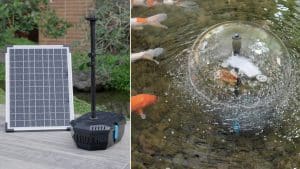
A solar panel pump fountain essentially works by changing sunlight into electrical energy via a small solar panel. The generated electricity then supplies a pump which pushes the water out of the fountain nozzle. Naked electric fountains don’t have power stored unless there is a battery backup integrated into the system. Hence, the performance of the fountain is only dependent on the light intensity the panel is getting at that precise time.
Direct sunlight may give the most power, but solar panels are not dependent on complete sun rays to operate. They can still produce energy from indirect or diffused light, which is the case most of the time on a cloudy day. Of course, the water flow rate will be in proportion to the intensity of that light.
Performance on Cloudy Days: What You Can Expect
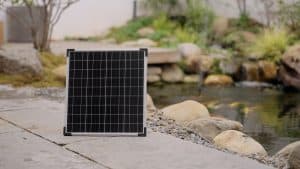
Typically, a solar panel pump fountain continues to operate on cloudy or overcast days, but the strength of the operation will be reduced. The water spout may be lower, softer or less steady than on a bright sunny day. You might see bubbling or slow but steady water movement instead of a tall water spout pattern.
This lower performance is normal and the pump is not faulty. Cloudy weather does not completely block sunlight because the sun rays are scattered by clouds. That is why the solar panel keeps getting energy, only the amounts are smaller. With increasing cloudiness, the fountain may briefly stop and start running again with changing light levels.
Does Shade Affect Solar Fountain Efficiency?
Shade affects the solar panel more than cloud cover does. Therefore, if the solar panel pump fountain is put under trees, by walls, or in places that get very little sunlight, the performance will be reduced a lot. Partial shading causes irregular water flow, whereas full shading may lead to no water flow at all.
To get maximum output, a solar panel should be exposed to at least four to six hours of direct sunlight without any shade. Some of the latest models have separate panels that are connected by a wire so that the panel can be placed in the sun while the fountain can be kept in the shade or a decorative area.
Low-Light Conditions in Early Morning and Evening
Light levels are naturally low in early morning and late evening hours. Under such conditions, a solar panel pump fountain might run for a short time, work very weakly, or be off till there is daylight again, which is stronger. This is the normal behavior of systems that do not have batteries.
With the increase of light intensity as the sun comes up, the fountain becomes more and more lively. Just like that, water flow decreases as the light fades in the evening. This gradual starting and stopping pattern is one major difference between solar and electric fountains.
The Role of Battery Backup in Low-Light Performance
Some solar panel pump fountains have an internal battery storage feature. These cells absorb extra energy when the sun is at its peak and give it out later when there is less or no sunlight. A battery backup allows the fountain to keep running in the shade or at night.
But solar-powered systems with batteries rely on sunlight to get recharged. The batteries will be emptied if it is overcast for several consecutive days, thus resulting in shorter operating time. Batteries enhance the dependability of the system, but they cannot fully negate the influence of bad weather or insufficient sunlight.
Seasonal Changes and Solar Fountain Output
Seasonal changes, moreover, have an impact on performance. In the summer, the days are longer and the sunlight is stronger, so a solar panel pump fountain can be running for longer periods. On the other hand, winter means shorter days, a lower sun angle, and more cloud cover.
Generally, the pump itself will not be affected by cold temperatures, but the energy production is limited by reduced sunlight. In places with long winters or frequent storms, solar fountains might be better off as seasonal decor rather than something to use throughout the year.
Maintenance Factors That Impact Low-Light Efficiency
The cleanliness of a solar panel pump fountain significantly determines its efficiency in dim light. When the panel is covered with dust, pollen, algae, or mineral deposits, it will not be able to absorb light effectively. A very small amount of dirt can drop the energy output by a large margin.
Cleaning the panel thoroughly and gently with only water and a soft cloth is a good practice for saving its effectiveness. Besides that, removing the impurities from the pump filter also contributes to the ease of water circulation. When weather or shade already limit the amount of sunlight, the right care becomes even more crucial.
Are Solar Panel Pump Fountains Reliable in All Conditions?
A solar panel pump fountain will really shine when it is used with a bit of common sense about what it can do. It is at its best when there is a lot of sun; it can still provide a refreshing water flow in cloudy weather, but the flow rate will be significantly reduced in the shade or when it is very dark. So even though it might not give you a super-powered water flow 24/7, it is a great, simple, and completely green way of bringing water movement and a little musical note to your garden or patio.
Solar fountains are an ideal, low-maintenance option for gardeners who follow nature’s rhythms and prefer a daylight-operated system. Knowing how the sun’s rays affect a fountain’s performance helps one to decide on the best location, do the right maintenance, and have a steady supply of water joy all year round.