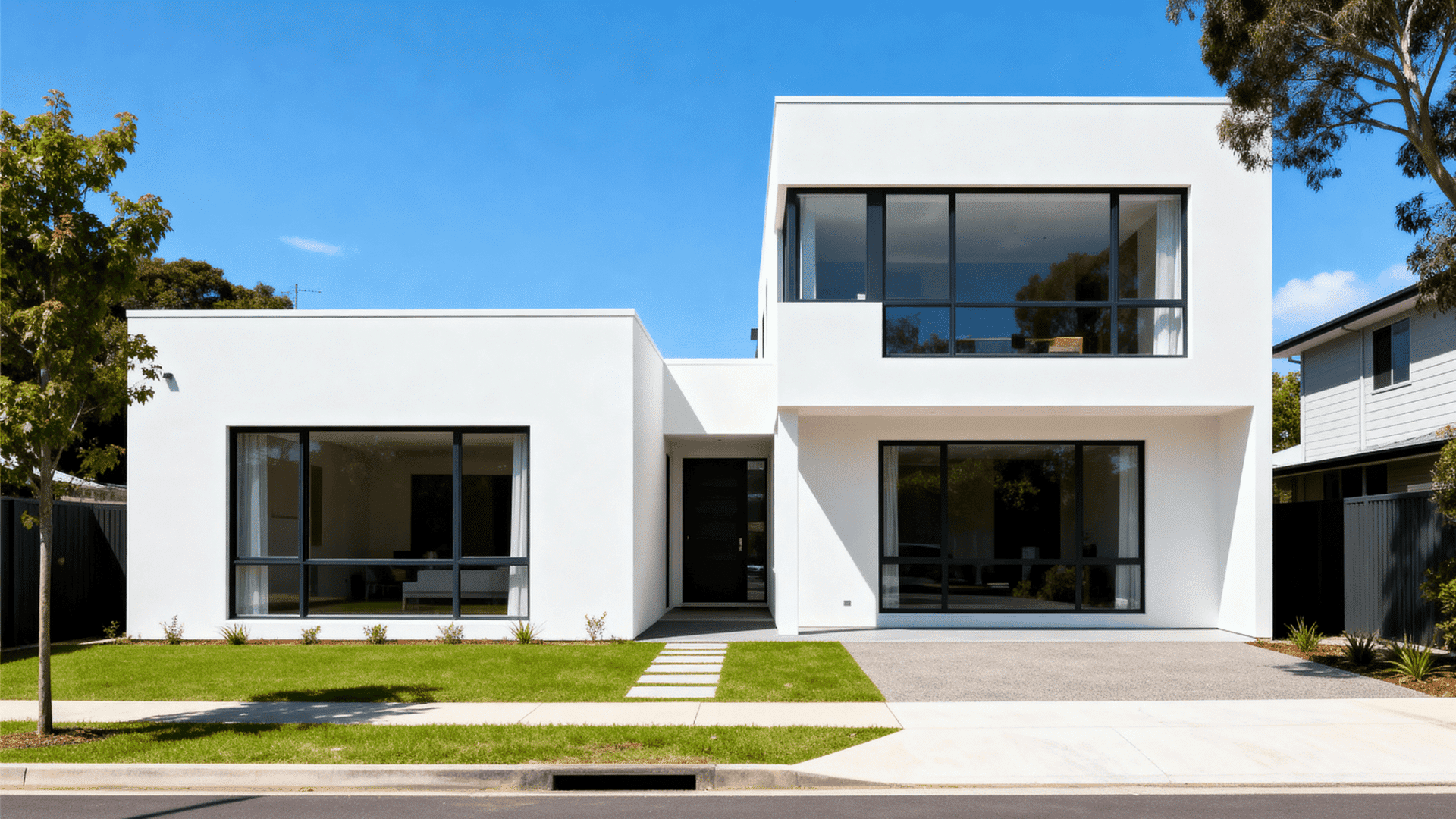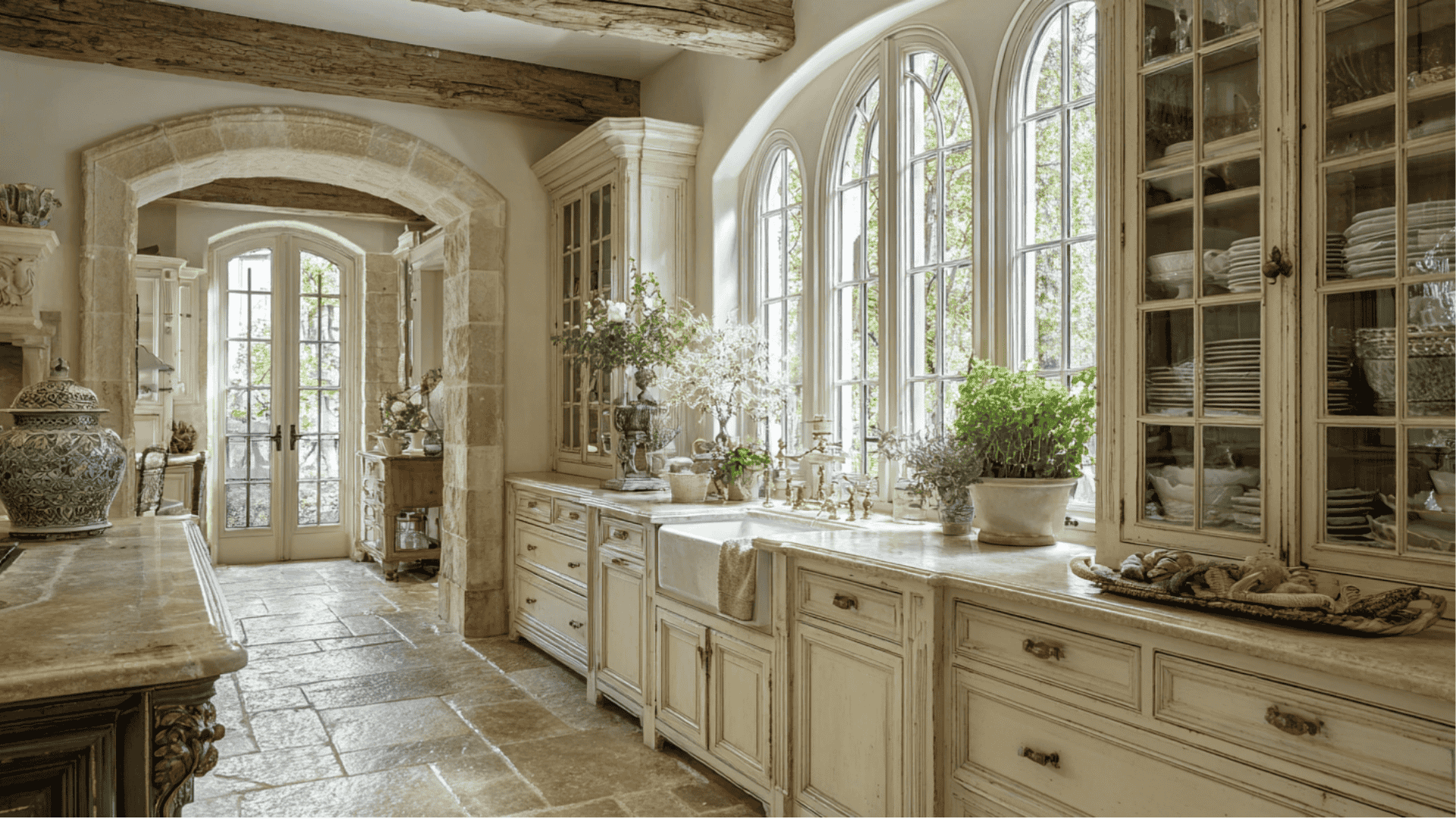

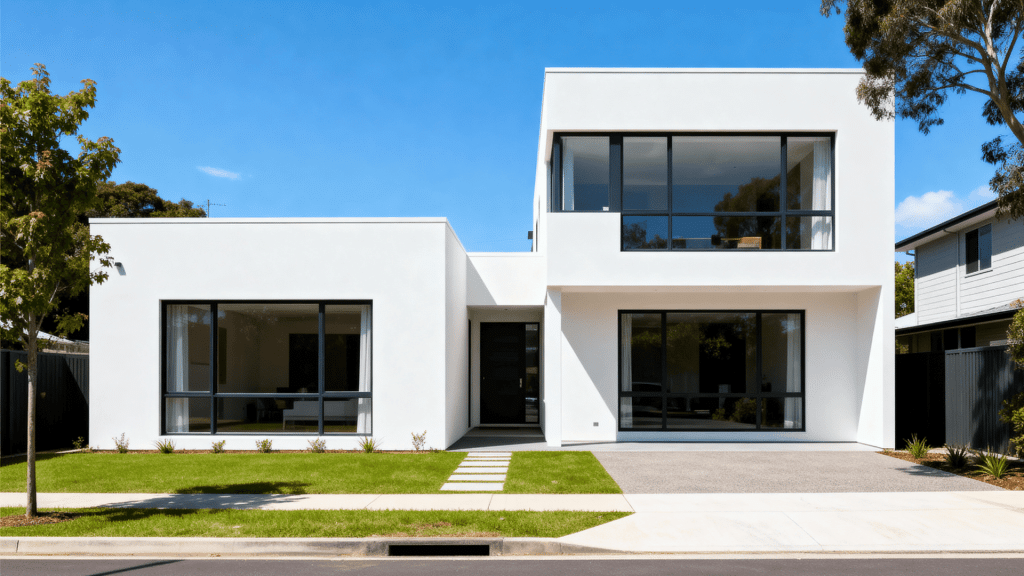
Are you tired of looking at the same old boring styles? Traditional designs can feel outdated and stale.
Contemporary homes are changing how we think about living spaces.
They blend clean lines with practical layouts. They do it without breaking the bank or sacrificing comfort. These modern spaces offer open floor plans that actually work for families.
In this blog, you will see what makes a contemporary house design different.
You’ll learn core elements, best house plans and materials, and budget-friendly tips you can use for building or remodeling homes.
Core Elements of Contemporary House Plans
These share specific features that set them apart from other styles. Here’s what’s in most modern designs today:
- Open Floor Plans: Walls come down to connect the kitchen, dining, and living areas into one flowing space.
- Neutral Color Palettes: White, gray, beige, and black dominate the color scheme for a calm atmosphere.
- Mixed Materials: Wood, metal, glass, and concrete combine to add visual interest and texture throughout.
- Tiniest Ornamentation: Less is more here. You won’t find fancy trim or elaborate flourishes anywhere.
- Indoor-Outdoor Connection: Patios, decks, and large doors blur the line between inside and outside living.
- Lines & Shapes: Straight edges and basic shapes create a tidy look without unnecessary decorative details.
- Large Windows and Glass Doors: They bring in natural light and beautifully connect indoor spaces with the outdoors.
- Low-Pitched Roofs: Rooflines remain horizontal or nearly flat, giving homes a modern, streamlined appearance.
Popular Floor Plan Ideas for Contemporary House Design
Modern homes come in all shapes and sizes. These ideas work well for modern designs:
1. Single-Story Open Concept
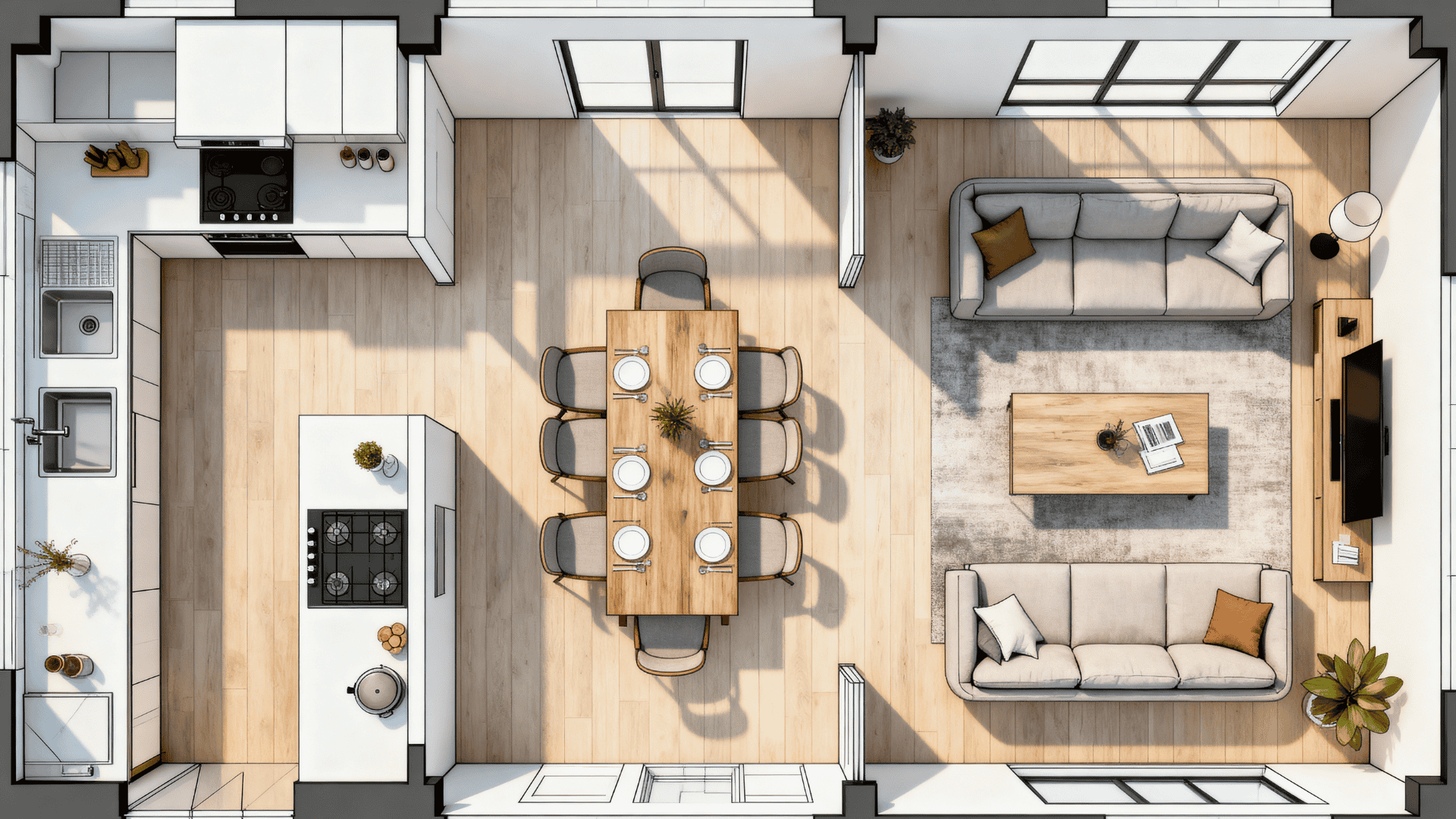
This plan puts everything on one level. The kitchen flows into the dining room and living room without walls.
It’s perfect for families who want easy movement. No stairs means better accessibility for everyone.
2. Two-Story with Master Suite Downstairs
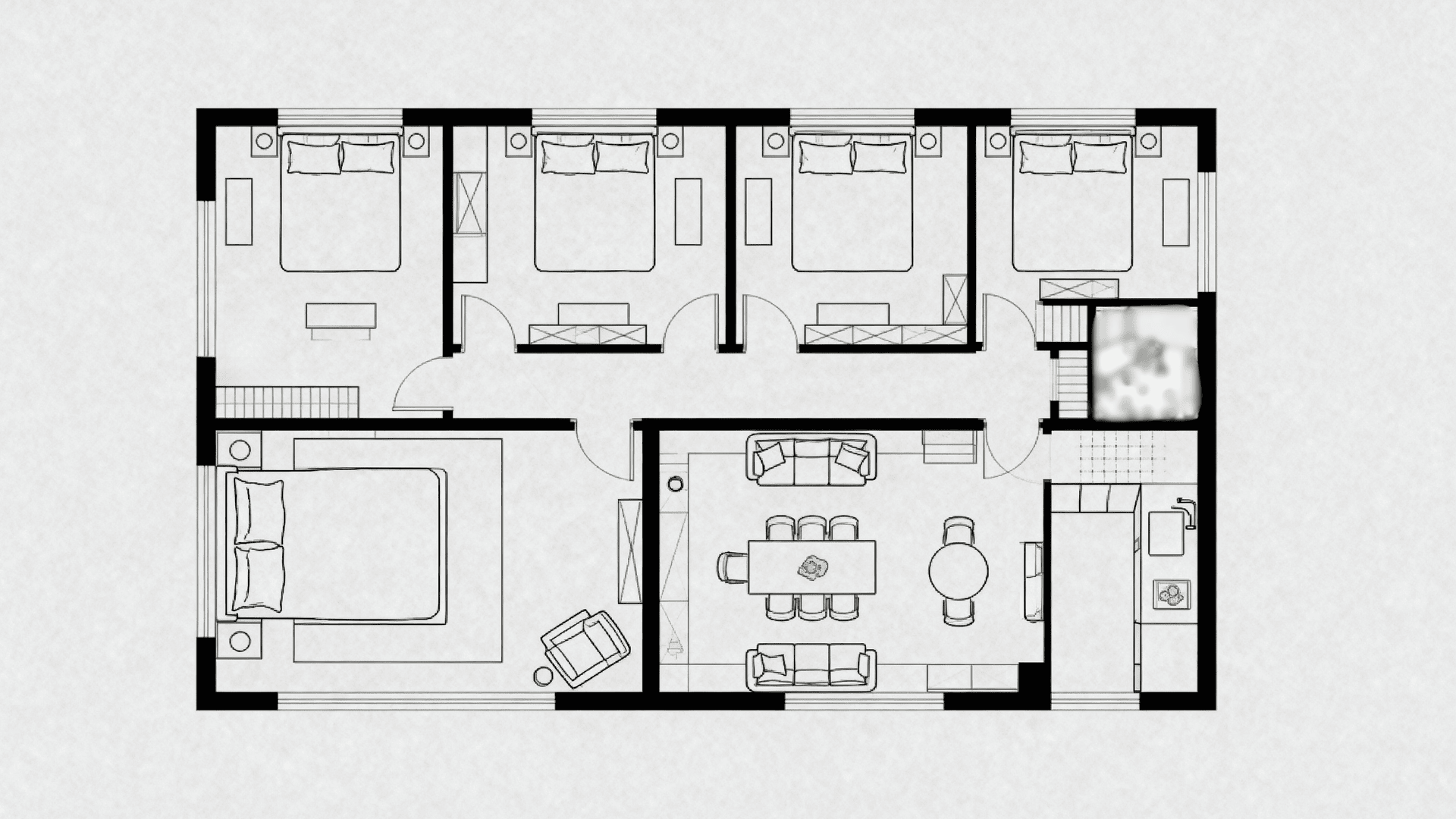
The main bedroom sits on the ground floor for privacy. Kids’ rooms go upstairs, along with a bonus space. This layout works great as you age.
You won’t need to climb stairs daily.
3. Split-Level Design
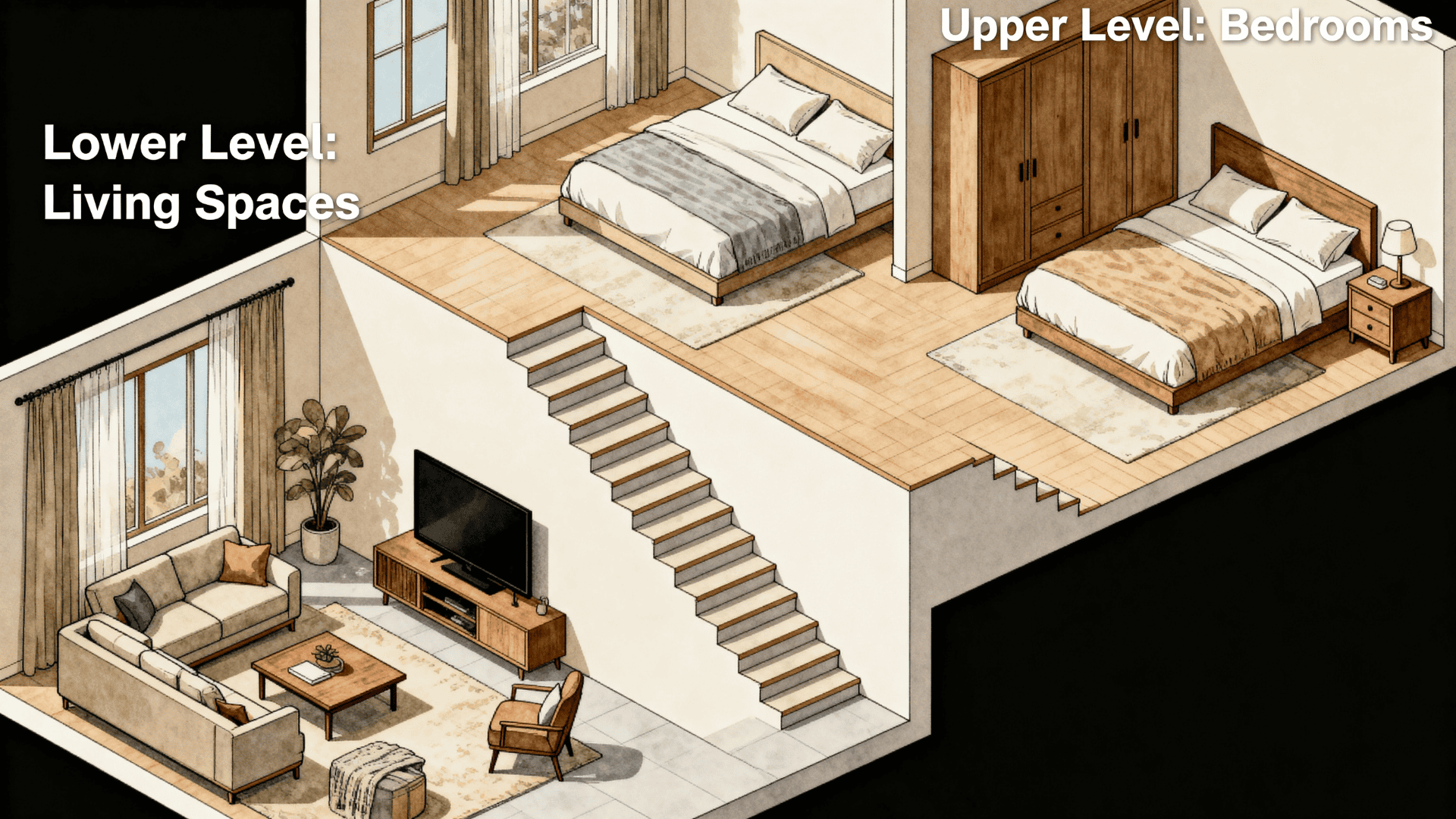
Half flights of stairs separate different zones in the home.
Living areas sit on one level, bedrooms on another. The design creates natural divisions without full walls. It’s ideal for sloped lots.
4. L-Shaped Layout
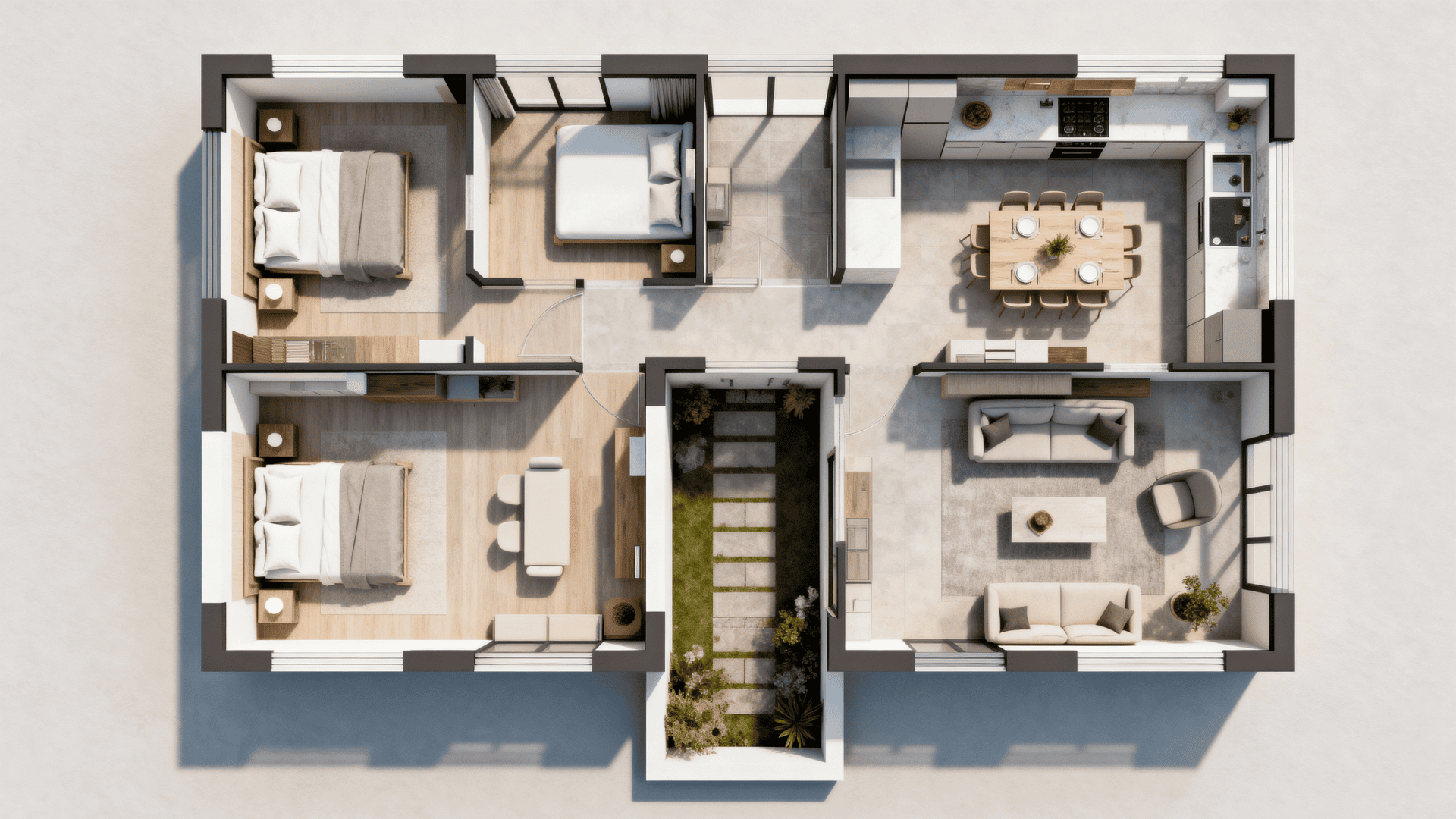
Two wings form an L shape around a courtyard or patio. One wing holds bedrooms.
The other has common areas, and the design creates a sheltered outdoor space. It maximizes privacy from neighbors, too.
5. U-Shaped Floor Plan
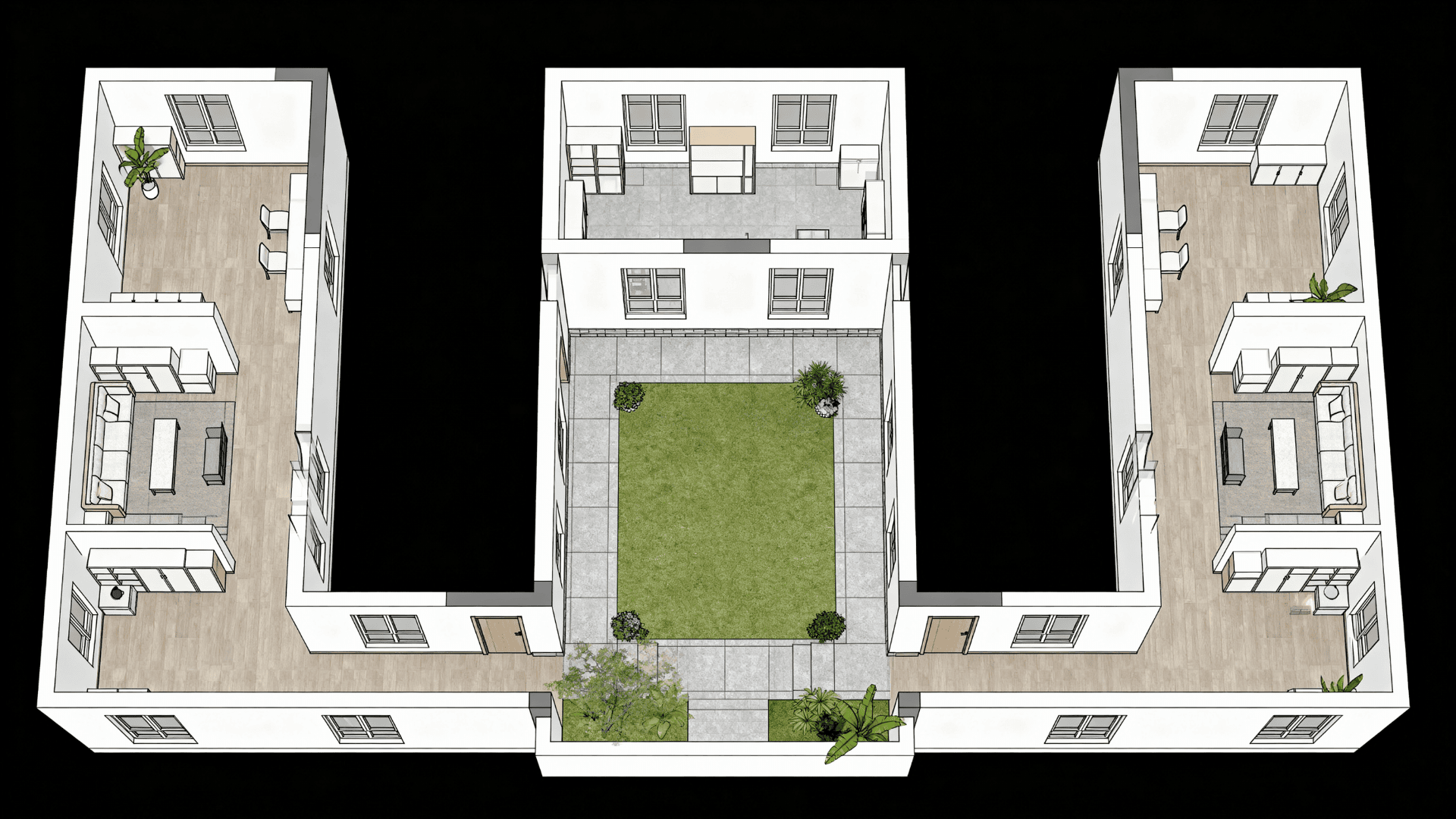
Three connected sections wrap around a central outdoor area. This plan offers maximum privacy and protection from the wind.
Every room gets good natural light. The courtyard becomes a private retreat.
6. Linear Single-Story
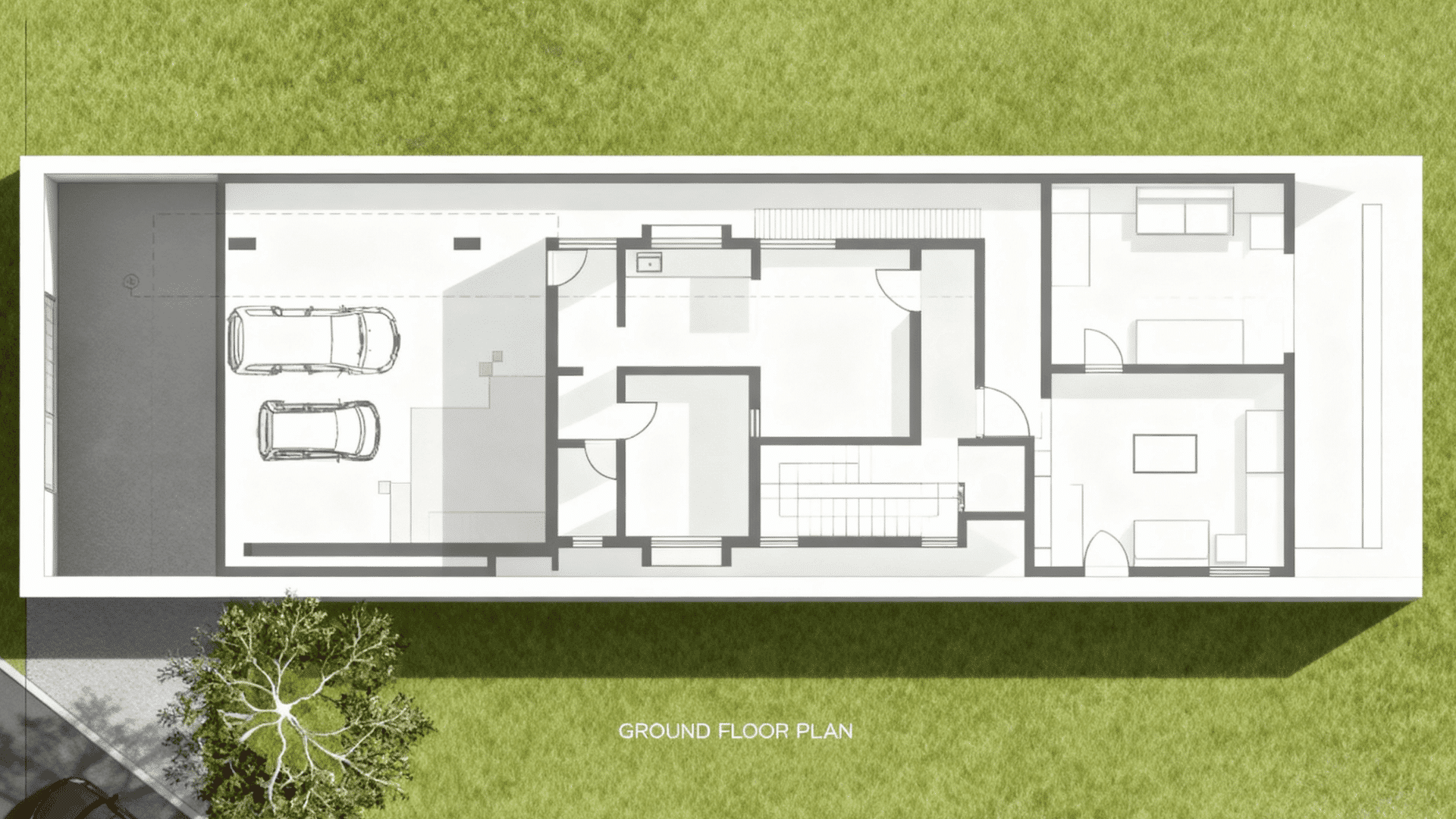
Rooms line up in a row along one axis. This simple plan works well on narrow lots. You get clear circulation from front to back. Windows on both sides provide cross ventilation.
7. Cube Design
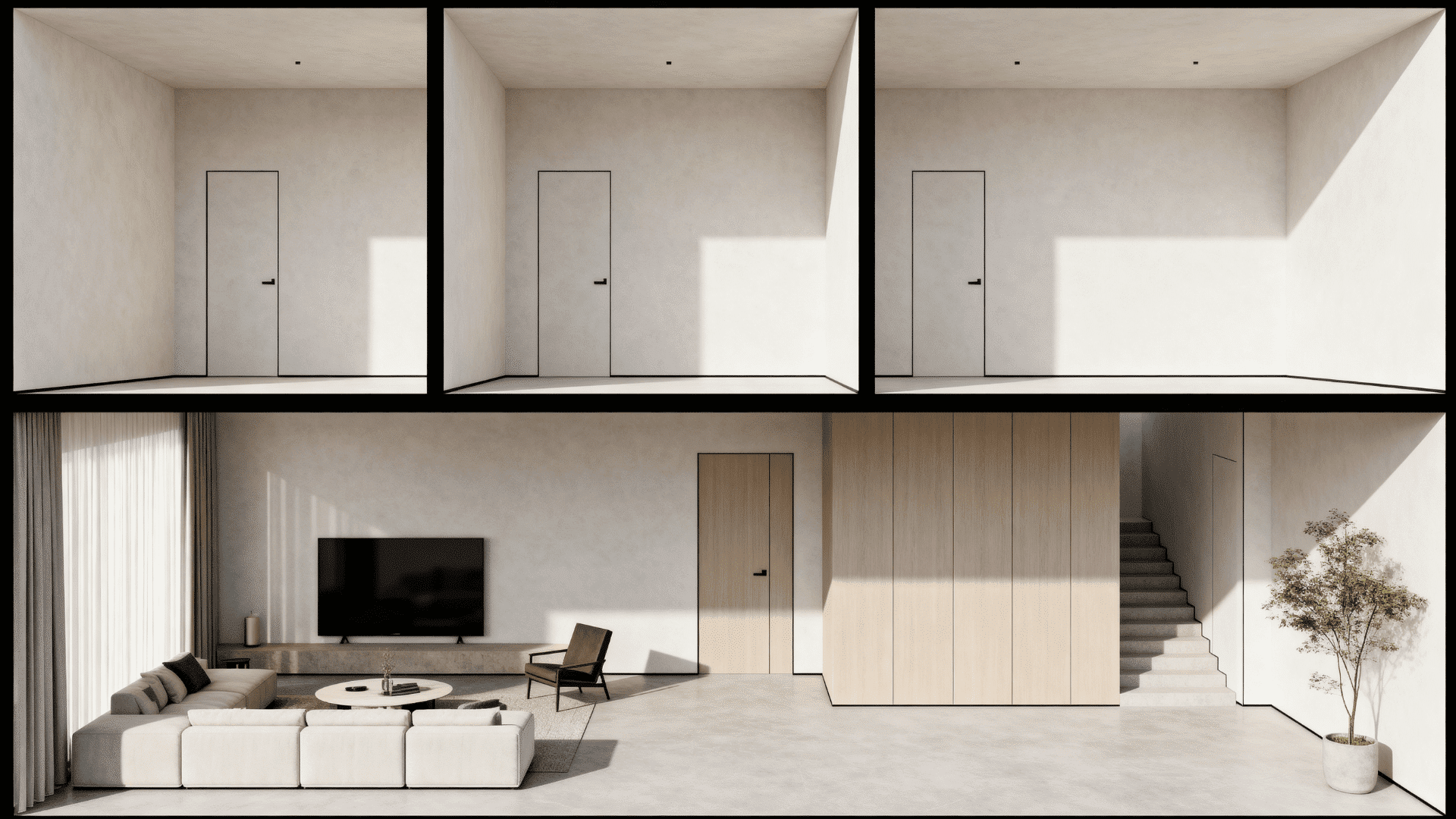
A simple box shape with two full stories. This efficient plan minimizes exterior walls and construction costs.
The compact footprint leaves more yard space. Modern details prevent it from looking boring.
8. Container-Style Plan
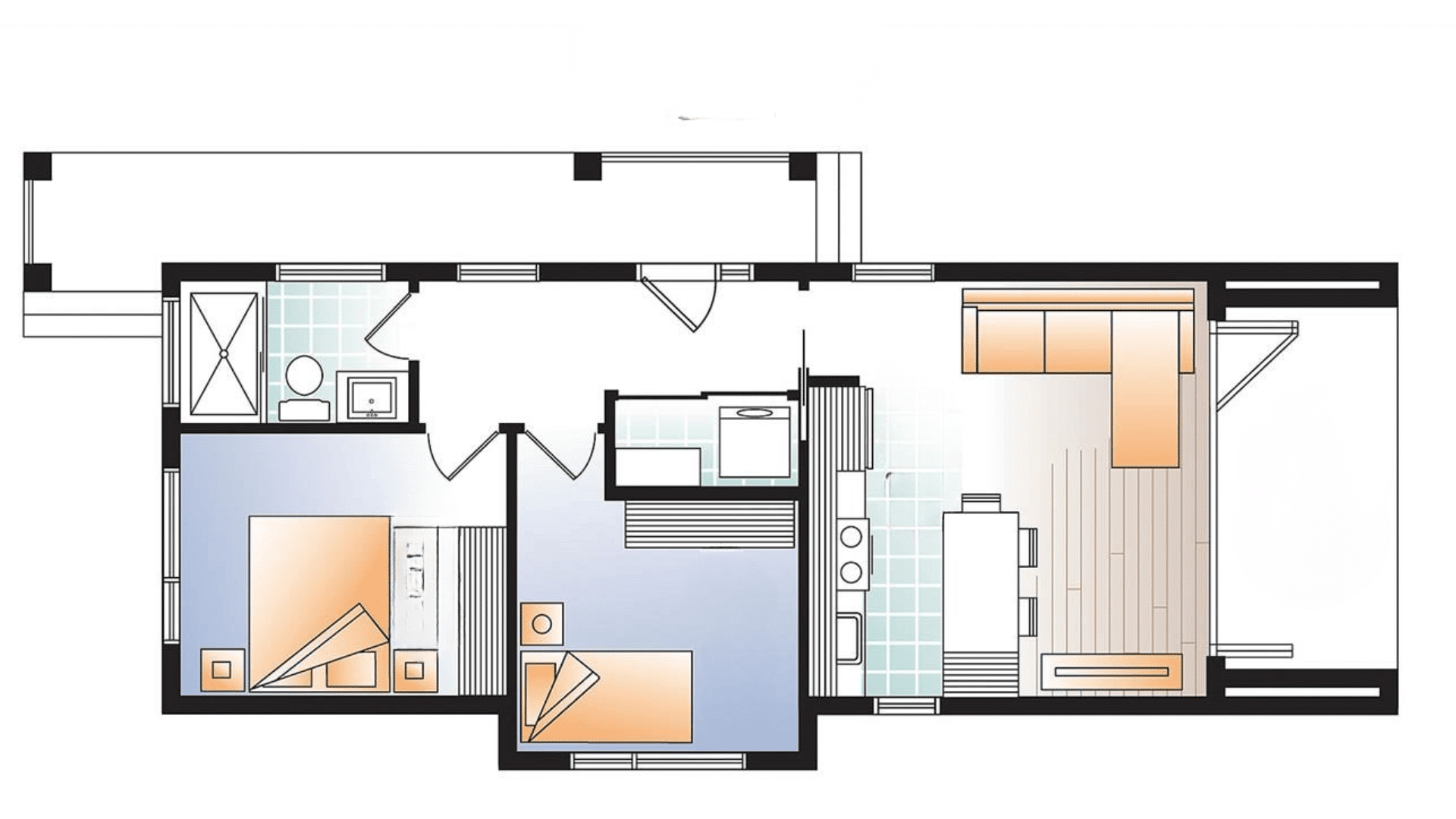
Long, narrow rectangular layout inspired by shipping containers. The plan maximizes space on tight urban lots.
High ceilings prevent the space from feeling cramped. Strategic window placement brings in plenty of light.
9. Pavilion Style
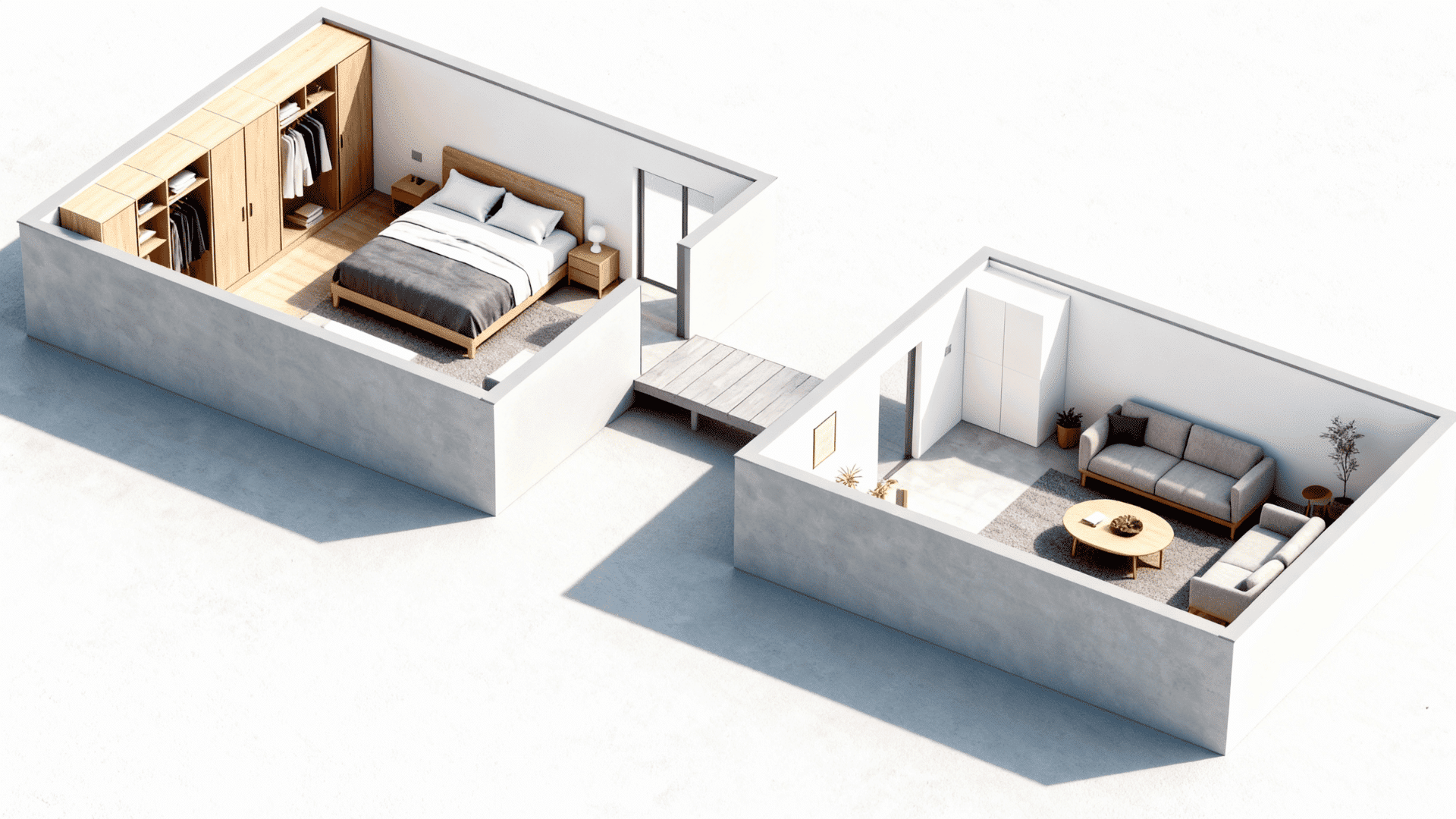
Covered walkways or breezeways connect multiple small structures.
Each pavilion serves a different function, like sleeping or cooking. This plan suits genial climates beautifully. It feels like living outdoors.
10. Great Room Concept
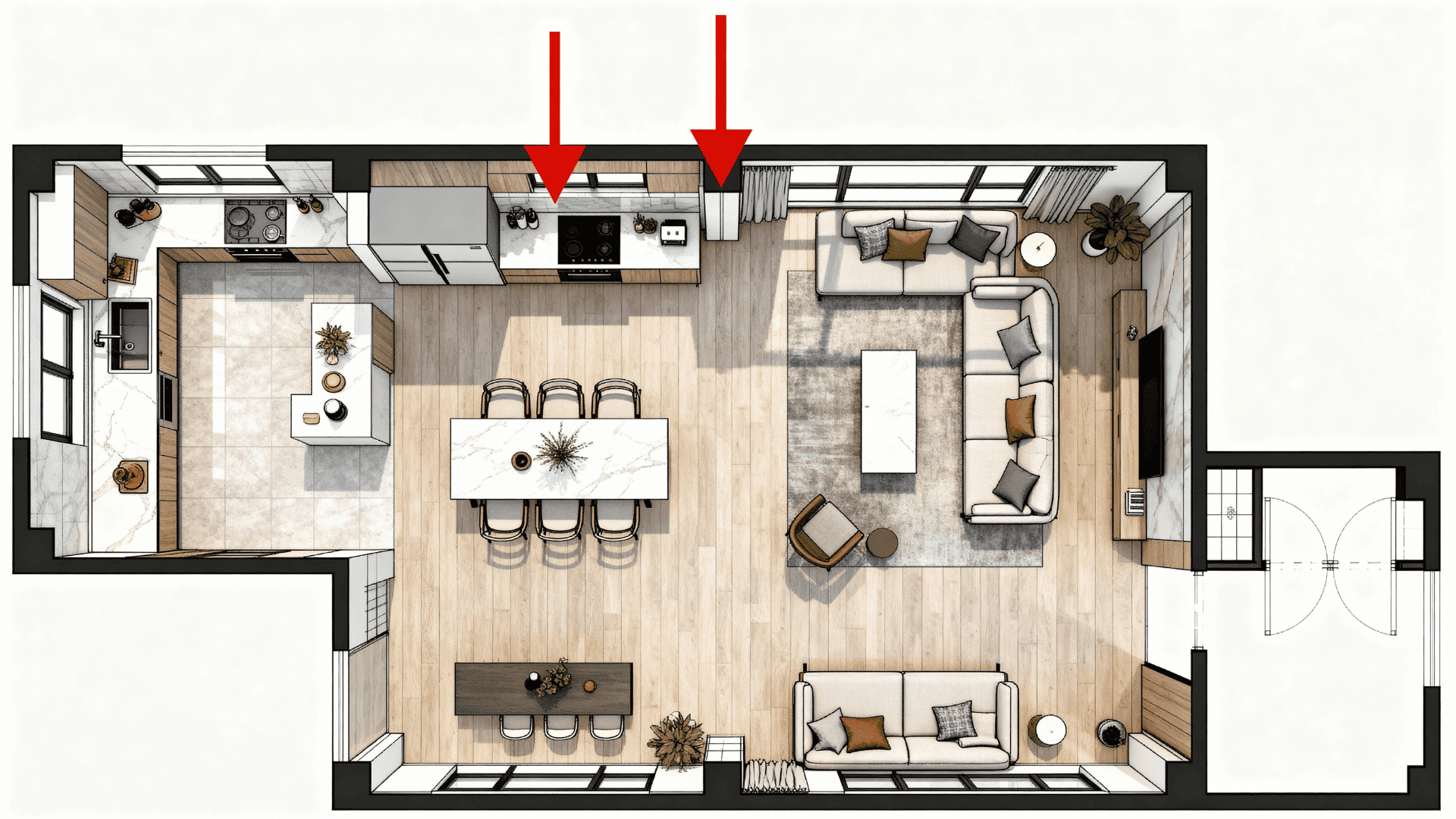
One massive space combines kitchen, dining, and living areas.
The room becomes the heart of the home. High ceilings add to the spacious feel. It’s perfect for entertaining large groups.
11. Loft-Style Open Plan
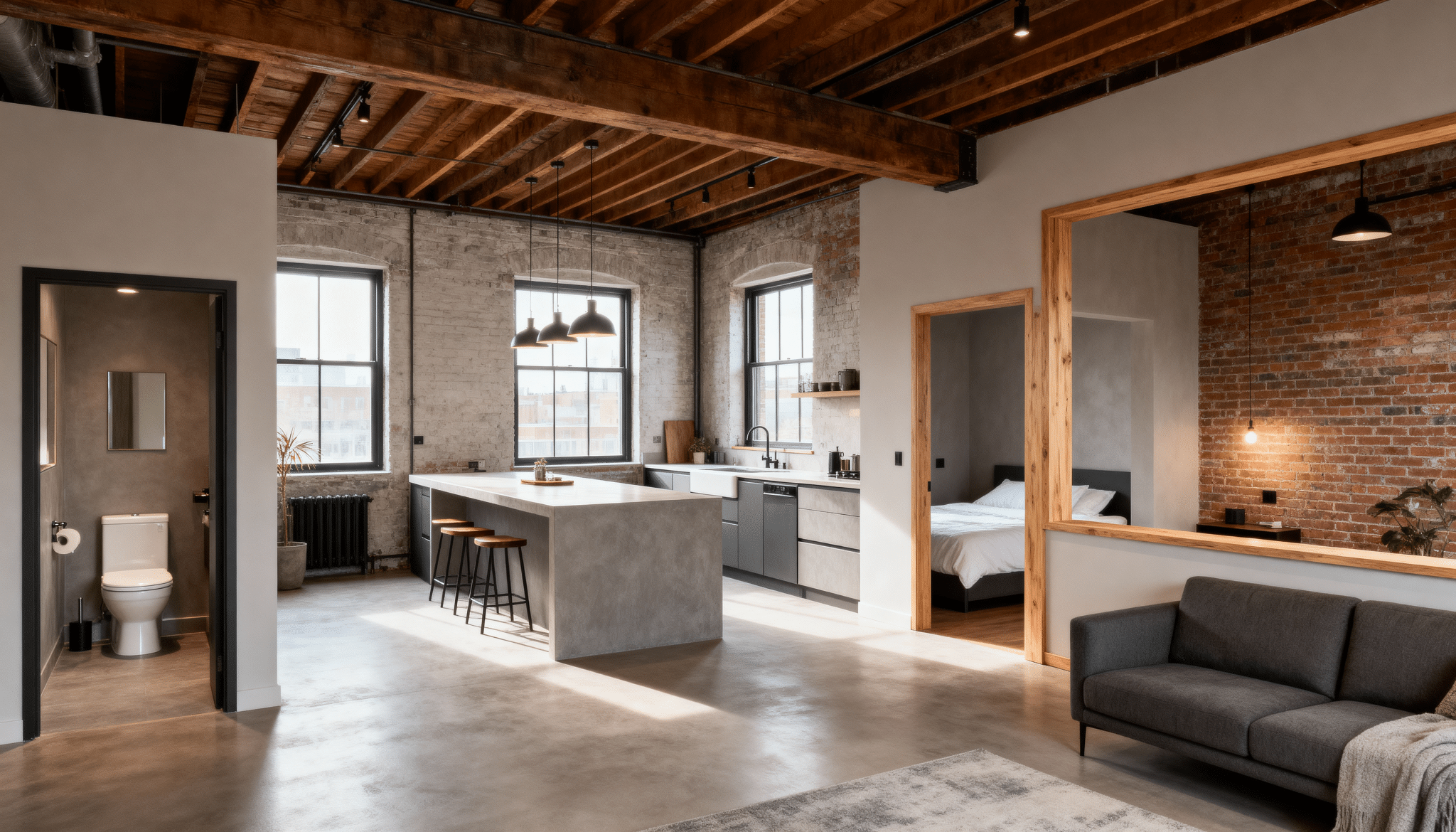
Inspired by converted industrial spaces with the tiniest interior walls.
Bedrooms might use partial walls or sliding panels. The bathroom is the only fully enclosed room. Young professionals and artists love this layout.
12. Courtyard Entry Design
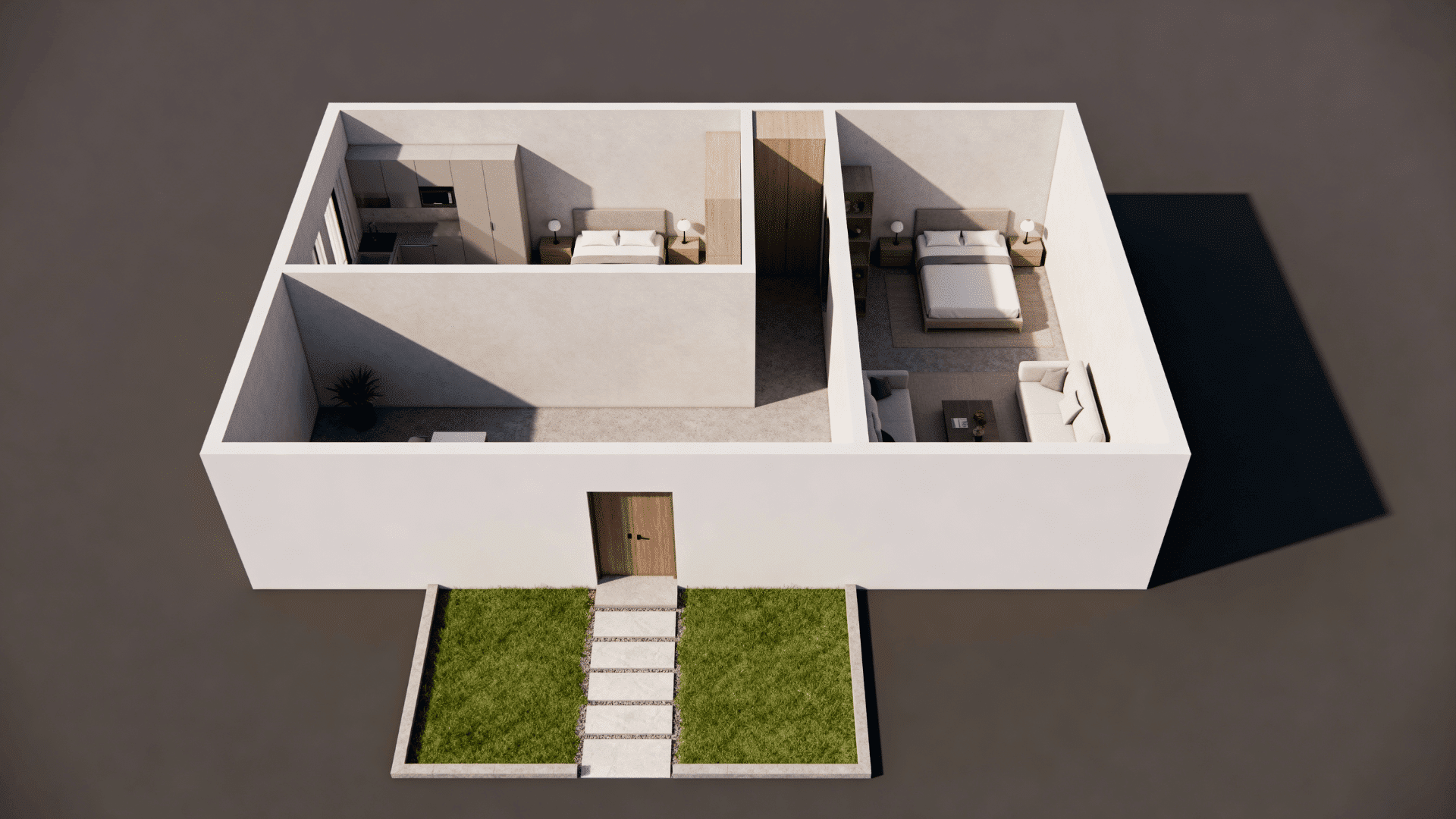
You walk through an outdoor courtyard before entering the home. This creates a transition zone from public to private.
The courtyard adds curb appeal and outdoor living space. It works in both warm and moderate climates.
13. Two-Story with Bridge
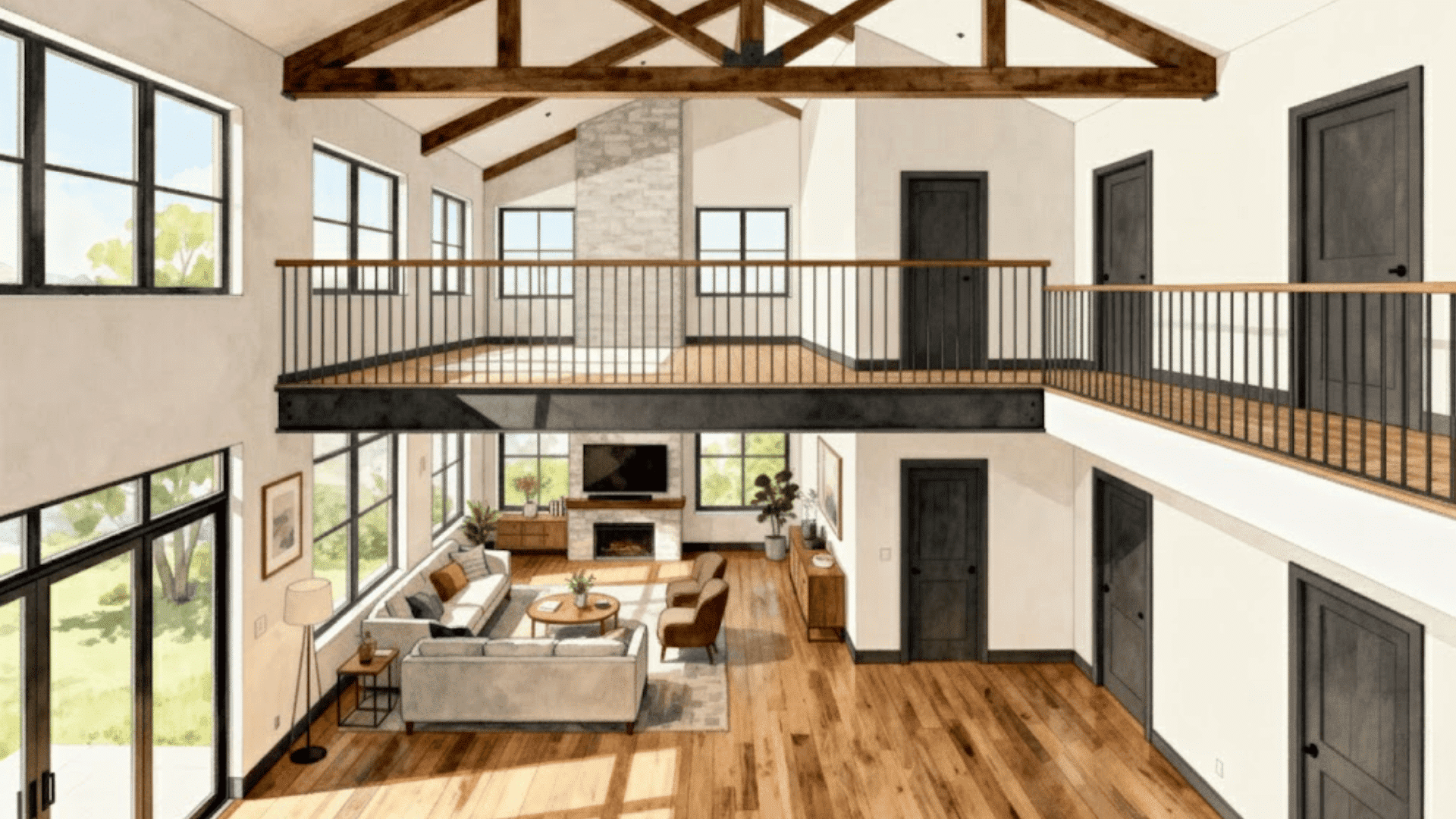
An open living area on the ground floor extends two stories high. The double-height space feels luxurious.
A bridge on the second floor connects bedrooms overhead. This dramatic plan creates an impressive visual impact.
14. Attached ADU Plan
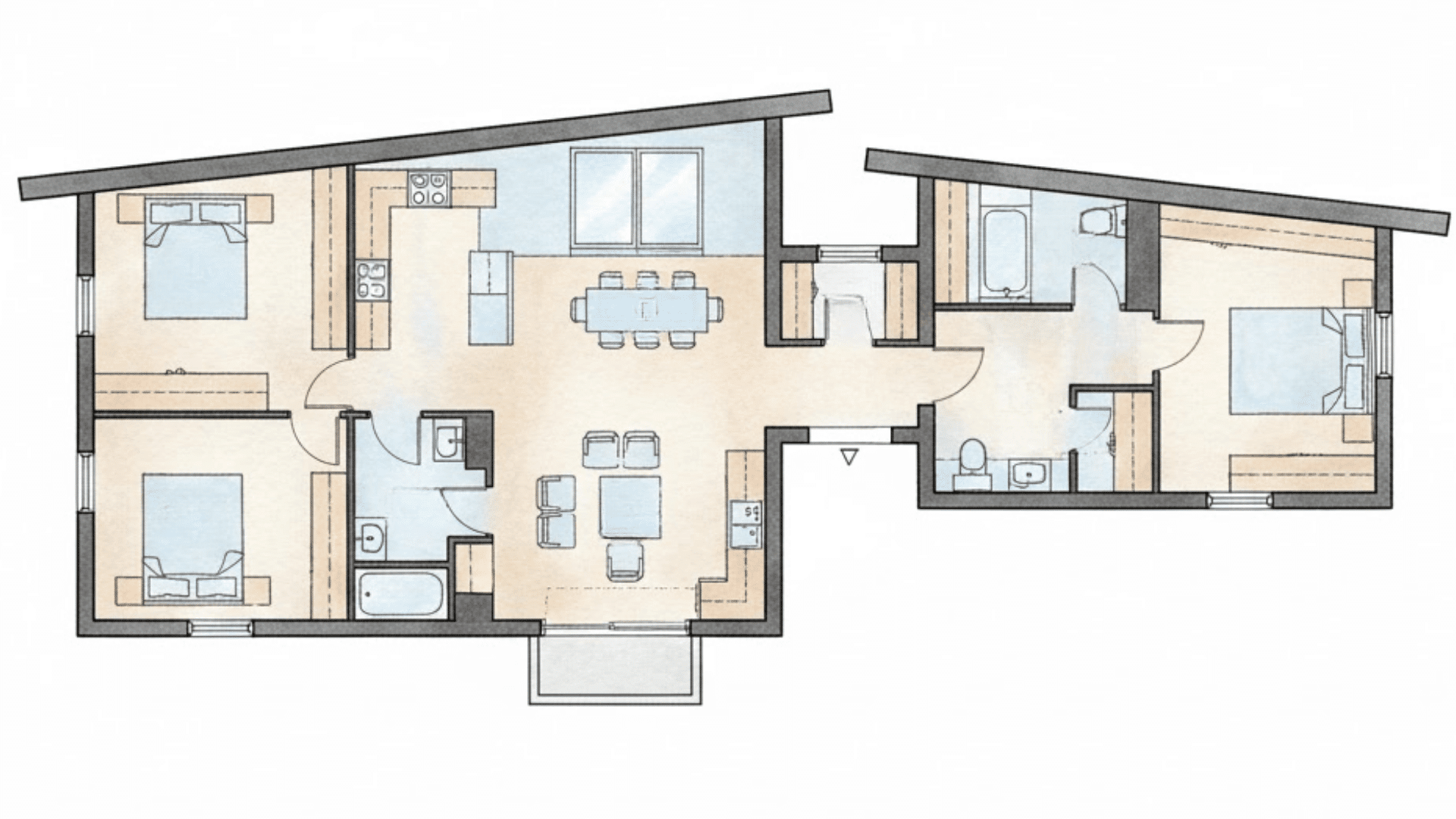
The main house connects to a smaller accessory dwelling unit.
The ADU can house guests, in-laws, or generate rental income. Both units maintain privacy through separate entries. It’s thoughtful long-term planning.
15. Studio-Style Layout
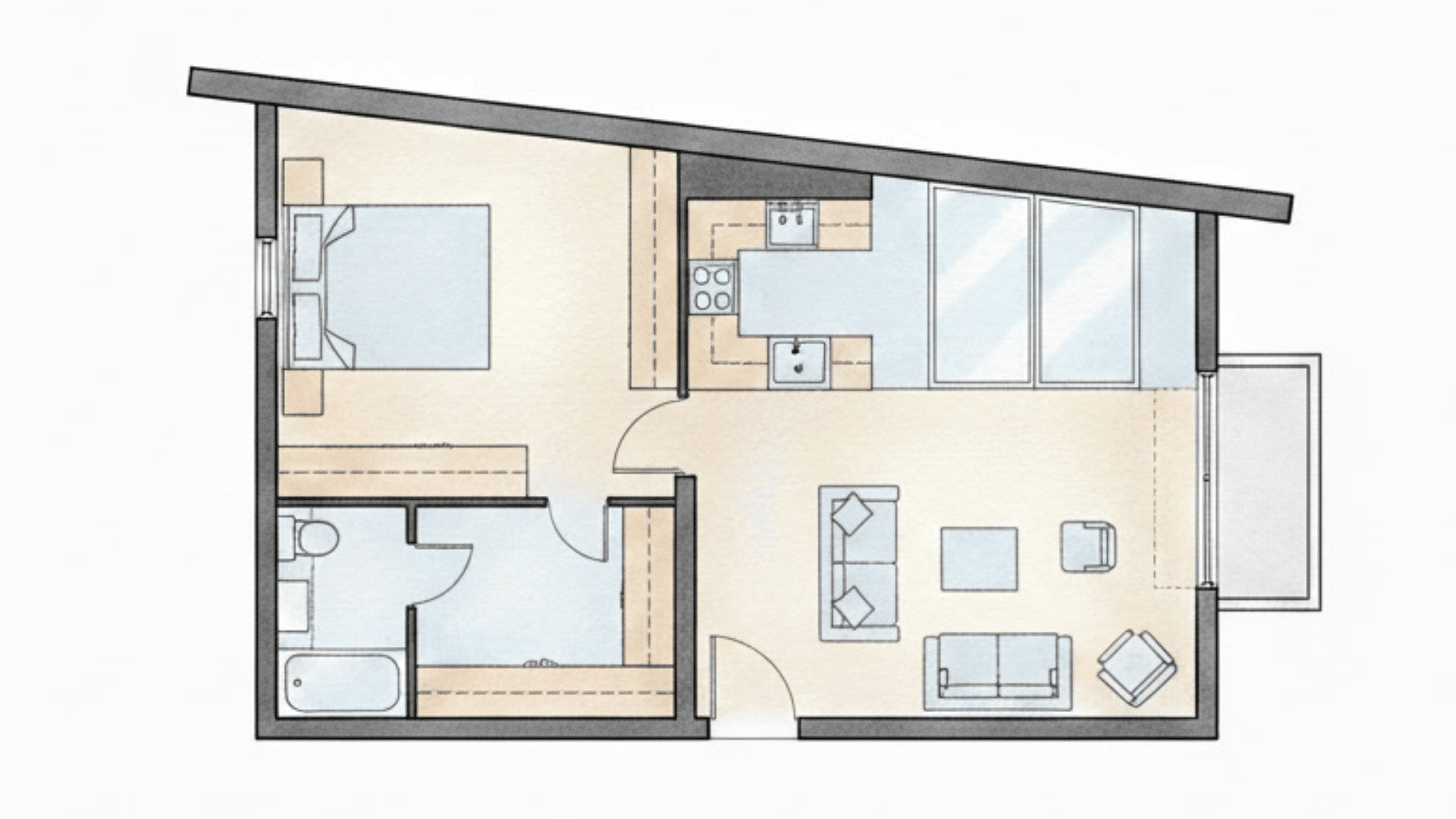
Everything exists in one large room except the bathroom. Kitchen, sleeping, and living areas share the same space.
This works for small lifestyles. Furniture and rugs define different zones.
16. Split-Bedroom Design
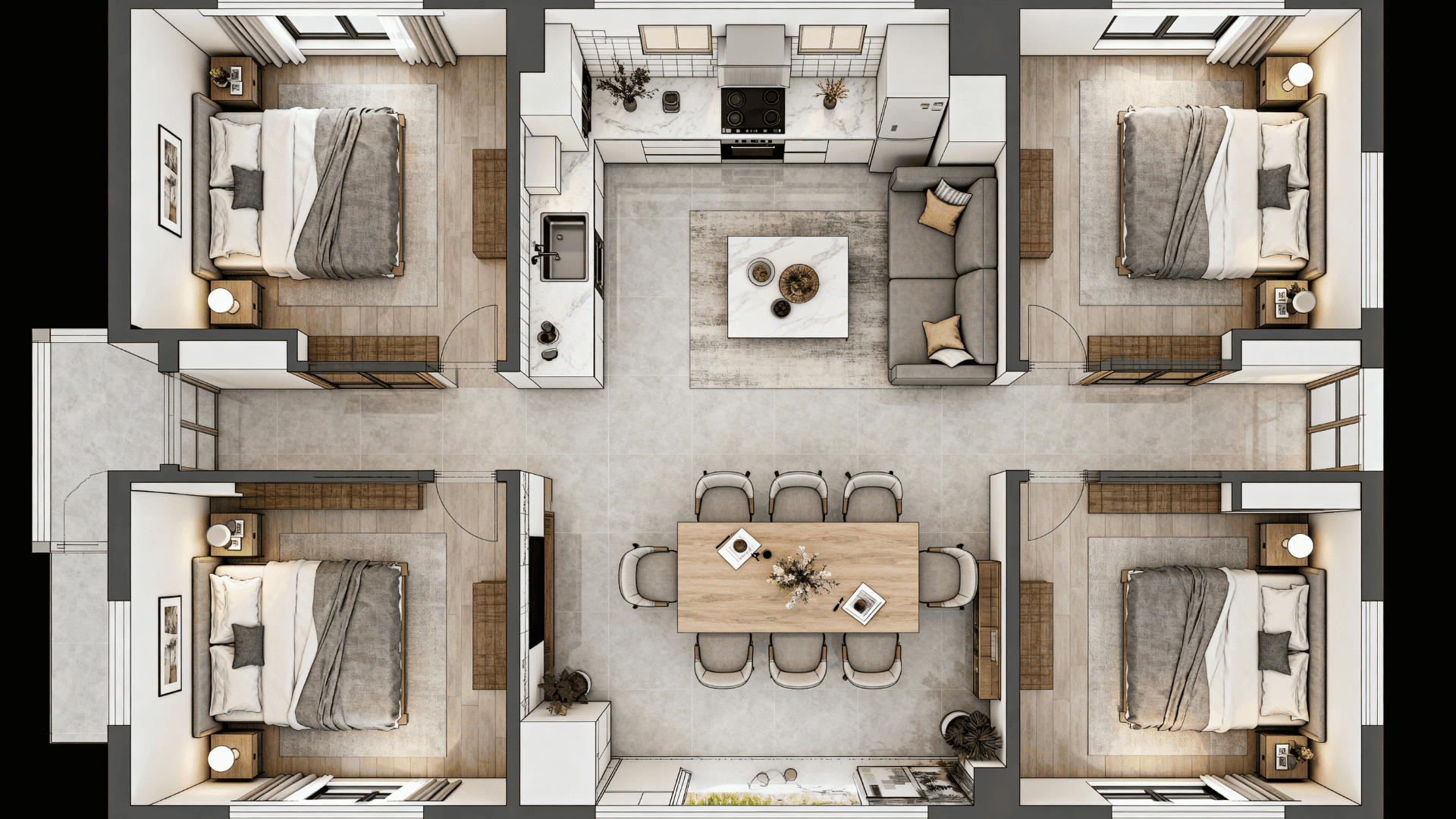
The master suite sits on one side of the house. Other bedrooms cluster on the opposite side. Common areas separate the two sleeping zones.
Parents get privacy while staying close to kids.
17. Three-Story Urban Plan
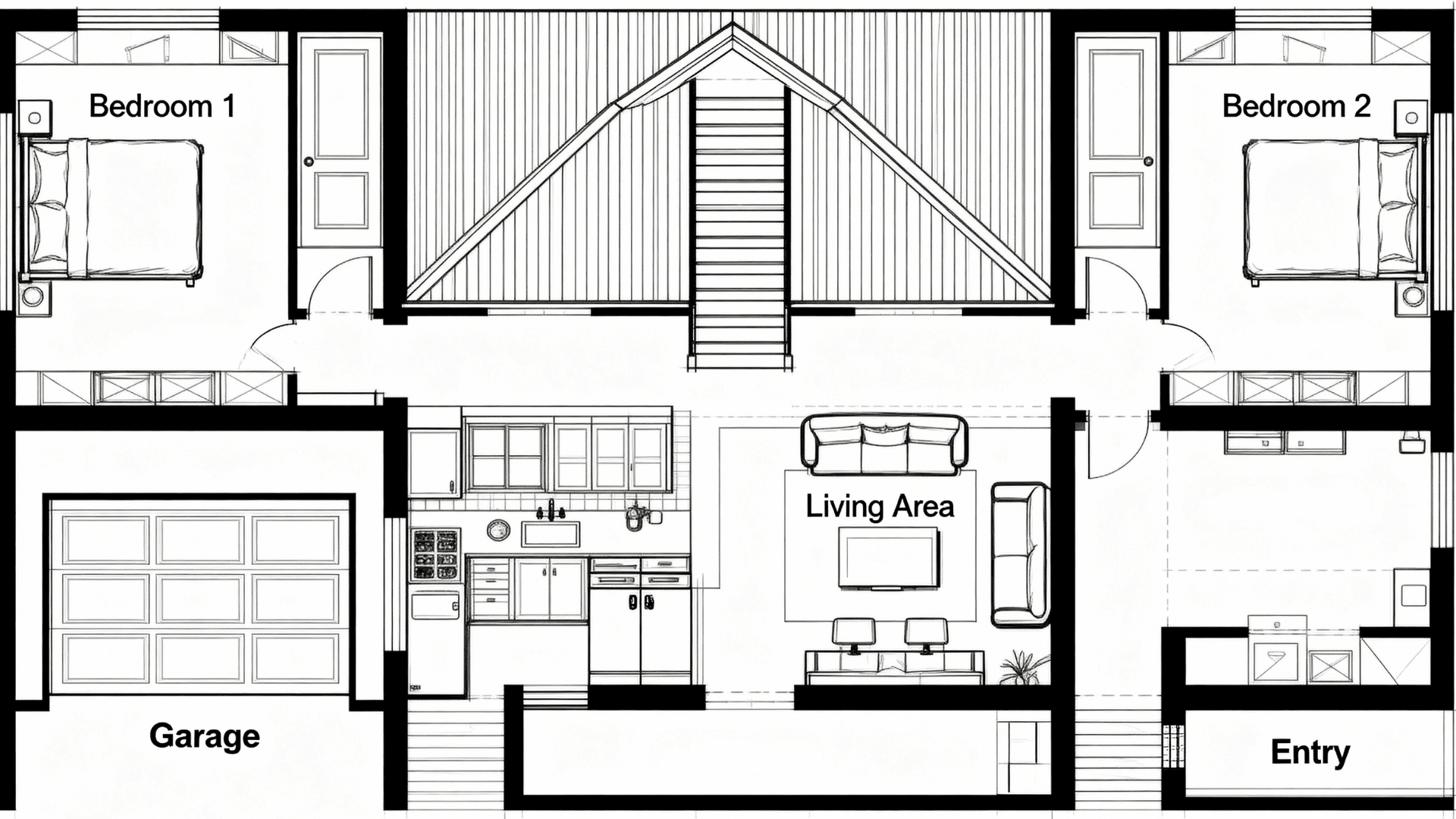
Vertical living for narrow city lots with limited width. The garage and entry occupy the ground floor.
Living spaces go on the second floor. Bedrooms fill the third level with rooftop access.
18. Wrap-Around Porch Plan
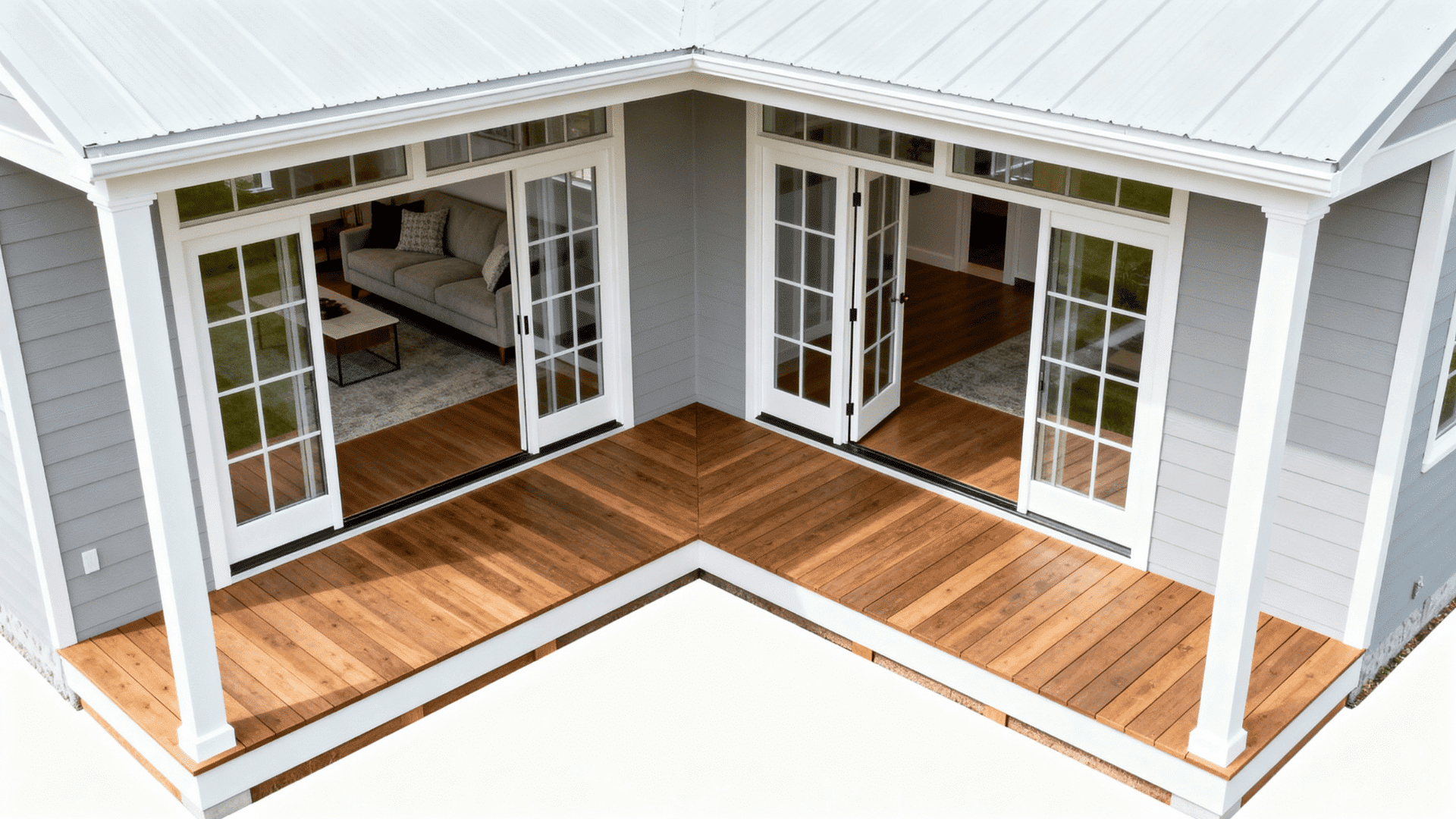
A covered porch extends along multiple sides of the house.
Large glass doors connect interior spaces to the porch. This particularly extends your living area outdoors. It provides shade and weather protection.
19. Atrium Center Design
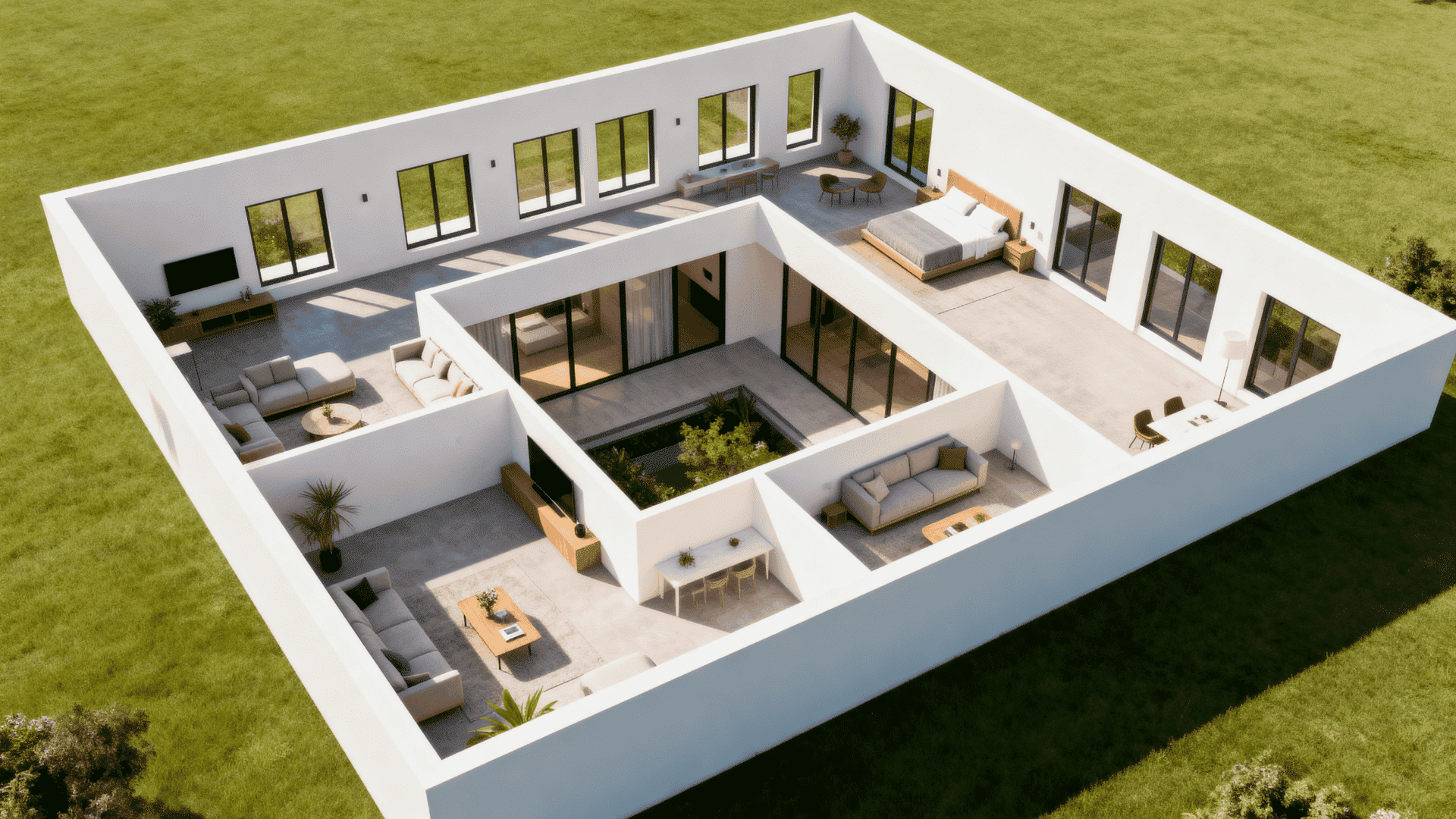
An open-air courtyard sits in the middle of the home. Rooms surround this central outdoor space. Every room gets natural light and garden views. It’s a private sanctuary within your home.
20. Flexible Live-Work Layout
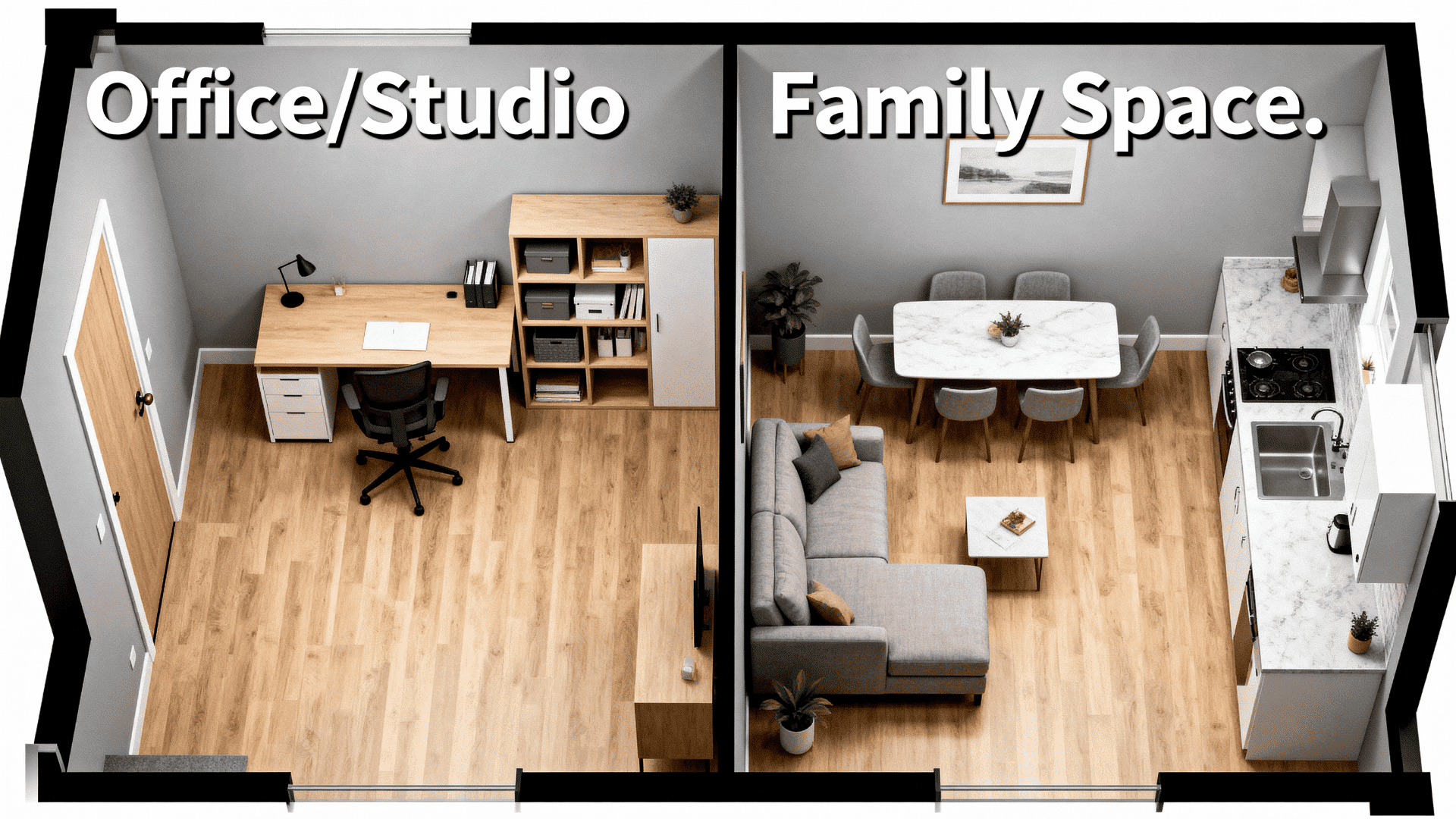
Front rooms can function as office or studio space. A separate entrance allows clients to visit without entering the living areas.
The back contains private family spaces. This plan suits entrepreneurs and freelancers.
21. Compact Two-Bedroom
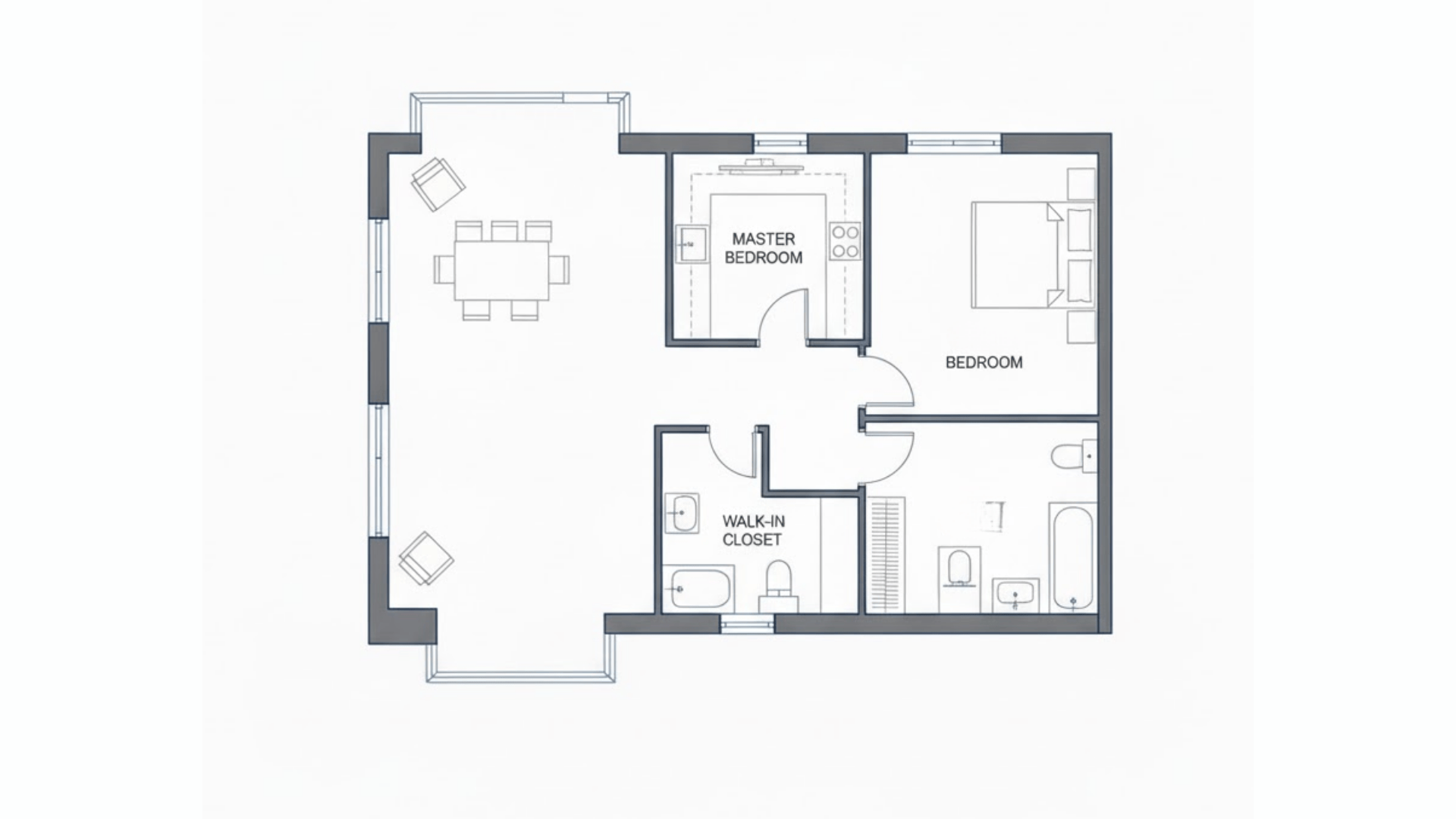
Efficient use of space without feeling cramped or cluttered.
Two bedrooms, one bath, and combined living areas. Perfect for starters, retirees, or vacation properties. Quality beats quantity in this innovative design.
22. Multi-Generational Plan
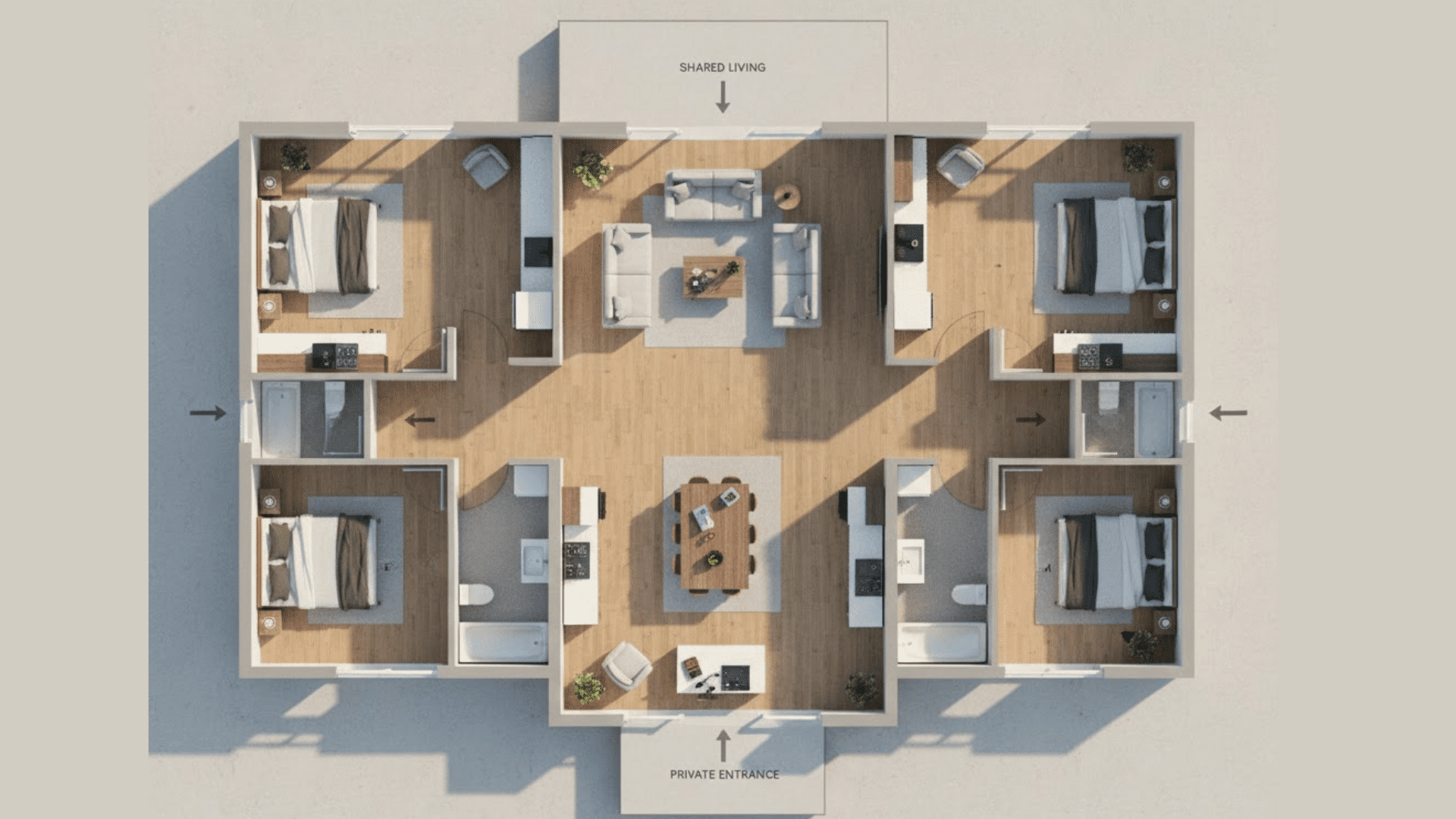
Separate living quarters for extended family under one roof. Each section has its own kitchen and entrance.
Shared spaces bring everyone together when desired. This respects everyone’s independence and privacy.
23. Clerestory Window Design
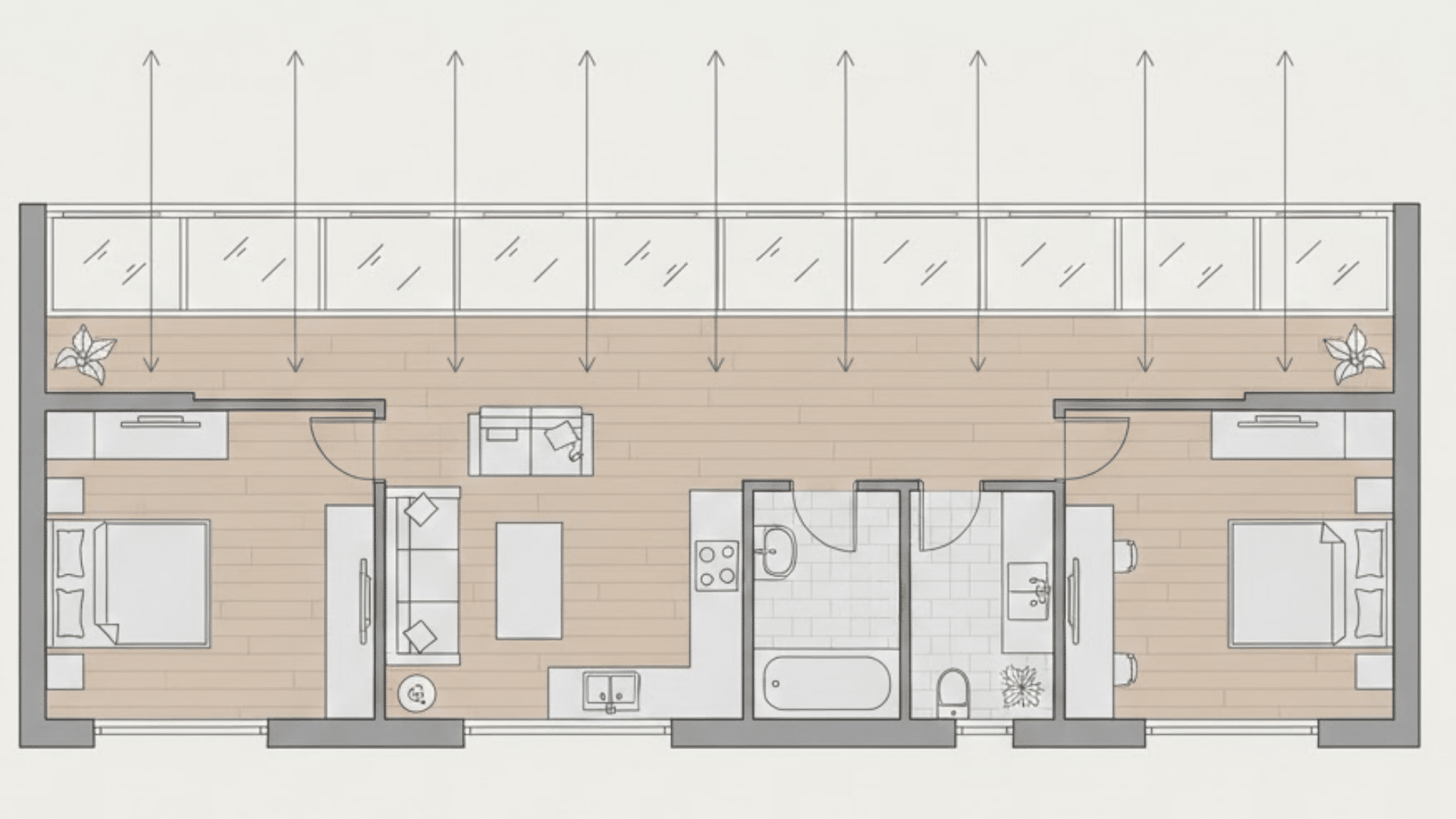
High windows near the ceiling bring light deep inside. The plan keeps privacy while maximizing natural illumination.
This works exceptionally well in dense neighborhoods. Heat rises and escapes through operable clerestory windows.
24. Indoor-Outdoor Kitchen
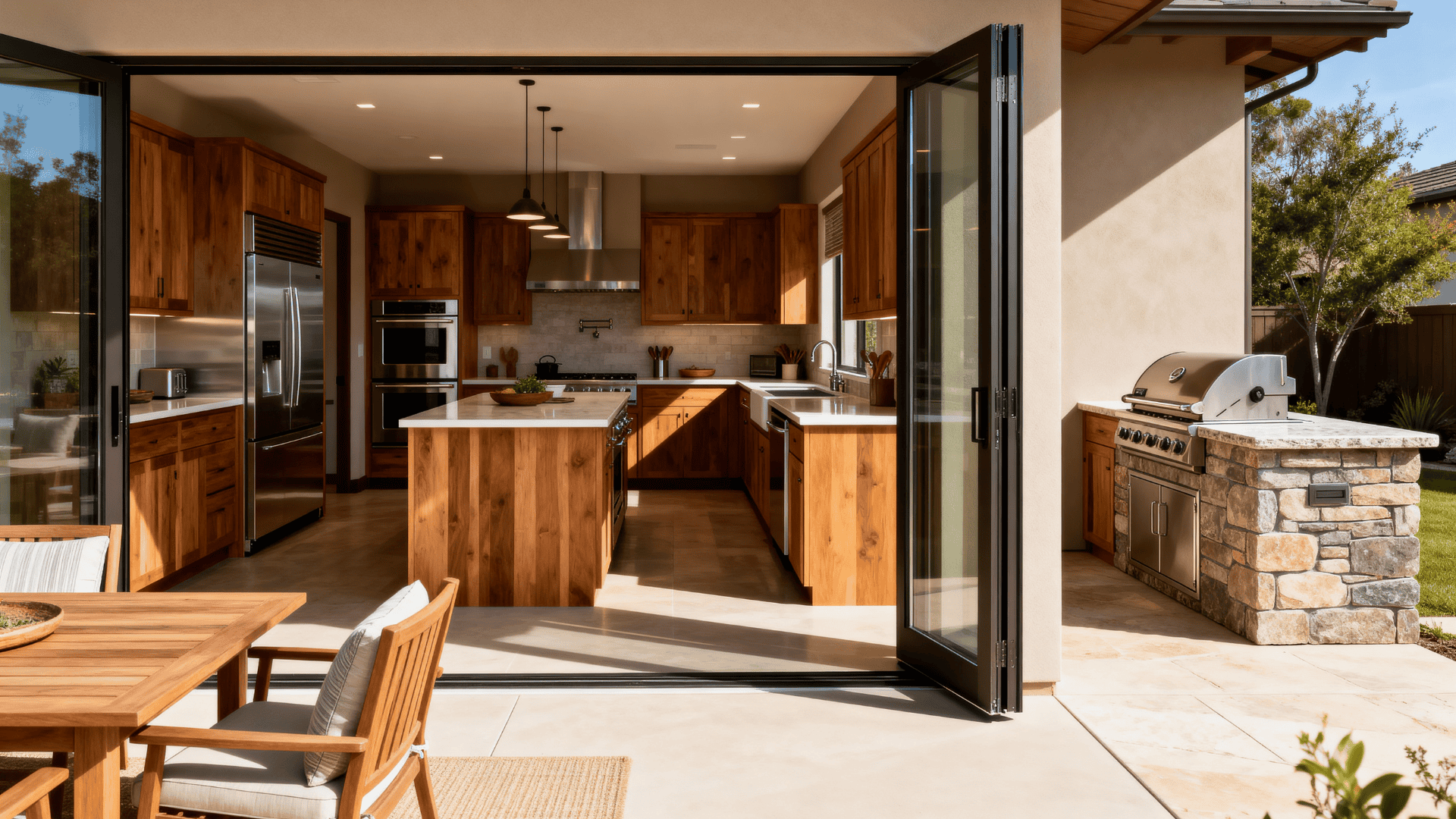
The kitchen opens completely to an outdoor cooking area. Large sliding or folding doors disappear entirely when opened.
You can prep inside and cook outside seamlessly. Great for cordial weather, entertaining, and meals.
25. Modern Three-Bedroom
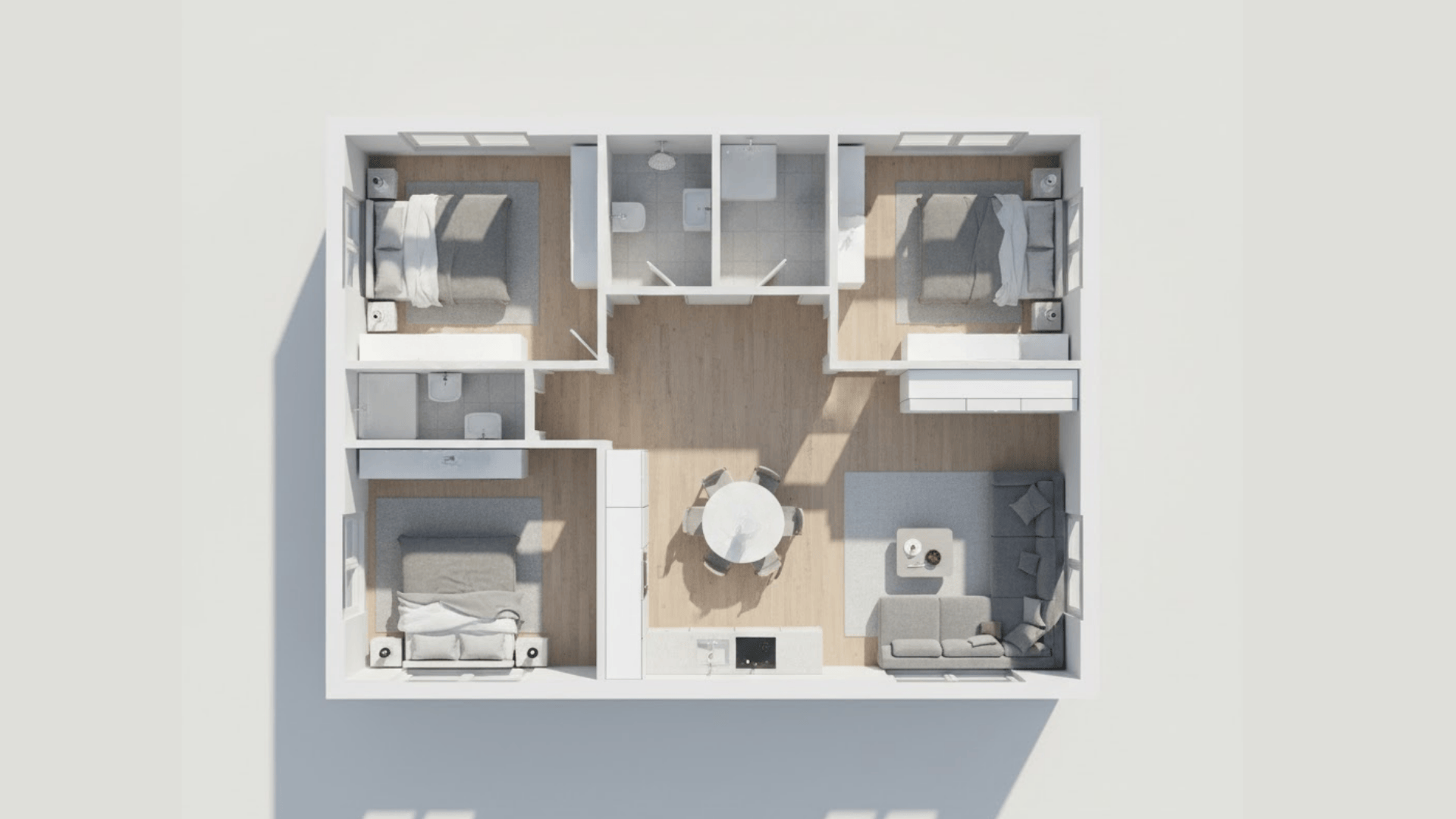
Three bedrooms are arranged efficiently with shared bathroom access. Focus on quality spaces rather than excessive square footage.
Storage solutions built into walls save floor space. Every room serves its purpose without waste.
26. Rooftop Terrace Plan
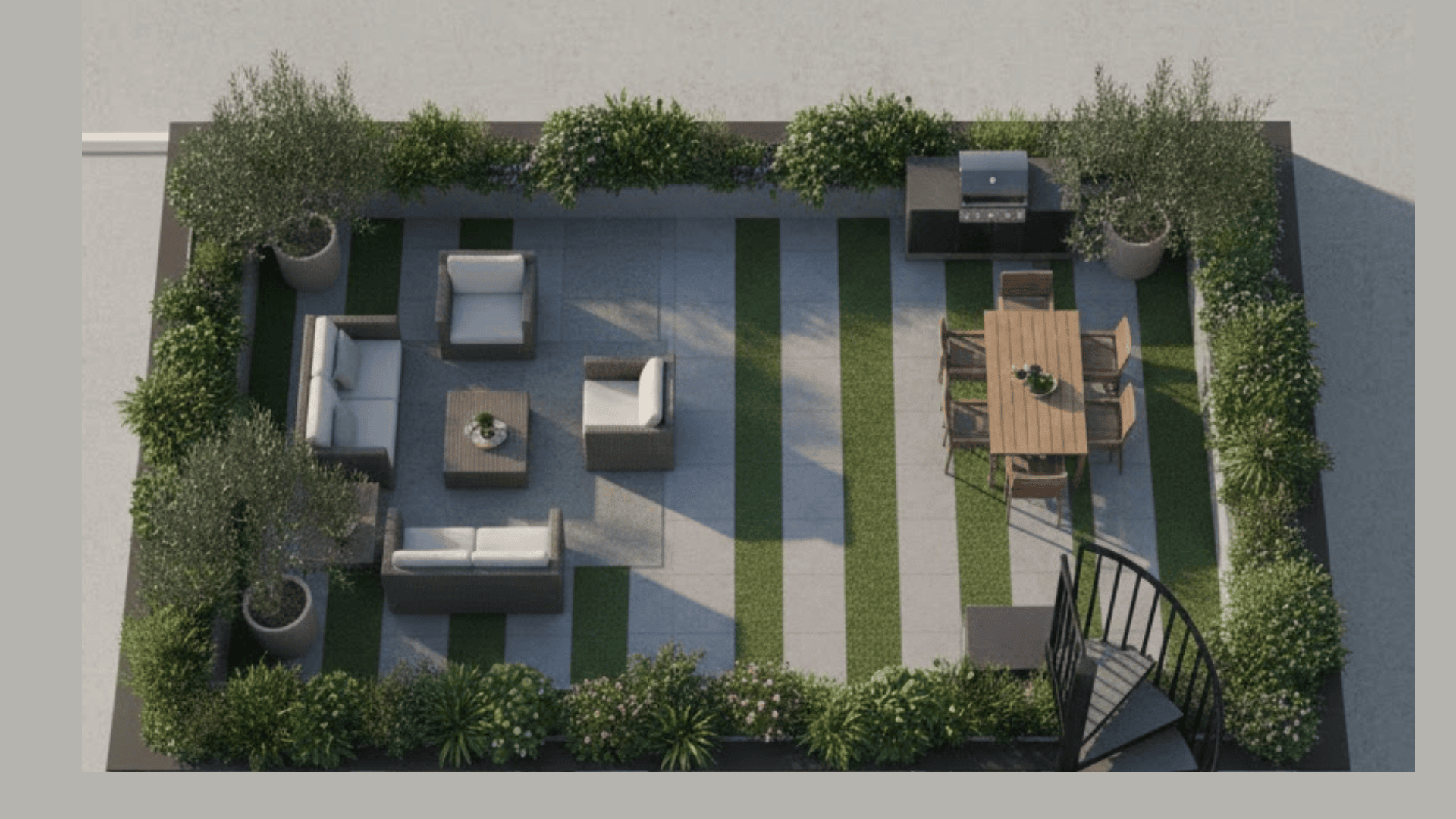
A flat roof doubles as usable outdoor space. Stairs or a ladder provide access to the rooftop area.
This adds substantial living space without increasing lot coverage. City views make it even more appealing.
27. Carport Integration
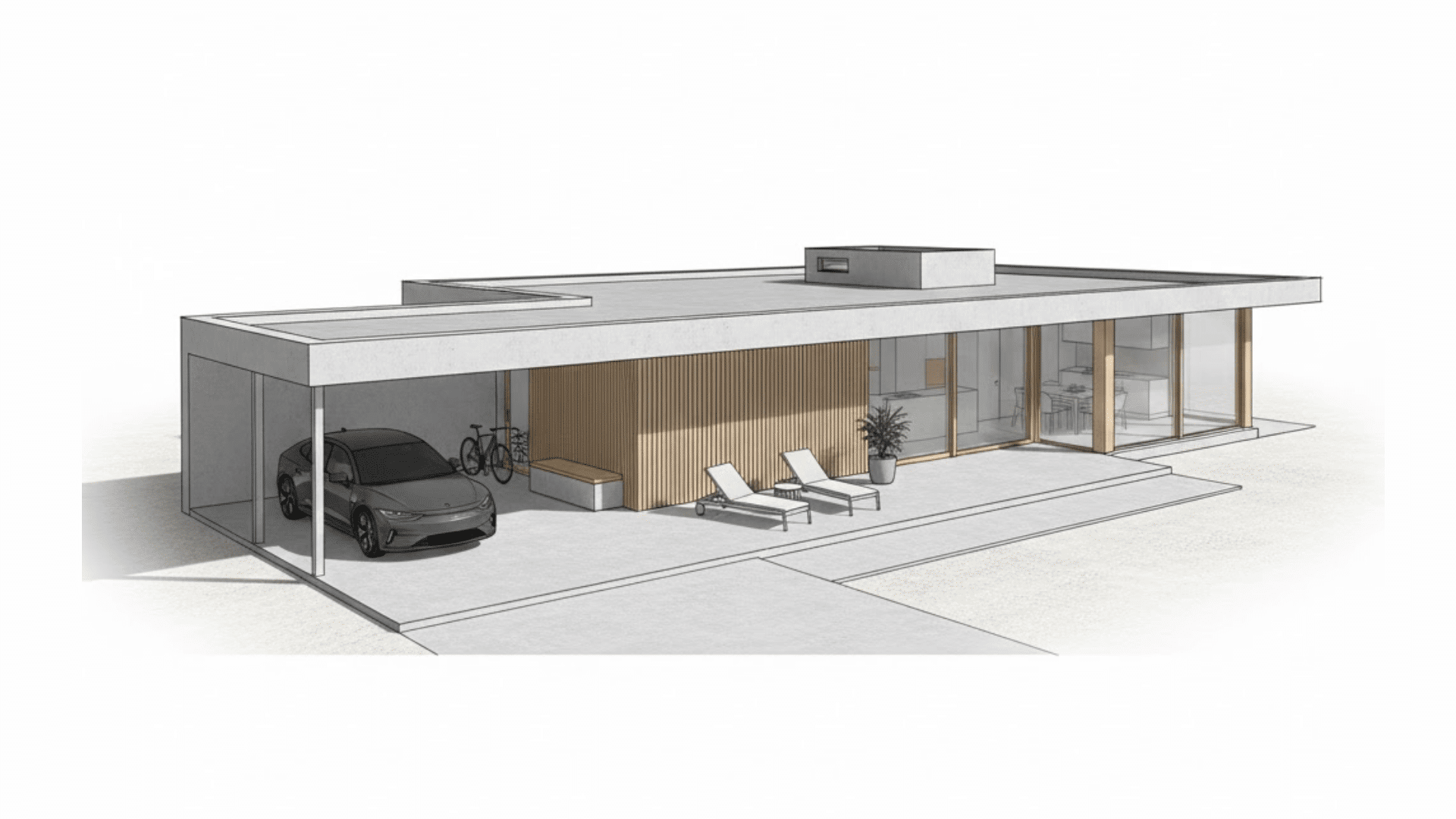
An open carport becomes part of the architectural design. Rather than hiding cars, the space flows visually.
The covered area can serve multiple purposes beyond parking. It reduces construction costs compared to enclosed garages.
28. Sustainable Solar-Ready
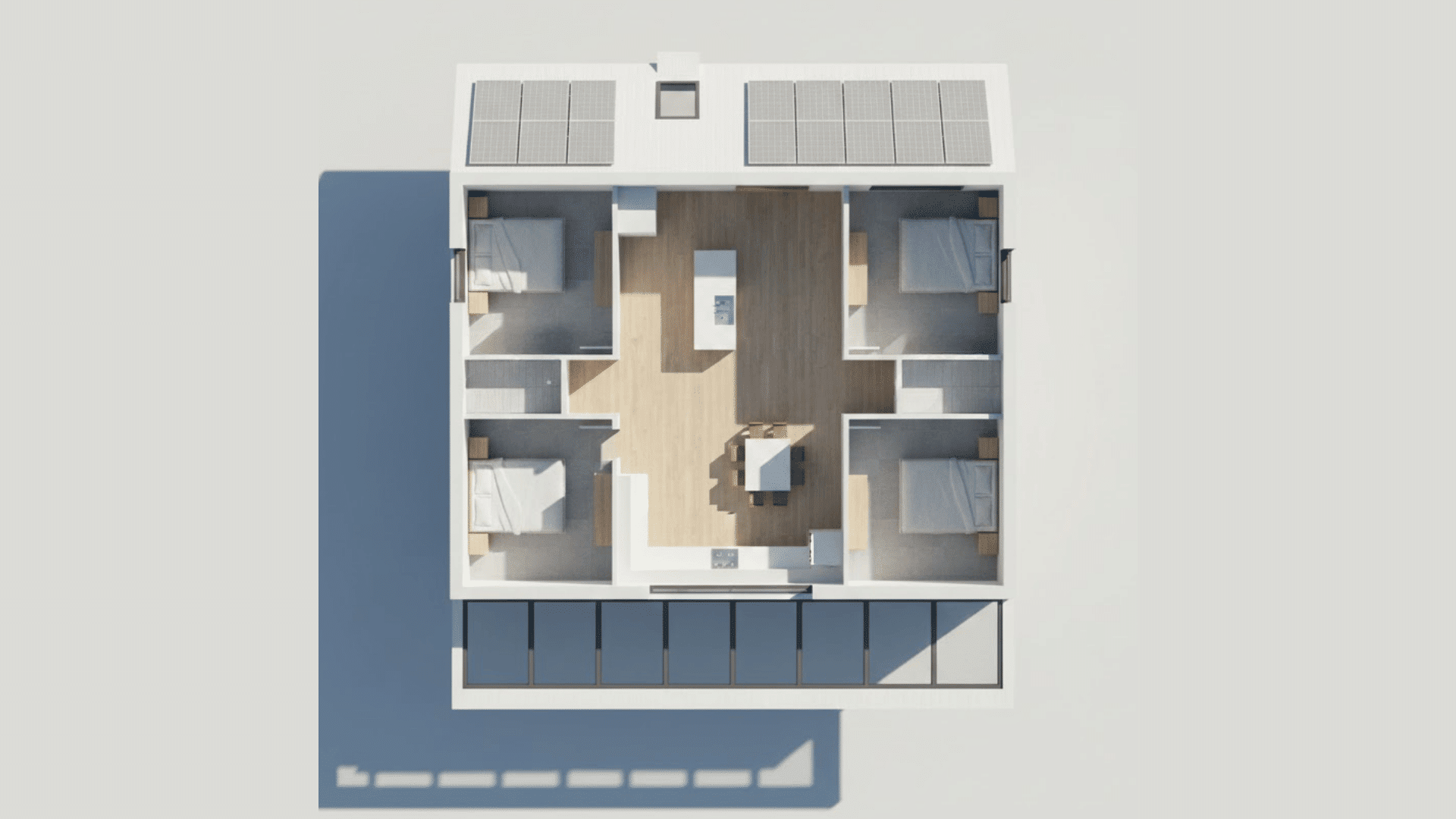
The plan orients rooms to maximize passive solar gain. Large south-facing windows heat the home naturally in winter.
Overhangs provide shade during hot summer months. The roof pitch and orientation suit solar panels.
29. Flex-Room Layout
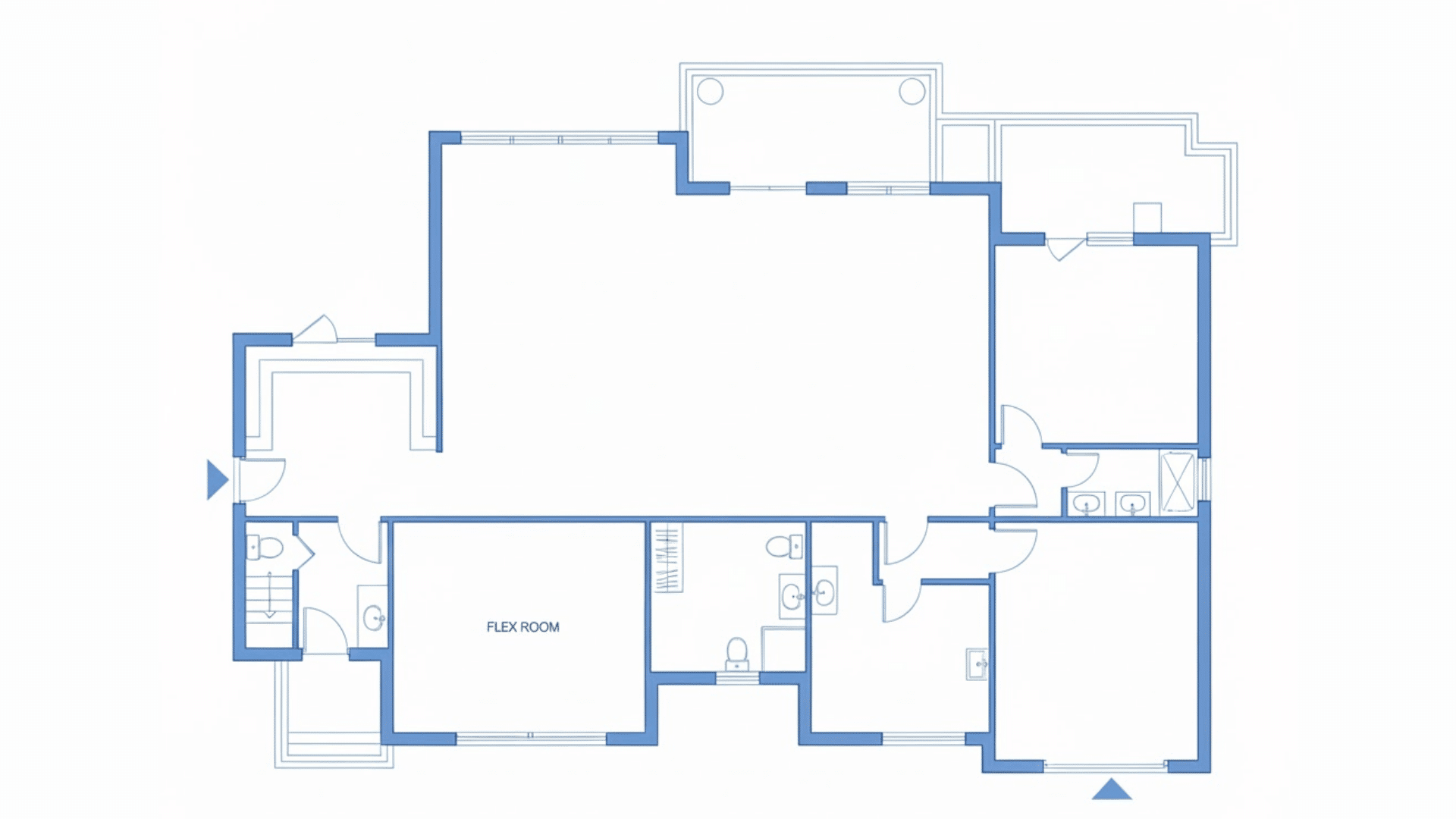
Extra rooms serve multiple purposes depending on current needs.
A flex room can be an office, a gym, or a guest room. As your life changes, the space adapts easily. This future-proofs your home for different life stages.
Cost Breakdown
Building costs vary based on location, materials, and design choices.
Here’s a general breakdown to help you plan.
| Cost Category | Percentage of Total | Average Cost Range |
|---|---|---|
| Foundation | 8-10% | $15,000 – $30,000 |
| Framing | 15-20% | $30,000 – $50,000 |
| Exterior Finishes | 10-15% | $20,000 – $40,000 |
| Roofing | 5-8% | $10,000 – $20,000 |
| Windows & Doors | 8-12% | $15,000 – $30,000 |
| Plumbing | 10-15% | $20,000 – $35,000 |
| Electrical | 8-12% | $15,000 – $28,000 |
| HVAC | 8-10% | $15,000 – $25,000 |
| Interior Finishes | 15-20% | $30,000 – $50,000 |
| Kitchen & Bath | 10-15% | $20,000 – $40,000 |
| Flooring | 5-8% | $10,000 – $20,000 |
| Permits & Fees | 2-4% | $5,000 – $10,000 |
Disclaimer: Costs vary by location, materials, and labor rates.
Budgeting Tips:
- Simplify the structure by designing a simple box shape to reduce complexity and material waste.
- Build on a slab foundation rather than a basement to save major excavation and concrete costs.
- Opt for a flat or low-slope roof to avoid the expense of complex angles and framing.
- Install standard-sized windows to avoid the premium price tags associated with custom glass dimensions.
- Cluster plumbing areas by keeping bathrooms and kitchens close together to minimize pipe runs.
- Choose polished concrete floors to achieve a modern look without paying for additional flooring materials.
- Use pre-fabricated cabinets and modify them slightly rather than paying for fully custom millwork.
- Construct a carport instead of a fully enclosed garage to reduce immediate building costs drastically.
- Stick to limited material palettes on the exterior to streamline construction.
Must-Have Features in a Contemporary House Design
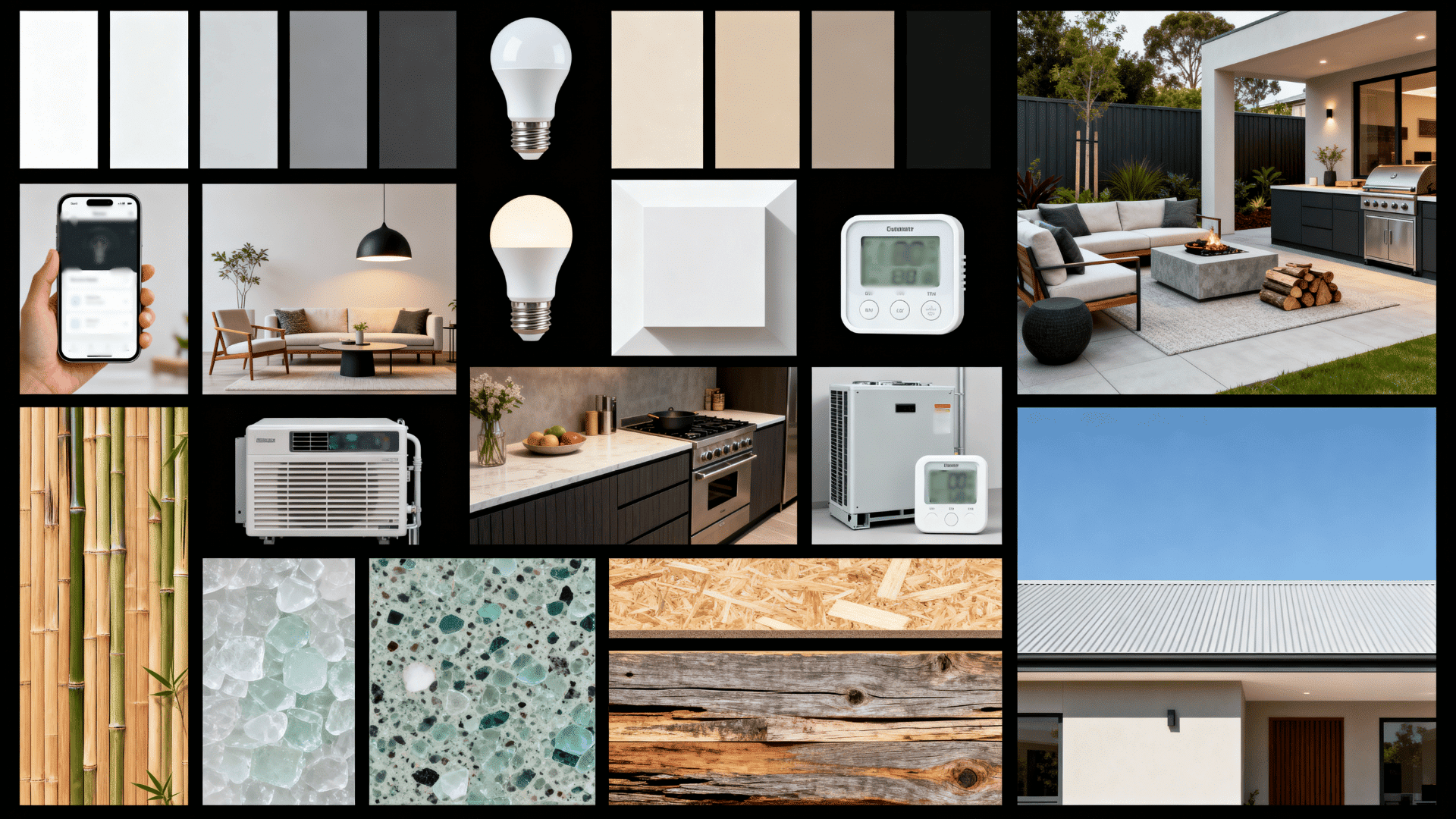
Modern homes need specific features to feel truly stylish. Here are the essentials to include in your design.
Neutral Color Scheme
Stick with whites, grays, beiges, and blacks throughout the home to maintain a calm, cohesive, and effortless appearance overall.
Smart Home Technology
Install automated systems for lighting, temperature, security, and entertainment that you can easily control from your phone or via voice commands.
Energy-Efficient Systems
Add LED lighting, programmable thermostats, and efficient HVAC systems to reduce utility bills and environmental impact, especially over time.
Geometric Shapes
Incorporate squares, rectangles, and straight angles in architecture and decor rather than traditional curved or ornate decorative elements throughout spaces.
Statement Lighting Fixtures
Choose bold, sculptural light fixtures as focal points that serve as functional art pieces while beautifully and efficiently illuminating rooms.
Outdoor Living Space
Design patios or decks as extensions of indoor rooms with comfortable seating, cooking areas, and weather protection for year-round use.
Sustainable Materials
Choose eco-friendly options like bamboo flooring, recycled glass, and reclaimed wood that reduce environmental impact while looking great.
Flat or Low-Slope Roof
Design rooflines that stay mostly horizontal rather than steeply pitched to create the signature modern silhouette people recognize immediately today.
Final Thoughts
Contemporary house design isn’t just about following trends.
It’s about creating spaces that work for how you actually live. The clean lines, open layouts, and quality materials covered give you a solid foundation. Remember, your home should first reflect your needs and lifestyle.
Start with the floor plan that fits your family. Choose materials you can afford and maintain.
Add features that make daily life better, not just look good in photos.
Your home should feel comfortable, not like a cold showroom.