
Windows dress your rooms, but getting the look right takes some thought.
You might be wondering whether you can use blinds and curtains together without it looking cluttered or weird. Good news: you absolutely can.
This combo gives you better light control, more privacy, and a finished look that works in almost any room.
Let’s break down how to pair them so your windows look intentional and polished.
Can You Combine Curtains and Blinds?
Yes, you can definitely layer. It’s not only possible but actually a wise design choice.
The blinds handle the practical stuff like blocking light and giving you privacy when you need it.
Curtains add softness and style to the window.
Together, curtains over blinds create a layered look that feels complete. You get function and beauty in one setup, which is why so many people choose this approach.
Benefits of Using Blinds and Curtains Together:
- Better light control with fewer gaps around the edges
- Extra insulation that helps regulate room temperature
- Added privacy, especially at night when lights are on
- Sound-dampening from outside noise
- More visual depth and a polished, finished appearance
- Easy style updates by swapping curtains without changing blinds
Best Types of Blinds to Pair With Curtains
Not all blinds work well under curtains. Some styles create bulk, while others layer smoothly and look intentional. Here are your best options.
1. Roller Blinds
These sit completely flat against your window.
They roll up out of sight when you don’t need them, giving curtains plenty of room to hang without looking crowded.
2. Roman Shades
Roman shades fold into soft pleats when raised.
They add texture on their own, and curtains on top create a rich, finished look that works great in living spaces.
3. Venetian or Wood Blinds
Horizontal slats give you flexible light control. Wood versions add warmth, while metal feels sleek.
Both handle heavier curtain fabrics without any issues.
4. Vertical Blinds
Perfect for sliding doors and expansive windows.
They stack neatly to one side, letting your curtains frame the opening without getting in the way of foot traffic.
5. Cellular/Honeycomb Blinds
The honeycomb design insulates your windows and stays slim.
These won’t bulk up your space, making them ideal when you want energy savings plus style.
6. Blackout Blinds
Need serious darkness? Blackout blinds block nearly all light.
Add curtains for extra coverage and a polished appearance that handles both function and looks.
Best Curtain Styles for Layering Over Blinds
The style you pick changes how your windows work and look. Here are the top options.
1. Blackout Curtains
Thick and heavy, these blocks are nearly all light. Great for bedrooms where you need total darkness.
Make sure your rod can handle the weight.
2. Sheer Curtains
Light and breezy, sheers filter sunlight without blocking it.
They add privacy during the day while keeping things bright and airy.
3. Grommet Curtains
Metal rings at the top slide smoothly on the rod.
These open and close easily with even, modern folds. Good if you’ll adjust them often.
4. Rod-Pocket Curtains
The rod slides through a sewn pocket at the top. These create a gathered look and stay in place better.
Works well for stationary panels that just frame your blinds.
Curtains Over Blinds Styling Ideas
Seeing actual combinations helps more than any guide. Here are five setups that work in real rooms.
Sheers Over Roller Blinds
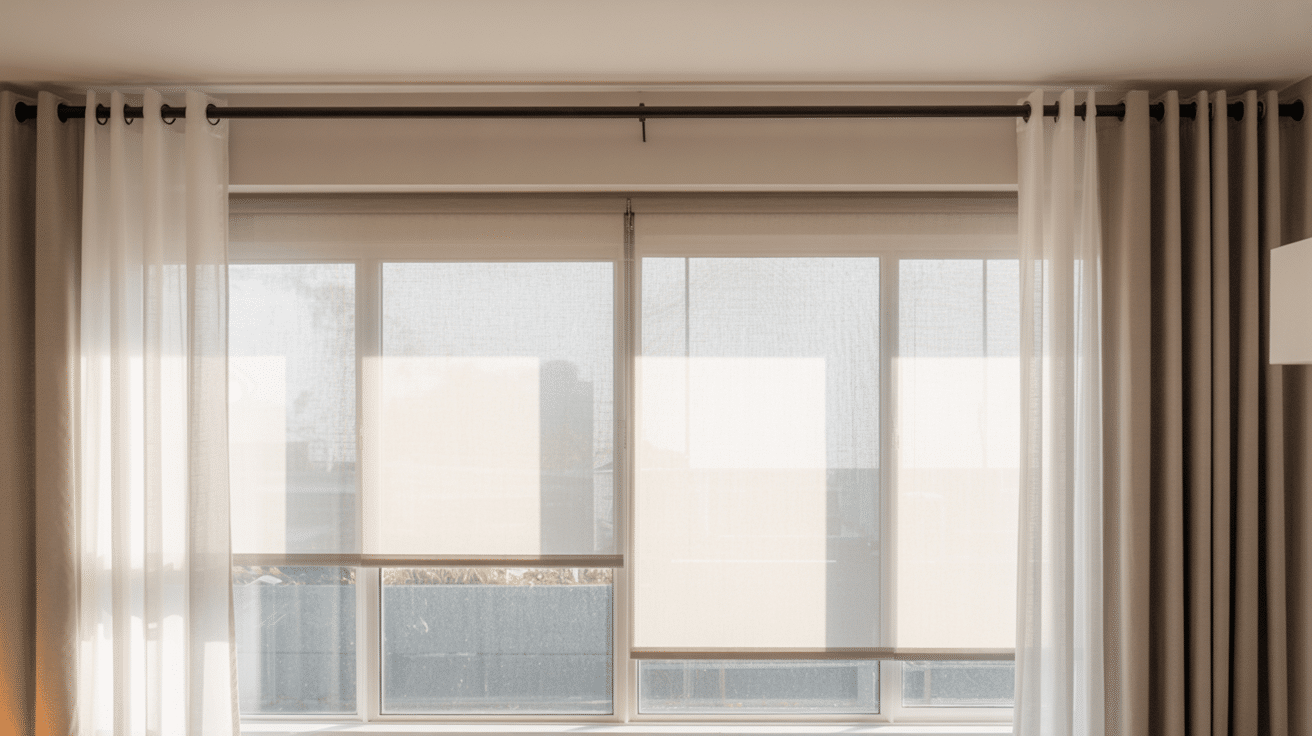
White or gray roller blinds with sheer white curtains create a clean, airy vibe. The blinds control light, and the sheers soften everything. Keep hardware simple with thin matte rods.
Curtains Over Wood Blinds
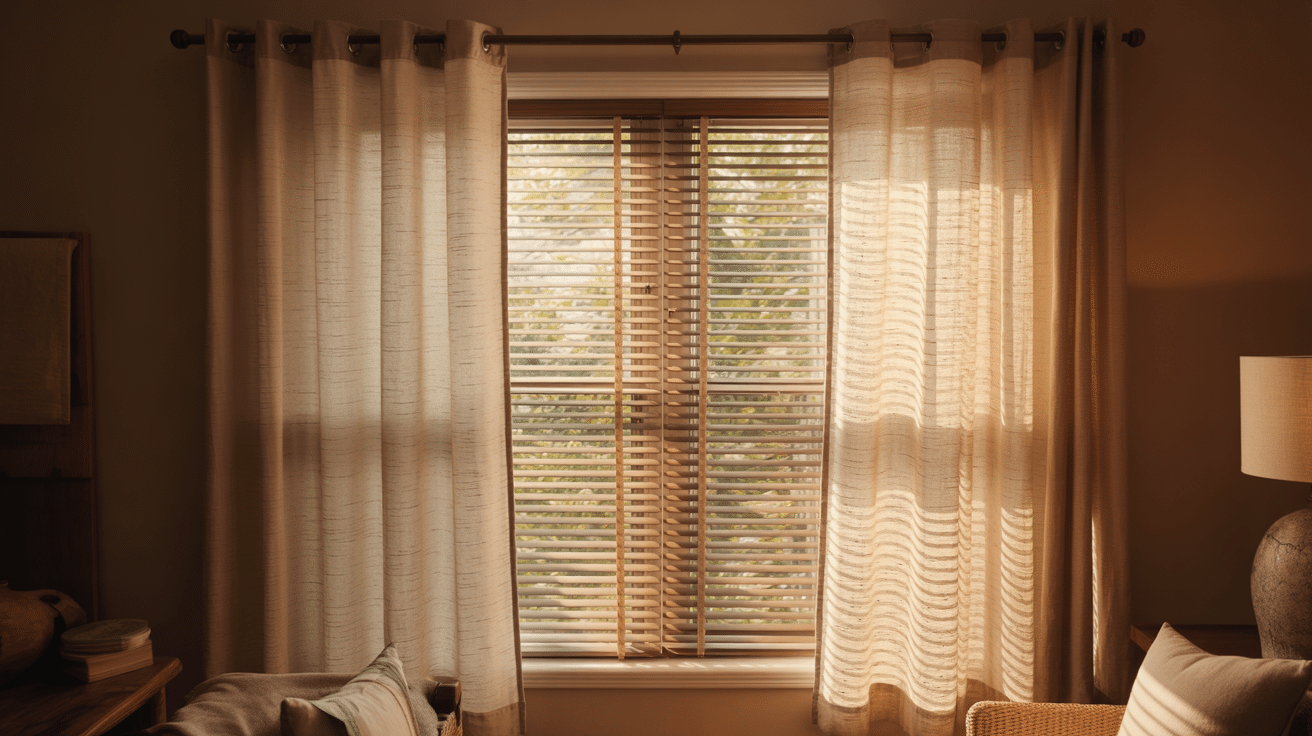
Wood blinds already bring warmth. Add linen or cotton curtains in cream or beige, and you’ve got a cozy setup. The texture mix between hardwood and soft fabric adds depth naturally.
Full-Length Drapes with Roman Shades
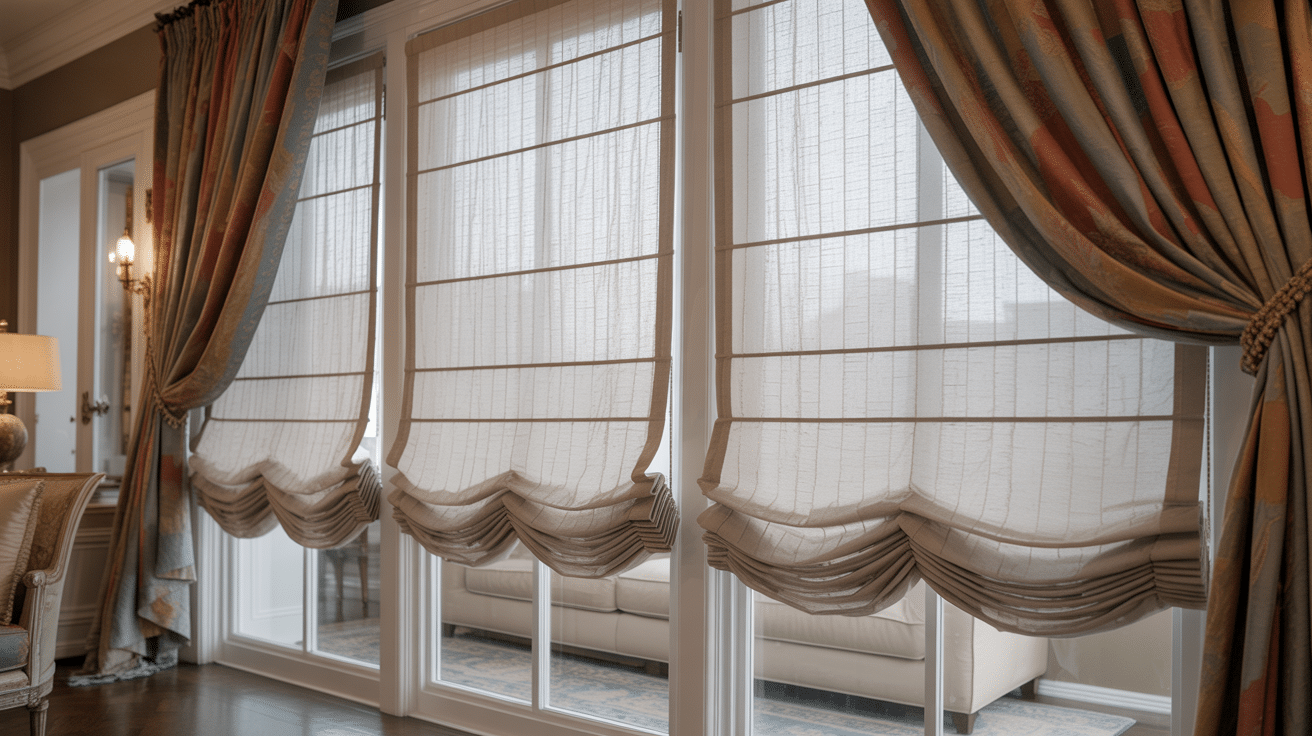
Roman shades have built-in texture. Pair them with floor-length drapes in a complementary color for a polished, expensive look. Choose drapes with weight so they hang nicely.
Blackout Curtains + Light Filtering Blinds
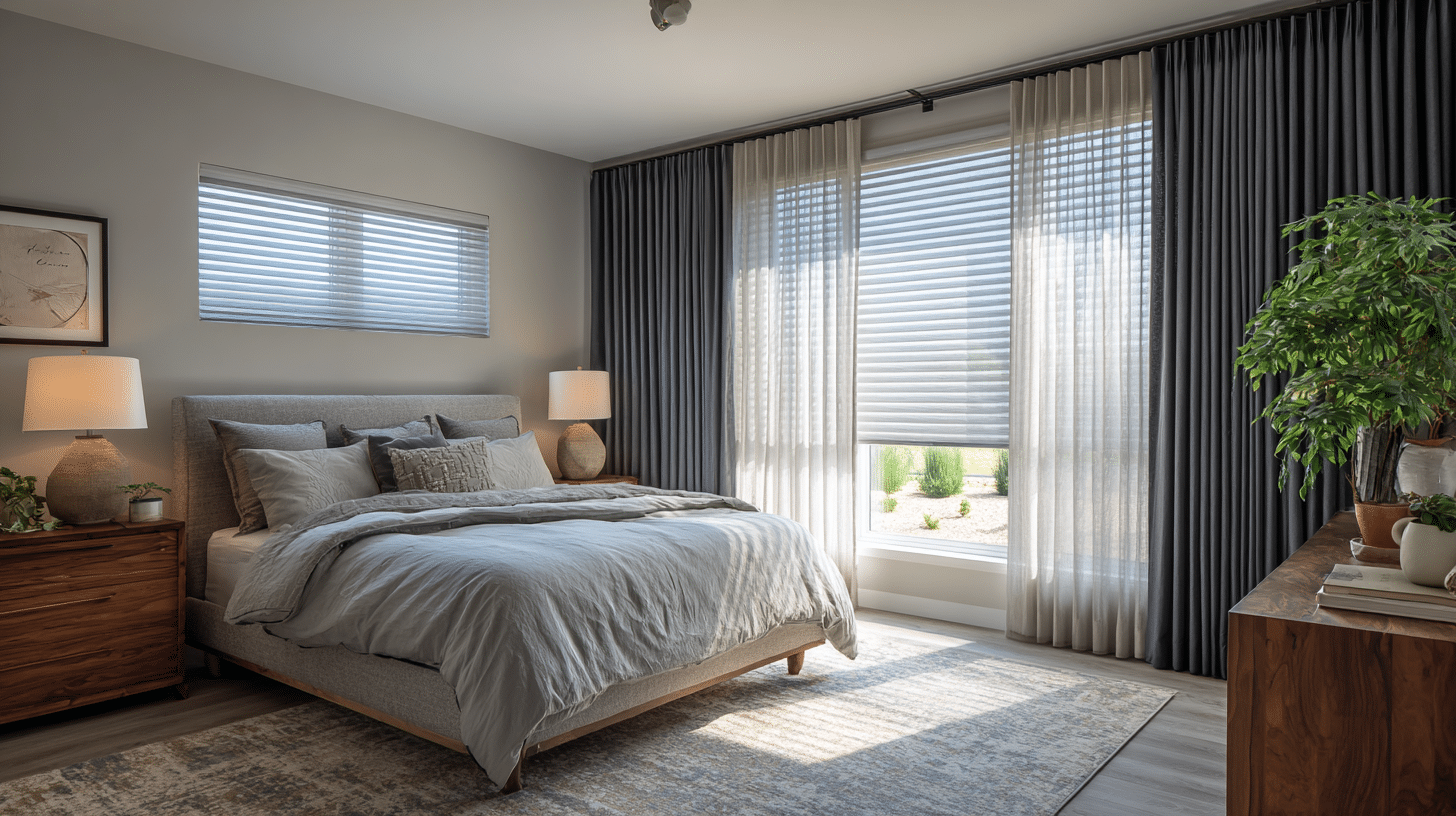
Light filtering blinds for daytime, blackout curtains for night. You get flexibility without losing function. Adjust blinds for soft light, close curtains for total darkness.
Neutral Panels with Honeycomb Blinds
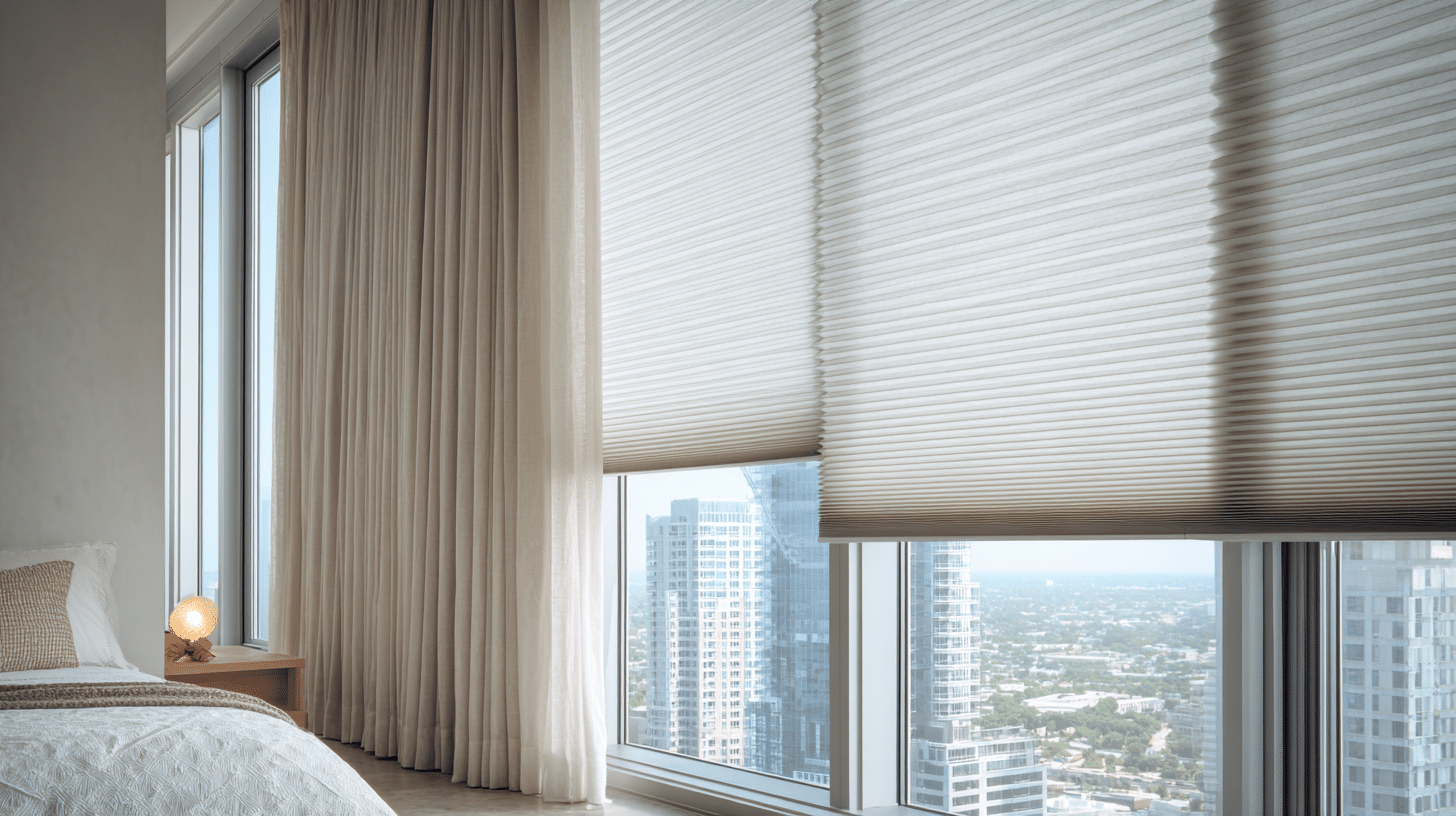
Honeycomb blinds are sleek. Add neutral panels in gray or taupe for a modern, approachable feel. The geometric blinds add interest while smooth curtains keep things calm.
Dos and Don’ts While Styling Curtains with Blinds
Getting the combination right means knowing what works and what doesn’t.
| Dos | Don’ts |
|---|---|
| Mount rods high and wide to make rooms feel taller | Don’t hang rods too close to the window frame |
| Choose curtains 1.5 to 2 times your window width | Don’t pick curtains that are too narrow |
| Test both layers before finalizing the setup | Don’t mix too many competing patterns or colors |
| Coordinate colors and textures between both layers | Don’t forget clearance space between the rod and the wall |
| Use sturdy hardware that supports the curtain’s weight | Don’t use flimsy hardware for heavy curtains |
| Let curtains touch or slightly puddle on the floor | Don’t leave curtains hanging awkwardly short |
How to Install Curtains Over Blinds (Step-by-Step)
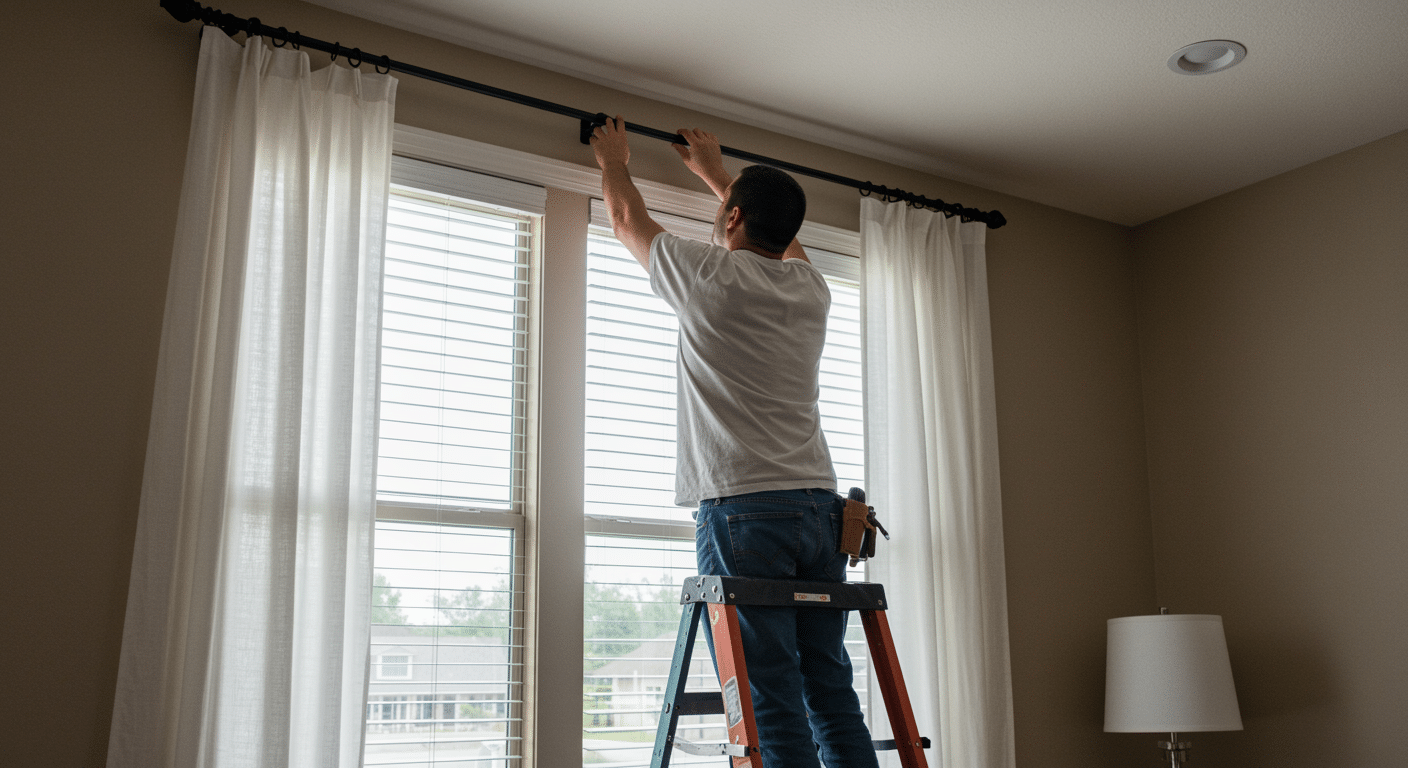
Installation of blinds and curtains together is simple when you follow these steps.
Step 1: Measure Window Width and Height
Measure your window frame width and add 6 to 12 inches on each side. For height, measure from 4 to 6 inches above the frame down to the floor.
Step 2: Choose the Right Curtain Rod
Pick a sturdy rod that extends 3 to 6 inches past each side. Make sure the brackets provide enough wall clearance so the curtains don’t catch on the blinds.
Step 3: Install Brackets Above and Outside the Window Frame
Mark bracket spots 4 to 6 inches above the frame. Use a level, drill pilot holes, and screw in brackets. Use anchors in drywall.
Step 4: Hang Curtains and Adjust Them for Full Coverage
Slide the curtains onto the rod and place them on the brackets. Arrange the fabric evenly, and make sure the panels reach the floor and cover the edges when closed.
Step 5: Test Light Control and Privacy
Open and close curtains several times. Check that nothing catches and both systems work together smoothly. Adjust if needed.
Tips for Styling Curtains Over Blinds
A few smart styling moves make all the difference.
- Hang curtains higher and wider. Mount closer to the ceiling and extend past the frame to make rooms feel taller and windows bigger.
- Layer sheers with blackout curtains. Double rods give you daytime privacy and nighttime darkness without choosing between them.
- Use tiebacks during the day. Stack curtains to the sides to expose blinds and let in more light while adding a polished look.
- Match rods to your hardware. Coordinate with other metal finishes in the room. Too many mixed metals look unplanned.
- Keep small windows simple. Heavy drapes and thick blinds overwhelm smaller spaces. Stick with sheers or simple panels.
- Test before committing. Live with your setup for a few days before making it permanent. Adjust what doesn’t work in real use.
- These touches separate good from great. Now let’s wrap this up.
Final Notes
Layering curtains with blinds isn’t complicated once you know the basics.
Pick blinds that stay flat, choose curtains that match your needs, and hang everything at the right height.
Test the setup daily to make sure it actually works.
The best combinations balance what you need functionally with what looks good in your space. Get those pieces right, and your windows will feel complete instead of half-finished.