
Most contractors completely guess their paint numbers.
And then they wonder why the job made no money.
I can’t tell you how many times I’ve talked to a contractor and they’re like, “Yeah, the job went great… but we didn’t really make anything.” And when we break it down, it’s almost always finishes—paint, cabinets, trim—where they got hit.
Paint is one of those things that looks easy… until you actually start doing it at scale. Kitchens, bathrooms, full house refreshes—this is where your margin either gets protected or completely wiped out.
If you’re serious about growing, you can’t treat paint like some throwaway line item. You need a system. That’s why a lot of guys end up using
residential estimating services early on—just to get consistent numbers and stop guessing on every job.
Why Paint Actually Matters More Than You Think
Here’s the reality.
The homeowner doesn’t care about your framing, your layout, or how clean your rough-in was.
They walk in… and they see paint.
I had a job early on where everything behind the walls was perfect. Structurally, it was one of the cleanest jobs we had done. But the painter rushed the finish, and the homeowner immediately started pointing out imperfections.
And in their mind, the entire job was bad.
That’s when it really clicked for me—paint is what people judge everything else on.
So from an estimating standpoint, paint isn’t just a couple gallons and a day of labor. It’s materials, prep, labor, surface conditions, and the type of paint you’re using.
And most contractors completely ignore at least half of that.
That’s exactly where the money gets lost.
Different Types of Paint (This Is Where Your Numbers Get Off)
You can’t price every part of a house the same. That’s the mistake a lot of guys make when they’re starting out.
Different areas of a home require different paint, different prep, and different levels of detail.
Flat paint and matte finishes are typically used for ceilings and low-traffic areas like bedrooms. It’s cheaper and more forgiving, which is why it’s popular. But I’ve been on jobs where we thought one coat would cover, and it turned into two or three because of color differences. That alone adds hours you didn’t plan for.
Eggshell and satin are your standard for most residential walls. Kitchens, living rooms, hallways—this is where homeowners expect durability and cleanability. It costs more than flat, but the bigger factor is expectations. You can’t leave roller marks or uneven finishes. So your labor needs to reflect that.
Then you move into semi-gloss and gloss. This is where a lot of contractors get hit.
I remember one project where we underbid all the trim because we treated it like walls. Big mistake. Every imperfection showed, so we had to go back, sand more, repaint—it turned into way more labor than we planned.
And then kitchens and bathrooms take it even further.
Now you’re dealing with moisture-resistant paints, cabinet-grade enamels, and specialty coatings. These materials cost more, but more importantly, they require more steps. Priming, multiple coats, proper dry time—if you skip any of that, the finish fails.
If you’re not adjusting your estimate based on these differences, your numbers are already off before the job even starts.
How to Actually Estimate Paint (The Right Way)
Most contractors think estimating paint is just square footage.
That’s not how it works.
You need to measure actual surfaces. Walls, ceilings, trim—everything separately. Because each one has a different level of effort.
Early on, I used to just take the square footage of the house and try to back into a number. It worked sometimes… but it wasn’t consistent. Some jobs made money, some didn’t.
Once you start breaking it down properly, your numbers start making sense.
Paint typically covers around 300 to 400 square feet per gallon per coat. But that’s just a baseline.
Now you have to multiply by how many coats you actually need. In residential work, you’re almost always doing at least two coats on walls. Sometimes more if there’s a color change or poor surface condition.
If you’re going from dark to light, you might need a primer plus two coats. That’s three full applications.
I’ve had jobs where we didn’t account for that, and what should’ve been a one-day task turned into two or three.
And then you need to factor in waste. Always.
At least 10 to 15 percent. More if you’re dealing with rough textures or detailed areas.
If you skip that step, your numbers will always come in short.
The Real Problem: Labor (This Is Where You Win or Lose)
This is the biggest gap I see.
Most contractors focus on the cost of paint.
That’s not the problem.
Labor is the problem.
Paint labor is not just rolling walls and leaving. You’ve got masking, covering floors, protecting cabinets, patching holes, sanding surfaces, priming, applying coats, waiting for dry time, doing touch-ups, and cleaning everything up at the end.
Every one of those steps takes time.
And time is what you’re actually selling.
Kitchens and bathrooms are even worse. Tight spaces, more cutting, more detail, more obstacles.
And then there’s cabinets.
I’ve seen guys completely blow an entire job just on cabinets because they didn’t realize how long it takes. You’re removing doors, labeling everything, sanding, priming, coating, drying, reinstalling—it’s a process.
That can easily take multiple days by itself.
If you’re pricing cabinets like they’re just another wall… you’re losing money every time.
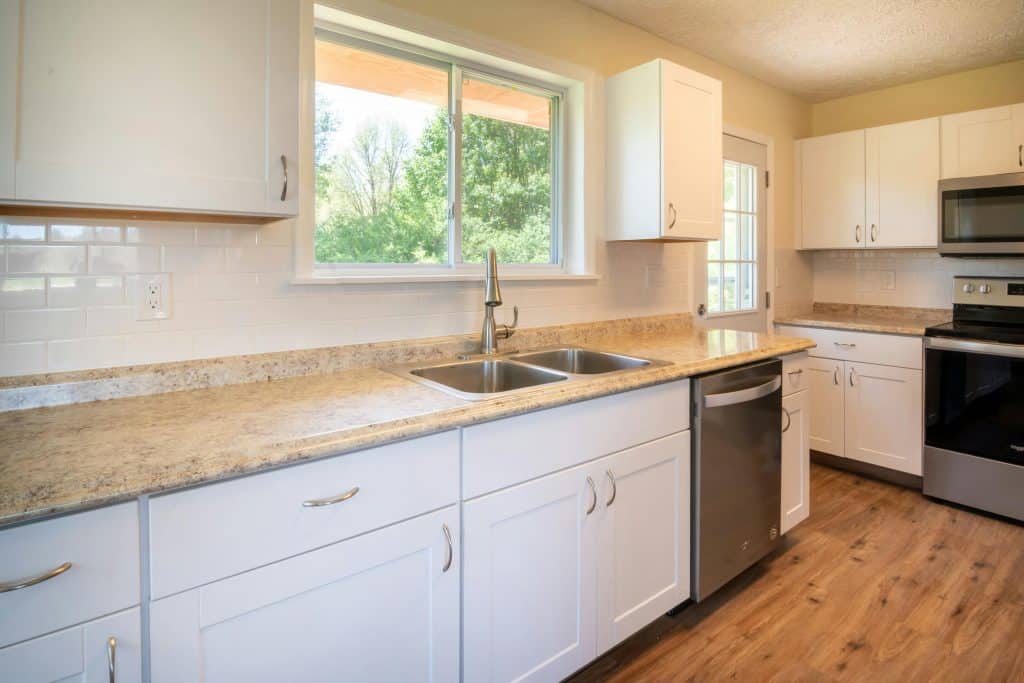
Real Example: Kitchen Renovation Breakdown
Let’s make this real.
You walk into a kitchen project. The homeowner says, “We just want to repaint everything.”
Sounds simple.
But once you break it down, it’s not.
Walls and ceilings might take one to two full days.
Trim could take another full day.
Cabinets? Two to four days depending on prep.
I had one job where we thought cabinets would take two days. It ended up taking four because of the level of finish the client wanted.
So now what looked like a simple “paint job” is actually a multi-phase process that takes close to a week.
That’s what you’re estimating.
Not paint.
Time.
Where Contractors Consistently Lose Money
It’s the same pattern over and over again.
They don’t charge enough for prep because the customer doesn’t “see it.”
They assume two coats when the job really needs three.
They use the wrong type of paint.
They underestimate cabinets and trim.
They rush detail work and end up coming back.
I’ve made all of these mistakes myself. That’s how I know.
It’s not random.
It’s a lack of system.
Paint Drives Property Value (More Than You Think)
This is something a lot of contractors overlook.
Paint is one of the fastest ways to change how a house feels—and how much it’s worth.
If you’re working with homeowners, it affects their satisfaction. If you’re working with investors, it affects their return.
Clean, professional paint jobs can increase rental value, reduce vacancy, and improve resale.
That’s why companies like Graystone Investment Group focus heavily on finishes and maintenance. They understand that paint isn’t just cosmetic—it’s part of the investment strategy.
Paint estimating isn’t complicated.
But you can’t wing it.
If you’re just throwing numbers together, you’re going to keep running into the same problems. Jobs that should’ve made money won’t. Timelines will drag. Margins will disappear.
But once you build a system around it—understanding paint types, measuring correctly, and actually accounting for labor—you start to see consistency.
Your bids get tighter.
Your margins get better.
You stop guessing.
And that’s when you actually start scaling your construction business.