
Did you know that ceiling leaks can cause wood and drywall to rot? You don’t want to deal with structural decay or electrical problems in your home due to a water leak. With swift action and a level head, you can navigate a ceiling situation effectively.
Stay with us as we outline the best steps to address a ceiling leak without panicking.
Determine the Source of the Leak
When you notice moisture, water spots, or other visible signs of a leak, don’t panic. Instead, try to figure out where the water leak originates.
Consider if there is a fast drip or if it’s slower. And look for signs that the water is pooling on the floor or other surfaces. You want to assess the level of urgency needed to address the leak.
Shut Off the Power
Look at the area around the leak. If you have lamps, outlets, and other electrical sources near a living room ceiling leak, for instance, it’s best to err on the side of caution. Access your home’s breaker panel and turn off the power to that area. You don’t have to turn off all power, but limiting electrical risks near the leak is critical for your safety.
Catch the Water
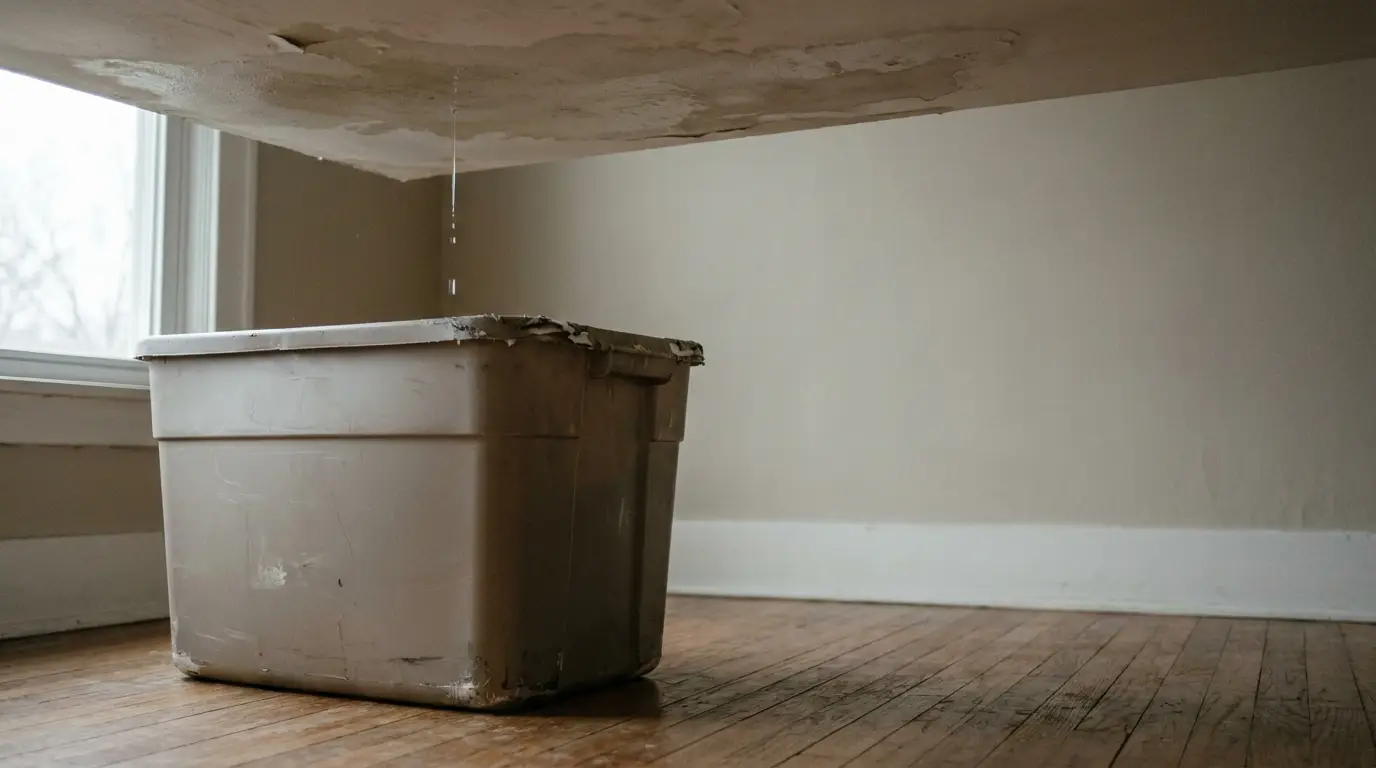
Before addressing the leak, make sure you have something to keep the water from spreading. Look for large storage bins, especially if you’re seeing a rapid drip.
Check your ceiling for signs of bulging, too. To avoid a ceiling collapse, you might have to poke a small hole to let out excess water. Be sure to have a bucket or bin to catch that water, too.
Relocate Furniture and Personal Items
Water damage can force you to throw away electronics and some furniture if you’re not careful. Relocate all belongings, including area rugs and furniture items, right away.
If you have trash bags, you can use them to cover and protect furniture that is too difficult to move. Remove any window curtains that could be in the path of water leaks, as well.
Consider Reaching Out to a Professional
While you might be able to tackle a small leak or buy time, ultimately, it’s best to have a professional take a look at the problem. Whether you’re in your home or at your business, you don’t want to take chances with a faulty repair.
If you’re in Houston, Houston commercial roof leak repair professionals can intervene. They’ll be able to find the source of the leak and create a permanent solution. With quick action, you can avoid warped materials, rot, and mold growth within your walls.
Reduce Incoming Water
Until you can get professional assistance for the leak, you’ll want to do everything possible to prevent more water from entering your home or business. If you’re able to access an attic, for instance, you may be able to place a tarp on the floor. Don’t take chances with your safety, though, if it’s too hard to reach the leak.
Take Photos of Damage
Be sure to document all damage due to the leak. Photographs and videos that show gushing water or damage to your ceiling will be helpful when you file a claim with insurance. If any personal belongings are damaged, take photos of those, as well.
Stay Calm During a Ceiling Leak
Yes, a ceiling leak can feel like an overwhelming situation. But when you stay calm, you can locate the source of the leak and take action to collect water. Reach out to professionals, too, so your leak doesn’t get any worse.
With a careful approach, you can help stop the leak and avoid costly repairs.