
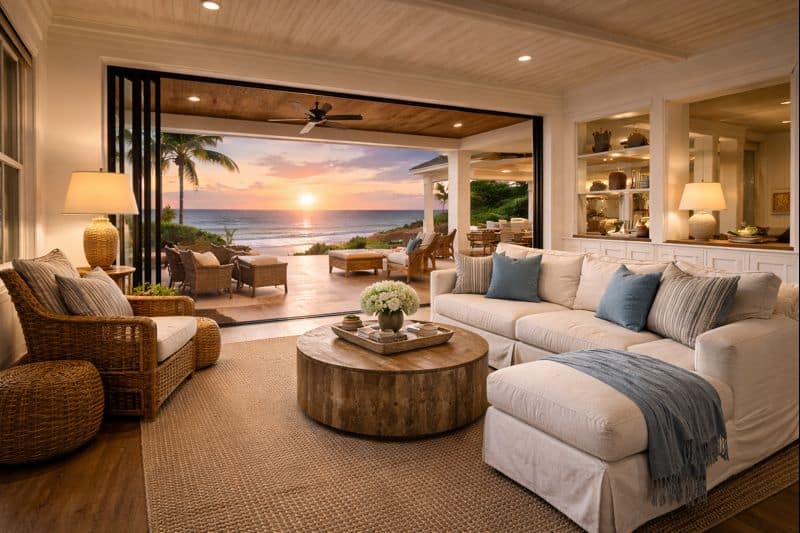
Beach houses are easy to admire, but hard to design well. The ultimate coastal home is not defined by themed décor or trendy finishes, but by how well it responds to sun, wind, salt, and daily life near the water. A successful beach house balances openness with protection, beauty with durability, and relaxation with long-term performance.
In this guide, we look inside the ultimate beach house and outline the features every coastal home needs, from layout and materials to climate control and safety. Whether the goal is a full time residence or a seasonal retreat, the right design choices turn a coastal house into a place that truly works.
Start With the Setting: How Coastal Life Changes Design Priorities
Contemporary coastal architecture firm designers often begin with a simple truth, coastal conditions are harsher than most homeowners expect. Salt air accelerates corrosion, sun exposure fades finishes, humidity invites mold, and wind drives moisture into every weak joint. These forces reshape design priorities from the very first planning stage. Durability matters as much as beauty. Ventilation becomes as important as insulation.
Drainage, material selection, and orientation are no longer details, they are foundations of the design. A beach house that ignores its environment will age quickly, while one that responds to it can stay comfortable, efficient, and attractive for decades.
A Layout Built for Breezes, Views, and Easy Movement
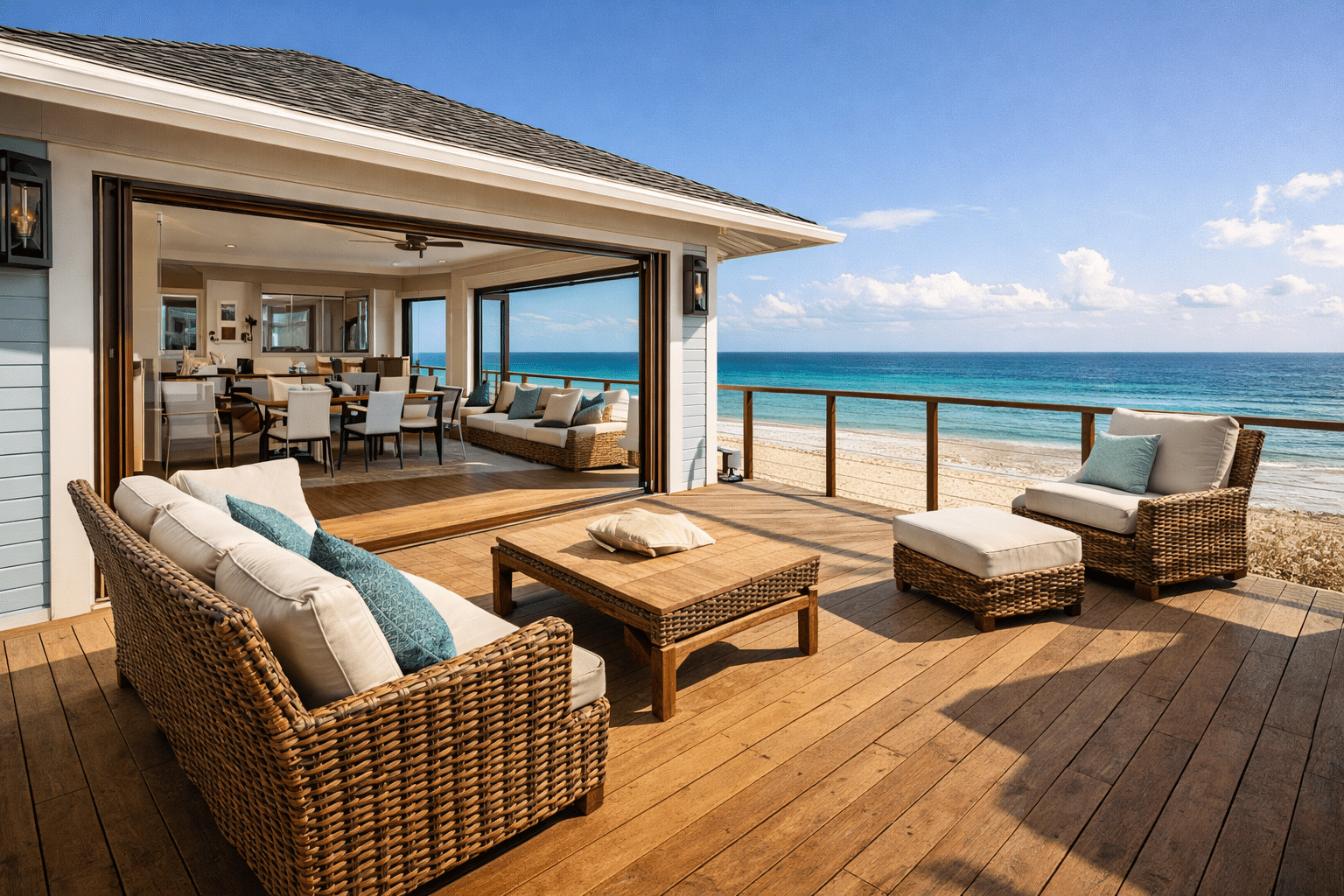
The best beach house layouts feel effortless, but they are carefully planned. Open plans allow air and light to move freely, yet smart zoning keeps noise and traffic under control. Circulation paths should be wide and intuitive, guiding people naturally from entry to living space to outdoor areas.
Sightlines to the water deserve priority, with main living spaces oriented toward views rather than hallways or service rooms. Many coastal homes elevate primary living areas to capture breezes and reduce flood risk. When the layout supports airflow, movement, and views, the house feels calm even at peak occupancy.
Indoor–Outdoor Living That Actually Works
Indoor–outdoor living is a defining feature of great beach houses, but it only works when details are right. Large sliding or folding doors should open wide without creating awkward thresholds. Covered porches protect from sun and rain while extending usable space. Screened areas allow breezes without insects.
Outdoor showers keep sand out of interiors, and simple outdoor kitchens make entertaining easy. Materials must tolerate moisture and heat without warping or staining. When indoor and outdoor spaces connect smoothly, the house expands naturally and daily life feels less confined.
Materials and Finishes That Hold Up to Salt, Sun, and Sand
Material selection separates long-lasting beach houses from those that age poorly. Hardware should be corrosion resistant. Windows and doors need coastal grade seals and frames. Flooring must tolerate moisture, sand, and frequent cleaning. Exterior cladding should resist UV damage and salt spray without constant repainting.
Inside, finishes should be easy to maintain without sacrificing warmth. Low maintenance does not mean low quality. It means choosing products that perform quietly for years instead of demanding constant repair or replacement.
Smart Climate Control, Ventilation, and Dehumidification
Comfort in a coastal home depends as much on humidity control as temperature. Cross ventilation and ceiling fans reduce reliance on mechanical systems. HVAC should be sized for moisture removal, not just cooling. Dehumidifiers protect finishes and furnishings. Zoned systems improve comfort across changing conditions.
Smart thermostats adapt to occupancy and weather patterns. A well designed climate strategy prevents mold, protects materials, and keeps the house comfortable without excessive energy use.
Storage Solutions for Beach Gear and Real Life
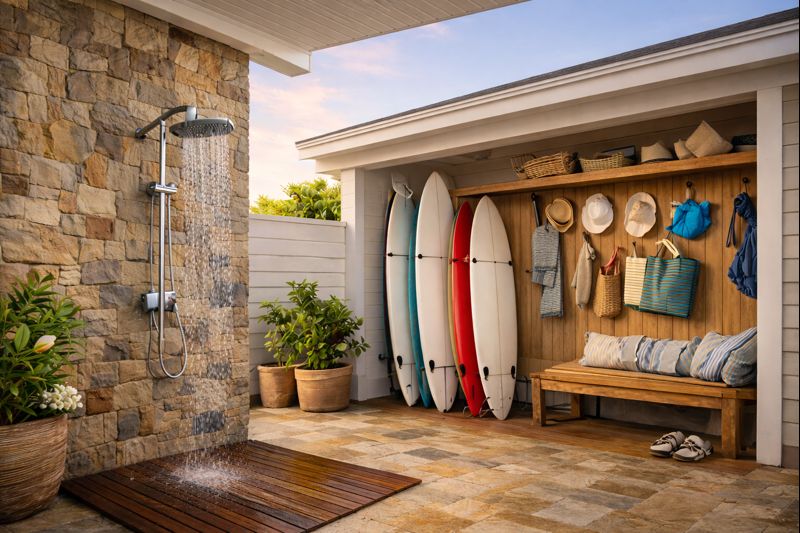
Beach life comes with gear, towels, toys, boards, and wet clothing. Without proper storage, clutter spreads quickly. Mudroom style entries create natural drop zones. Built-in benches and cabinets organize daily traffic. Towel storage near outdoor showers reduces mess. Laundry areas should sit close to entry points. Easy clean surfaces near doors contain sand before it travels. When storage supports real behavior, the house stays orderly even during busy weekends.
Coastal Safety and Resilience Features Worth Building In
Resilience is a quiet but critical feature of every coastal home. Impact resistant glass, storm shutters, and reinforced roofs protect against severe weather. Mechanical systems should be elevated above potential flood levels. Drainage must direct water away from foundations.
Backup power keeps essential systems running during outages. Exterior lighting and security features protect vacant homes. These measures may not be visible every day, but they define how the house performs when conditions turn difficult.
The Finishing Touches That Make It Feel Like a True Beach House
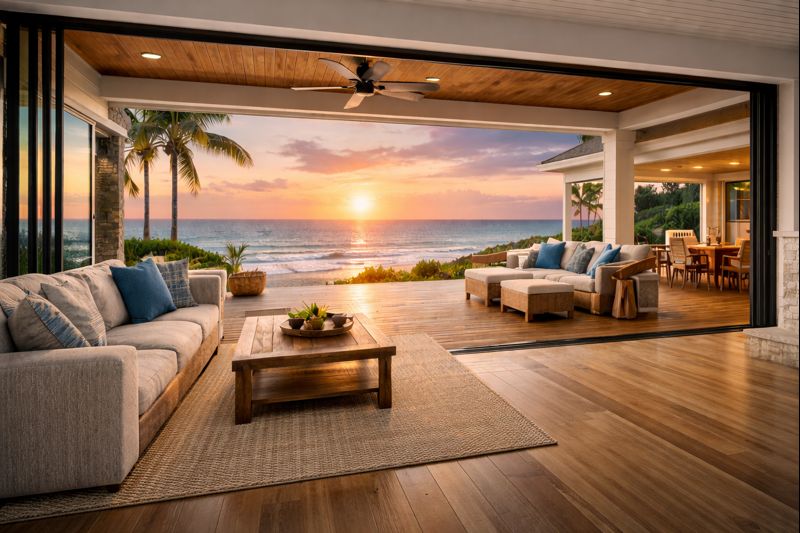
The final layer is the atmosphere. Lighting should feel soft and layered, not harsh. Textiles must be durable but inviting. Color palettes work best when calm rather than themed. Acoustics matter in open spaces. Quiet luxury outperforms novelty. When support comfort finishes instead of decoration, the house feels natural rather than staged. In the end, the ultimate beach house is not about trends. It is about building a home that lives well by the sea, year after year.