
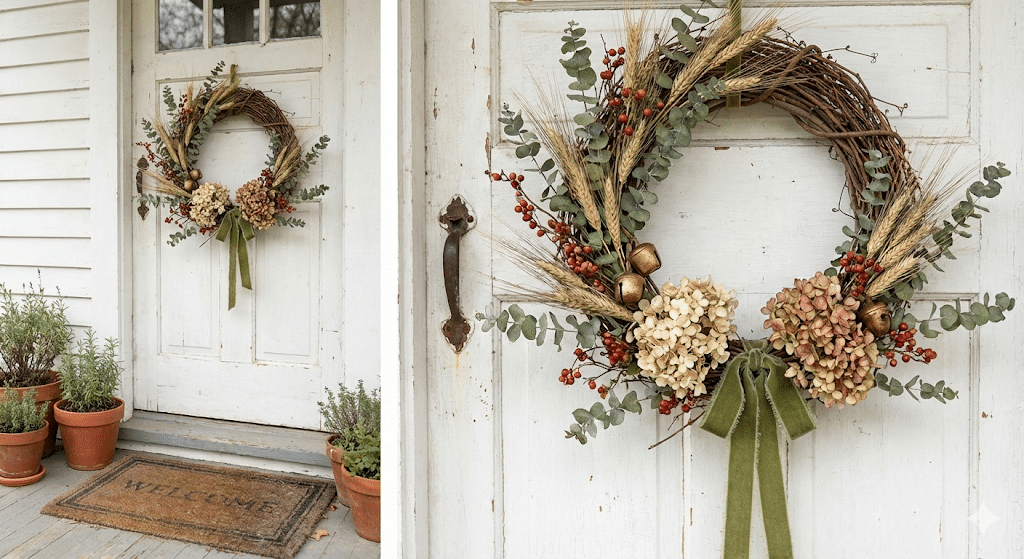
If you were to drive past my little farmhouse on any given Tuesday—whether it’s a crisp October afternoon or a sweltering July morning—you would notice one consistent thing: there is always something hanging on my front door.
For years, I treated wreaths as strictly “seasonal bookends.” I had my pine and holly for Christmas, and maybe a grapevine wreath with a few faux pumpkins for fall. The rest of the year? My door remained bare, a blank canvas waiting for a holiday to justify a little decoration. But as I’ve dived deeper into making our house a home, I’ve fallen in love with the idea that wreaths aren’t just holiday decor; they are a timeless tradition that spans centuries, cultures, and seasons.
A wreath is more than just a ring of twigs and flowers. It is the “jewellery” of your home’s exterior. It is a universal symbol of welcome, a circle of eternity, and a way to celebrate the shifting rhythms of nature right on your doorstep. Today, I want to take a little journey through the history and tradition of wreaths and share how you can embrace this beautiful custom for every occasion—not just the snowy ones!
Wreaths for Life’s Special Moments
Beyond the changing seasons, wreaths have a beautiful place in marking personal milestones.
The Wedding Wreath:
In many European cultures, rosemary (for remembrance) and myrtle (for love) are woven into wreaths for the couple. I love the idea of preserving your wedding bouquet and having it reworked into a wreath to hang in your master bedroom. It’s a keepsake you can admire every day.
The Nursery Wreath:
Celebrating a new arrival? A soft, lambs-ear or cotton boll wreath on the nursery door is a sweet, modern alternative to the traditional stork sign. It creates a hushed, gentle vibe right at the entrance to the baby’s room.
The Memorial Wreath:
Just as the circle represents new life, it also represents the completion of life. Sympathy wreaths are a traditional way to honour a loved one, symbolizing that their spirit, like the circle, has no end.
The Circle of Life: A Brief History
Before we get into the fun styling tips (and you know I have plenty!), I think it’s so cool to look at why we hang these things in the first place. The tradition goes back way further than the Victorian Christmas cards we often picture.
In ancient Greece and Rome, wreaths were symbols of victory and status. Winners of athletic games were crowned with laurel wreaths, and leaders wore them as a sign of authority. But for the everyday home, the wreath has always been deeply connected to the earth.
The word “wreath” comes from the Old English word writhan, meaning “to twist.” Ancient cultures would twist wheat and other crops into circles to hang on their doors as a way of asking for a bountiful harvest or protecting the home against crop failure. The circular shape is significant, too—it has no beginning and no end. It represents eternity, the cycle of the seasons, and the circle of life.
When I learned that, it completely changed how I looked at my door decor. Hanging a wreath isn’t just about “curb appeal” (though it helps!); it’s a way of honouring the season we are in and creating a continuous circle of warmth for everyone who enters.
Spring: Awakening and Rebirth
After a long, grey winter, nothing lifts the spirits quite like the first signs of spring. The tradition of the spring wreath is rooted in the celebration of new life.
The Symbolism:
In many cultures, spring festivals (like May Day) involved weaving fresh flowers into garlands and hoops to celebrate the return of the sun. The egg, a common motif in Easter wreaths, is the ultimate symbol of rebirth and potential.
Farmhouse Styling for Spring:
For my spring wreaths, I love to keep things light, airy, and a little “imperfect.”
- Materials: Forsythia branches, pussy willow, and tulips are my go-to stems. They represent that first burst of colour.
- The Look: Try a “deconstructed” wreath. Instead of covering the entire form, leave some of the natural grapevine or gold hoop exposed. It feels fresh and modern.
- The Occasion: Spring wreaths are perfect for Easter, of course, but they are also traditional for welcoming new neighbours. A wreath made of fresh herbs (like rosemary and thyme) is a fragrant and functional housewarming gift that honours the kitchen garden tradition.
Summer: Abundance and Welcome
Summer wreaths are often overlooked, which I think is a tragedy! This is the season of “open doors”—of neighbourhood barbeques, iced tea on the porch, and kids running in and out. A summer wreath signals that your home is open for business (the fun kind!).
The Symbolism:
Historically, midsummer wreaths were made with St. John’s Wort and other sun-loving herbs to ward off bad spirits and celebrate the summer solstice. They were often thrown into bonfires at the end of the festival as a way of releasing the old and welcoming the new.
Farmhouse Styling for Summer:
I lean into two themes for summer: The Garden and The Coast.
- The Garden Look: Think big, bold hydrangeas. I love drying my own hydrangeas (you can find my tutorial on that in the archives!) and stuffing them into a willow basket to hang on the door. It’s a “wreath” in spirit, if not in shape.
- The Coastal Look: Even if you’re landlocked like me, a wreath made of driftwood, oyster shells, or simple seagrass rope adds a breezy, relaxed vibe. It says, “We’re in vacation mode.”
- The Occasion: Summer is prime wedding season! A wreath on the door of the bride’s home—or hung on the church doors—is a classic tradition symbolizing the unending love of the couple.
Autumn: The Harvest Home
This is arguably the “Super Bowl” of wreath seasons for us farmhouse lovers. The tradition of the harvest wreath is perhaps the oldest of them all.
The Symbolism:
In ancient times, the “Harvest Knot” or wheat sheaf was created from the very last stalks of grain cut from the field. It was believed that the spirit of the corn lived in this final sheaf. By weaving it into a wreath and bringing it indoors, families believed they were keeping the spirit of the harvest safe and warm through the winter, ensuring success for the next year’s planting.
Farmhouse Styling for Autumn:
I love to honour this “gathering” tradition by using natural, foraged materials.
- Materials: Dried corn husks, wheat stalks, pheasant feathers, and dried lotus pods.
- The Look: Layering is key. I often start with a flat magnolia leaf wreath as a base and then wire in clusters of dried wheat and velvet pumpkins. The textures should feel rich and cozy.
- The Occasion: Thanksgiving is the obvious one, but a harvest wreath is appropriate from late September all the way through November. It’s a visual representation of gratitude.
Winter: Light in the Darkness
And here we are, back to the classic. The winter wreath is deeply rooted in the concept of perseverance.
The Symbolism:
Evergreens like pine, holly, and ivy were revered because they stayed green when everything else turned brown and died. Hanging them on the door was a promise that life would return. The circular shape also mimics the sun, reminding us during the darkest days of the year that the light will come back.
Farmhouse Styling for Winter:
While I love a good red bow, I’ve recently been drawn to “Winter Woodland” themes.
- Materials: Juniper berries, cedar branches, pinecones, and bells.
- The Look: I love adding vintage brass bells to my winter wreaths. Not only do they look beautiful against the deep green, but the sound of them jingling when the door opens is just magical. It creates a sensory experience.
- The Occasion: Advent is a major tradition involving wreaths, usually lying flat on a table with candles. However, you can mirror this on your door by adding battery-operated fairy lights to your wreath, literally bringing light to your entryway.
Finding Your Inspiration
One of the things I love most about the wreath-making community is how creative it has become. We aren’t limited to the plastic-looking flowers of the past. Today, florists and artisans are doing incredible things with dried natives, structural branches, and unexpected materials.
If you ever feel stuck in a rut or need to see how the pros balance colour and texture, I highly recommend browsing professional collections for inspiration. For instance, the wreath collection at Spearwood Florist’s website is a great example of how diverse these designs can be. They showcase everything from vibrant, fresh floral wreaths to muted, lasting dried arrangements. Seeing how professional florists combine textures—like pairing soft bunny tails with architectural banksia—often gives me the courage to try new combinations in my own DIY projects.
A Tradition for Everyone
Whether you forage for twigs in your backyard to make a wild, rustic creation, or you invest in a stunning preserved masterpiece that you bring out year after year, the act of hanging a wreath is significant.
It is a small act of beauty. It is a nod to the history of those who came before us, twisting wheat and vines to protect their homes. And most importantly, it is a way to say to the world (and to yourself), “This home is cared for. This season is celebrated. And you are welcome here.”
So, friends, I challenge you: don’t wait for December. Find a reason to hang a wreath today. Maybe it’s to celebrate the blooming of your hydrangeas, or maybe it’s just because it’s Tuesday and your door needs a smile.