
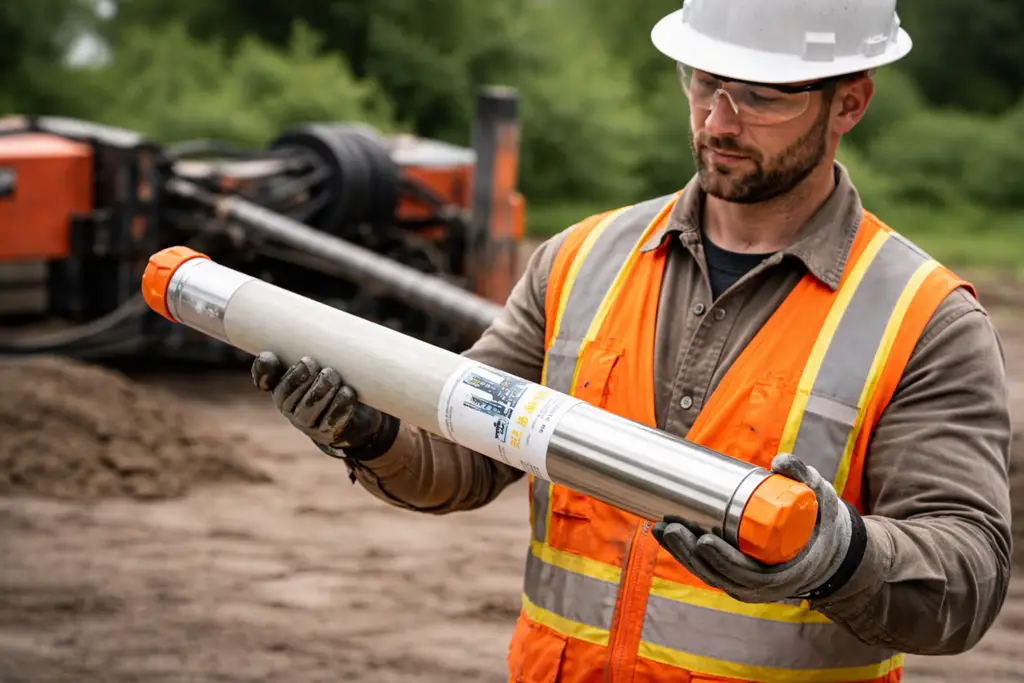
A sonde is easy to overlook when you price a bore setup. It is small. It rides out of sight. On paper, it can look like one more component. In the field, it is not. A Ditch Witch sonde helps your crew track the head, read pitch and roll, monitor temperature and battery status, and keep the bore on line.
That is why the question is not just, “Should I save money and buy a used Ditch Witch sonde?” The better question is, “What kind of risk can this job, this crew, and this schedule afford?”
A new sonde gives you a clean starting point. You know the model, the support path, the warranty terms, and the condition on day one. A used sonde can still be a smart buy, but only when the basics line up: frequency, depth range, housing fit, battery setup, software path, and service history. If those details are unclear, the lower purchase price can fade fast in weak reads, downtime, or a unit that does not fit the work you do.
For HDD contractors and utility contractors in the U.S., this is the real standard. The right sonde is not the cheapest one or the newest one by default. It is the one that fits your locator system, your bore conditions, and your tolerance for downtime.
Start With Compatibility, Not Price
Most buying mistakes happen before anyone talks about condition, especially when a contractor is comparing a new vs. used Ditch Witch sonde. They happen when someone assumes that the right brand name is enough. It is not.
Compatibility comes first because a sonde only works well when it works cleanly with the rest of the system. That means the tracker, the display, the downhole housing, and the update path. Subsite says its Marksman Series beacons perform best in approved downhole tool housings. Its product literature also shows that depth range can change with frequency, battery type, and housing. That matters. A used sonde that powers on is not automatically a good buy if it does not fit the rest of your setup.
This matters even more with mixed fleets and older equipment. A contractor may only want a direct replacement for a familiar unit. Another crew may be trying to bridge older tooling with newer trackers or newer software. That is where problems start. The sonde may still function, but not at the level the job requires. A narrow frequency set, the wrong housing fit, or an awkward update path can turn a bargain into a delay.
New tends to win here because the picture is cleaner. You know what you are buying and where it fits. Used makes sense only when you can verify the exact model and confirm that it belongs in your current system. If that match is unclear, price should not lead the decision.
Why “Same Brand” Is Not Enough
Brand familiarity can create false confidence. A contractor sees Ditch Witch or Subsite on the label and assumes the rest will sort itself out. It will not.
Within one brand family, sondes differ in frequency, depth capability, battery configuration, temperature rating, dimensions, and pitch resolution. Some models also follow different software and update paths. Those differences matter because the sonde is not working alone. It is one part of a guidance system. If it is out of step with the tracker, the display, or the housing, the whole setup loses value.
This is one reason used equipment can be deceptive. The unit may look clean. The seller may say it came off a working rig. None of that proves it is right for your jobs. A crew boring shallow, predictable shots may be able to live with a narrow set of options. A crew working deeper, hotter, or in utility-dense corridors usually cannot.
That is why the first question should not be, “How much is it?” It should be, “Will this exact Ditch Witch sonde do what our jobs require with the equipment we already own?” If the answer is not clear, the deal is not clear either. Compatibility is the first filter because every other benefit depends on it.
Match the Sonde to the Bore Conditions You Actually Face
A sonde should be chosen for the work, not for the shelf. That sounds obvious, but it gets missed when buyers focus too hard on purchase price and not hard enough on field conditions.
Different Ditch Witch sonde models bring different strengths. Subsite’s beacon charts show clear differences in frequency, depth range, battery life, operating temperature, dimensions, and pitch resolution across older and newer models. Some older units have lower depth ranges and lower maximum temperature ratings. Newer T-Series and M-Series beacons add broader frequency options, configurable power levels, automatic tuning, and higher operating temperatures.
This is where the new-versus-used decision becomes practical. If your work is repetitive, shallow, and fairly controlled, a used sonde that cleanly matches your system may do the job well. But if your schedule includes deeper bores, tighter utility corridors, hotter downhole conditions, or more variable signal environments, the margin for error shrinks. In those cases, a newer sonde with broader frequency options and a higher operating temperature can give the crew more room to work.
It also helps to remember that published depth numbers are not promises in every condition. The spec sheets tie performance to battery type, frequency, and housing. Real-world interference changes the picture again. So if a used unit only barely meets your needs on paper, it may fall short when the job gets harder.
Depth Range, Frequency, and Flexibility Matter More Than Cosmetic Condition
A used sonde can look fine and still be the wrong tool. Scratches and worn decals are not the main issue. The main issue is whether the unit has the frequency options, depth capability, and operating range your crew needs.
That matters because bore conditions are rarely neat. A sonde that performs well in open ground may struggle in a crowded corridor. A model with limited frequency options may give the locator less room to work around interference. A sonde that meets your target depth only under ideal conditions may become frustrating once field noise starts to distort readings.
This is why flexibility matters so much. Subsite’s product literature highlights low-frequency capability, field-configurable power levels, and automatic tuning. The Marksman material also shows that newer beacon families cover broader ranges than many older units. Those features do not matter equally on every job. They matter most when the site is noisy, the bore is deeper, or the conditions change.
Cosmetic condition does not tell you any of that. A clean exterior does not reveal the unit’s thermal history, the kinds of jobs it ran, or whether it was pushed near its limits. Buyers often judge what they can see because it is easy. The harder question is the one that matters: does this sonde fit the work we do?
Interference Changes the Value of a Sonde Fast
Interference is where the gap between “good enough” and “right for the job” becomes expensive for any Ditch Witch sonde.
Tracking equipment does not operate in a clean environment. FHWA says bore tracking equipment must be free from both active and passive interference to perform properly. Subsite’s Marksman manual makes the same point in field terms. It tells operators to check the jobsite for active and passive interference and notes that both can distort readings. It also says crews can minimize those effects by using system features such as changing beacon frequencies.
That matters because a sonde is only valuable when the crew can trust it. A basic or older used unit may still perform well on straightforward shots. But as the signal environment gets worse, flexibility matters more. The ability to work at different frequencies, adjust power levels, and keep usable communication can make the difference between a steady bore and a stop-and-check job.
This is also where many used purchases disappoint. The unit may still transmit, but it may not offer the range of options a modern site demands. On a quiet job, that limitation may stay hidden. On a noisy job, it becomes the whole story.
For contractors who work in mixed conditions, urban corridors, or utility-dense areas, interference should be treated as a buying criterion, not just a field annoyance.
Why Frequency Options Matter on Noisy Jobs
Frequency is not just a technical line item. It is one of the crew’s best tools for working through difficult tracking conditions.
Subsite’s Marksman manual tells operators to minimize interference by using system features such as changing beacon frequencies. Its product literature also points to low-frequency capability as a way to work around materials such as metal rebar. A NASTT case study published by Subsite gives a real example: when the crew compared conditions on the site, the instruments recommended 29 kHz and 12 kHz to help mitigate ambient interference.
That is why frequency choice matters in the buying decision. A used sonde with a narrow frequency profile may still work on simpler jobs, but it gives the locator fewer options when the site gets noisy. That can slow the crew down. It can also lower confidence in the readouts, which is the last thing you want on a crowded job.
A sonde with broader frequency range gives the crew more room to adapt. That matters most for contractors whose jobs vary from open right-of-way to utility-dense streets. On those schedules, versatility is not a luxury. It is part of staying productive and staying in control of the bore.
Heat History Is One of the Biggest Unknowns in a Used Sonde
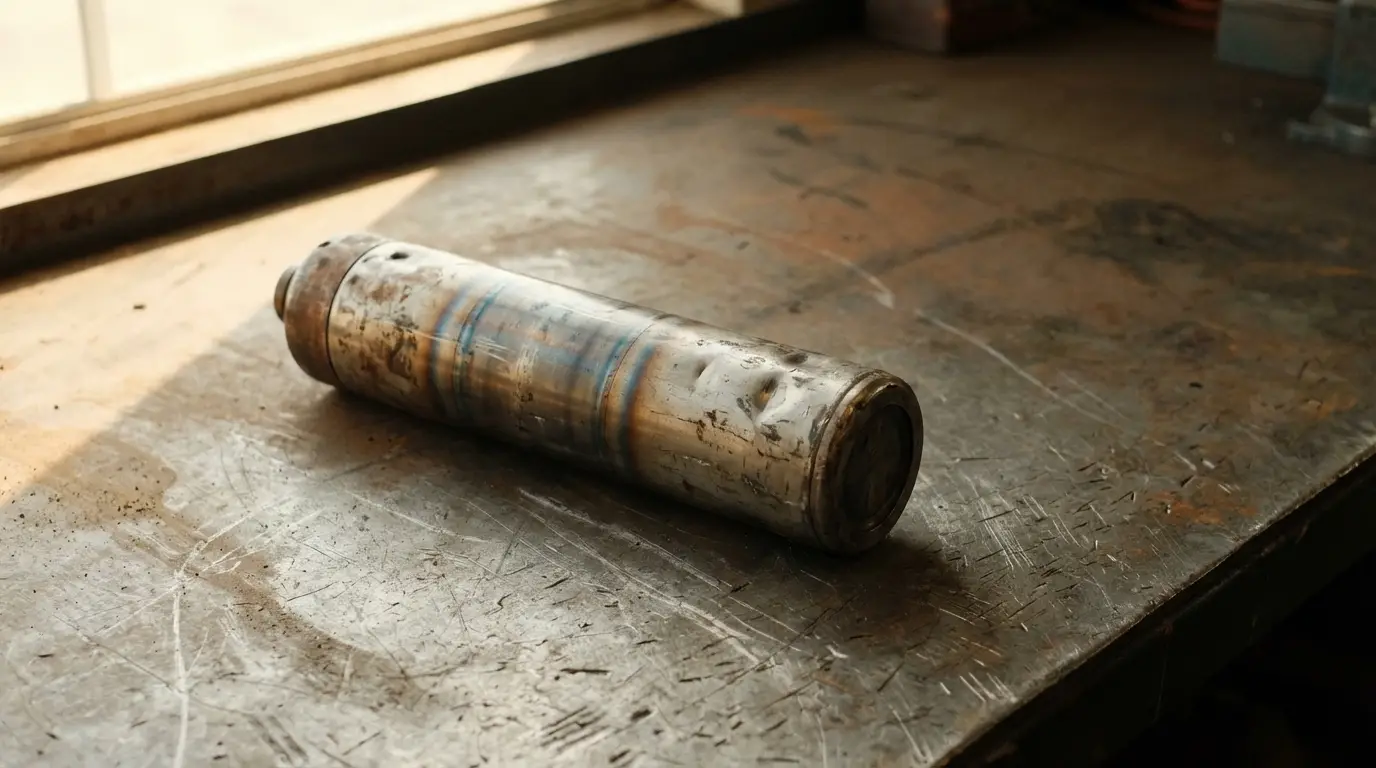
If there is one hidden risk in the used Ditch Witch sonde market, it is heat.
Subsite states the issue plainly: high temperature is the primary cause of beacon failure. Its manuals also warn operators to monitor beacon temperature carefully and list maximum operating temperatures by model. Older units in the spec sheets may top out at 176°F. Many newer T-Series, 86Bv3, and M-Series units are rated up to 221°F. That difference matters because heat does not just affect performance in the moment. It affects service life.
This is what makes used buying tricky. A seller can describe appearance and model number. What is much harder to prove is the sonde’s thermal history. How often did it run near its limit? Was it used on hotter, more demanding shots? Was temperature monitored carefully? Those answers matter more than a clean exterior.
New units remove that uncertainty. You start with no heat history. Used units require more caution. Contractors should pay close attention to the model’s maximum temperature rating and the kind of work the unit did before it came up for sale. A sonde that still powers on is not the same as a sonde with a clean history.
When your work includes hotter conditions or long production runs, that unknown becomes more serious. In those cases, paying more for a new sonde may be the safer ownership choice.
Why a Clean Exterior Does Not Mean a Healthy Sonde
Used equipment buyers naturally inspect what they can see. They check the shell. They look for impact damage. They judge whether the unit looks cared for. That is sensible, but it is not enough.
A sonde’s most serious problems may come from what happened inside the tool. Repeated exposure to high temperature, poor battery practices, or long storage in the wrong condition can reduce reliability without leaving obvious marks outside. A seller may not know the full history. Many used units move through more than one owner. By then, the most important details may be gone.
That is why cosmetic condition is only a weak clue. A scratched unit from a careful owner may be a better buy than a clean one with a hard thermal past. The buyer who focuses only on appearance is looking at the least important evidence.
A better approach is to ask harder questions. What kind of jobs did it run? Was it used in hotter conditions? Has it shown intermittent problems? Has it been serviced, and if so, by whom? Those questions do not remove all risk, but they tell you more than a quick visual check ever will. In used sonde buying, the unseen history often matters most.
Warranty, Repair Rules, and Support Can Decide the Real Value
Purchase price does not tell the whole story. Warranty terms, repair rules, and support access can change the real value of a sonde fast.
With a new sonde, the support picture is usually clear. Subsite’s Marksman manual says HDD guidance beacons in the M-Series and T-Series carry a three-year, 750-hour warranty. It also notes that used cosmetic electronics products sold by the manufacturer carry a six-month warranty. That gap alone should shape how a buyer thinks about risk.
Repair rules matter too. The same manual says M-Series beacons are not repairable and that warranty assessments can only be done at an authorized Subsite Electronics repair center. It also states that units repaired at the manufacturer’s location or an authorized service center carry a 90-day warranty on replaced components, parts, and labor. Those are practical ownership details, not fine print.
Used units complicate all of this. Some may still be inside a warranty window. Many will not be. Some may have clear service history. Others may not. A used sonde with uncertain support history may be cheap to buy and hard to trust when something goes wrong.
For contractors who cannot afford downtime, that matters. If the sonde is a primary field unit, support history belongs in the buying decision right alongside price and condition.
Why Authorized Service History Matters
Service history is one of the strongest filters in used buying because it helps separate manageable risk from blind risk.
Subsite’s warranty language makes clear that authorized repair channels matter. The Marksman manual points buyers to the manufacturer and authorized service centers for repair and warranty assessment. That means service history is not just nice to have. It is part of understanding what the unit is worth.
A sonde that has been inspected or serviced through the proper channel gives a buyer more confidence than one with a vague repair story. Once equipment has been opened, modified, or repaired outside the normal path, uncertainty grows. You do not just wonder whether it works today. You wonder whether it will keep working under field stress and whether support options are limited.
That is why buyers should ask for records, not just reassurance. A seller who can identify the model, serial number, approximate purchase date, and service path is giving you something useful. A seller who only says, “It worked when we parked it,” is not giving you much at all.
This is not paperwork for its own sake. It is a practical way to reduce avoidable risk. If you are buying used, a clear service history makes the decision stronger. If the history is missing, the price should reflect that.
Battery Setup, Runtime, and Storage Habits Affect Ownership More Than Most Buyers Expect
Battery details do not sound exciting, but they shape field performance in quiet, expensive ways.
Subsite’s spec sheets show wide variation in battery type and runtime across beacon models. Some units are rated with lithium thionyl chloride batteries. Some use alkaline batteries. The published hours also vary by model, power level, and frequency. That matters because battery setup is not just a convenience issue. It affects how long the sonde runs, how the crew plans the day, and how much confidence the locator has during a shot.
Used buyers often overlook this because the conversation stays fixed on whether the unit powers on. That is too narrow. A better question is whether the model’s battery setup and runtime fit the way your crew works. If the unit has limited runtime or a battery arrangement that does not fit your field routine, the lower purchase price may not save much in practice.
Storage matters too. Subsite’s M10 manual says to remove the battery for long-term storage. Its literature also warns that nonapproved batteries can reduce battery life and limit power options. Those details matter because battery habits affect long-term condition. A used sonde that sat poorly or was handled carelessly may still work, but it carries more uncertainty than one with a clear history.
The Hidden Cost of Poor Battery and Storage History
Battery and storage problems often show up as nuisance issues before they show up as outright failures. Runtime may be shorter than expected. Communication may feel less steady. The crew may start checking and rechecking instead of trusting the system. That kind of doubt costs time.
This is why battery history belongs in used-equipment due diligence. A buyer should ask simple questions. What batteries were used? Was the unit stored for long periods? Was the battery removed during storage? Was it used regularly or left idle? These questions are not glamorous, but they help reveal how carefully the tool was handled.
They also help put the price in context. A used sonde that technically works but comes with a weak battery story may still be the wrong buy. Reliability matters more than the first number on the invoice. A crew that knows what to expect can plan around the tool. A crew that is guessing loses time.
Battery details also tie back to model choice. Some jobs need longer runtime and fewer interruptions. Some crews can manage a tighter routine because the work is predictable. The point is not that one battery setup is always better. The point is that the setup should fit the work.
Firmware, Software Support, and System Age Should Be Part of the Buying Decision
A sonde is hardware, but it does not live in a hardware-only world.
Subsite’s software updates page shows that different beacon families and trackers follow different software versions and update paths. It lists separate entries for M17 and M17+ beacons, M15 and M15+ beacons, the M10, the Marksman Tracker, and the Field Scout app. That tells you something important: system age and update support are part of the value of the tool.
This matters most when a fleet is changing. A used sonde from an older generation may still transmit, but that does not mean it fits cleanly into the system your crews are using now. The update path may be narrower. The support path may be less convenient. The model may still work, but it may no longer be the strongest fit for the rest of the equipment.
Newer sonde families have an advantage here. They sit inside the current support structure and current update workflow. That does not make every older sonde a bad buy. It does mean a used purchase should be judged in context. If your operation is stable and you know exactly what model you need, used can still make sense. If your system is moving forward, that changes the calculation.
The buying question is simple: does this sonde fit the system you run now, and will it still fit it after the next update cycle?
When New Makes More Sense Than Used
New makes more sense when the cost of uncertainty is high.
That includes work in noisier areas, hotter downhole conditions, or jobs where frequency flexibility matters more because site conditions change. It also includes operations that want the cleaner support path that comes with a current model, current warranty, and current software path.
A new sonde gives you a known starting point. You know the model. You know the condition. You know the warranty status. You know the service history because there is none yet. You also know where it fits in the current tracker and software ecosystem. Those are not small advantages. They remove unknowns before the sonde ever reaches the jobsite.
New also makes more sense when the unit will be relied on as a primary field tool. If downtime is costly, the safer choice often becomes more attractive. The higher upfront cost may still be the lower-risk decision over the life of the unit.
That does not mean every contractor needs the newest option. It means a new Ditch Witch sonde earns its value when certainty matters more than the initial savings of used equipment.
When Used Can Still Be a Smart Buy
Used can make sense. It just needs discipline.
A used sonde is often a reasonable option for contractors with predictable work, a stable locator setup, and a clear understanding of the exact model they need. If the jobs are straightforward, the depth and frequency requirements are well within the model’s published range, and the service history is solid, used can deliver value.
The mistake is treating all used units as equal. They are not. There is a big difference between “used but verified” and “used and cheap.” A verified used sonde has a known model, a known fit with the rest of the system, and a service story that the buyer can follow. A cheap used sonde may only have a low opening number.
Used also makes the most sense when the work does not demand the latest flexibility. If the crew performs the same kinds of shots in similar conditions and already knows the system well, a used unit may be enough. But it still pays to buy carefully. If the sonde is going to save money, it should save money without adding avoidable risk.
That is the standard that matters. Used can be smart. It is not smart by default.
A Practical Checklist Before You Buy Any Used Sonde
A used Ditch Witch sonde should never be bought on a quick impression. It should be bought through a checklist.
Start with the basics: the exact model, serial number, approximate purchase date, and any records tied to service or repair. Then move to fit. Confirm the frequency, depth capability, dimensions, housing compatibility, battery type, and whether the unit belongs in your tracker ecosystem. If those basics do not line up, there is no reason to go farther.
Next, ask about work history. What kind of bores did it run? Was it used in hotter conditions? Was it a daily production unit or a spare? Then ask about storage and batteries. How was it stored? Were approved batteries used? Was the battery removed during long-term storage? Those details help show how carefully the tool was handled.
After that, focus on support history. Has it been serviced? Was that done through the proper channel? Is there any documentation? A used unit with a clear service story carries less risk than one with vague assurances.
Finally, test it as realistically as you can. Check communication, pitch and roll reporting, battery status, and temperature behavior. Bench confidence helps. Field confidence matters more. If you need help sorting through new and used options, UCG HDD can help you compare fit, condition, and risk before you buy.
The Best Choice Depends on Risk, Not Just Budget
New versus used is not a personality test. It is a risk decision.
If your jobs are varied, interference-heavy, hotter, or more demanding, new often wins because it cuts uncertainty. If your operation is stable, your work is predictable, and you can verify the sonde thoroughly, used may be the better financial move. Both choices can be right. The wrong choice is the one made on price alone.
A sonde sits at the center of tracking confidence. OSHA’s HDD safety bulletin tells trackers to check readings frequently during operations, compare them with pre-operational readings, and stop drilling if readings change. That guidance underlines the point: reliable tracking matters. The sonde is not just a line item. It is part of how the crew keeps control of the bore.
The practical rule is simple. Buy new when you need certainty from a Ditch Witch sonde. Buy used only when you can prove fit, condition, and support well enough to trust the unit in the field.
That is the standard worth using, and it is the one that protects both the bore and the business.