Why Relaxing Hobbies and Simple Art Help at Home
Some days feel long even when you stay at home. Work, chores, and constant noise from phones can leave your mind tired and restless. A simple hobby can change that without much effort. It gives your attention one clear task and a calm pace, which helps your mind slow down in a natural way. For example, paint by numbers gives you clear steps and removes the guesswork, which makes it easy to start and continue.
Creative hobbies work well because they follow simple steps. You sit down, start with one small action, and continue from there. Your focus shifts from thinking about many things to doing one thing at a time. This shift can feel small at first, but it often brings a sense of relief. You stop checking your phone, you stop jumping between tasks, and you begin to feel more present.
Many people believe they are not creative. This idea often comes from school or from comparing themselves to others. In reality, most relaxing hobbies do not require skill. They rely on repetition and clear instructions. When the next step is obvious, it becomes easier to continue without doubt.
There is also a quiet satisfaction in seeing progress. You begin with a blank space and slowly fill it. Each small step builds on the previous one. After a short time, you can already see a result. This kind of progress feels steady and real, and it often improves your mood without you noticing it right away.
A hobby at home can also create a small personal routine. Even 20 minutes in the evening can become a moment that belongs only to you. Over time, this moment becomes something you expect and enjoy. It helps bring balance to the day without adding pressure.
6 Easy Artistic Activities Anyone Can Try
You do not need special tools or experience to begin. Many creative hobbies are designed to be simple and clear from the start. They guide you step by step and remove the need to guess what to do next.
- Paint by numbers
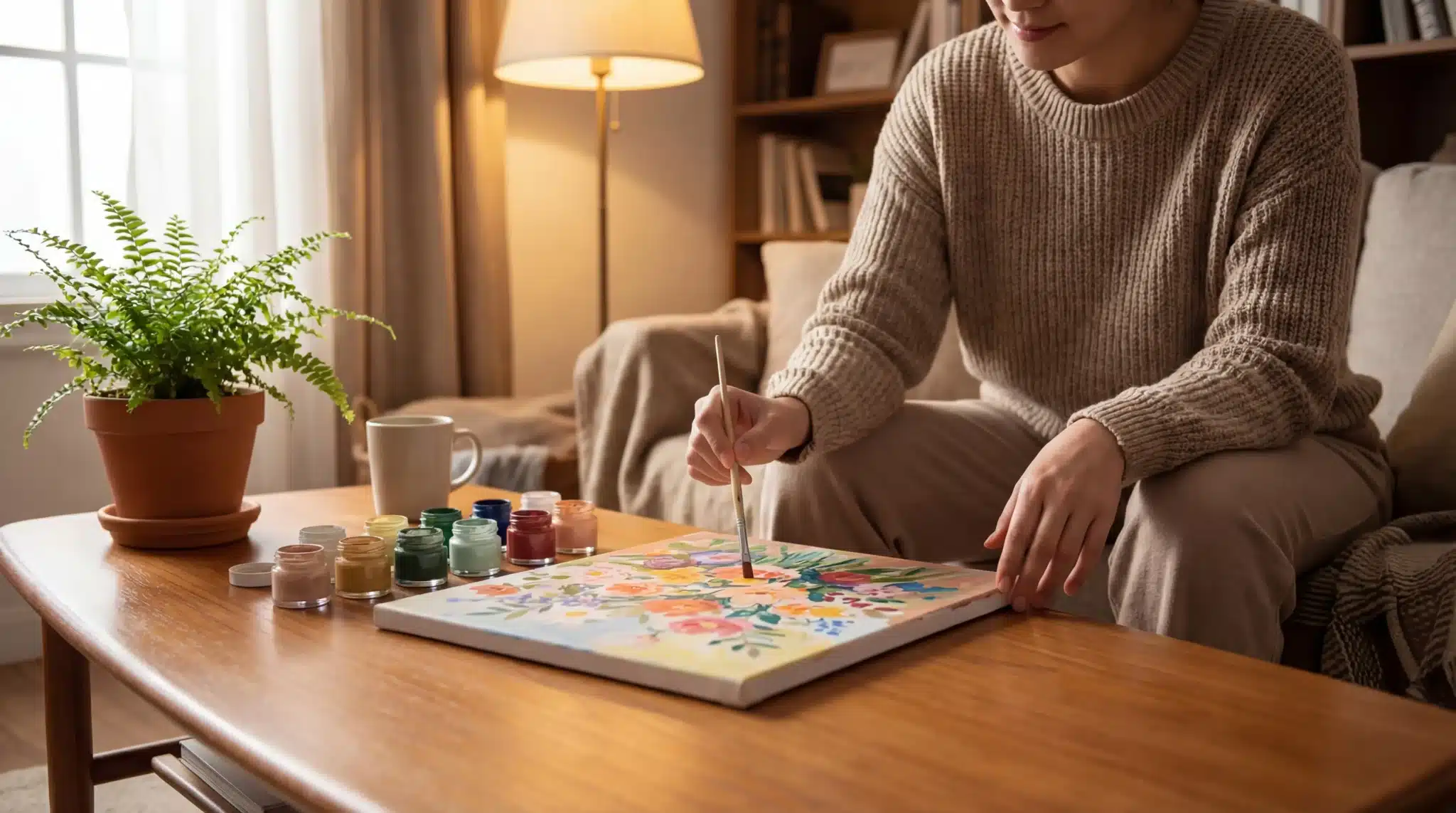
This activity, often called painting by numbers, is one of the easiest ways to start for beginners. The canvas already shows numbered areas, and each number matches a paint color. You follow the guide and fill in each section. The process feels structured, and that structure makes it easy to continue even when you feel tired. Many people are surprised by how detailed the final image looks. - Adult coloring books
These books include patterns, flowers, or simple scenes. You choose colors and fill each shape. The repetition helps your mind settle. It feels calm without being boring, and you can stop and continue at any time. - Basic sketching
You only need a pencil and paper. Start with simple objects around you, such as a mug or a plant. You do not aim for perfection. You focus on observing and trying. Over time, your hand becomes more confident. - Air-dry clay
Clay is soft and easy to shape. You can create small bowls, simple figures, or abstract forms. It does not need special tools or baking. Working with your hands adds a physical element that many people find very calming. - Journaling with small drawings
You can write a few sentences about your day and add small sketches. The drawings can be simple lines or shapes. This combination feels personal and relaxed, and it helps you reflect without pressure. - Collage with paper or photos
You can use magazines, old prints, or photos. You cut out pieces and arrange them on a page. There is no strict rule to follow, which makes it feel playful and free.
All these activities share one key point. You always know what comes next. That clarity removes pressure and helps you stay with the activity longer.
How Creative Routines Fit Into Daily Life
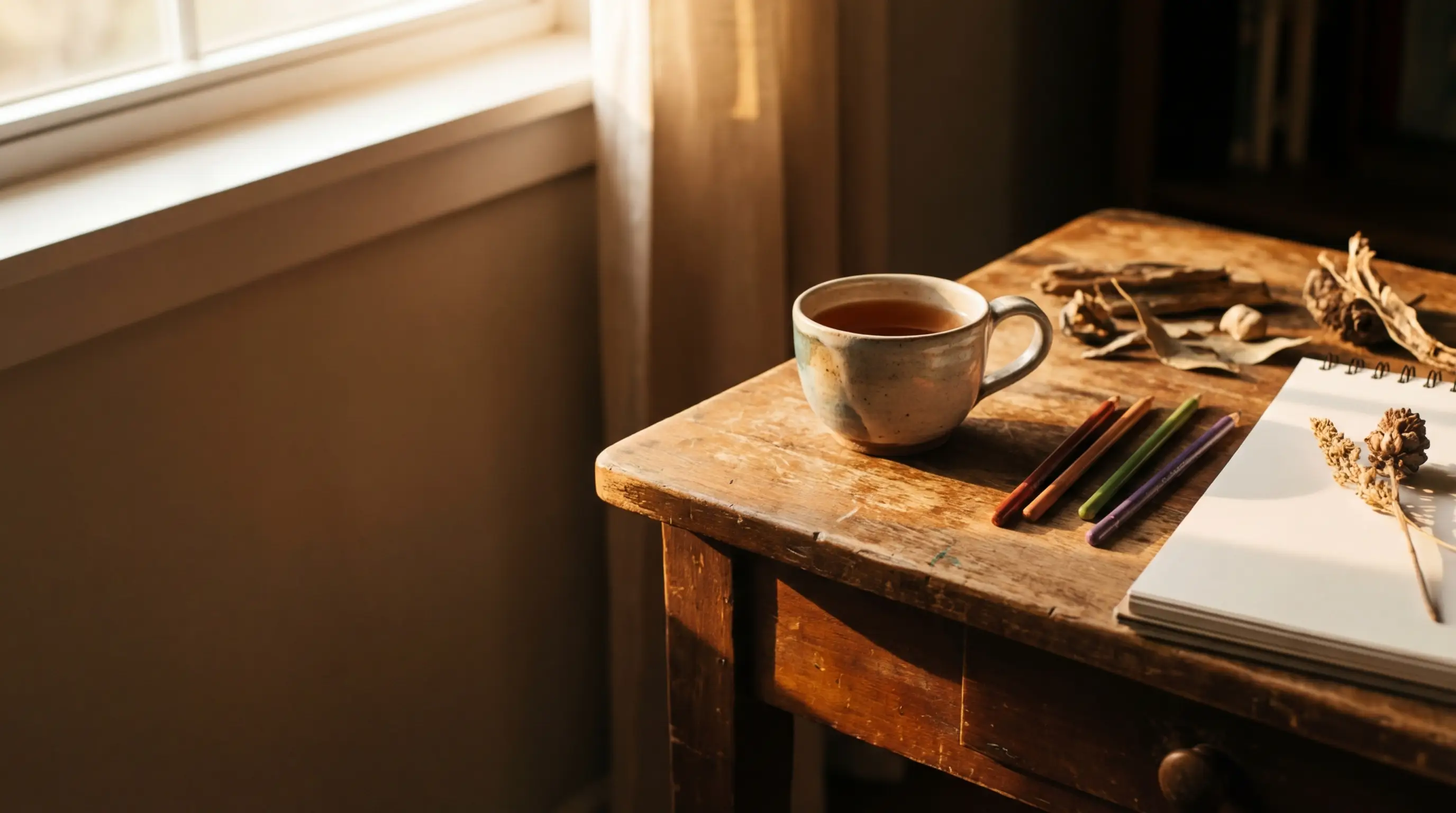
A hobby becomes more helpful when it fits into your daily routine. It does not require long sessions. Short and regular time works better.
You can choose a fixed moment in your day. Many people prefer the evening, when the main tasks are done. This creates a clear break between a busy day and a quieter part of the night. It becomes easier to sit down and focus because the timing stays consistent.
Creative time can also combine with other habits. You can listen to music, a podcast, or even sit with a cup of tea. These small details make the routine feel comfortable and familiar.
Diamond painting kits are a good example of a hobby that fits easily into daily life. You place small pieces on a sticky canvas, one by one, following a simple pattern. The movement is repetitive and easy to follow, which makes it suitable even when you feel low on energy.
Consistency matters more than how long you spend. A short session done often builds a habit. After a few days, it feels natural to return to your project. You do not need to think about starting, you just continue where you stopped.
This kind of routine also gives your mind a break from constant decisions. You follow a clear process, and that reduces mental load. It creates a quiet space where you can focus without pressure.
Simple Ways to Start Without Experience
Starting a new hobby can feel uncertain, but it does not need to be complicated. The easiest way is to begin with something simple and clear.
Choose an activity that has a defined process. Avoid tools or methods that require too much preparation. A ready-to-use kit or basic supplies can help you begin without delay. When the setup is simple, you are more likely to start.
Set a small and realistic goal for your first session. You do not need to complete a full project. Focus on one section or a few steps. This approach makes the experience feel manageable and removes pressure.
Create a small space for your hobby. It can be a table, a corner, or even a box with your materials. When everything stays in one place, you save time and reduce resistance to starting.
Mistakes are part of every creative process. They do not ruin your work. In many cases, they add character or go unnoticed. Accepting this helps you stay relaxed while you work.
With time, the process becomes familiar. Your hands learn the movements, and your mind settles faster. What felt new at the beginning becomes something comfortable and steady.
You do not need to be crafty to enjoy a creative hobby. You only need a simple starting point and a few quiet minutes in your day. That is often enough to create a small moment of calm that stays with you.