Premium travel is shifting, and not just statistically. Travelers who once chose hotels by star count and lobby size are now after something else: space, privacy, a real sense of place. This piece looks at why small suites and villas have become the more honest answer to that demand, and what’s driving it.
When Scale Stops Being a Selling Point
Somewhere between 2019 and 2023, something quietly changed in how people think about trips. Not because of one event, just gradually it became obvious that a 400-room hotel with a fountain in the lobby no longer signals a quality stay.
Big hotels are built around a specific model: fast turnover, standardized service, group bookings. For conferences or overnight layovers, fine. But when the point is to recover, to actually be somewhere rather than pass through it, a large hotel starts working against you.
Bali makes this clear. The villa market on the island has matured enough that travelers looking for one bedroom villas in Bali regularly find options that beat hotel rooms at the same price point, with no reception queue, no breakfast lineup, no neighbors through the wall.
A suite or villa gives what a hotel structurally can’t: the feeling that the space is yours, even temporarily.
Privacy as the New Form of Luxury
What Changed in Traveler Behavior
A few real shifts happened in premium travel lately. Slow travel gained traction: people stay in one place for two or three weeks instead of rushing through several countries. And the pandemic reset what basic comfort means. A proper kitchen, a separate entrance, control over your own space, these stopped being upgrades and became baselines.
Major chains responded. Marriott, Hilton, IHG all expanded into apartment-style formats and extended-stay products. But the underlying logic stayed the same: uniformity, scale, standardized procedures. The guest remains one of many.
Small suites and villas work differently. Their value isn’t in the volume of services but in coherence: architecture, materials, landscaping, even how morning light moves through the room.
Three Things a Hotel Can’t Offer by Design
- Silence without a schedule. Hotels run on timetables: housekeeping hours, breakfast service, check-in windows. A villa has no imposed rhythm, and nobody knocks at 10am with a cleaning cart.
- A sense of place. A standard chain room looks essentially the same in Dubai, Barcelona, or Bangkok. A well-considered villa is always tied to where it sits, through materials, layout, and what you see from the terrace.
- A real kitchen. Not a minibar with a kettle. An actual kitchen. For longer stays or families, this changes the whole logic of being there.
The Design Logic of Smaller Formats
There’s a pattern that becomes obvious when comparing large hotels with compact suites. The former invest in communal spaces: lobby, pools, restaurants, spa. The latter invest in the space where you actually live. In a 300-room hotel, your personal space is around 35 to 40 square meters. The rest of what you paid for went into an atrium you’ll probably walk through once.
In a suite or villa, that proportion flips. The budget lands in your space: flooring quality, bed linen, a layout where things are where they should be.
What to Check When Choosing
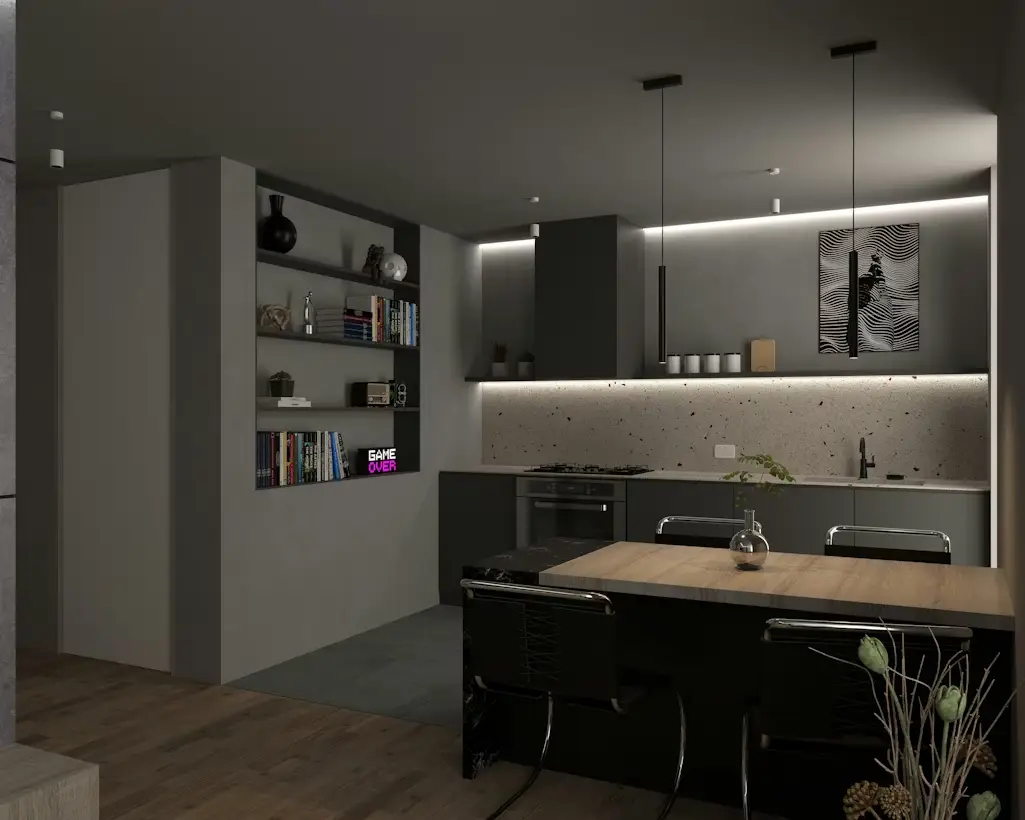
- Floor plan. An open kitchen integrated with the living area feels larger than separated rooms with the same total square footage.
- Private pool or terrace. As a baseline, not a premium add-on. The gap between a shared and private pool is the gap between a hotel stay and having your own place.
- Building orientation. In high-sun destinations like Bali, Maldives, or Santorini, which direction a property faces has a real effect on comfort throughout the day. It’s practical, not aesthetic.
Uluwatu: When Architecture Follows the Terrain
Why This Part of Bali
Uluwatu is all cliffs, wind, and open horizon. It feels like a different island tucked inside Bali itself, far from the postcard rice fields and souvenir markets. Mass tourism never really took root here the way it did in Kuta or Seminyak, and that quiet absence has shaped how everything has been built. Local height limits, often summed up as “no higher than a coconut tree,” pushed architects to stretch buildings low and wide, letting them follow the contours of the peninsula instead of fighting them.
The waves at Uluwatu rank among the most reliable left-hand breaks in the world, drawing surfers since at least the 1970s. If you are not here for the lineup, you still get something rare: paths down to the ocean without crowds, Indian Ocean sunsets without queues, and air that feels noticeably cleaner than in Bali’s busier central areas.
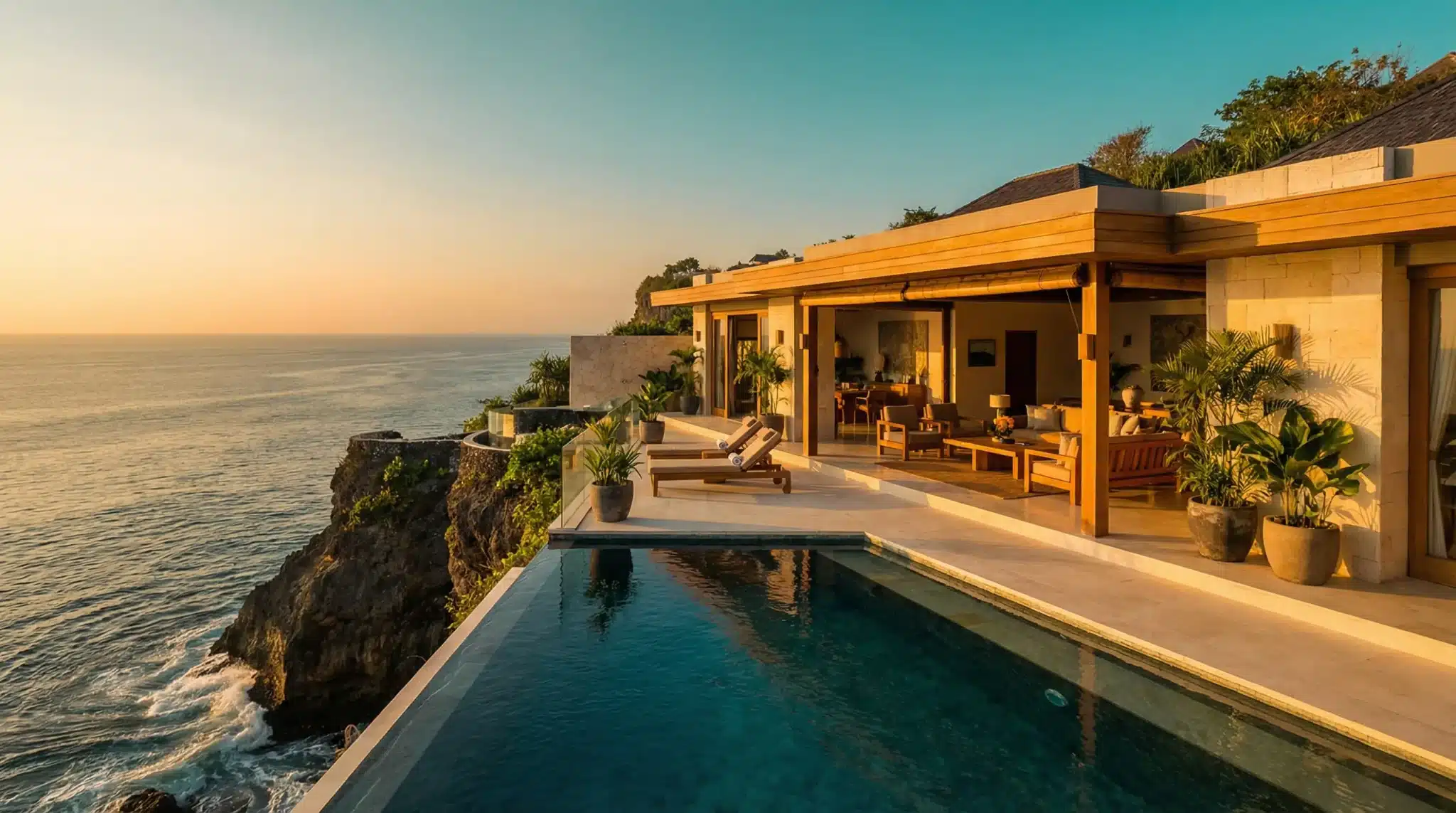
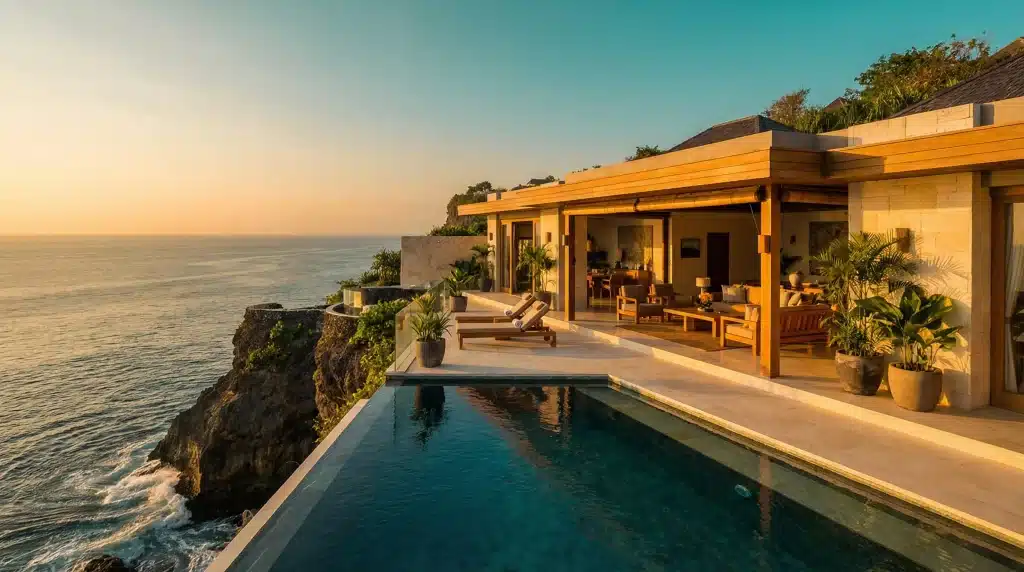
This is also where Dolce Suites Villas in Uluwatu sit, a compact property where the design follows the landscape directly. Natural materials, open volumes, minimal decoration, and the feeling of a personal space above the ocean rather than a room inside a resort.
Worth Knowing Before You Go
Bali has changed, and if your last trip was pre-2022, some of it will catch you off guard. There’s now a tourist levy — Rp 150,000 per person — paid through lovebali.id before you even land. Easy enough, but plenty of people still show up at the gate without it.
The motorbike situation is worth taking seriously. After a string of deportations in 2024 and 2025 that got real media attention, authorities have been consistent about enforcement: no locally recognized license, no riding. Renting one anyway isn’t the calculated risk it used to be. And around temples, the rules around dress and behavior that always existed on paper are now actually applied.
Visas: the B211 Social/Cultural Visa covers most stays, good for 60 days with room to extend, and the process is relatively straightforward. The Nomad Visa gets a lot of coverage online but in practice it’s a heavier lift — foreign income verification, full medical insurance for the entire stay, and an Imigrasi process that moves at its own pace. Worth researching properly rather than assuming the website reflects reality.
Small Luxury: Less Is More Precise
Quiet luxury isn’t about the absence of logos or studied minimalism. It’s about precision: paying for what actually affects your experience rather than scale as a concept.
A large hotel is convenient. A small suite or villa feels personal. For anyone who’s tried both, the preference tends to settle after the first trip where the space genuinely felt like their own. Bali is one of the few places where this format has been refined to a real degree: the climate, the hospitality culture, a mature market, and a density of well-located properties all make it a strong case for the smaller format. Not because it’s fashionable, but because it works.