
Most homeowners treat furniture like an afterthought — something you figure out once the walls are painted and the floors are done. But here’s what professional designers know that the rest of us don’t: furniture decisions should begin at the blueprint stage, not at the furniture showroom.
Getting this sequence wrong is one of the costliest mistakes in any home project. You end up with a sofa that won’t fit through the door, a dining table that swallows the room, or a bedroom that feels more like a storage unit than a retreat. The good news? With the right approach, choosing and placing furniture can feel less like guesswork and more like solving a very satisfying puzzle.
This guide walks you through the entire process — from reading your floor plan to making final furniture selections — the way a seasoned interior designer would.
Why Furniture Planning Starts Long Before You Shop
The biggest myth in home decorating is that you can eyeball it. You cannot.
Experienced designers begin with measurements, traffic flow, and architectural context before they ever open a catalog. Why? Because every furniture decision is connected to the bones of the space. The ceiling height influences how tall your bookcase should be. The window placement determines where your sofa can realistically live. The door swing controls how much clearance you need near an entryway.
This is why top-tier design firms plan furniture alongside the architecture — not after it.
Think in Zones, Not Pieces
One of the first things designers do is divide a room into functional zones. A living room, for example, might contain a conversation zone, a reading nook, and a media area. Each zone has its own furniture logic.
When you think in zones, you stop asking “Where should the couch go?” and start asking “What does this space need to do, and how does furniture help it do that?” That shift in thinking changes everything.
How Professionals Read a Space Before Buying Anything
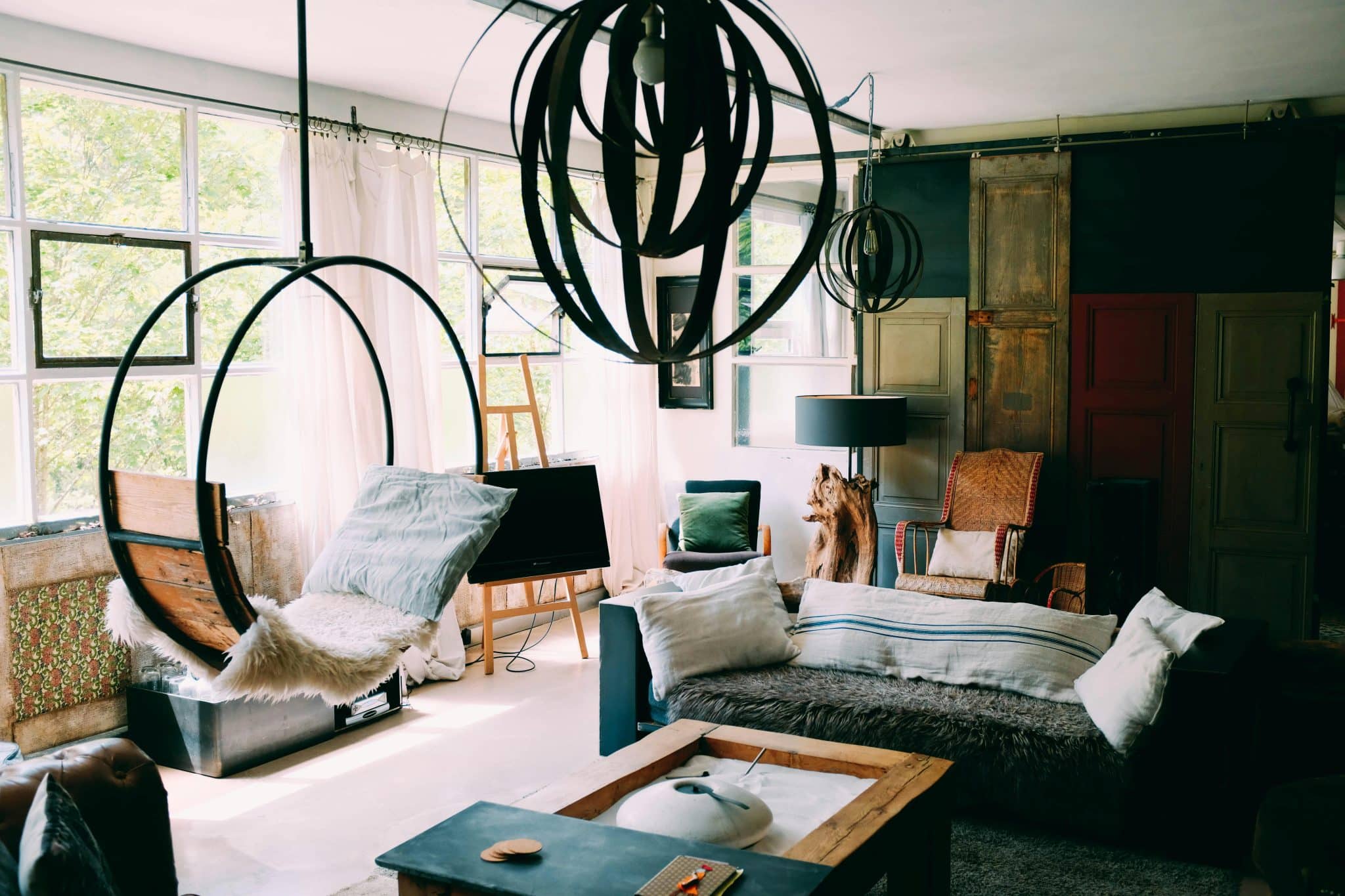
Before a single purchase is made, designers spend time understanding what the space is actually telling them. Here’s what they look at:
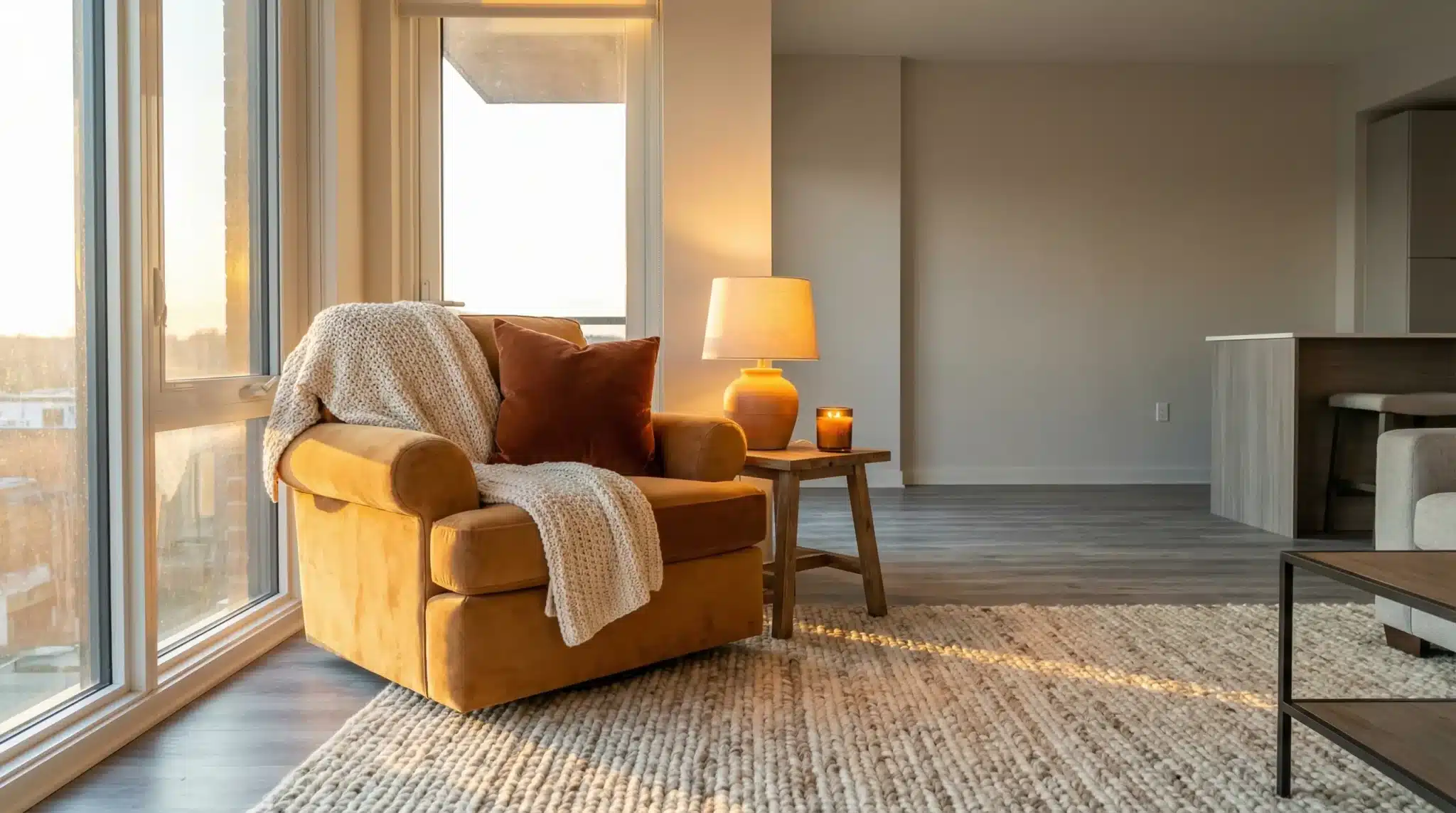
Natural light and its movement — where it enters, at what time of day, and how it changes the room’s mood. Light-sensitive pieces like velvet sofas or dark wood tables need to be positioned with this in mind.
Architectural focal points — a fireplace, a large window, an exposed beam. Furniture arrangements should either celebrate these features or gracefully redirect attention away from them.
Traffic patterns — how people move through the space naturally. The standard rule is to maintain at least 36 inches of clearance for main pathways and 18–24 inches between seating pieces.
Room proportions — a low-ceilinged room calls for lower-profile furniture. A grand double-height space can handle substantial, tall pieces without feeling oppressive.
Getting this analysis right is what separates a room that looks “designed” from one that just looks decorated.
The Role of Aspen Interior Designers in Setting the Standard
When it comes to truly elevated residential design, few markets set the bar higher than Aspen, Colorado. The homes there demand a rare combination of mountain warmth, modern sophistication, and functional living — often all in the same room.
Aspen interior designers like Ali & Shea have built a reputation around exactly this kind of integrated thinking. Their approach isn’t to pick beautiful things and arrange them nicely — it’s to deeply understand how a family lives, what they value, and what they need from every room before a single piece of furniture is specified. That’s a fundamentally different process, and it shows in the results.
What makes the Aspen design world particularly instructive for the rest of us is that the constraints are extreme. Spaces are often architecturally complex, clients are discerning, and the surrounding landscape demands respect. Every furniture decision has to earn its place.
That discipline — of justifying every piece against the space, the light, and the lifestyle — is something any homeowner can adopt, regardless of budget.
Selecting Furniture That Works With Your Architecture
Once you understand the space, the real selection process begins. Here’s how to approach it without getting overwhelmed.
Scale Is Everything
The single most common mistake in furniture selection is getting the scale wrong. A sectional that looks reasonable in a showroom can completely dwarf a living room once it’s in place. Conversely, a dining table that seems substantial can look lost in a large open-plan kitchen.
The fix is simple: always measure your room and tape out the furniture footprint on the floor before buying. Use painter’s tape to mark the exact dimensions. Walk around it. Live with it for a day. You’ll immediately know whether it works.
Material Should Respond to the Room
The materials you choose should feel like a natural extension of the architecture. In a room with lots of natural wood — exposed beams, hardwood floors, timber windows — bringing in more wood furniture can feel redundant. A mix of metal, stone, and upholstered pieces might create more visual interest.
In more minimal, contemporary spaces, consistent materials create calm. Pick two or three and repeat them thoughtfully throughout the room.
Functionality First, Aesthetics Second
A beautiful piece that doesn’t work for your life will frustrate you every single day. Before falling in love with a coffee table, ask: does anyone in this house need to put their feet up? Do the kids do homework here? Is this a space where drinks get set down frequently?
Design professionals ask these questions relentlessly. It’s not that aesthetics don’t matter — they absolutely do — it’s that functionality provides the framework within which beautiful choices are made.
Getting the Technical Details Right: Door Rough Openings and Furniture Delivery
Here’s something most people don’t think about until it’s too late: can your furniture actually get into the room?
This is a genuinely practical concern. Large sofas, oversized beds, and statement armoires are all wonderful until the delivery team is standing at your front door unable to get them through it. The dimension that matters most here is the door rough opening — the framed structural space in the wall where the door sits.
The rough opening is always slightly larger than the finished door size, but it’s the finished opening (the actual doorway once casing and trim are in place) that determines what can pass through. For a standard 36-inch interior door, the finished opening typically runs about 33–34 inches wide once trim is accounted for.
Before ordering any large furniture piece, measure:
- The width and height of every doorway it needs to pass through
- Any staircase turns or landings if the piece is going upstairs
- The hallway width leading to the room
- Whether legs, cushions, or bases can be removed to reduce the clearance needed
This is especially important during renovations. If you’re replacing doors as part of a larger project, it’s worth knowing the rough opening dimensions so you can plan both the door size and the furniture delivery in the same conversation.
Building a Cohesive Room: The Designer’s Final Checklist
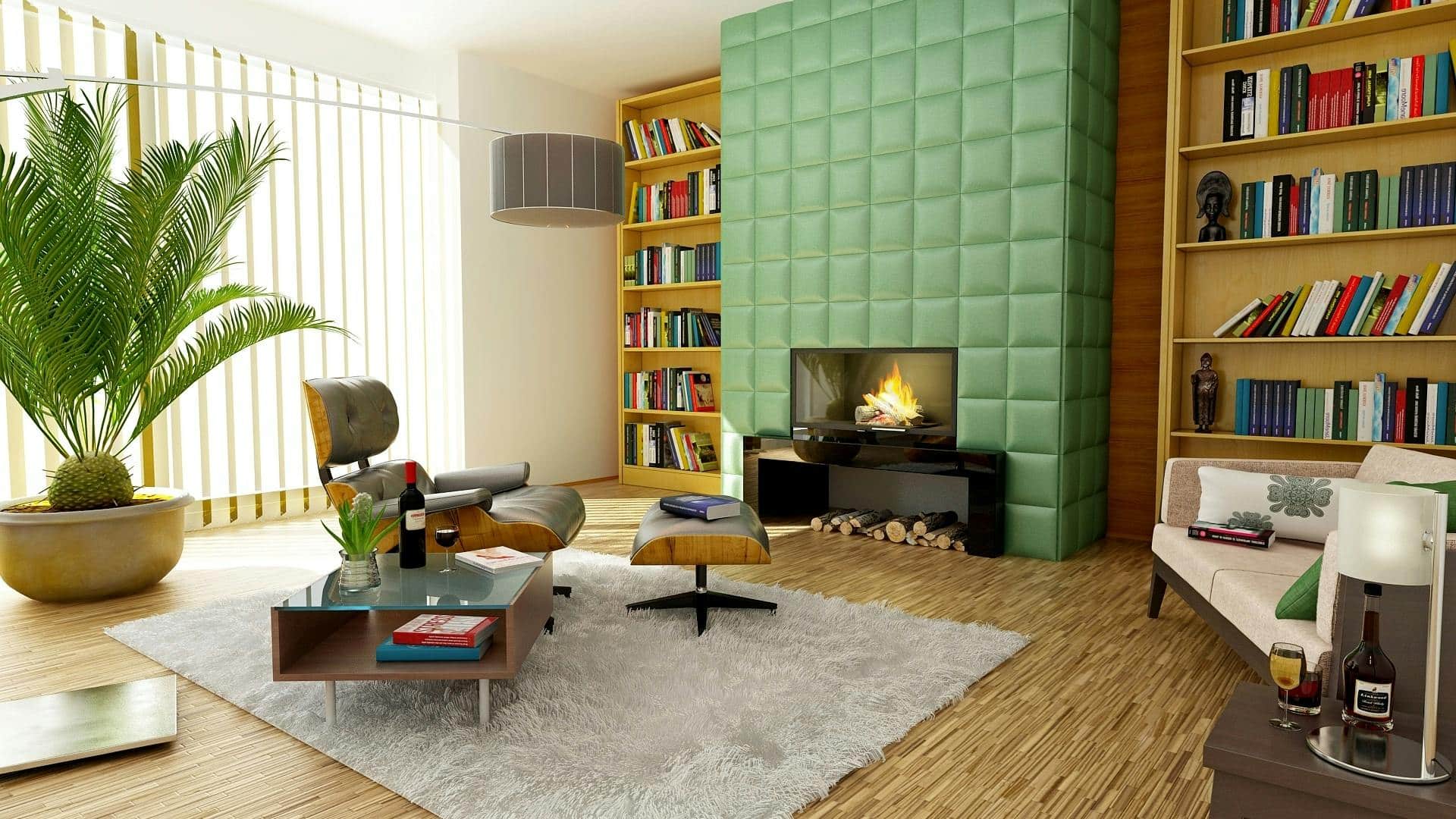
Once individual pieces are selected, the work of making them feel like a unified room begins. Here’s what designers check before calling a space complete:
Visual weight is balanced — a room shouldn’t feel heavier on one side than the other. If you have a large dark sofa on one wall, balance it with a substantial piece on the opposite side, even if it’s lighter in color.
There’s a clear focal point — every room needs an anchor. A fireplace, a piece of art, a dramatic window. Furniture should be arranged to either face or frame it.
Layers are present — great rooms have multiple levels of visual interest. Furniture provides the primary layer, then rugs and lighting add the second, and accessories and art complete the third.
Nothing is floating — furniture that drifts in the middle of a room with no connection to the walls or other pieces tends to feel unsettled. Area rugs are one of the most effective tools for grounding a furniture arrangement.
Negative space is respected — not every corner needs to be filled. Empty space is a design choice, not a failure. It gives the eye somewhere to rest and makes a room feel considered rather than cluttered.
Lighting: The Furniture Selection Step Most People Skip
No furniture piece looks the same under every type of lighting. Yet most people select furniture under showroom lighting — which is usually bright, even, and flattering — and then wonder why it looks different at home.
Before finalizing any upholstery color, wood tone, or material finish, see it in your actual space. Order fabric swatches. Bring home material samples. Look at them in the morning, at noon, and in the evening under artificial light.
This one step prevents more buyer’s remorse than almost anything else in the design process.
Conclusion
Choosing and installing furniture well is not about having the biggest budget or the most adventurous taste. It’s about understanding your space deeply, respecting its architecture, and making decisions that serve the way you actually live.
The designers who do this best — and the mountain design world is full of them — approach every project with patience and precision. They measure before they dream, plan before they buy, and always consider the full journey a piece of furniture takes from manufacturer to its final resting place in a room.
Start there. Measure everything. Understand your space before you fall in love with anything in it. That discipline is what turns a house full of furniture into a home that genuinely feels designed.
And that’s a difference you’ll feel every single day.