


Math homework can change the mood of the whole evening very quickly. A child gets stuck on fractions or one algebra step, shuts down, and the table turns tense for everyone.
That happens because math keeps building on old material. When one gap stays unfixed, the next topic gets harder. Tutoring is often less about grades than about easing pressure and helping a child catch up before confusion starts piling up.
When School Is Moving Too Fast
Once algebra or geometry starts, lessons move quickly. A child can still be stuck on fractions, negative numbers, or basic equations, while the class has already moved on. This is exactly where online math classes from Brighterly can make a real difference, because the student gets focused one-on-one support, clear explanations, and enough space to ask questions they would usually keep to themselves in class.
There is also the problem of math anxiety. Stanford professor Jo Boaler has written and spoken widely about how fear around math can shut down working memory. That matters in a very practical way. A child may know more than they look like they know, but panic blocks access to it. In a quieter one-on-one setting, that panic often drops. Once that happens, the child can actually think.
Why One-to-One Help Works so Well
Parents often hear vague phrases like “personalized support,” but there is real research behind this. Bloom’s 2 sigma problem came out of Benjamin Bloom’s work on one-to-one tutoring and mastery learning. The core result was striking: the average tutored student performed far above most students in a standard classroom setting.
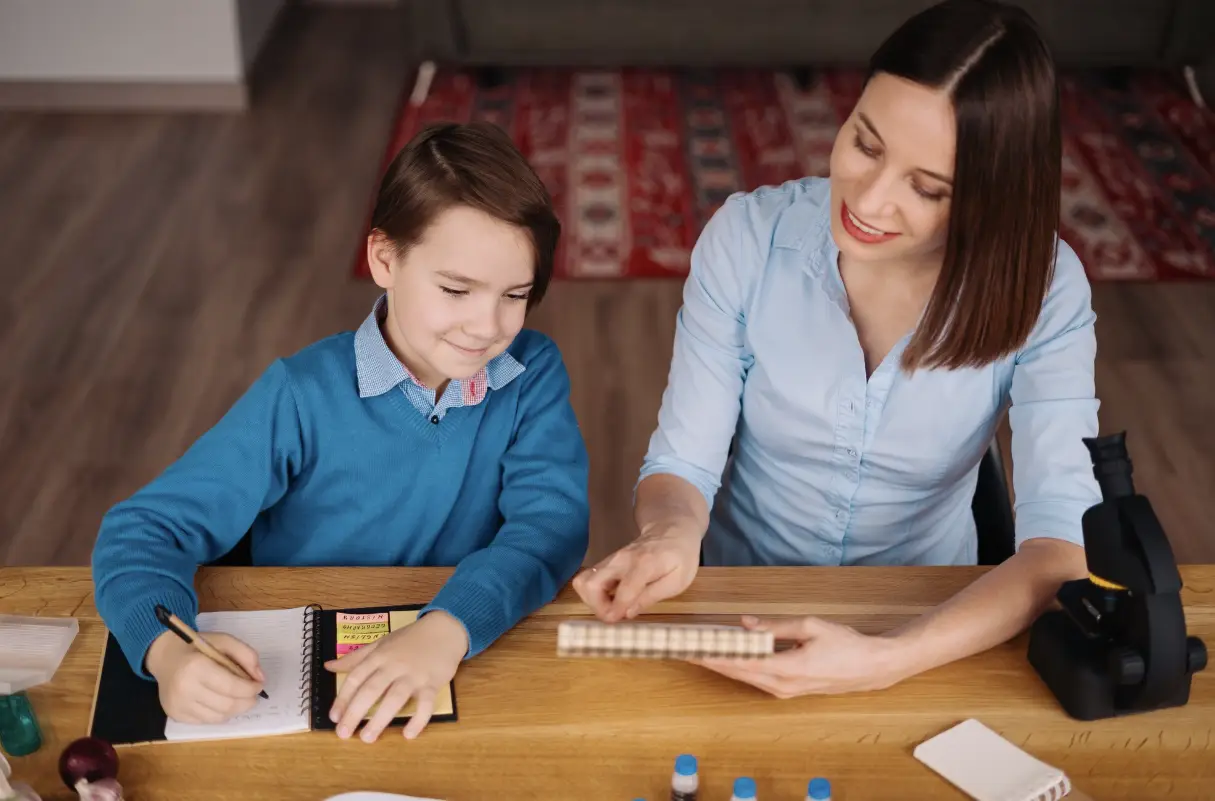
That happens for reasons that are easy to see in real life. A tutor can stop the second confusion from starting. A child does not have to pretend to follow the lesson. They can say, “Wait, I still don’t understand why the negative sign changed,” and stay there until it clicks. That removes a lot of mental overload.
A good tutor also changes how mistakes feel. In class, a wrong answer can feel public. In a private session, it becomes useful information. That shift helps with things like:
- Asking questions sooner.
- Slowing down without embarrassment.
- Fixing gaps before they grow.
- Replacing guessing with actual reasoning.
Children usually become more talkative once they stop feeling judged. That is often the point where math starts making sense.
Online Tutoring Is Stronger Than Many Parents Expect
Many parents still imagine online tutoring as a basic video call. In practice, tutors often use shared whiteboards like BitPaper or Miro, so both sides can work through the same problem live. It feels much closer to sitting over the same notebook than most parents expect.

Families are no longer limited to whoever happens to live nearby. Parents can be much more selective now. One child may need a calm tutor who slows things down and takes the pressure out of each lesson. Another may need someone strong in SAT math. Often it comes down to something more basic – finding a tutor who can explain algebra in a way the child actually follows. Some kids still do better face-to-face, especially if sitting still is already a struggle. For many families, though, online lessons are simply easier to keep up with.
The Signs Are Often Easy to Miss
A child does not need failing grades to need help. Sometimes the first signs are behavioral, and they show up before report cards do. Parents should pay attention when math starts affecting mood, routine, or confidence.
A few patterns come up often:
- “Forgetting” to write down math homework.
- Complaining of stomachaches before math tests.
- Getting unusually upset the night before a test.
- Going quiet, irritated, or completely stuck halfway through homework.
That phrase deserves attention early. Once a child turns a temporary struggle into an identity, the problem gets harder to undo.
It Is Not Only for Kids Who Are Behind
Some families still think tutoring is only for children who are failing. That is too narrow. Plenty of strong students use tutors when they want help with AP Calculus, SAT prep, or faster progress in school math. The point is not only to rescue. It can also be preparation.
Parents also look at it from a longer-term angle. The U.S. Bureau of Labor Statistics expects STEM jobs to grow 8.1% from 2024 to 2034, while non-STEM roles are projected at 2.7%. There is also a practical reason parents think about this early. The same release lists median annual pay at $103,580 for STEM and $48,000 outside it. For parents, that is a straightforward point – strong math keeps more doors open later. It does mean solid math skills keep more options open later. It does mean strong math skills keep more options open later.
Tutoring is working when the child starts needing less of it. You can usually see that before the grades even change. Homework help gets calmer, questions get sharper, and new topics stop feeling like a threat every single time.