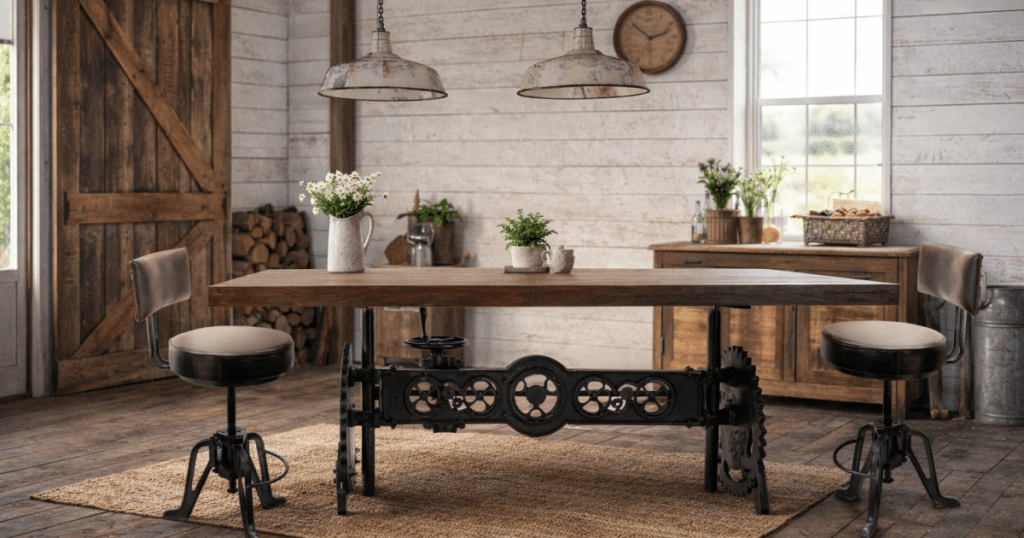
The dining room is one of the few places where time genuinely slows down, allowing meals to stretch into long conversations.
To create this atmosphere, the room requires thoughtful dining room styling ideas that make it feel intentionally crafted rather than generic.
By focusing on sensory texture and unexpected focal points, you can craft a memorable atmosphere without a complete renovation.
The four simple details that make guests talk include anchoring the space with a solid table, introducing one unique conversation starter, softening hard edges, and layering heritage decor.
Focusing on these elements transforms an ordinary dining area into a dedicated hosting space where people naturally want to linger.
Implement these strategies to ensure your environment leaves an impression that outlasts the evening.
1. Anchor the Room With a Statement Table
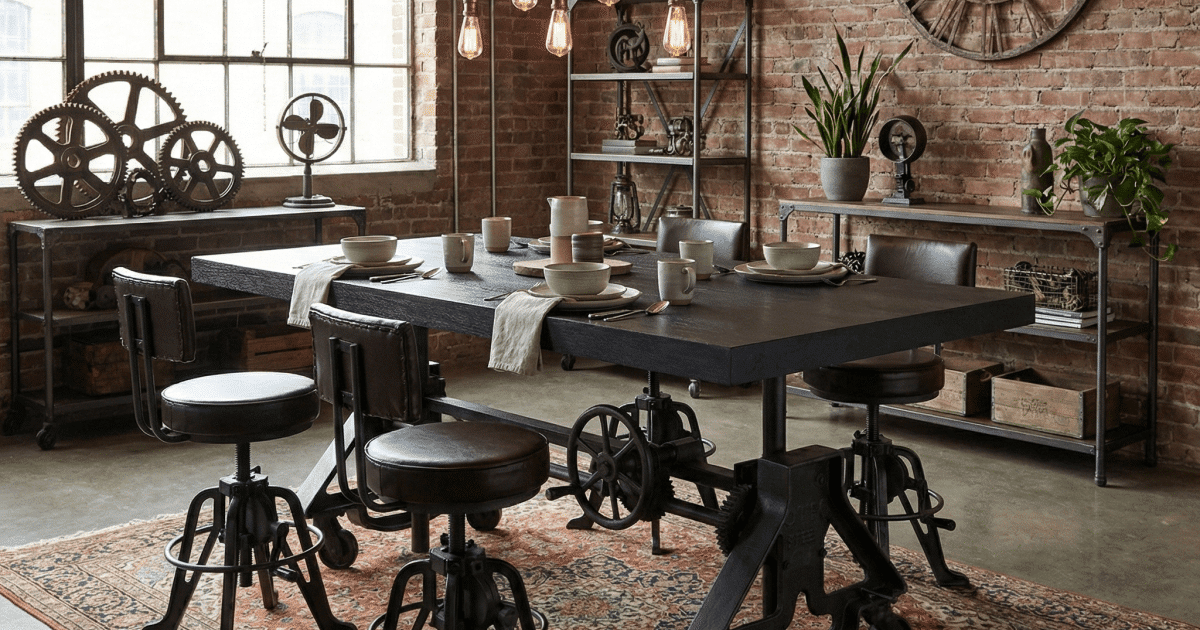
Every memorable dining room begins with one foundational piece that establishes the atmosphere before anyone even pulls out a chair.
When considering options, pieces like a salvaged barn door desk, Knox Deco’s vintage-style industrial dining tables, or a local artisan’s solid oak workbench provide the necessary scale and material authenticity.
This is particularly true for an industrial farmhouse dining room, which relies on the honest appeal of heavy materials.
Reclaimed wood grain and sturdy iron bases ensure the furniture feels earned rather than merely assembled.
Pieces built with regional specificity and material integrity always stand out against standard options.
A quality reclaimed wood dining table with visual mass grounds a space without overcrowding it. Let the table lead the design narrative, and style everything else in the room in response.
2. Add One Unique Conversation Piece
True conversation piece home decor is something that makes a guest stop mid-sentence and ask a genuine question.
Applying a collector’s sensibility by displaying a vintage tapestry, decorative medieval armor from Medieval Collectibles, or an antique brass telescope introduces history that mass market art cannot manufacture.
A well-placed item like this can elevate the entire aesthetic of your hosting space when displayed thoughtfully.
Scale, placement, and lighting ultimately dictate whether an item feels tasteful or out of place in heritage home styling.
Mount statement pieces at eye level or in a well-lit alcove to avoid making the arrangement feel overly crowded.
Use a directional spotlight to give the object warmth, allowing it to stand alone without a competing gallery wall.
One piece of this magnitude is a brilliant statement, but adding more quickly becomes a theme that closes down conversation.
|
Important: Don’t let your decor become a theme park. One bold conversation piece creates a focal point, but too many competing statements can quickly overwhelm the space and stifle natural dialogue. |
|---|
3. Balance Hard Lines With Warm Textiles
A strong angular table calls for softness elsewhere, as the room can otherwise read as cold or unfinished.
This design principle of contrast is what ultimately creates a welcoming dining room atmosphere that encourages guests to relax.
You can introduce this vital softness through specific layers of lighting and carefully chosen fabrics.
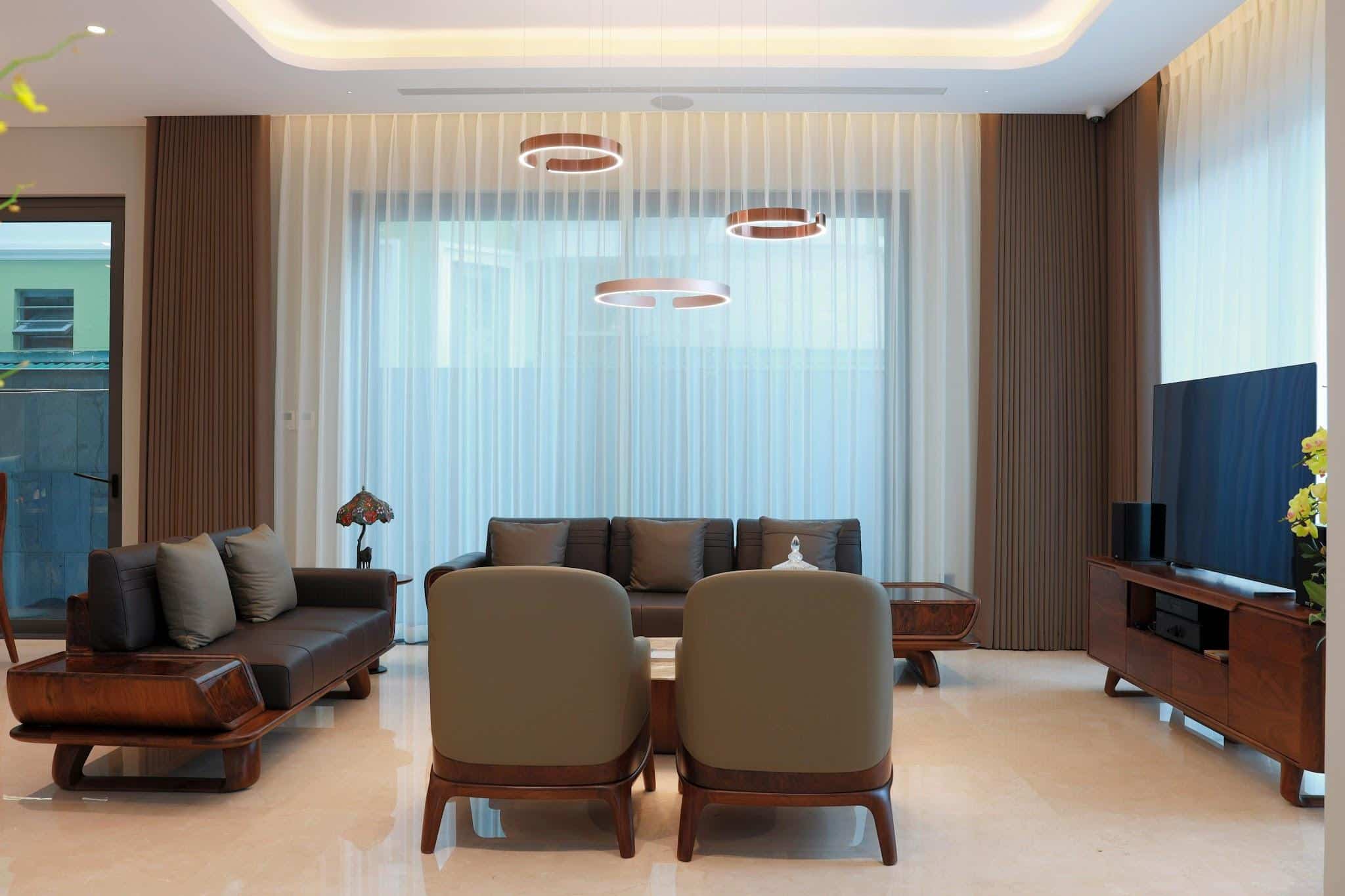
Pendant lights hung low over the table create immediate intimacy, while warm-toned bulbs on dimmers extend the room’s personality deep into the evening.
Tactile textiles offer essential visual relief and acoustic benefits for your hosting space.
In public settings, loud restaurant noise can be a barrier to communication, making sound-absorbing materials crucial for comfortable residential dining too.
Linen runners, woven placemats, layered napkins, or a natural fiber area rug beautifully define the dining zone while softening echoes.
Keep these textiles in natural, earthy tones like cream, oat, sage, or rust so they complement heavier furniture.
Consider incorporating mixed seating to break up the visual rigidity of the room.
Pairing tailored upholstered chairs with a simple wooden bench quietly signals that long, comfortable gatherings are the entire point of the evening.
These dining room styling ideas ensure the room feels physically warm the moment you walk in.
|
Pro Tip: Use lighting to define the mood and textiles to define the comfort. Warm bulbs and natural linens soften industrial edges, signaling to guests that lingering is highly encouraged. |
|---|
4. Layer Authentic Vintage Elements Together
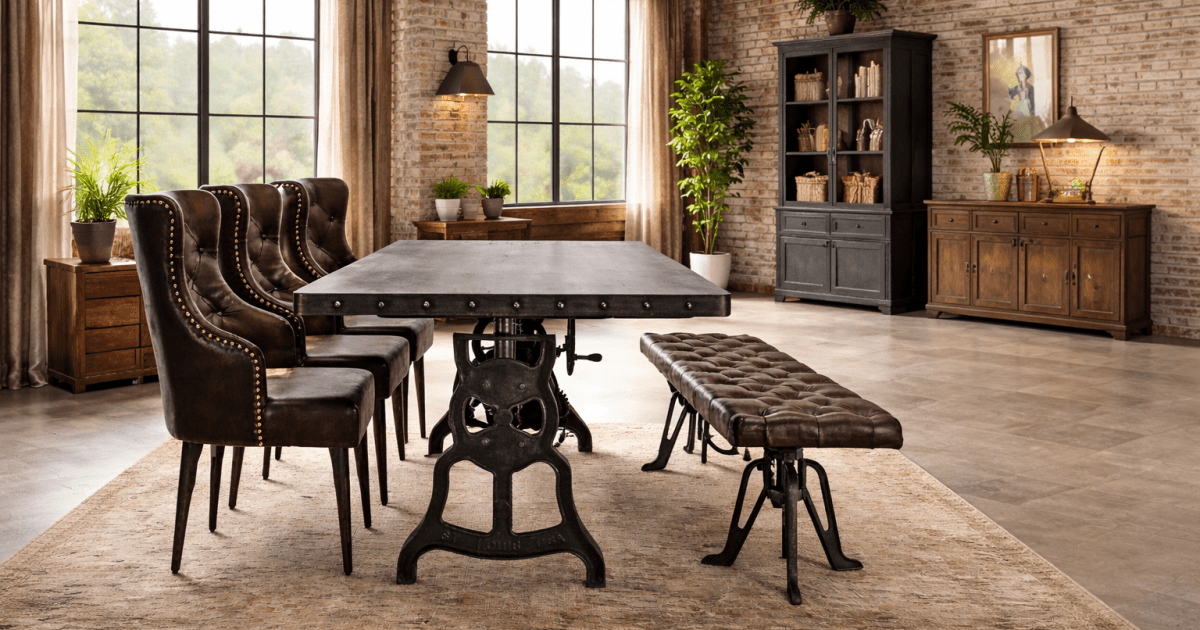
There is a distinct difference between a room that looks styled and a room that feels truly inhabited by its owners.
Well-executed vintage dining room decor bridges that gap by emphasizing objects that appear gathered over time.
Instead of buying a matching set of modern accessories, consider repurposing an old apothecary cabinet as a sideboard.
Framed architectural prints or a reclaimed wood shelf holding mismatched antique glass all build an authentic layered aesthetic.
The key principle of heritage home styling is that pieces should feel like they belong to a long-running story.
Each item should carry a purpose, whether it has a flea market origin, a family connection, or obvious textural age.
Aged metals and raw textures naturally reinforce an industrial farmhouse dining room tone without needing to perfectly match one another.
Restraint matters immensely when styling these older artifacts in a modern home. Three carefully considered vintage pieces create far more atmosphere than a crowded, cluttered shelf of coordinated accessories.
Even a vintage-style sconce effortlessly bridges that old-world feeling with modern, reliable functionality.
The Bottom Line
These four details represent a unified design philosophy rather than a rigid checklist for your home.
When you anchor with intention, soften with warmth, layer with authenticity, and punctuate the room with bold statement decor, the space transforms.
The goal is never a photographically perfect room, but rather a space with a distinct and welcoming point of view.
The best hosting spaces earn their reputation through the rich, lingering stories the room invites people to tell.