Your flooring choice determines more than aesthetics; it also determines your rental income and turnover costs. Choosing the right floor can keep quality tenants longer in your property and compel them to pay more rent. But the wrong floor will cost you money on repairs over time and longer vacancies.
Here are three upgrades to balance your high upfront costs with durability and protect your investment while keeping your property earning.
3 Flooring Upgrades That Increase Rental Value and Reduce Turnover
Flooring upgrades do more than decorate your building. They solve three very real business problems: protect an asset from damage, increase rent potential by providing tenants with upgraded amenities, and make your rental units more comfortable to live in.
Investing in the right flooring option can improve your property’s marketability and property value. Three types of floor coverings that will help you solve these three problems include:
1. Luxury Vinyl Plank (LVP)
Boosting Property Value: The fact that LVP communicates to the marketplace that your property is contemporary and properly maintained is one of its greatest advantages. Dated carpet and scratched linoleum don’t photograph nearly as well as LVP. Therefore, this visual aspect enables you to list your unit at the highest point in your area’s price spectrum.
Addressing Wear and Tear: There is no comparison among all the budget options available when it comes to durability. LVP is 100% waterproof and resistant to scratches. Thus, if a tenant lets his/her dog have an accident or a child spills an entire cup of juice, the liquid will sit atop the flooring material and will not soak down into the underlayment. Therefore, you avoid the lengthy, costly process of replacing carpet or refinishing wood floors due to accidents between renters. Over a 10-year period, the longer lifespan of LVP can reduce your total maintenance cost per turnover by 50 percent (compared to average carpet).
Meeting Common Tenant Lifestyle Needs: Tenants do not want to spend their weekends cleaning the rug with steam. Tenants require a quick and easy way to clean their floors. With these requirements in mind, LVP provides both pet owners and individuals working from home with what they need. Pet owners will appreciate how well LVP holds up to dog claws, and rolling office chairs will show little to no damage to LVP as opposed to soft surfaces, which will immediately display dents and divots.
2. Porcelain Tile (Wet Areas)
Boosting Property Value: Tile isn’t a luxury; tile is an expectation. Renters expect to see tile in their kitchen and/or bathroom. An otherwise ordinary rental with a nicely tiled bathroom will feel cleaner than a rental with no tile. Additionally, renters view a rental unit with poorly applied peel-and-stick vinyl as lower quality, whether the rest of the rental unit has high-quality finishes.
Addressing Wear and Tear: Moisture is the worst enemy for rental flooring. Whether it be water getting behind baseboards, buckling laminate at the edge of rooms, or creating mold in carpet pads. Tile provides a strong barrier to help prevent all three issues from occurring. When tile is installed correctly with the grout sealant on the grout lines, it can last the life of the building and require only a simple cleaning of the grout every 2-5 years.
Meeting Common Tenant Lifestyle Needs: Cool floors during warm weather. While not as common as being able to walk into your home without stepping onto carpet, having a cool floor will make many renters happy. The bigger advantage here is the comfort that comes from knowing that you have the ability to keep your bathroom floor clean. In today’s post-COVID environment, tenants want assurance that they are keeping themselves safe through cleanliness.
3. Waterproof Laminate (Bedrooms)
Boosting Property Value: Waterproof laminate is an ideal choice for landlord owners who have moderately priced rental properties, as it will provide a clean and even appearance compared to older, dirty carpet. With a turn-key feel, this will help you get new renters faster.
Addressing Wear and Tear: Laminate has always been the biggest concern for landlords because of swelling at the seam. Waterproof laminate (AC4 & AC5) eliminates this issue and will provide better dent resistance in many cases over LVP, and is ideal for bedrooms where there is less foot traffic but more movement of furniture.
Meeting Common Tenant Lifestyle Needs: Most renters like the durability of hard floors in the main living area. Most people prefer a softer, quieter surface under their feet in their bedroom. Laminate, combined with a quality underlayment, will absorb sound much better than LVP. This makes for fewer noise complaints in multifamily complexes and creates a cozy atmosphere for your tenants, making them happy to renew their lease.
Practical Considerations Before Replacing Flooring
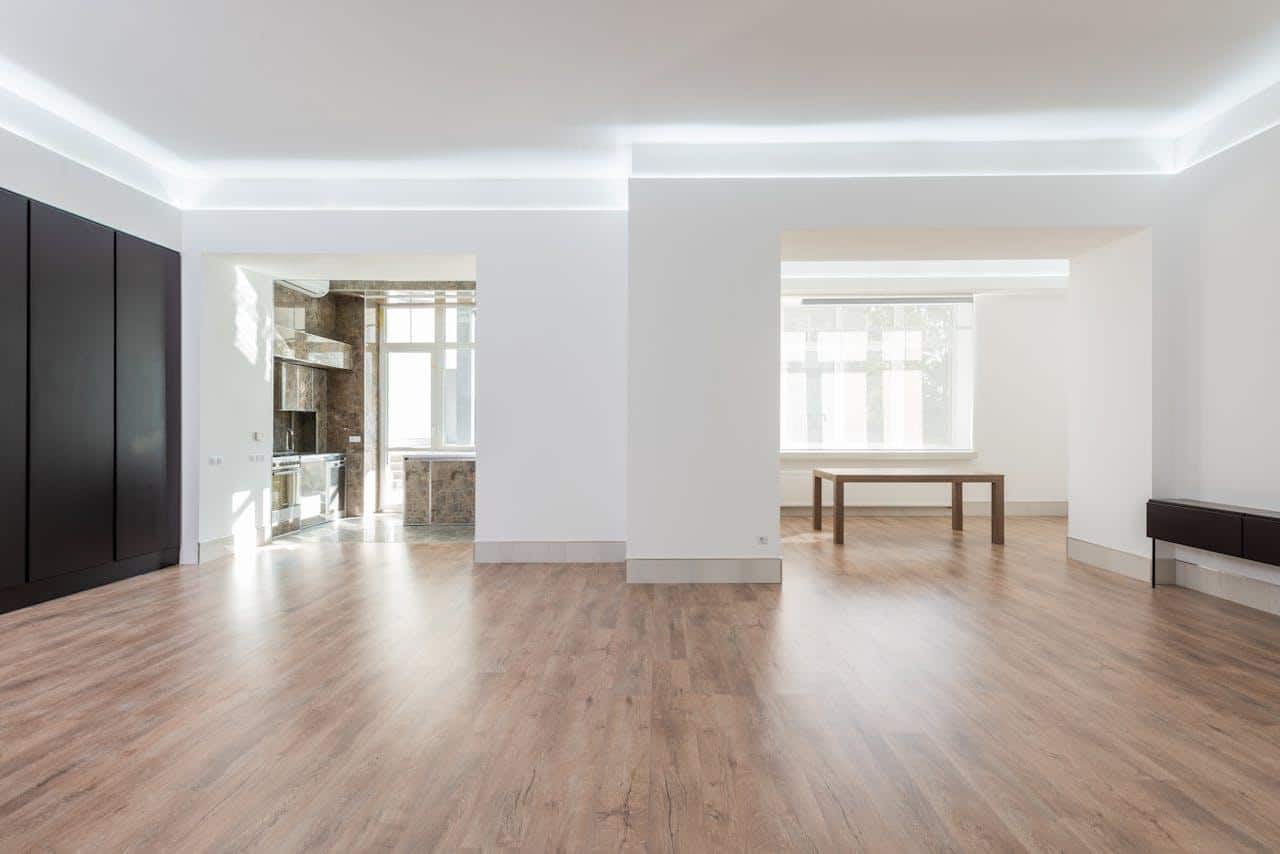
Image Alt Text: Brown Wooden Table near White Wall
It’s one thing to choose the best product for your needs. It’s quite another to know when and how to install the material so you can get the most from your money.
To be successful in an upgrade of this nature, you first have to determine the financial feasibility of the project, how much it will cost, and then develop a long-range strategy to maintain the look and integrity of that floor over time.
Balance Cost vs. Return
The most common and costly error made by landlords is to make too many improvements in a rental unit. When improving a rental unit with flooring, you need to match the quality of the flooring to the property type/class and the rent ceiling for the neighborhood.
You should first ask yourself: “Will this floor allow me to raise my rents?” If you have a Class A Luxury Building, your renters expect premium finishes. However, installing low-cost laminate in a luxury unit will actually reduce your rent potential since your renters’ expectation of premium floors has not been met. On the other hand, when renting in a Class B or C Working-Class Neighborhoods, spending an additional $4.00/square foot on real hardwood may only add an additional $1.00/month to your rent. Therefore, you have just lowered your profit margins and increased the amount of time it will take to recapture your costs from the hardwood.
To assist you in determining whether or not to install a new floor based upon financial returns, use a Payback Period Calculation. Divide the total cost of the new floor by the estimated monthly rent increase you can achieve as a result of installing the new floor.
For example, assume you spent $3000.00 to install LVP and were able to increase your rents by $75.00/month. Your payback period would be approximately 40 months (a little over 3 years). If your plan for owning this property is greater than 3 years, then it would probably be worthwhile to spend money on a new floor. If you anticipate selling the property within 2 years, then you might want to look at an inexpensive but clean-looking option, such as new mid-grade carpet in the bedrooms only.
Seek help from a local Washington DC rental manager to coordinate with trusted contractors with cost-effective quotes for your property.
Establish a Maintenance Plan
Even though floors are built to last a long time, if you don’t put a preventative system into place, they will still be replaced early.
First: purchase an amount of attic stock to cover a full area of flooring. This is not optional. Flooring manufacturers cease production on color and lock systems every 2-5 years. So when one of your tenants damages only one piece of their LVP in year 3 of a 10-year warranty, and that exact style is discontinued, then you either go along with a mismatched repair or replace the entire room.
Do yourself a favor and buy 2-3 additional boxes of the same type of flooring when it is installed. Then store those in a dry area with air conditioning/heat. Spending $150 for spares can save you $3000 replacing the whole room.
Second: Create a standardized turnover walk-through. When training your property manager or yourself, look for all the standard indicators, such as:
- Moisture swelling between the planks near exterior doorways.
- Cracked or missing grout in the shower floor.
- Deep scratches caused by furniture legs without protective pads.
Fixing these areas before your next tenant moves in eliminates future problems and disputes regarding “lease violations” and/or “security deposits.”
Third: Take pictures of everything at the move-in. At the beginning of each rental term, take dated, high-quality photographs of the flooring throughout the home. These photographs will protect you during the security deposit refund process. Without evidence of the previous condition of the flooring, you will lose any dispute you may have regarding normal wear and tear vs. damage.
Conclusion
The right flooring protects your cash flow & keeps units occupied. For main living areas, use LVP (luxury vinyl plank). For wet zones, you can use tile, and use waterproof laminate for the bedroom area. Always consider upgrade costs when considering rent increases; keep spare planks in inventory to fix damage quickly.
Durable, low-maintenance floors attract better tenants, reduce turnover problems, and increase the long-term value of properties. Invest smart, and let your floors do the work.