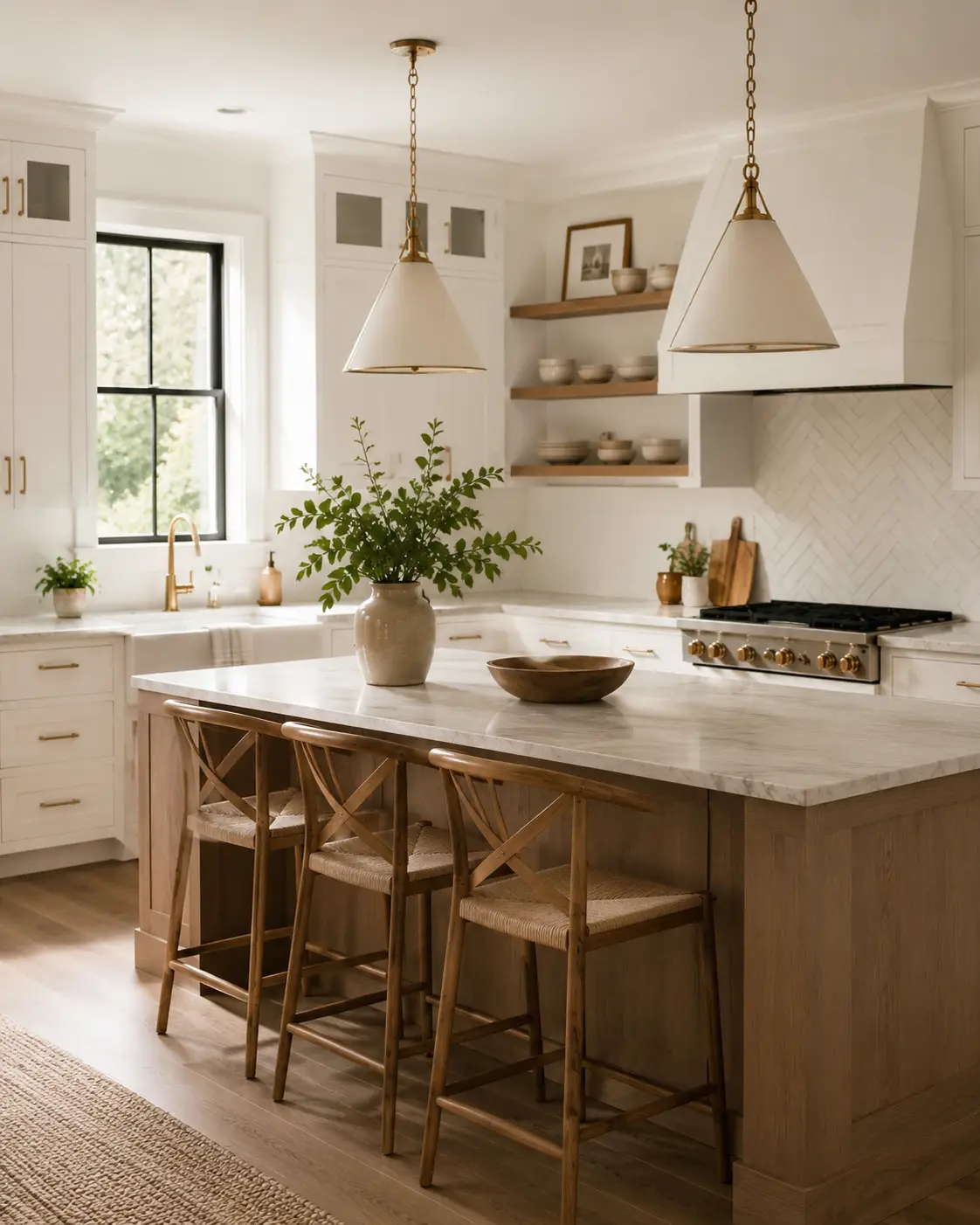
Farmhouse kitchens have a particular quality that no amount of shiplap or apron-front sinks can manufacture on their own: they feel like they were built slowly and chosen carefully.
The cabinets are a big part of that impression.
And if you have ever stood in a showroom staring at a row of nearly identical shaker-door samples trying to figure out which one actually belongs in a farmhouse kitchen, you already know the real question is not what looks right. It is what is built right.
Ready-to-assemble wooden cabinets have closed the quality gap considerably in recent years.
The strongest RTA lines now offer plywood box construction, dovetail drawer joinery, and soft-close hardware as standard.
For farmhouse kitchens specifically, that structural quality matters more than in almost any other style: farmhouse kitchens are used hard, they are designed to look like they have been used, and they need to hold up across years of daily cooking without the cabinet face betraying the box behind it.
This guide covers exactly what to look for before you order, the seven criteria that separate a farmhouse-appropriate RTA cabinet from one that will look dated or structurally compromised within three years.
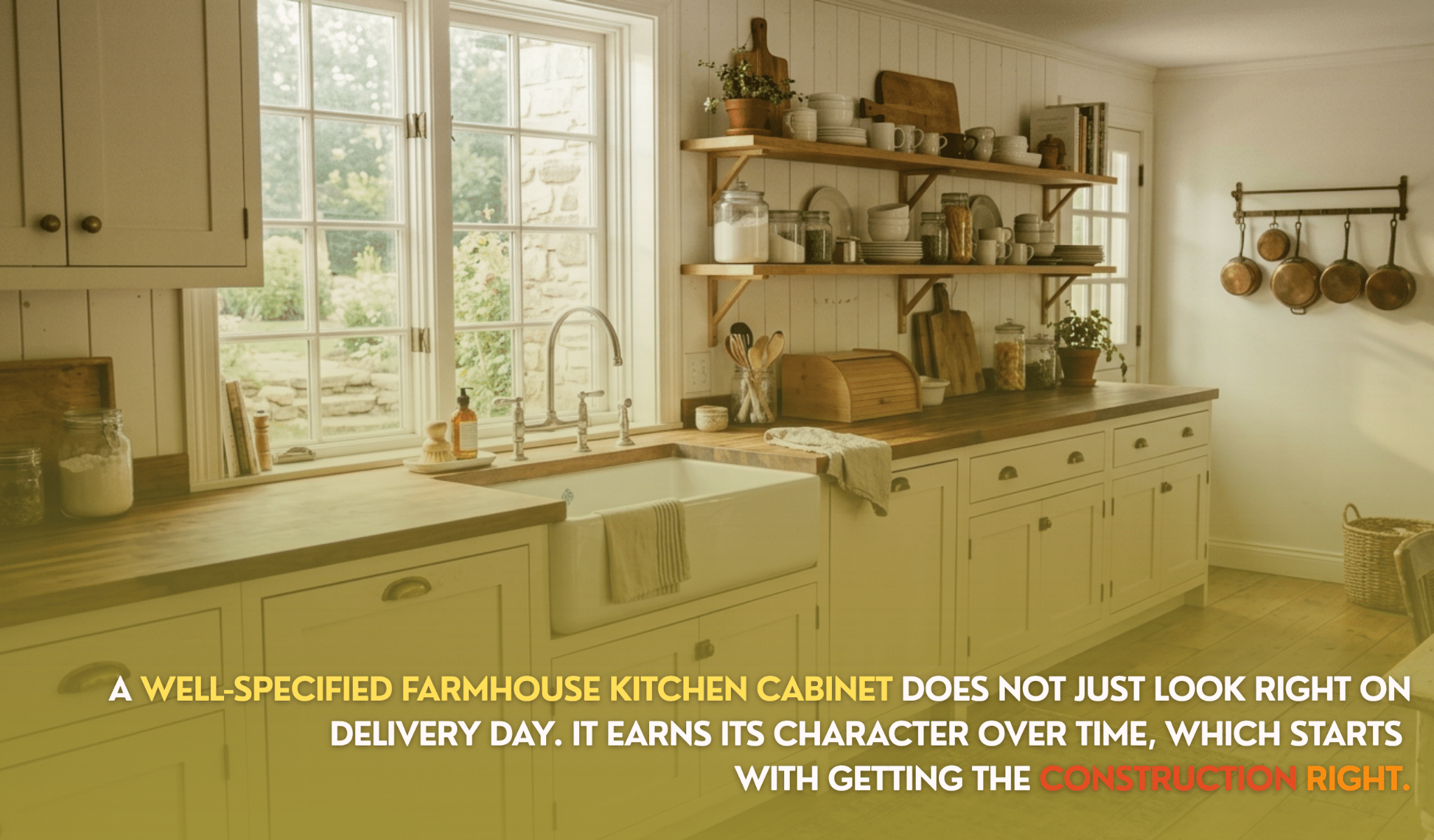
Why the Farmhouse Style Makes Specific Demands on Cabinetry
Most interior design guides treat cabinet selection as a purely aesthetic decision. For farmhouse kitchens, that framing misses the point.
The farmhouse style is built on the idea of functionality that ages well, materials that develop patina rather than simply wearing out, and a visual language that feels inherited rather than installed.
A cabinet that ticks every aesthetic box but uses particleboard box construction or a plastic-laminate face that chips at the edges will undermine that aesthetic faster than any bad styling choice.
The good news is that the criteria for a farmhouse-appropriate cabinet align closely with the criteria for a well-made cabinet in general.
Plywood construction, solid wood face frames or door profiles, quality hardware, and a finish that rewards rather than conceals the natural wood character are the right starting points regardless of style.
Where farmhouse-specific decisions come in is around door profile, finish tone, and the configuration choices (open shelving versus upper cabinets, glass-front inserts, furniture-style feet) that define the aesthetic.
For a broader view of where farmhouse kitchen design is heading in 2026, interior design 2026 trends and what homeowners should expect is worth reading before you finalise any cabinetry decisions.
The shift toward layered cabinetry palettes combining warm neutrals with wood accents maps directly onto what the best RTA wooden cabinet lines are currently offering.
1. Plywood Box Construction, Not Particleboard
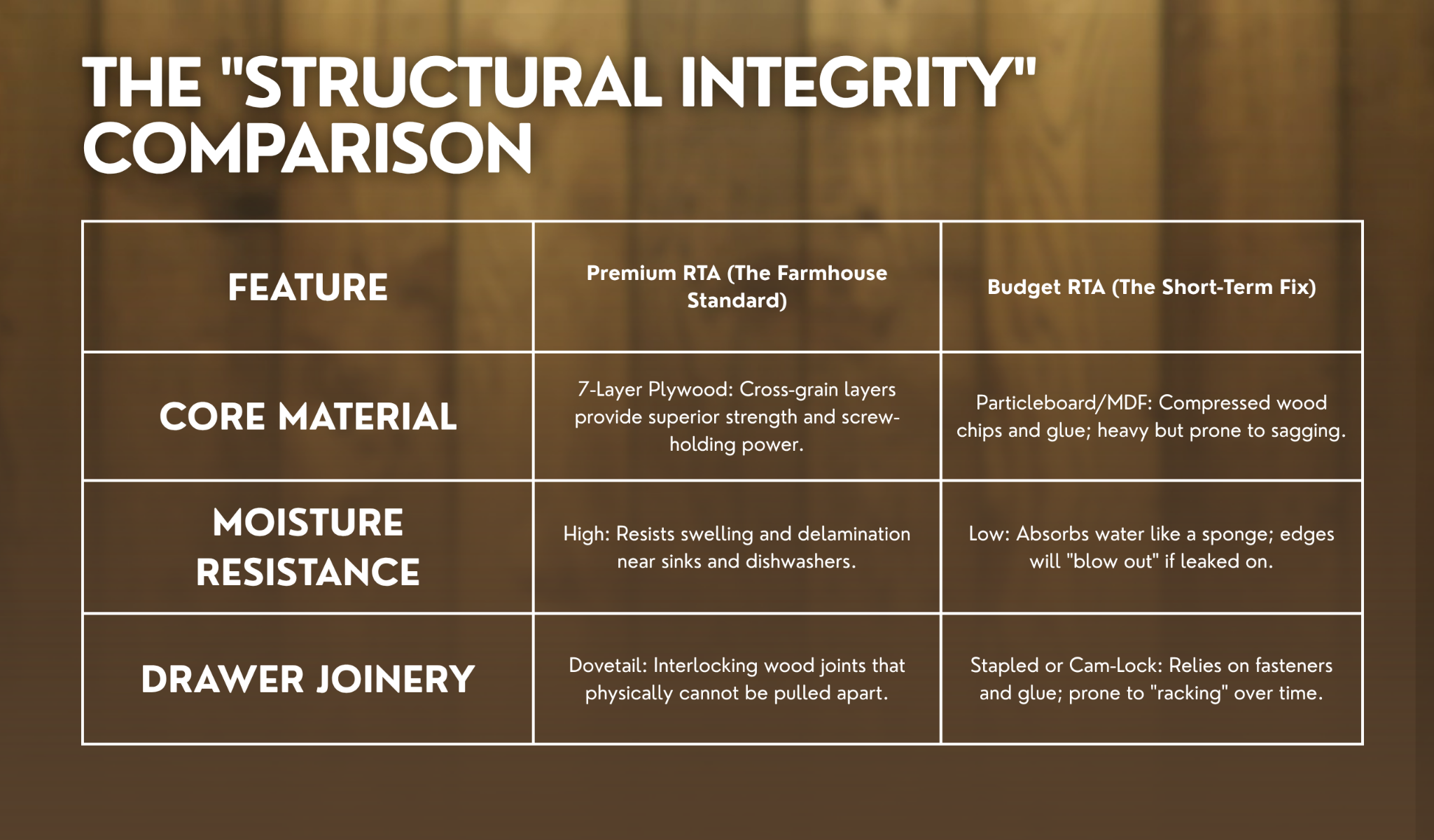
This is the single most important structural specification and the first thing to check before anything else.
Particleboard is heavier than plywood, more vulnerable to moisture expansion near a sink or dishwasher, and does not hold screw fastenings as well over repeated use.
A farmhouse kitchen that is used the way a farmhouse kitchen is supposed to be used will expose every weakness in a particleboard cabinet box within a few years.
Plywood boxes are not universal in the rta market, even at mid-range price points, so it requires a specific confirmation rather than an assumption.
For a reliable starting point, Rta wood cabinets’ collection of wooden kitchen cabinets Uses 3/4-inch plywood construction throughout, which is the correct specification for a primary residence kitchen. This is the benchmark to use when comparing other brands.
2. a Shaker Door Profile in The Right Finish Tone
The shaker door is not farmhouse-exclusive, but it is the profile that works best in that context because it reads as crafted without being ornate.
A recessed centre panel with a clean perimeter frame has enough visual detail to suit a farmhouse aesthetic while staying restrained enough to live alongside modern appliances and fittings without looking incongruous.
Finish tone is where farmhouse specificity comes in.
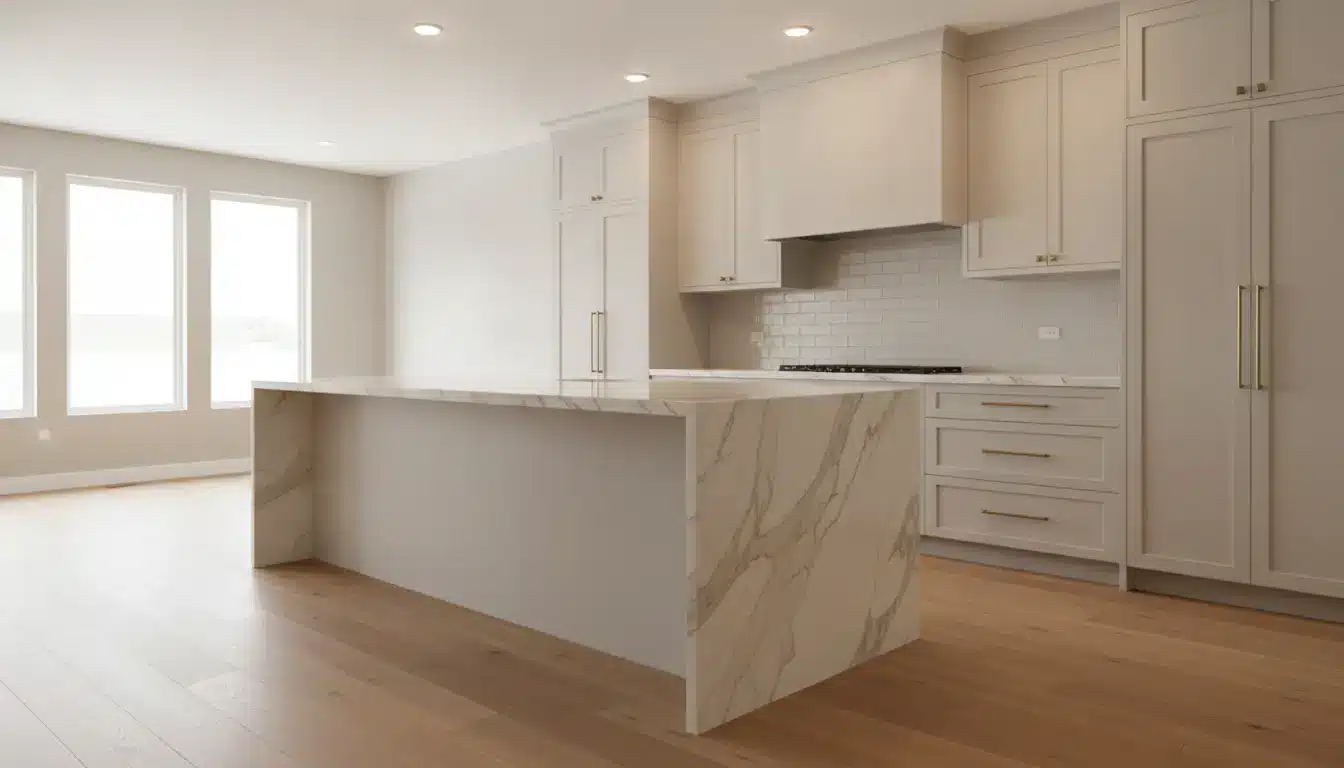
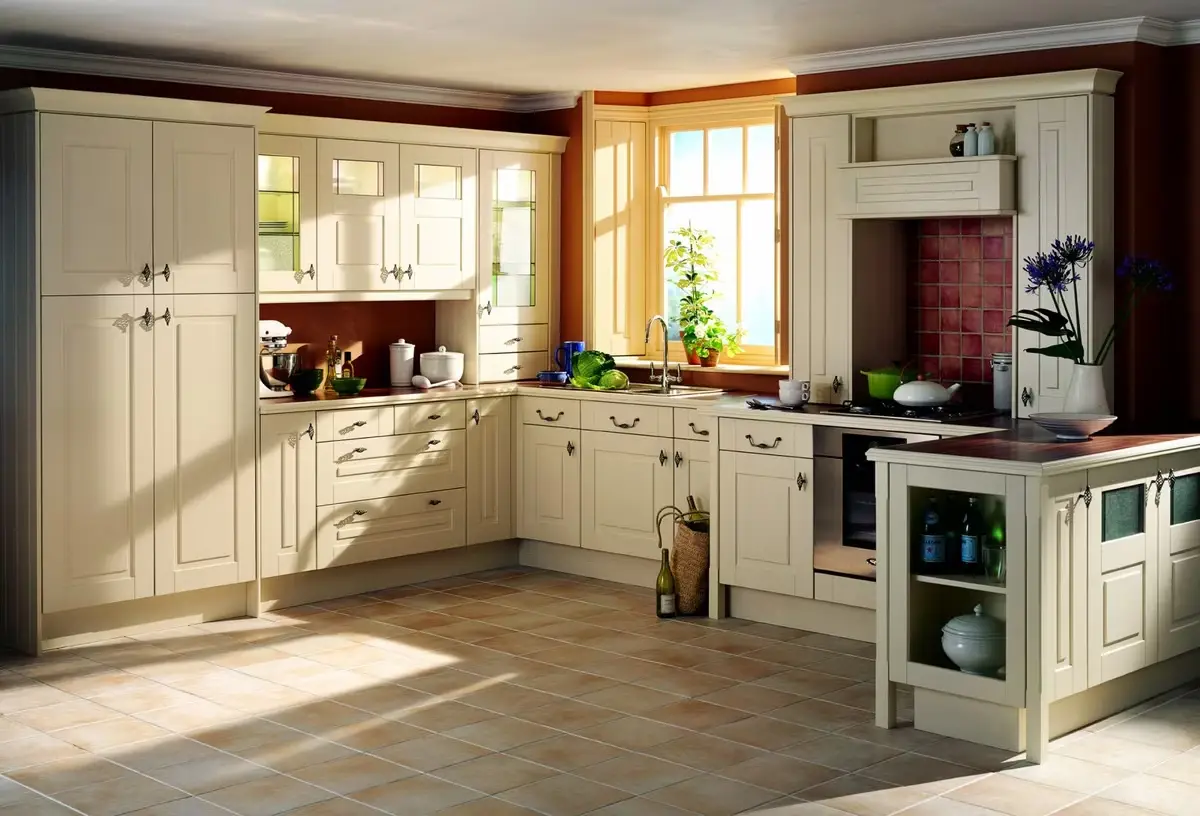
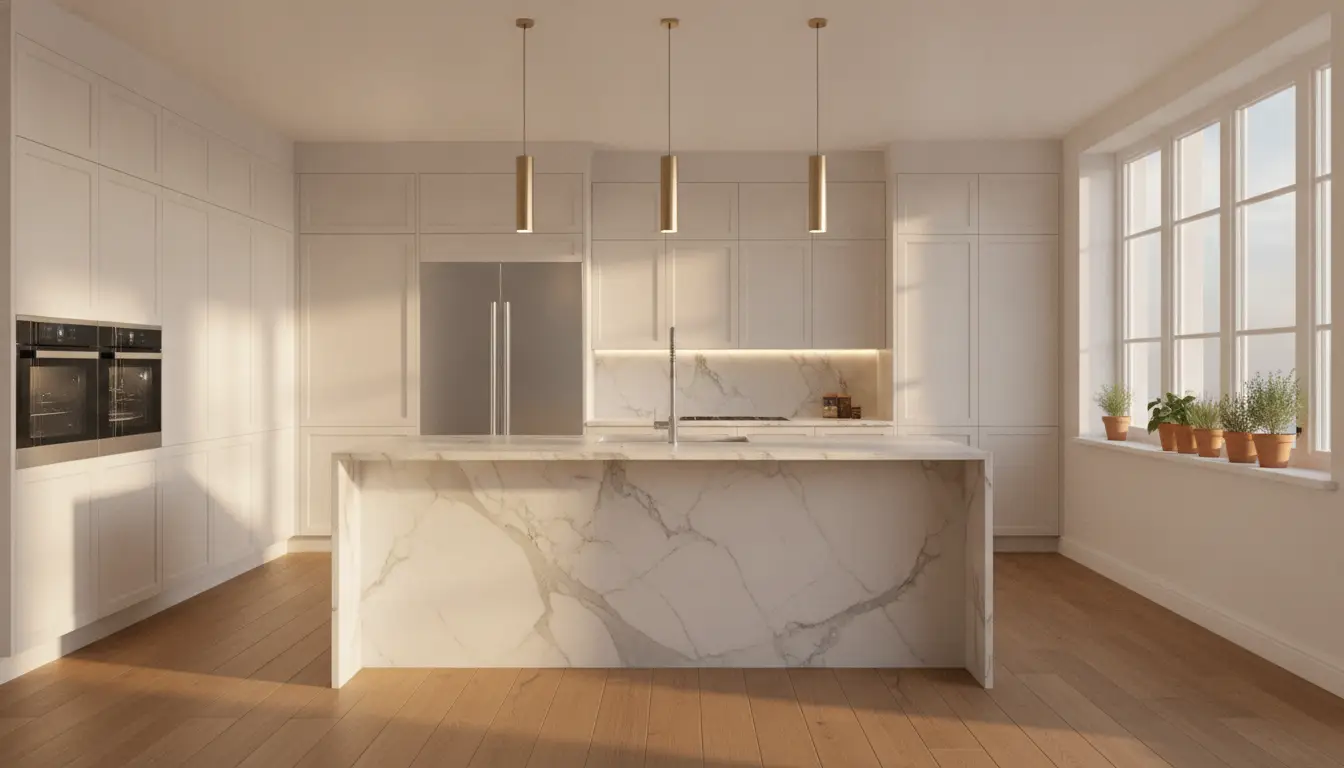
Cream, off-white, and warm white (with a slight yellow or bone undertone rather than a cool blue-white) are the palette most consistent with the farmhouse style.
Natural wood stains in honey or warm oak tones work equally well for a less painted look.
Avoid bright white with a cool undertone: it reads as contemporary rather than farmhouse, and the contrast with natural wood accents like butcher block or open shelving tends to look jarring rather than considered.
3. Dovetail Drawer Box Joinery
Drawer boxes are the most heavily used component in any cabinet run, and the joinery method determines how long they hold up.
Dovetail joinery, where the drawer sides interlock with the drawer front and back through a series of angled cuts, produces a mechanical connection that resists racking (the diagonal pulling stress that develops when a drawer is opened and closed repeatedly with weight inside).
Dowel-and-cam joinery is the budget alternative and performs adequately under lighter use, but in a farmhouse kitchen where drawers may hold heavy cast-iron cookware, heavy cutting boards, or deep utensil loads, dovetail construction is the right specification.
4. Soft-Close Hinges and Drawer Guides as Standard
Soft-close hardware is the quality indicator that distinguishes a cabinet you will still appreciate in ten years from one that starts to feel tired within two.
The mechanical difference is straightforward: soft-close hinges use a hydraulic damper to slow and cushion the final movement of a door or drawer before it closes, which prevents the repeated impact stress that loosens screw fastenings over time.
In a busy farmhouse kitchen, where cabinet doors and drawers are opened and closed dozens of times a day, the structural benefit compounds significantly.
Confirm that soft-close is included as standard hardware rather than an add-on before ordering.
5. Finished Interior Surfaces
Cabinet interiors in raw or unfinished wood are a common cost-reduction point in budget rta lines.
In a farmhouse kitchen, where the cabinet interior is frequently visible (open-door cooking, glass-front uppers, open shelving transitions), an unfinished interior reads as incomplete.
More practically, an unfinished plywood interior is harder to clean and more susceptible to moisture marking around the sink base and dishwasher zones.
A melamine or uv-finished plywood interior is the correct specification for a kitchen that will be used rather than photographed.
6. Oil-Rubbed Bronze or Brushed Nickel Hardware Compatibility
Hardware is the detail that most directly signals farmhouse intent.
Oil-rubbed bronze is the most consistent choice for a traditional farmhouse look: its dark, slightly uneven finish reads as aged without requiring actual age, and it pairs well with cream and warm-white painted cabinets.
Brushed nickel works well in kitchens that lean toward a cleaner, more transitional farmhouse aesthetic.
Cup pulls and bin pulls (the horizontal u-shaped handle) are the door hardware profiles most specific to the farmhouse style.
Confirm that the cabinet door profile and drilling dimensions are compatible with your intended hardware choice before placing the order, since some rta lines use proprietary hinge placements that limit aftermarket hardware options.
7. Configuration Options: Glass Fronts, Open Shelving, and Furniture Feet
Three configuration choices define a farmhouse kitchen visually and set it apart from a standard shaker cabinet installation.
Glass-front upper cabinets (either clear or seeded glass with a divided-light mullion) allow display of ceramics and glassware in the way a hutch or dresser would in a traditional farmhouse.
Open shelving in place of some or all upper cabinets is a farmhouse kitchen staple, and the strongest
Rta lines offer coordinated floating shelf brackets that match the cabinet wood species and finish. Furniture-style feet on the base cabinet run (a separate toe-kick detail that mimics freestanding furniture) are a more advanced option but one that significantly elevates the farmhouse character of a full kitchen installation.
When planning which configuration options to include, it helps to think through the wall space in the same way a vintage-inspired kitchen is styled: building from anchor pieces outward rather than filling every available surface.
Our guide on How to style and maintain a vintage-inspired farmhouse kitchen Covers how to balance open display shelves with closed cabinetry in a way that reads as curated rather than cluttered, which is exactly the right framework for deciding which configuration options to include in your rta order.
Sizing Considerations Specific to Farmhouse Kitchen Layouts
Farmhouse kitchens often have layout characteristics that differ from contemporary open-plan kitchens.
Larger footprints with a central island or harvest table, deeper countertop overhangs for seating, and taller upper cabinet runs that reach toward higher ceilings are common. A few sizing notes worth checking before finalising your rta order:
- Standard wall cabinet height: Most stock rta wall cabinets come in 30-inch, 36-inch, and 42-inch heights. Farmhouse kitchens with 9- or 10-foot ceilings often look best with 42-inch uppers, which eliminates the visual gap above the cabinet run and gives the kitchen a more built-in, furnished appearance. Confirm 42-inch height availability in your chosen door profile before ordering.
- Deep upper cabinets: Standard upper cabinet depth is 12 inches. For farmhouse kitchens where the upper cabinets are expected to store platters, large mixing bowls, or stacked dinnerware, a 15-inch depth upper is worth investigating as an option in the rta line you are considering.
- Island height: If a farmhouse kitchen island is part of the plan, confirm that the base cabinet height is adjustable or that furniture-height base cabinets (34.5-inch rather than 36-inch finished height) are available. A lower island surface is more consistent with the farmhouse aesthetic and is more comfortable for hand tasks like bread kneading and pastry work.
- Narrow base fillers: Farmhouse kitchens with irregular wall dimensions or chimney breast intrusions often require narrow filler cabinets. Confirm that 9-inch and 12-inch base cabinet widths are available as stock items rather than special orders, since re-ordering at a later date can produce visible batch variation in finish tone.
Putting It All Together: The Farmhouse Kitchen Cabinet Checklist
Before placing any rta cabinet order for a farmhouse kitchen, run through these seven checkpoints. Each one can be confirmed on a product page or through a supplier conversation before you commit:
- Box construction: 3/4-inch plywood throughout (not particleboard or mdf).
- Door profile: Shaker recessed-panel in cream, off-white, or natural wood stain tone.
- Drawer boxes: dovetail joinery (not dowel-and-cam or stapled).
- Hardware: soft-close hinges and drawer guides included as standard.
- Interior finish: melamine or uv-finished plywood interior (not raw or unfinished).
- Hardware compatibility: cup pull or bin pull drilling confirmed against your chosen hardware.
- Configuration options: Glass-front uppers, open shelf brackets, or furniture feet available in the same finish family.
A farmhouse kitchen is one of the few design contexts where the cabinet’s material integrity and its aesthetic character are genuinely inseparable.
Getting both right from the start, rather than discovering the mismatch after installation, is where the real value of a careful rta specification lies.
For anyone working through a wider home redesign alongside a kitchen update, Mixing modern elements with farmhouse wall decor Covers how to layer contemporary and traditional elements without either cancelling the other out.
The same principles that apply to wall decor decisions apply to the transition between a farmhouse cabinet specification and modern appliances or lighting fixtures in the same kitchen.