The kitchen is one of the most used rooms in any home. It is where mornings start, meals are made, and people tend to gather without being asked. Yet when it comes to decorating, most kitchens end up with the same solution: white paint, neutral tiles, and nothing on the walls worth looking at twice.
Wallpaper changes that entirely. A well-chosen kitchen wallpaper brings personality, warmth, and a sense of intention to a space that deserves more than just functional finishes. The key is choosing the right design for the specific demands of a kitchen environment. Here is how to do it.
Consider the Practical Requirements First
Kitchens are harder on wall coverings than any other room in the house. Steam from cooking, splashes near the sink, grease particles in the air near the hob, and frequent cleaning all put pressure on whatever you put on the walls. Before you fall in love with a pattern, make sure the material can handle the conditions.
Vinyl-coated wallpaper is the most practical choice for kitchens. It is moisture-resistant, wipeable, and durable enough to withstand the daily realities of a working kitchen. Peel and stick options are also worth considering, particularly if you rent or want the flexibility to update the look without a full redecoration. They have come a long way in quality and now offer a finish that is difficult to distinguish from traditionally hung wallpaper.
Avoid delicate paper-only finishes in high-humidity zones like directly above the sink or near the stove. In those areas, peel and stick backsplash, tile or a painted surface is still the safer call. Save the wallpaper for the areas that get less direct exposure.
Think About the Size and Layout of Your Kitchen
Scale matters more in a kitchen than people expect. In a small galley kitchen, a large bold print can feel overwhelming and close the space in further. In an open plan kitchen-diner with high ceilings, a small repeated pattern can disappear entirely and look underwhelming against the scale of the room.
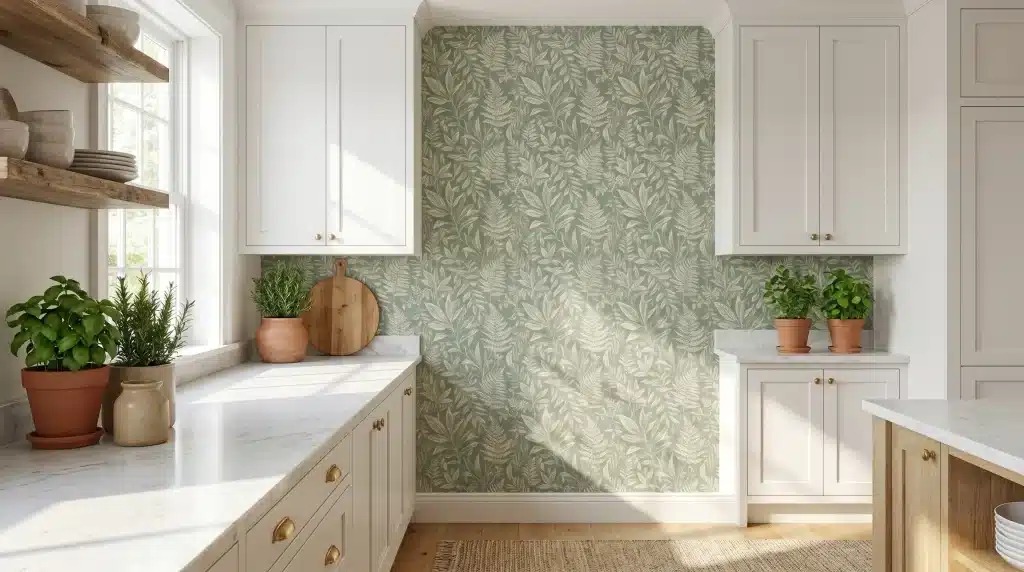
As a general rule, smaller kitchens benefit from lighter backgrounds with medium-scale patterns that add interest without crowding the space. Larger kitchens can carry bolder, larger-scale designs with more confidence. If your kitchen has a mix of open wall space and lots of cabinetry, focus the wallpaper on the sections of wall that are actually visible. A single papered wall between upper and lower cabinets, or the wall at the end of the kitchen that acts as a focal point, can be enough to transform the entire room.
Match the Pattern to the Overall Style of Your Home
A kitchen doesn’t exist in isolation. It connects to the rest of your home, and the wallpaper you choose should feel like a continuation of your overall aesthetic rather than a jarring departure.
If your home leans toward a classic or traditional style, consider botanical prints, delicate geometric patterns, or vintage-inspired designs that feel timely rather than trend-dependent. If your interiors are more contemporary, cleaner geometric patterns, abstract prints, or graphic tile-effect wallpapers can add visual texture without clashing with modern cabinetry. For something in between, a well-curated kitchen wallpaper collection will give you options that bridge classic and contemporary, making it easier to find something that fits your specific space without having to compromise on style.
Use Wallpaper as a Backsplash Alternative
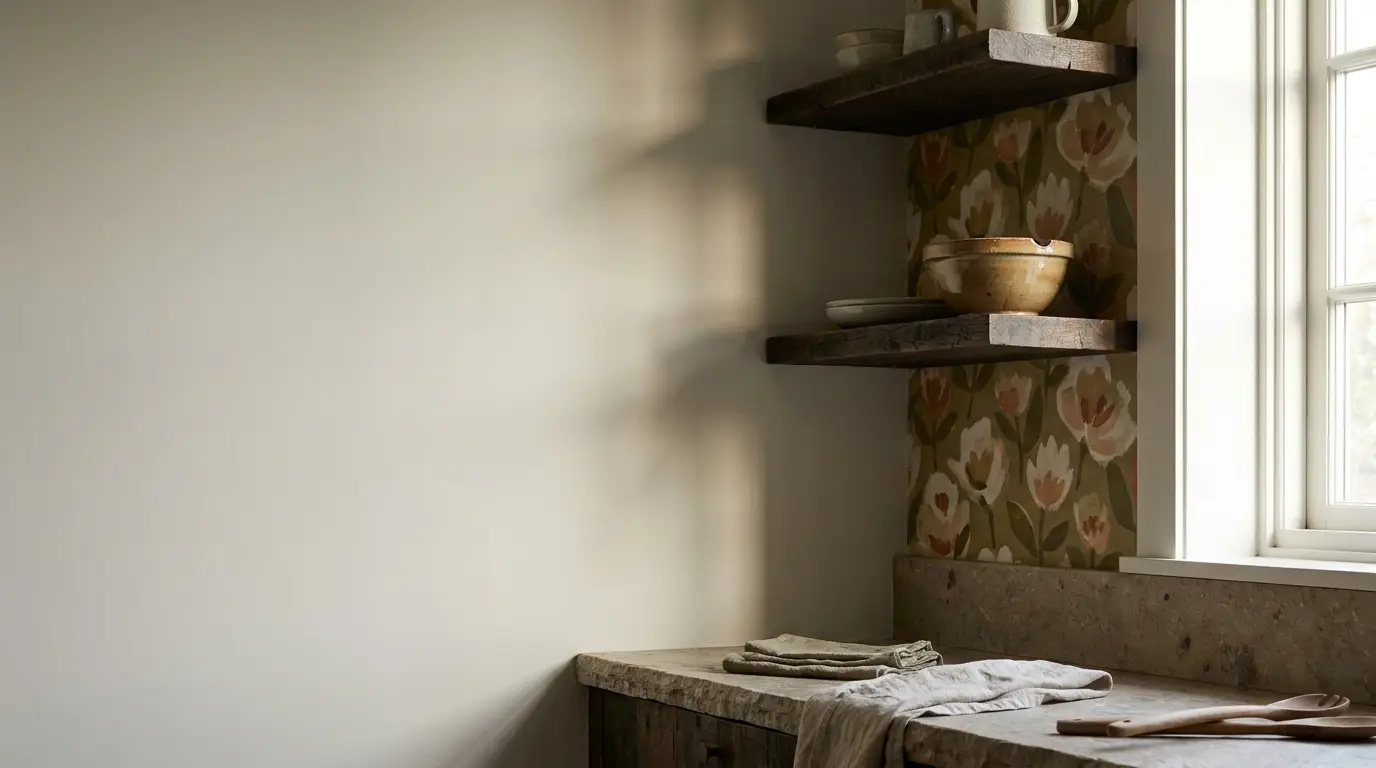
One of the most creative ways to use wallpaper in a kitchen is as a backsplash in areas that don’t get direct water or grease exposure. The wall behind open shelving, the space between the top of the counter and the bottom of the upper cabinets on a dry stretch, or the wall visible between the fridge and a pantry cupboard are all strong candidates.
This approach lets you introduce pattern and color in a focused, contained way. It also gives you the chance to be bolder with your choice because the area is small enough that a more daring pattern won’t take over the room. A graphic print or a rich jewel-toned design works particularly well in this context because it creates a deliberate focal point in what is often a dead zone on the wall.
Don’t Overlook the Ceiling
If your kitchen is short on usable wall space due to cabinetry, appliances, or windows, the ceiling is an underused option that more people should consider. A wallpapered ceiling in a kitchen adds an unexpected layer of design that feels distinctive and considered. Keep the pattern relatively simple if you go this route, as a busy ceiling combined with busy walls can quickly become too much. A subtle geometric print or a soft tonal botanical works well overhead without competing with everything else in the room.
Get the Color Right for Your Cabinetry
The wallpaper and the cabinetry need to work together, and this is where many people go wrong. The instinct is often to match colors directly, but that approach tends to flatten the room. A better strategy is to use the wallpaper to introduce a color that is present but not dominant in the rest of the kitchen.
If you have white or cream cabinetry, almost any wallpaper color will work. If your cabinets are a stronger color, navy, sage, or charcoal for example, look for wallpaper that either complements those tones or introduces a warm neutral that softens the overall palette. The goal is balance. The wallpaper should add to the room, not fight with it.
The Bottom Line
Choosing kitchen wallpaper is not complicated once you separate the practical requirements from the aesthetic ones. Get the material right for the environment, match the scale of the pattern to the size of the room, and make sure the design connects to the broader style of your home. Do those three things and the rest is simply a matter of finding a pattern you genuinely love.
The kitchen is too important to leave bare. A well-chosen wallpaper turns it from a purely functional space into one that reflects personality and care. That shift is worth every bit of the effort it takes to get the choice right.