Step onto any well-designed terrace today, and you’ll notice something subtle but important: the materials feel considered. The textures are warmer, the finishes less synthetic, and the overall atmosphere more intentional. That shift isn’t accidental. Across hospitality and commercial design, sustainability has moved from a background concern to a defining principle—especially when it comes to outdoor spaces.
For hotels, resorts, and restaurants, choosing a sustainable range of plastic chairs is no longer just about environmental responsibility. It’s about creating spaces that age gracefully, perform reliably, and resonate with guests who increasingly value thoughtful design.
A New Standard for Outdoor Spaces
Outdoor areas have evolved. What was once secondary—an extra patio or poolside seating—has become central to a customer’s experience. These spaces host everything from morning coffee service to evening cocktails, and they need to feel as curated as any interior.
That’s where sustainable patio furniture comes in. It offers a balance that’s particularly valuable in commercial settings: durability without heaviness, refinement without excess, and materials that tell a quieter, more responsible story.
Guests may not ask what a chair is made of, but they notice how it feels. Whether it stays cool under the sun, whether the cushions hold their shape, and whether the overall space feels cohesive all matter to them.
What Sustainability Really Means in Furniture
There’s a tendency to reduce sustainability to a label, but in outdoor furniture, it’s more nuanced than that. It begins with sourcing—wood from responsibly managed forests, metals that can be recycled indefinitely, and synthetic materials that repurpose existing waste rather than create new demand.
Teak, for example, has long been favored in hospitality for its resilience. When sourced responsibly, it becomes part of a sustainable system rather than a strain on it. Recycled aluminium, on the other hand, offers a different kind of advantage. It is lightweight, corrosion-resistant, and can be reused without degrading in quality.
Then there are modern materials like high-density polyethylene (HDPE), often made from recycled plastics. In a busy commercial setting, these materials quietly excel. They don’t splinter, they resist fading, and they require very little intervention to stay looking polished.
True sustainable outdoor furniture is defined not by a single material, but by how all these elements come together—and how long they last.
Why Durability Is Part of Sustainability
It’s easy to overlook, but longevity is one of the most important aspects of sustainability. Furniture that needs replacing every season carries a hidden cost—not just financially, but environmentally.
In hospitality environments, where usage is constant, this becomes even more relevant. A well-built outdoor sofa that holds up through heat, humidity, and heavy turnover does more than save money — it reduces waste and operational disruption.
This is why many designers now prioritize the best sustainable outdoor furniture, both for materials and for construction. Reinforced frames, weather-resistant finishes, and high-performance fabrics all contribute to a longer lifecycle.
And in practice, that longevity is what makes sustainability tangible.
Materials That Perform Under Pressure
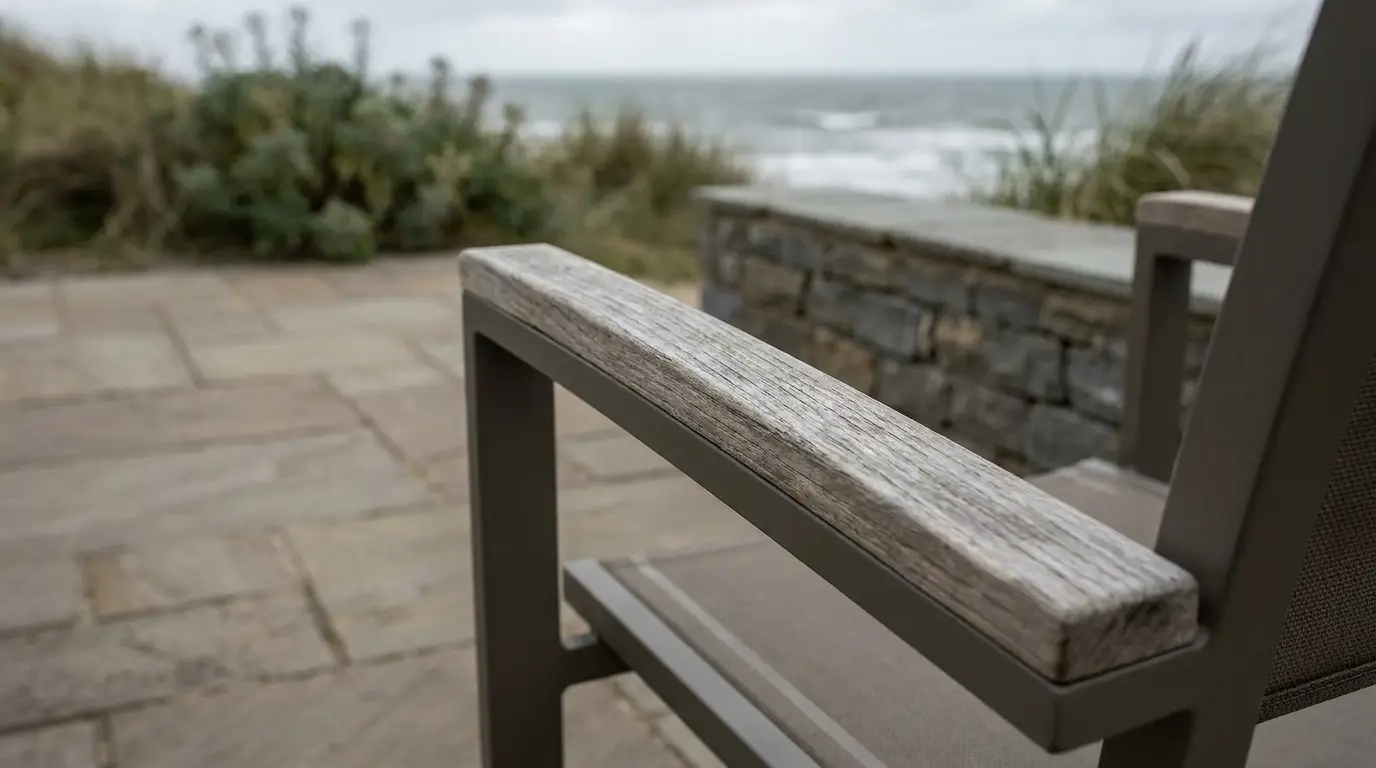
Every outdoor setting presents its own challenges. Coastal properties deal with salt air, urban rooftops face intense sun exposure, and poolside areas require constant moisture resistance. The right materials make all the difference.
Recycled aluminium has become a staple for good reason. It doesn’t rust, it’s easy to maintain, and it retains its structural integrity over time. For large-scale installations, its lightweight nature also simplifies logistics.
Sustainably sourced hardwoods—like teak and eucalyptus—bring a different quality. They introduce warmth and texture while naturally resisting decay. Over time, they develop a patina that many designers consider part of their appeal.
Recycled plastics, particularly HDPE, offer a more contemporary solution. They’re engineered to handle extremes, from UV exposure to heavy use, without cracking or fading. For operators, that reliability is invaluable.
Together, these materials define what sustainable patio furniture looks like in real-world applications: practical, resilient, and quietly refined.
Design That Feels Effortless
Sustainability no longer dictates a specific look. Today’s eco-friendly collections are as diverse as the spaces they occupy—sleek modular seating for rooftop bars, relaxed loungers for resort pools, and structured dining sets for outdoor restaurants.
What ties them together is a sense of restraint. Clean lines, balanced proportions, and neutral tones allow the setting itself to take center stage. Whether it’s a beachfront view or a city skyline, the furniture supports the experience rather than competing with it.
This is where the best sustainable outdoor furniture stands out. It doesn’t try too hard. It simply works—visually and functionally—across different environments.
Tailored Solutions for Hospitality Projects
No two properties are the same, and outdoor spaces often require a tailored approach. Layout, climate, and brand identity all influence the final design.
Working with an experienced outdoor furniture manufacturer allows for that level of precision. Instead of adapting a space to fit standard products, furniture can be designed to fit the space.
For larger projects, collaborating with an OEM outdoor sofa partner offers additional flexibility. Custom dimensions, fabric selections, and structural specifications ensure consistency across multiple locations while maintaining a unique identity.
This level of customization is particularly valuable in hospitality, where details matter and uniformity across properties can strengthen brand recognition.
Maintenance That Makes Sense
One of the less obvious advantages of eco-friendly furniture is how easy it is to maintain. In busy commercial environments, simplicity is essential.
Aluminium frames can be wiped clean in minutes. HDPE surfaces resist staining and don’t require refinishing. Even hardwoods, when properly cared for, age in a way that feels intentional rather than worn.
For operators, this translates into fewer resources spent on upkeep and more time focused on guest experience. It’s a practical benefit that often goes unnoticed—but it makes a significant difference over time.
The Business Case for Going Sustainable
Beyond design and durability, there’s a broader reason why sustainability has become a priority: it aligns with where the industry is heading.
Guests are more informed, more selective, and more attentive to the values behind the brands they choose. Outdoor spaces that reflect those values—through materials, design, and overall atmosphere—tend to leave a stronger impression.
At the same time, sustainable choices often lead to better long-term economics. Fewer replacements, lower maintenance costs, and consistent performance all contribute to a more efficient operation.
In that sense, investing in sustainable outdoor furniture isn’t just a design decision. It’s a strategic one.
Why KingMake
At KingMake, the approach to outdoor furniture is shaped by years of working closely with hospitality clients worldwide. The focus is straightforward: create pieces that look exceptional, perform reliably, and adapt to the demands of commercial use. Andy Wojack, a client, shared his experience with the brand. He said, “The order was very well packed for the long trip, and the quality exceeded our expectations. The sofa and chairs are comfortable and well-built. The colors and fabrics we ordered arrived exactly as we specified. Will order for next project.”