

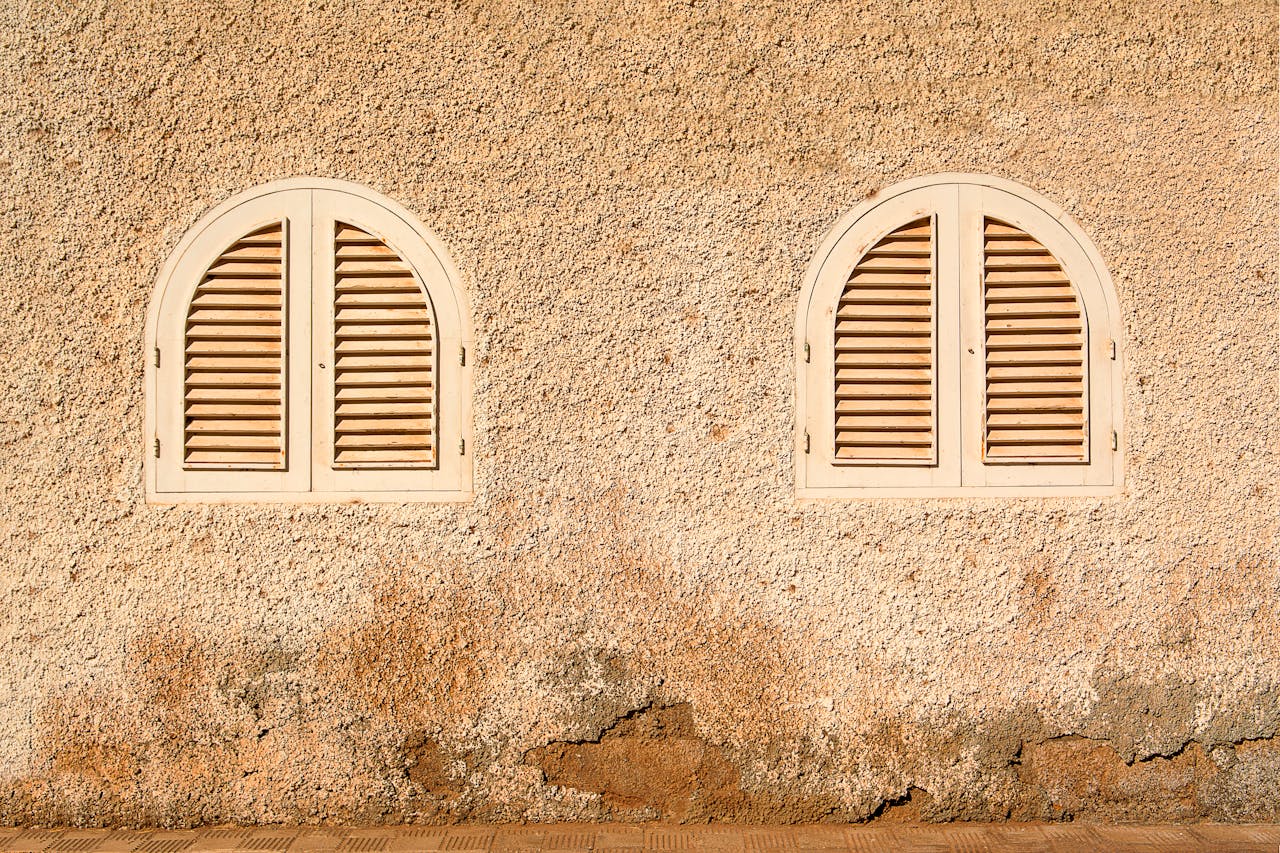
Limewash has been blowing up on design blogs and Instagram for the last couple of years, and for good reason. It gives walls a soft, layered depth that flat latex paint simply can’t replicate. The finish shifts with the light throughout the day, picking up warm undertones in the morning and cooling off by evening. It looks like something you’d find in a renovated Tuscan farmhouse, except it works just as well in a two-bedroom apartment.
But limewash is not regular paint. The application is completely different, the prep requirements are different, and the way it dries will catch you off guard if you aren’t expecting it. This guide covers what you actually need to know before committing to a limewash project, from surface prep to coat timing to knowing when DIY might not be the move.
What Limewash Is (and What It Isn’t)
Limewash is made from slaked limestone mixed with water and natural pigments. It’s been used on buildings for centuries, long before acrylic paint existed. When you brush it onto a wall, it doesn’t just sit on the surface the way latex does. It absorbs into porous material and carbonates as it dries, bonding chemically with the substrate underneath. That’s where the matte, chalky texture comes from.
This is different from Venetian plaster or Roman clay, which get applied with a trowel and create a smoother, more polished look. Limewash is thinner, closer to the consistency of whole milk, and you apply it with a large masonry brush in overlapping crosshatch strokes. The visible brush marks are the point. They’re what create that cloudy, organic movement across the wall.
One thing that surprises people: limewash dries significantly lighter than it looks when wet. You’ll finish a coat and think you’ve made a mistake. The color looks too dark, too blotchy, too uneven. Walk away for a few hours. When the lime carbonates and the moisture evaporates, the wall calms down and the real tone emerges. Color Atelier’s website warns customers about this specifically because so many people panic after the first coat.
The Surface Prep That Actually Matters
Here’s where most DIY limewash jobs go sideways. Limewash needs a porous, absorbent surface to bond with. If your walls are covered in standard latex or acrylic paint (which most interior walls are), you can’t just brush limewash over them and expect it to stick. The paint film blocks absorption, and the limewash will flake off within weeks.
You need a mineral-based primer. Romabio makes their own called Mineral Prime. Color Atelier has one too. These primers create a micro-porous surface that mimics bare plaster, giving the limewash something to grab onto. On new drywall, plan on two coats of mineral primer. On previously painted walls, one coat is usually enough, but test a small area first and see how the limewash absorbs before committing to the whole room.
Glossy or semi-gloss surfaces need extra attention. Sand them down with 150-grit paper before priming. If there’s any peeling, cracking, or loose paint, scrape it off and patch with joint compound first. Limewash will telegraph every flaw underneath it because the finish is so thin and translucent. Smooth walls aren’t strictly necessary (limewash actually looks great on slightly textured plaster), but damaged or flaking surfaces will cause problems fast.
Clean the walls with a damp cloth to remove dust and grease before priming. In kitchens especially, cooking residue builds up on walls even when you can’t see it, and it will interfere with primer adhesion.
Choosing a Brand and Color (They’re Not All the Same)
Not all limewash paints behave the same way. Portola Paints is probably the most well-known brand right now, especially in design circles. Their colors tend to be earthy and muted, and the product goes on smoothly. Color Atelier is another popular option with a wide color range and a slightly thicker consistency. JH Wall Paints offers more color options than most competitors and has solid reviews for interior use. Romabio’s Velatura Mineralwash was designed specifically for interiors and doesn’t require a separate primer on some surfaces, which simplifies the process.
Price varies quite a bit. Expect to pay $60 to $90 per quart for most brands, which covers roughly 100 to 150 square feet per coat. You’ll need at least two coats on most walls, so a single accent wall in a bedroom might run $120 to $180 in materials alone. That’s more expensive than a gallon of Benjamin Moore, obviously, but you’re paying for a finish that conventional paint can’t produce.
For colors, keep in mind that limewash works best in softer, muted tones. Bright whites, warm taupes, sage greens, and soft grays are the sweet spot. Bold, saturated colors can work but they’re harder to control because the layering creates more visible variation. If you want a moody dark wall, Romabio recommends using a slightly darker first coat and a lighter, diluted second coat to build up that dimensional effect. Going two shades apart on a paint chip card is their standard advice.
How to Apply It Without Making a Mess
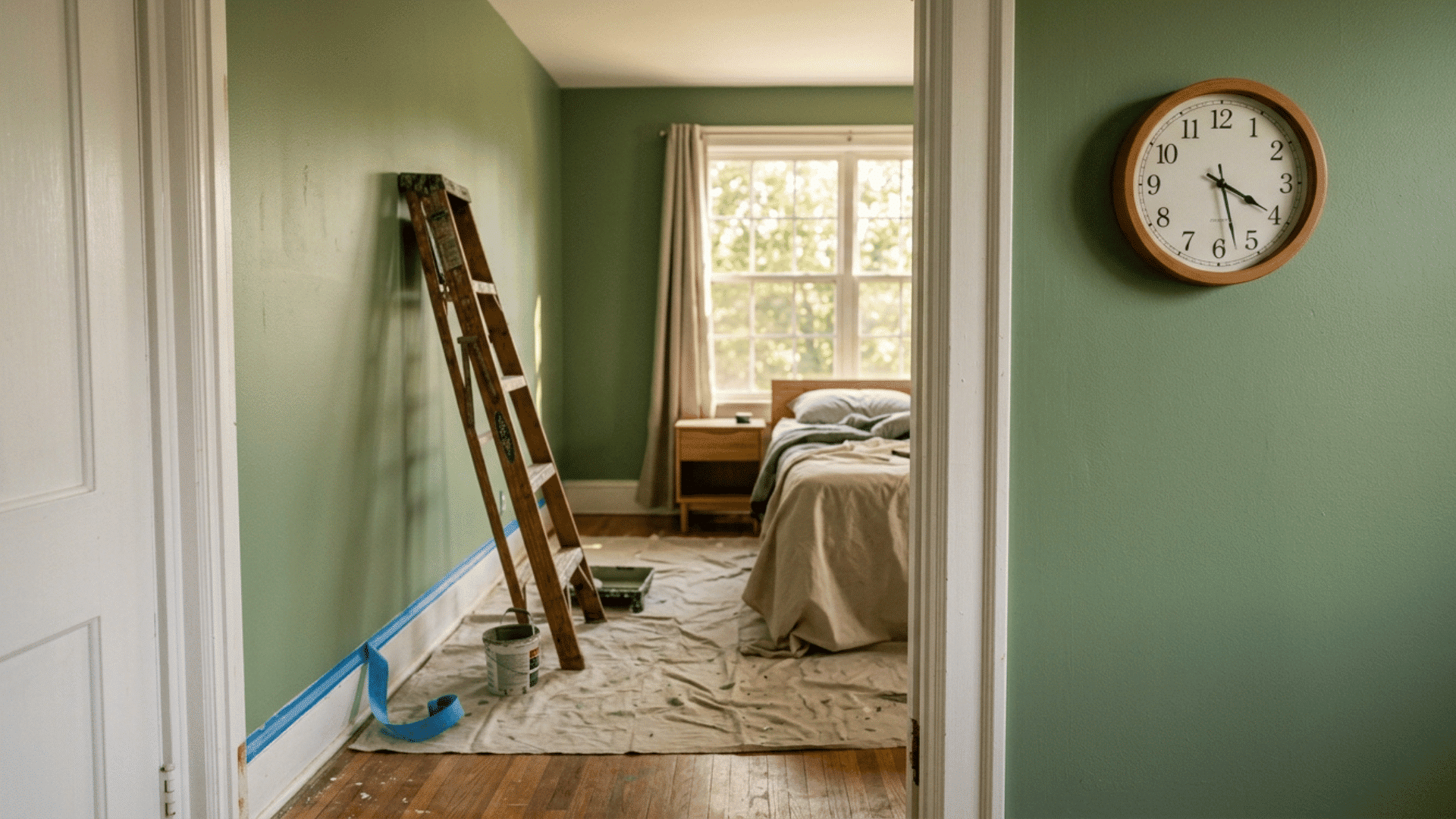
Limewash spatters more than regular paint because it’s so thin. Tape off your baseboards, ceiling line, and any trim with painter’s tape, and put down drop cloths. Seriously. It gets everywhere.
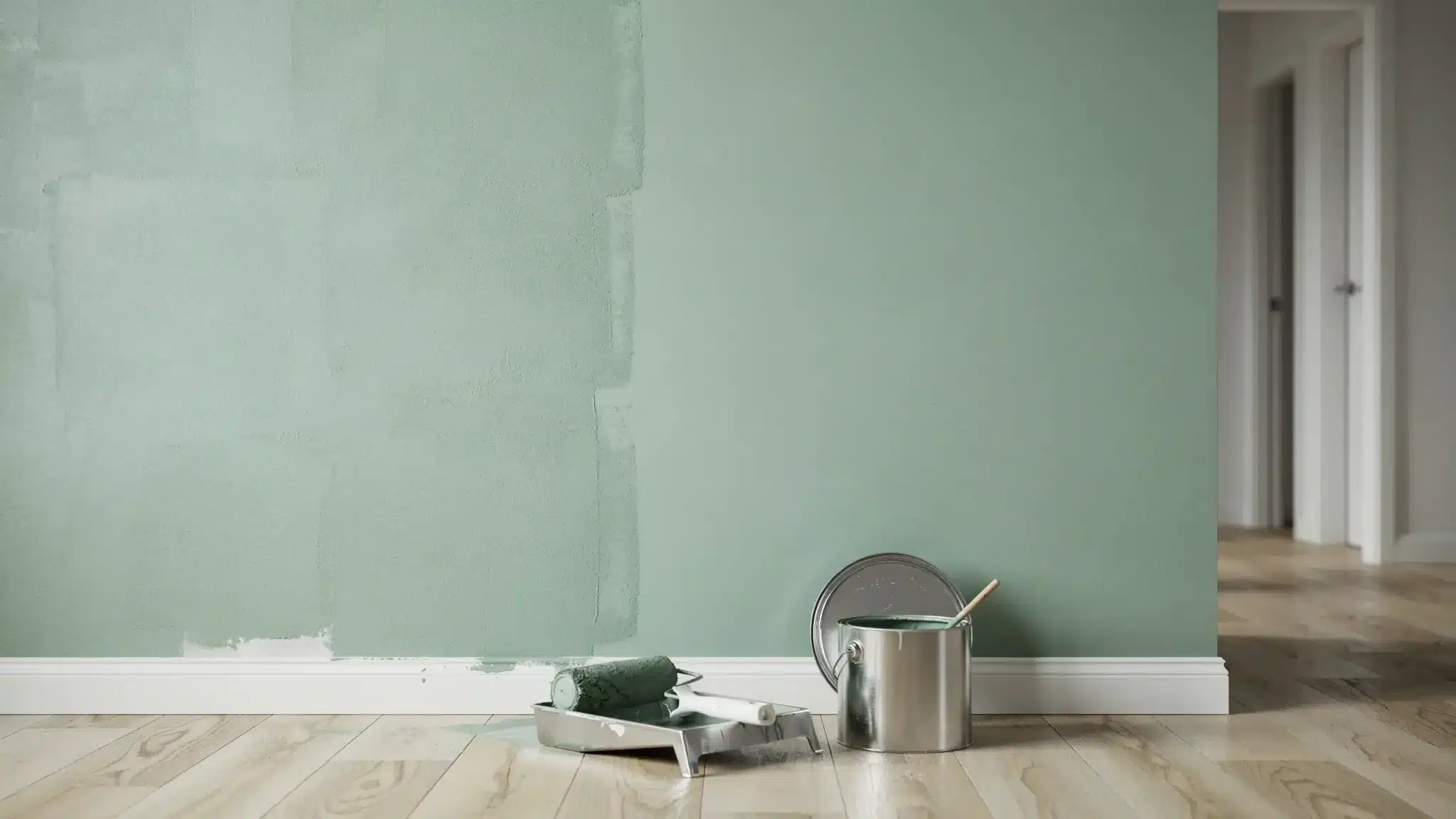
Load your brush about a quarter of the way up the bristles. Start at one end of the wall and apply the paint in a loose crosshatch pattern, working quickly across the surface. The goal on the first coat is not full coverage. You want a thin, somewhat patchy layer that allows the primer or wall underneath to peek through in spots. This first coat establishes the variation in absorption that creates the movement in the final finish.
Let the first coat dry completely. Depending on humidity and ventilation, this takes anywhere from four to twelve hours. In a well-ventilated room during summer, four hours is often enough. In a closed-up apartment with the heat running, give it overnight.
The second coat is where the magic happens. Dilute the paint slightly with water (most brands recommend about 25% dilution for the second coat, though Romabio suggests closer to 75% dilution for their Velatura product, so read the label). Apply it the same way, crosshatching over the first layer. The diluted paint settles into the low spots and glides over the high spots differently, which is what produces that dimensional, cloud-like effect.
Two coats is standard. A third coat deepens the color and reduces visible primer peeking through, but it also flattens out some of that natural variation. More coats means a more uniform look, fewer coats means more texture. It’s a trade-off.
When to DIY and When to Call Someone
A single accent wall in a bedroom or living room is a perfectly reasonable weekend DIY project. The technique is forgiving, and the imperfect quality is actually part of the appeal. If a few brush strokes overlap a little heavier in one spot, it blends into the overall character of the wall.
Whole rooms get trickier. Working limewash around corners where two walls meet requires careful timing so you don’t leave dried edges that create hard lines when the adjacent wall gets painted. Ceilings are another level of difficulty entirely since you’re fighting gravity with a paint that’s thinner than water. And matching the finish across multiple rooms so the house feels cohesive takes real consistency in brush pressure, dilution ratios, and timing between coats.
If you’re doing multiple rooms in a city apartment, especially in a place like New York where wall conditions vary wildly from old plaster to skim-coated drywall to previously patched surfaces, working with professional limewash painters in NYC who have trained on specific brands and primer systems can save you from a lot of expensive do-overs. Limewash materials are too pricey to waste on a bad application, and scraping off a failed coat to start over is nobody’s idea of a fun weekend.
That said, don’t let the learning curve scare you away from trying it yourself on a smaller scale. Pick up a quart and a sample board from your local paint store, practice the crosshatch technique, and get a feel for how the product moves before you commit to an actual wall.
Maintaining Limewash Walls After They’re Done
Limewash is not as tough as latex paint. It’s a mineral finish, not a plastic film, so it doesn’t scrub clean the same way. For everyday dust and light dirt, a gentle wipe with a barely damp cloth works fine. Skip the harsh cleaners and abrasive sponges.
In kitchens and bathrooms, consider applying a clear matte sealer over the finished limewash. This adds a layer of wipe-ability without changing the look of the finish. JH Wall Paints and James Alexander both sell sealers formulated specifically for lime-based paints. Wait at least 48 hours after the final coat before sealing.
One of the genuinely nice things about limewash is that touch-ups are simple compared to conventional paint. Because the finish is already varied and imperfect, you can dab a small amount of diluted limewash onto a scuff mark and feather it out with a brush. It blends right in. Try doing that with a perfectly uniform eggshell wall and you’ll understand why people end up repainting entire sections just to fix one ding.
Over time, limewash develops a patina. It doesn’t chip and peel the way regular paint does. It just gradually softens and ages, which most people actually prefer to the slow deterioration you get with latex. Minor scuffs and marks tend to disappear into the texture rather than standing out against it.
Start Small and See How You Feel
Limewash isn’t for everyone. Some people want perfectly smooth, uniform walls, and that’s fine. But if you’ve been drawn to those soft, textured interiors showing up all over design feeds lately, there’s a good chance you’ll love what limewash does to a room. Start with one wall. See how the light catches it at different times of day. Live with it for a week before deciding if you want to do more.
The materials are a real investment, so take the time to sample colors on an actual piece of drywall rather than trusting how they look on a screen. Every limewash brand sells sample sizes for exactly this reason. And remember that the color you see in the can bears almost no resemblance to the finished, dried, two-coat result on the wall. Patience with the process is half the battle.






One Response
Clara,
Greetings! We have a 1732 sq ft single level home in Vegas and it is a builder grade home with standard textured walls and ceilings. To get that attractive limewashed look that I see in photos, do I need to remove/cover the texture? It seems that all the beautiful limewashed walls I see online are flat walls. Also would it look weird that some walls are limewashed and some aren’t? If I do a room, would it be better to include the ceiling? And finally, are limewashed walls a turn-off for prospective buyers? They say make sure the color is neutral. Thanks!
-Roberto