Boiling eggs is not just about dropping them in hot water and waiting.
Knowing how to hard boil eggs perfectly comes down to a few small but important steps; get those right, and you’ll never deal with overcooked or undercooked eggs again.
So let’s get into the exact method that works every time.
Nutritional Benefits of Eggs
Eggs are a highly nutrient-dense superfood, delivering about 75 calories, 6g of protein, healthy fats, and a powerful mix of vitamins and minerals in each large egg.
They are rich in choline (for brain health), vitamin B12, vitamin D, selenium, and eye-protecting antioxidants like lutein and zeaxanthin.
Eggs promote muscle maintenance, satiety for weight management, and support heart, eye, and overall health.
For most healthy people, 1–3 eggs per day are safe and beneficial, and dietary cholesterol has minimal impact on blood cholesterol levels.
Whole eggs (especially yolk) provide the maximum nutrition.
How to Hard Boil Eggs: Step-by-Step
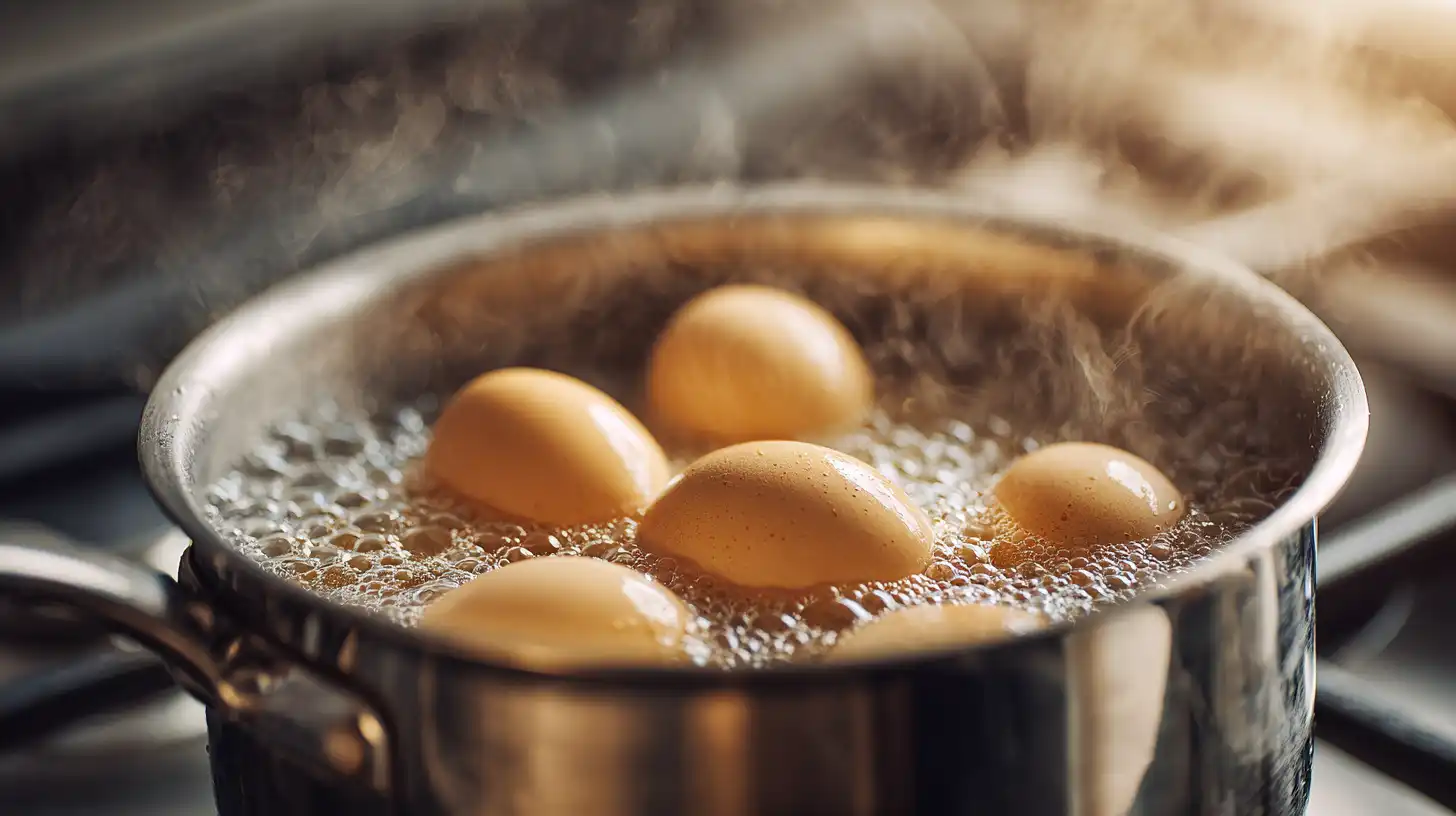
Boiling an egg is very simple, we all know, but getting hard-boiled eggs, and that too the right ones, is a little weirdly complicated and involves a few steps.
I know, I know, steps to boil an egg? Very absurd.
But let’s know how to get it done perfectly.
What You’ll Need for Perfect Boiled Eggs Before You Start
- Fresh or slightly older eggs (older ones peel better).
- A pot with a lid that fits your eggs comfortably.
- Enough cold water to cover the eggs by at least an inch.
- A bowl of ice water for cooling after cooking.
Step 1. Start With Cold Water
Place your eggs in the pot first, then fill it with cold water until the eggs are covered by at least an inch.
When you place eggs in already-boiling water, it increases the risk of cracking and results in uneven cooking throughout.
Step 2. Bring to a Boil
Set the pot on the stove and bring the water to a full boil. Once it gets there, reduce the heat to a gentle simmer and cover the pot.
Step 3. Transfer to an Ice Bath
As soon as the timer goes off, move the eggs into a bowl of ice water and leave them there for at least 10 to 12 minutes.
This stops the cooking process immediately and prevents that greenish-grey ring from forming around the yolk.
How Long Does it Take to Boil Eggs?
| Cook Time | Yolk | White |
|---|---|---|
| 6 minutes | Soft, jammy | Fully set |
| 8 minutes | Slightly soft | Firm |
| 10 minutes | Almost fully set | Firm |
| 12 minutes | Fully set | Firm |
Cold eggs in cold water, brought to a boil together, always cook more evenly than eggs dropped into hot water.
How to Tell When Eggs are Done?
Timers are helpful, but they aren’t the only way to tell if your eggs are cooked right. A few simple checks can tell you what is going on inside the shell.
1. The Spin Test
Place a cooked egg on a flat surface and spin it. A fully cooked egg spins smoothly and fast, while a raw or undercooked egg wobbles because the liquid inside is still moving.
2. The Float Test (Before Cooking)
Fresh eggs sink flat in water, while older eggs tilt upward or float slightly, which also means they will peel much more easily after cooking.
3. Visual Check After Peeling
A properly cooked hard-boiled egg has a fully white exterior with no translucent patches and a yolk that is pale yellow to golden with no grey ring.
A grey-green ring around the yolk means the egg was overcooked, and while it is safe to eat, the texture will be dry and chalky.
How to Peel a Hard Boiled Egg Easily?
Older eggs peel far more easily than fresh ones because the air pocket inside has had more time to separate the membrane from the shell.
Farm-fresh eggs are difficult to peel, so if that is what you have, give them a few days before boiling.
But, when it comes to technique, know this:
- Start peeling from the wider end where the air pocket exists.
- Roll the egg gently on a flat surface to crack the shell evenly.
- Peel under running water to help slip the shell off cleanly.
For batch peeling, place boiled eggs in a container with a little water, cover it, and shake gently to crack multiple eggs at once.
How to Store Hard Boiled Eggs?
Unpeeled hard-boiled eggs can be refrigerated for up to 1 week.
Keeping the shell on is always the better option because it locks in moisture and keeps odors out.
Once you peel them, transfer the eggs to an airtight container lined with a damp paper towel to prevent them from drying out, and use them within 5 days.
When freezing, whole hard-boiled eggs do not hold up well because the whites turn rubbery after thawing.
Cooked yolks are different, though, as they freeze well on their own in a flat, freezer-safe container and stay good for up to three months.
Alternatives to Hard Boil Eggs Without a Traditional Stove
And yes, you don’t just need a stove to boil eggs, and there are other ways to get it done.
In the Microwave
Never microwave an egg in its shell, as it can burst from the pressure buildup inside.
Instead, place a raw egg in a deep microwave-safe bowl, cover it completely with water, and microwave on medium power for about 12 minutes.
Transfer to cold water immediately after.
In an Air Fryer
Set your air fryer to 250 degrees Fahrenheit and place the eggs directly in the basket without water.
Cook for 15 minutes for a hard yolk, or for 13 minutes for a slightly softer center. Move them straight into an ice bath after.
In an Electric Kettle
Boil the water in your kettle first, then place the eggs inside and close the lid.
Leave them in the hot water for about 15 to 20 minutes, depending on how set you want the yolk.
On an Induction Cooktop
Induction cooktops heat water faster than gas or electric stoves, so keep the setting at medium rather than high to avoid overcooking.
Use a flat-bottomed stainless steel or cast iron pot for the best contact with the surface.
Wrapping Up – Getting Perfect Boiled Eggs Every Time!
Now you know exactly what separates a great boiled egg from a disappointing one, and it really does come down to a few simple steps done in the right order.
Keep a batch in the fridge, and you have a ready-to-go ingredient for almost any meal throughout the week.
Try the timing chart, test the spin trick, and find what works best for you.
Got a favorite way to eat boiled eggs? Drop it in the comments. We would love to hear that!
Frequently Asked Questions(FAQs)
1. What is the 6 6 6 Method for Hard-Boiled Eggs?
The 6 6 6 method means boiling eggs for 6 minutes, letting them sit in hot water for 6 minutes, then cooling them in ice water for 6 minutes.
2. Are Hard-Boiled Eggs Good for Diabetics?
Yes, hard-boiled eggs are low in carbs and high in protein, making them a safe and filling option for diabetics.
3. Can You Reboil Undercooked Eggs?
Yes, you can reboil undercooked eggs. Place them back in hot water for a few more minutes until they reach the texture you want.