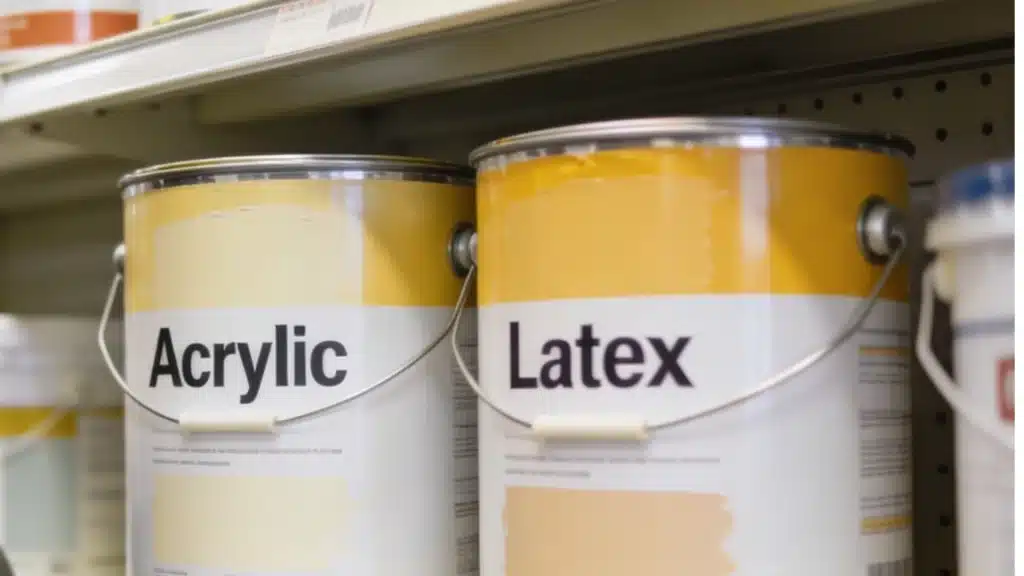
Which paint do you actually need, acrylic or latex? Are they the same? Which one is better? And what makes them different?
Most people stand in the paint aisle, staring at two cans that have the same question.
And to be honest, that’s fair.
The labels don’t always make it easy. A fresh coat that peels, fades, or doesn’t hold up is nobody’s idea of a good weekend project.
Once you know what each paint does and where it works best, choosing between them becomes much easier.
So let’s get into the acrylic vs latex paint debate and help you pick the right one for your space.
Latex vs Acrylic Paint: Key Differences Overview
| Feature | Acrylic Paint | Latex Paint |
|---|---|---|
| Base | Water-based | Water-based |
| Binder | Acrylic resin | Synthetic rubber |
| Durability | Very durable | Moderately durable |
| Flexibility | More flexible | Less flexible |
| Drying Time | Dries faster | Slightly slower |
| Best Used On | Wood, metal, walls, and more | Interior walls and ceilings |
| Indoor/Outdoor | Both | Mostly indoors |
| Moisture Resistance | High | Moderate |
| Cost | Slightly higher | Generally lower |
| Cleanup | Soap and water | Soap and water |
What is Acrylic Paint?
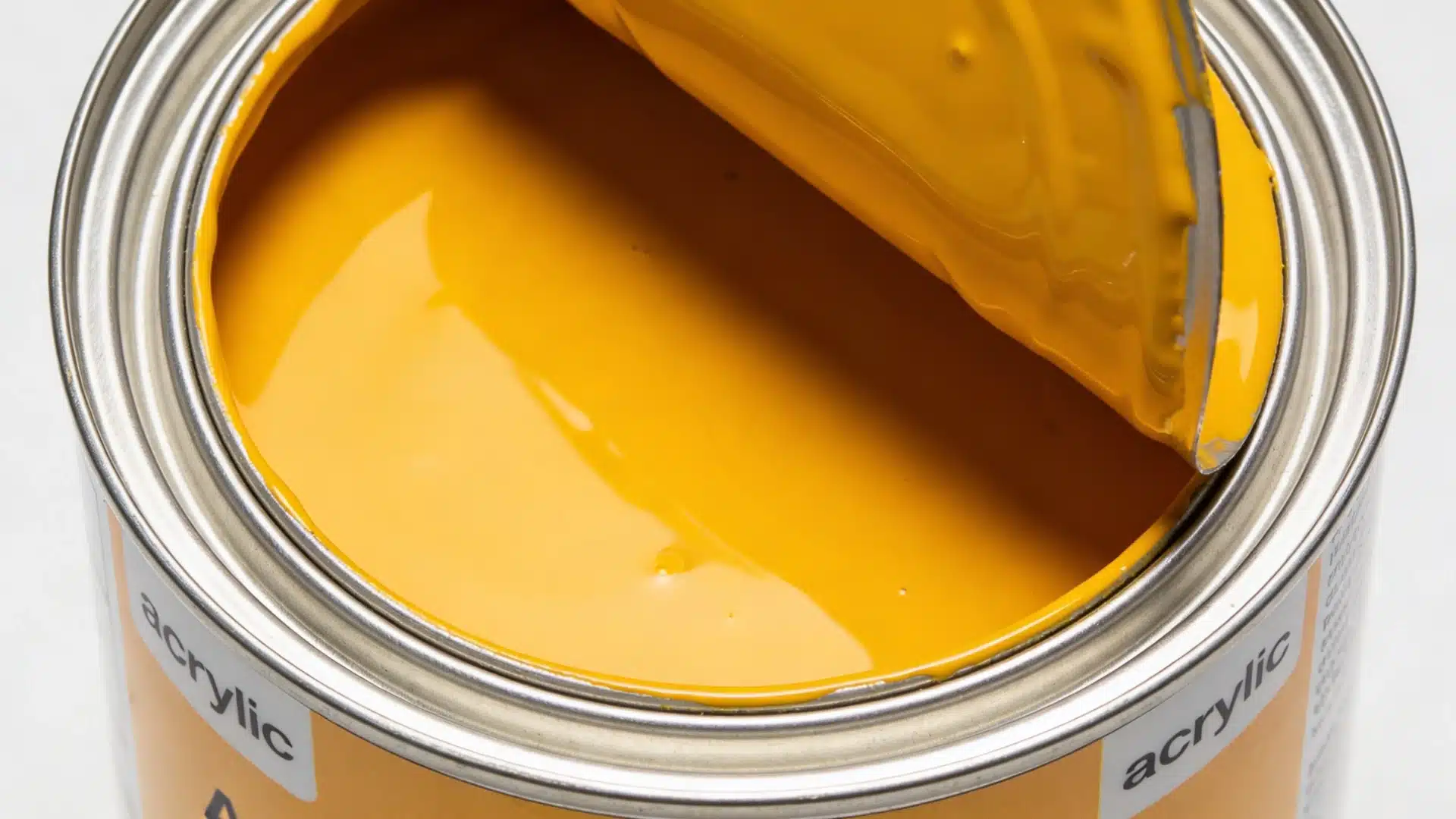
Acrylic paint is a water-based paint that uses acrylic resin as its binder.
It dries fast and forms a tough, flexible finish once dry.
It holds up well against moisture and wear and works on almost any surface, like wood, metal, walls, and more.
You can use it both indoors and outdoors.
How Does Acrylic Paint Work?
When acrylic paint is applied, the water in it begins to evaporate almost immediately.
As it lifts away, the acrylic resin particles left behind anchor themselves to the surface and cure into a firm, flexible layer.
That bond doesn’t just sit on top; it locks in.
Once fully cured, it resists moisture, holds color well, and stays flexible enough to move with the surface without cracking or pulling away.
All of that, usually within an hour.
Pros and Cons of Acrylic Paint
| Pros | Cons |
| Highly durable against moisture and wear | Costs more than latex paint |
| Flexible when dry, won’t crack or peel | It can be tricky to work with for beginners |
| Works on most surfaces, wood, metal, and walls | Dries too fast, leaving less time to blend |
| Great for both indoors and outdoors | May require a primer on some surfaces |
| Dries quickly for faster project completion | Less ideal for very large surfaces |
| Color stays fresh and bright for a long time | Can show brush marks if not applied carefully |
| Easy cleanup with soap and water | Fewer budget-friendly options are available |
What is Latex Paint?

Latex paint is a water-based paint that uses synthetic rubber as its binder.
It goes on smoothly, dries quickly, and cleans up easily with water. It’s mostly used on interior walls and ceilings and works great on large surfaces.
How Does Latex Paint Work?
Latex paint works much like acrylic paint.
As the water in it evaporates, the synthetic rubber particles bind together and stick to the surface. This forms a smooth, even coat.
It dries fairly quickly and leaves a clean finish behind.
Pros and Cons of Latex Paint
| Pros | Cons |
|---|---|
| Easy to apply, even for beginners | Less durable than acrylic paint |
| Dries quickly; second coat the same day | Not ideal for outdoor surfaces |
| Low in fumes, safe for indoor use | Less flexible when dry |
| Budget-friendly and widely available | May not hold up well in high-moisture areas |
| Holds color well over time | Fewer options for rough or uneven surfaces |
| Great for covering large surfaces | Can be less resistant to wear and tear |
| Easy cleanup with soap and water | May need more coats for full coverage |
Acrylic vs Latex Paint: Which One is More Eco-Friendly?
Both acrylic and latex paints are water-based, so they are already a better choice than oil-based paints.
They both have lower VOC levels, which means fewer harmful chemicals are released into the air.
That said, latex paint tends to have slightly lower VOCs overall, making it a bit safer for indoor use.
Acrylic paint also comes in low-VOC options; just check the label before buying.
Where do Acrylic and Latex Paints Suit Best?
Not every paint works in every spot. Having knowledge about where each one does its best work is very important.
Acrylic Paint Works Best for
Acrylic paint really shines in spots where you need the paint to last.
There are surfaces where other paints quietly give up. Acrylic tends to be the one that sticks around.
Exterior Walls
Acrylic paint handles harsh weather well.
It won’t crack or fade when exposed to rain, heat, or cold. That’s what makes it a reliable choice for outside surfaces.
Wood Surfaces
It sticks firmly to wood and stays flexible, so it won’t peel as the wood expands and contracts.
This keeps the finish looking clean for longer.
Metal Surfaces
Acrylic paint is moisture-resistant, making it a solid pick for metal surfaces prone to rust. It creates a strong barrier that protects the metal underneath.
High-Moisture Areas
Bathrooms and kitchens need paint that can handle humidity.
Acrylic holds up well in these spaces and keeps the walls looking fresh over time.
Latex Paint Works Best for
It spreads smoothly across large surfaces and dries fairly quickly, which makes painting less stressful, especially for beginners.
Interior Walls and Ceilings
Latex paint goes on smoothly and covers large surfaces evenly.
It’s the go-to choice for living rooms, bedrooms, and hallways where a clean finish matters most.
Low-Traffic Areas
It works well in spaces that don’t see a lot of daily wear and tear, like guest rooms or storage areas.
Less foot traffic means the paint lasts longer.
Spaces With Poor Ventilation
Its low-fume levels make it safe to use in rooms that don’t get much airflow.
You won’t have to worry about strong chemical smells lingering around.
Conclusion
So, that’s the acrylic vs latex paint breakdown in a nutshell.
Both are water-based, easy to clean up, and get the job done well. But they each have their strengths.
Acrylic paint is great when you need something tough, flexible, and built to last.
Latex paint, on the other hand, is a solid pick for interior walls and large surfaces on a budget.
At the end of the day, the right choice really comes down to where you’re painting and what you need from it.
Frequently Asked Questions
1. Is Acrylic vs Latex Paint Easy to Clean Up?
Yes, both are easy to clean up.
2. Can I Use Latex Paint Outdoors?
You can, but it’s not the best option. Latex paint is mostly built for indoor use.
3. Is Acrylic Paint Better than Latex Paint?
Not necessarily. It depends on what you need. Both are good, just in different situations.