Your asphalt shingle roofing has a limited lifespan of 20-30 years, and deciding between repair or replacement can feel overwhelming when damage appears. Given that roof repairs are less expensive in the short term, many homeowners default to patching problems without considering whether a full replacement makes better financial sense. Indeed, if your repair costs exceed 30% of a total replacement cost, replacing your asphalt shingle roof becomes the smarter long-term investment.
Repair or Replace an Asphalt Shingle Roof?
Asphalt roof shingles are widely used in Vancouver due to their cost efficiency and durability in changing weather conditions. Marks Roofing asphalt shingle services include installation, repair, and replacement for residential and commercial properties. Several key factors determine whether repairing or replacing your asphalt shingle roofing system makes financial sense. Understanding them helps avoid repeated repair costs when replacement is the better long-term option.
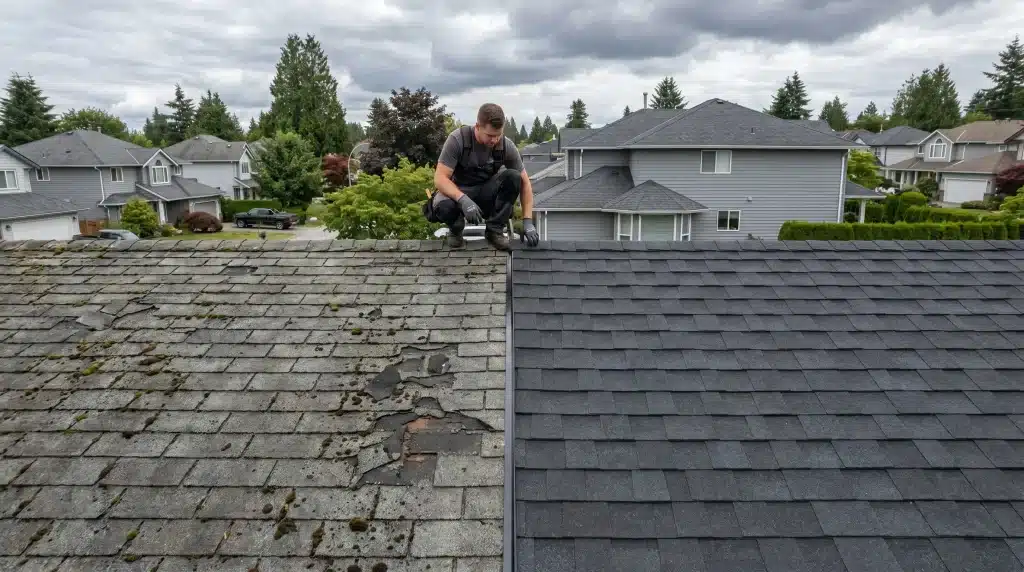
Age is the main indicator. If your roof is in the 10–20 year range with isolated damage, repairs usually make sense. Once it passes 20 years, it enters the gray zone where patches may only last 2–3 years before new issues appear. At 25+ years, replacement is typically the better option since shingles tend to fail across larger areas.
The extent of damage also matters. If more than 30% of the roof is affected, replacement is usually more cost-effective than multiple repairs. Contractors often use a simple rule: if repair costs exceed 50% of a full replacement, replacement is recommended because surrounding shingles will continue to age regardless of fixes.
Cost comparison goes beyond the initial quote. Minor repairs such as replacing a few shingles or resealing flashing typically cost $400–$1,100, while larger repairs involving multiple sections or chimney flashing range from $1,100–$3,500. For a standard bungalow, full replacement usually falls between $11,000–$25,000, making the 50% threshold around $5,500–$12,500. If repairs approach this range, replacement is often the better investment.
Structural condition is equally important. An asphalt shingle roofing system includes decking, underlayment, and support structures. If there is rot, mould, or water damage beneath the surface, full replacement is required to restore integrity.
Repair frequency can also indicate deeper issues. Well-done repairs may extend roof life by 5–10 years, but repeated problems on an older roof often lead to higher cumulative costs than replacement.
Finally, your long-term plans matter. If you’re selling soon, repairs may be enough to meet inspection needs. If you plan to stay long-term, replacement is usually the more reliable choice.
Clear Signs Your Asphalt Roof Only Needs Repair
Recognizing repair-appropriate damage saves you from unnecessary roof replacement expenses. These specific conditions indicate your asphalt shingle roofing needs targeted fixes rather than complete overhaul.
Missing or Damaged Shingles in Isolated Areas
A few missing shingles after high wind can often be repaired. Check whether all shingle tabs remain intact; finding some lying on the ground signals potential problems but doesn’t necessarily mean complete failure. If shingles continue coming loose or disappearing in different sections, however, this points to deeper wear across the entire roof. Replacing damaged or missing shingles proves straightforward when confined to small areas. Each shingle works together with others to shed water and resist wind uplift, which makes prompt replacement crucial even for seemingly minor gaps.
Minor Flashing Issues Around Vents and Chimneys
Flashing problems around chimneys, vents, and skylights frequently cause leaks but don’t require full replacement. If your metal flashing shows repeated tar and caulk applications, this suggests you need new metal flashings installed, especially when metal buckling allows moisture entry. Damaged flashing where metal has pulled away requires attention before leaks cause expensive damage. Properly installed chimney flashing creates a countering system where everything overlaps correctly to ensure positive water flow using gravity.
Single Leak with an Identifiable Source
One isolated leak doesn’t mean your whole roof has failed. Leaks on newer roofs often stem from clogged gutters, animal damage, ice dams, or storm damage. Poor installation or defective materials may cause issues within the first two years of installation, making this period crucial for warranty claims. Addressing single leaks quickly prevents further damage to your home.
Storm Damage on a Newer Roof
After hail, wind, or severe weather, damage isn’t always limited to what appears visible from the ground. If damage remains confined to a small, specific area, professional repair may suffice. Strong winds can displace shingles, which serve as your first line of defence for sloped roofs.
Top Warning Signs for Roof Replacement
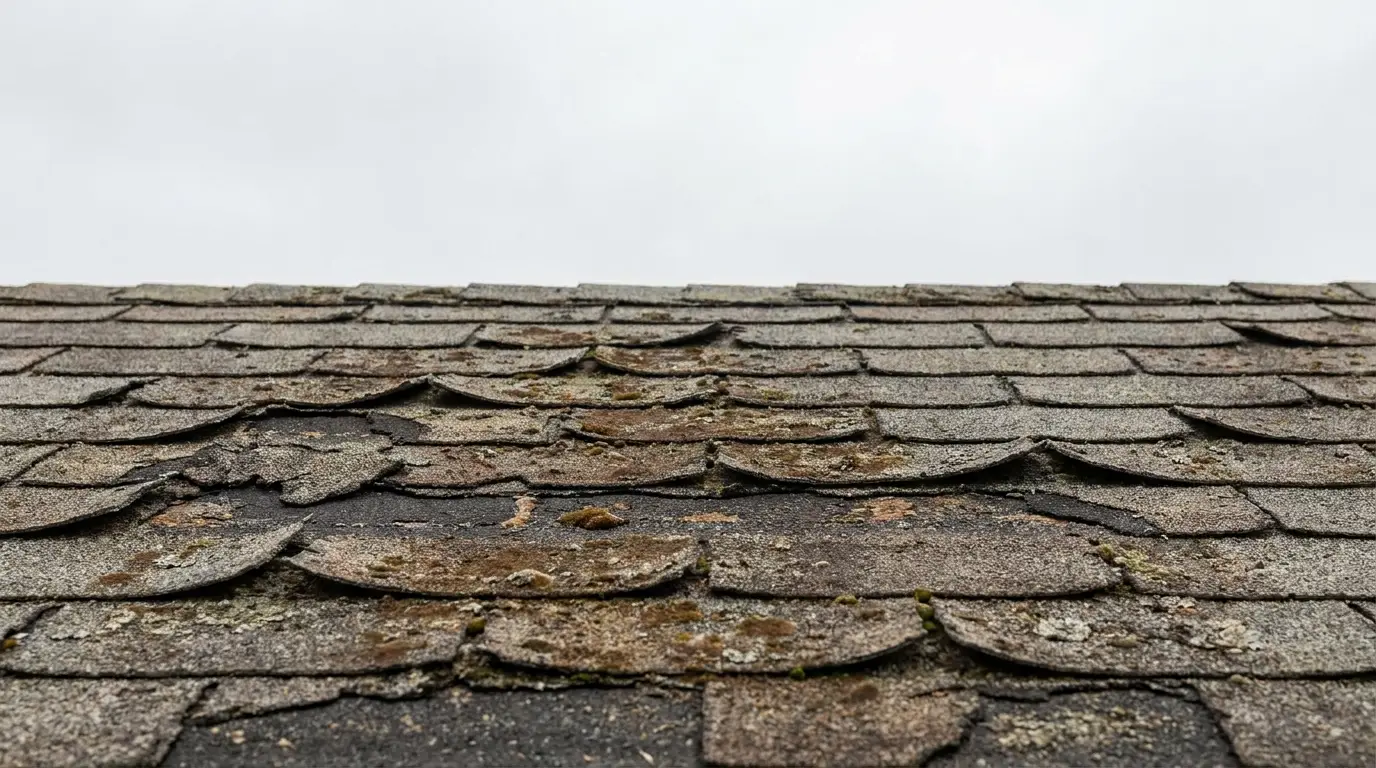
Certain deterioration patterns signal that your asphalt shingle roofing system has reached the end of its functional life. These conditions affect large portions of your roof rather than isolated sections.
Widespread Granule Loss Across the Roof Surface
When granule loss becomes widespread, exposed asphalt becomes vulnerable to the elements, accelerating deterioration and leading to water infiltration, structural damage, and mould growth inside your home. You’ll notice uneven colouring across your roof where areas with significant granule loss appear darker or faded compared to protected sections. Sandy debris in gutters often indicates granule runoff. Patchy or bald spots reveal areas where the shingle base shows through. If you see curling, cracking, or brittle shingles alongside granule loss, replacement rather than repair becomes necessary.
Multiple Active Leaks in Different Areas
Multiple leaks occurring in different roof sections indicate systemic failure rather than isolated damage. Water stains on ceilings or walls in various locations suggest your roof can no longer effectively repel moisture.
Curling or Cupping Shingles Throughout
Cupping occurs when shingle edges turn upward, creating a concave shape, while curling happens when edges or corners lift. Asphalt shingles are a type of roof covering made of overlapping elements designed to shed water. Extensive curling across the roof signals you need to replace asphalt shingle roof rather than pursue spot repairs. When curling affects large sections or coincides with leaks and soft decking, your system has reached the stage where roof replacement proves necessary.
Visible Daylight Through the Roof Deck
Seeing daylight stream through your roof decking indicates problems with both the shingles and plywood sheathing. This requires immediate attention since light penetration means water will enter as well. Holes in your decking usually mean replacement time has arrived.
Sagging or Structural Deck Damage
Visible dips or sags in the roofline indicate weakened support structures. A spongy feeling when walking on the roof points to rot or weakened decking. These structural issues demand complete replacement to restore roof integrity.
Cost Analysis and Getting a Professional Roof Assessment
Understanding the financial implications of both options helps you budget appropriately for your asphalt shingle roofing project.
Roof shingle repair costs typically range from $500 to $2,400, with most homeowners spending around $1,300. Minor repairs may cost as little as $200, while extensive damage can reach $8,000 or more. On average, repair work costs about $6 to $11 per square foot, with labour rates around $70 to $140 per hour.
Full replacement costs for asphalt shingles generally range from $10,000 to $33,000 for a 2,000-square-foot home, or about $5 to $17 per square foot. Installation usually accounts for roughly 60% of the total cost, while disposal of old materials adds approximately $1 to $7 per square foot.
A professional roof inspection evaluates the entire asphalt shingle roofing system, not just visible surface damage. Inspectors check shingles for cracks and granule loss, examine flashing around chimneys and vents, assess the roof deck condition, verify ventilation, and look for signs of interior leaks or moisture issues. Most inspections take between 30 minutes and an hour.
It is recommended to contact at least three roofing contractors for estimates. Always verify licensing and insurance, and ensure the written contract includes payment terms, materials, project timeline, and removal of old roofing materials. Comparing multiple quotes helps ensure a fair price and proper installation quality.
Conclusion
Your asphalt shingle roofing decision ultimately comes down to three factors: age, damage extent, and cost thresholds. When repairs exceed 30-50% of replacement costs, or your roof passes the 20-year mark with widespread problems, replacement becomes the smarter investment. For isolated damage on younger roofs, targeted repairs extend your system’s life effectively. Schedule a professional inspection to assess your specific situation, as qualified contractors provide the detailed evaluation you need to make a financially sound decision that protects your home.