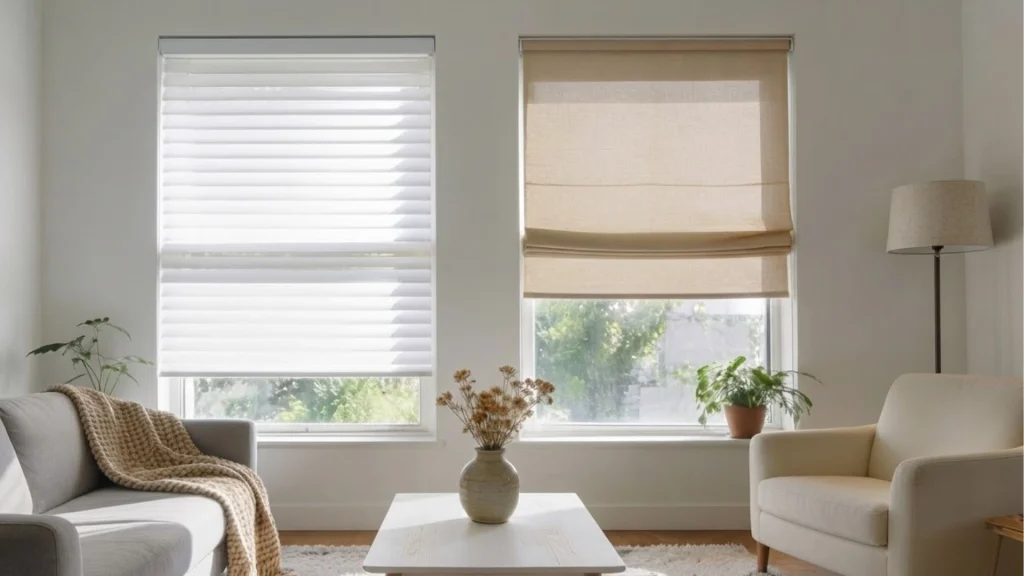
Choosing window coverings sounds simple until the choices start piling up.
The blinds vs shades debate trips up most homeowners, and for good reason. Each type handles light, privacy, and insulation in its own way.
Sorting out the difference helps a person match the right pick to each room, style, and budget. Some rooms need soft light. Others need full blackout or better warmth control.
This manual compares the two options side by side, much like weighing curtains against blinds, making the best choice for any home clear by the end.
What are Blinds?
Blinds cover windows with hard slats that tilt open and shut. The slats come in wood, faux wood, aluminum, or plastic.
A person turns a wand or pulls a cord to adjust it angle. Blinds also lift fully when a person wants a clear view.
Common types include Venetian blinds with horizontal slats and vertical blinds for wide doors.
The hard material wipes clean in seconds, so blinds suit kitchens and busy rooms. Grease splatters wipe off a slat in one pass; the same mess would sit in fabric for weeks.
Their crisp, lined-up look fits homes with sharp lines and modern decor.
What are Shades?
Shades cover windows with a single piece of fabric rather than slats. The fabric rolls, folds, or stacks up when a person raises it.
A sheer fabric filters soft light, while blackout fabric seals a room off from the light.
Whereas roman shades fold into neat pleats, and roller shades wrap around a tube. Cellular shades add pockets of air that trap heat and cut energy bills.
The smooth fabric brings a calm, gentle face to a window. Shades are best suited for bedrooms, living rooms, and softer spaces.
Key Comparisons: Blinds vs Shades
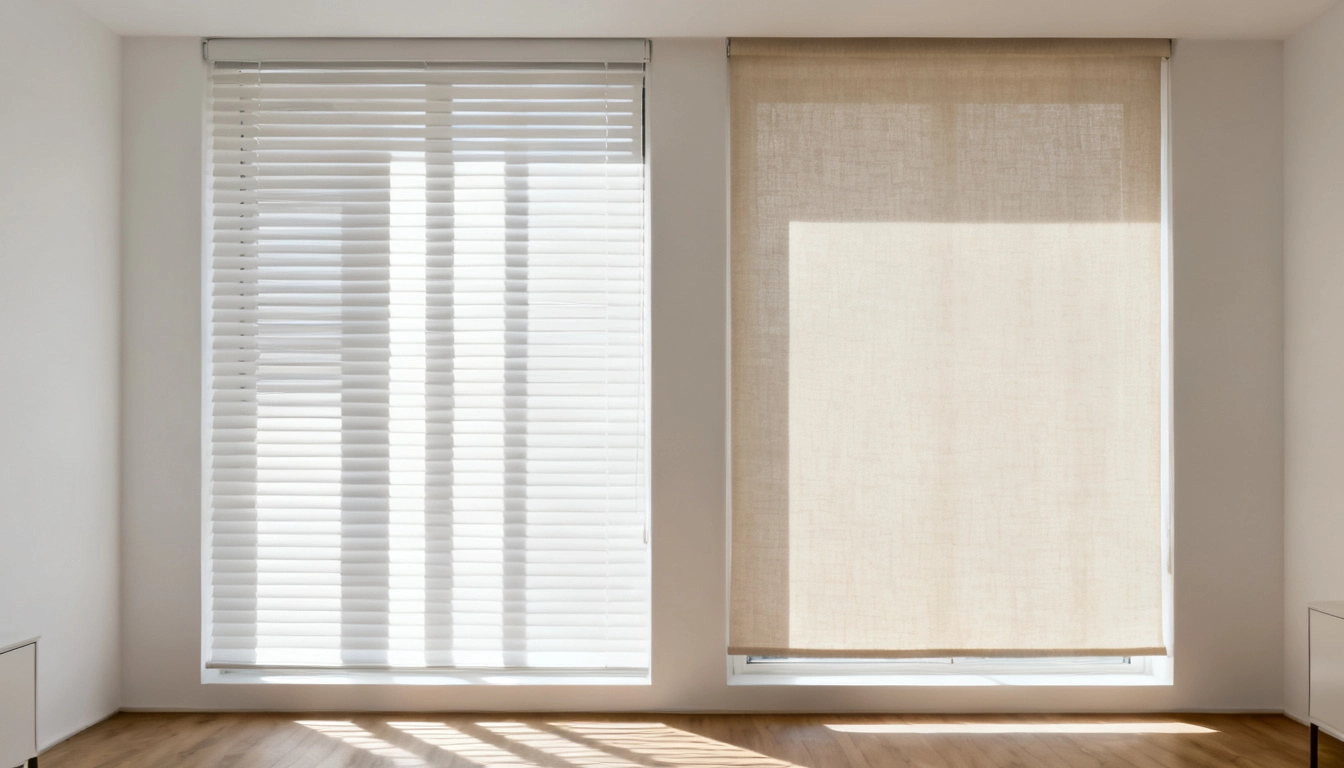
Here’s how blinds and shades stack up on the things that actually matter, similar to how a curtains versus drapes comparison plays out for softer window treatments.
1. Appearance
Blinds bring a structured, lined-up look with their visible slats. Wood and faux wood suit traditional rooms, while aluminum feels more modern.
Shades offer a softer, smoother surface since they use fabric. A person picks based on whether they want crisp lines or a gentle finish.
2. Light Control
Blinds shine here. The tilting slats let a person fine-tune how much light comes in. A small twist shifts a room from bright to dim.
Shades work differently. The fabric either blocks light or filters it, offering no in-between angle to fine-tune the brightness.
For rooms that face east or west, blinds handle the shifting sun far better than a fixed shade.
3. Insulation
Shades pull ahead here, especially cellular shades. Their air pockets trap heat and keep rooms comfortable through hot and cold months.
Blinds have gaps between the slats, so more air passes through. For energy savings, cellular shades beat blinds outright, the same way blackout curtains hold heat better in a closed-up room.
4. Privacy
Blinds let a person block the view while still letting light through the tilted slats, balancing privacy and brightness.
Shades cover the entire window in a single piece, so privacy and light come as a package. Blackout shades completely seal off a room, which suits bedrooms well.
Add a sheer shade behind blinds for daytime privacy that still lets soft light through.
5. Room Suitability
Blinds are in kitchens and offices since they wipe clean and handle moisture well. A quick swipe clears grease or splashes.
Shades are best for bedrooms and living rooms for softer light and better insulation. The fabric warms up a space and creates a calm mood for rest or downtime.
The right type of pick really comes down to what each room needs.
6. Durability
Blinds hold up well over time, since their hard slats resist bumps and wear. Wood and faux wood keep their shape for years with basic care.
Shades depend on the fabric. A quality braid lasts a long time, but thin material can fade or fray. Careful handling keeps them looking fresh.
7. Cleaning And Upkeep
Blinds wipe clean in seconds, so dust and grease come off with a quick pass. This makes them easy to keep tidy week to week.
Shades need a gentler touch. Most just need a light vacuum or a soft brush. Some fabric types require spot cleaning when spills occur.
Blinds vs Shades vs Shutters – A Brief Look
Shutters bring a third option to the table, and they play a different game than blinds or shades.
These are solid-framed panels that mount right onto the window. Below is how all three stack up side by side.
| Feature | Blinds | Shades | Shutters |
|---|---|---|---|
| Build | Hard tilting slats | Solid fabric panel | Solid-framed panels that swing open |
| Light Control | Slats tilt for fine-tuned light | Fabric blocks or filters, no angle | Louvers tilt like blinds, but are sturdier |
| Privacy | Tilt for partial view control | Full cover in one piece | Full cover with adjustable louvers |
| Insulation | Gaps between slats let air pass | Cellular types trap heat well | Thick panels seal windows tightly |
| Cleaning | Wipe clean in seconds | Light vacuum or soft brush | Wipe down like blinds, very low upkeep |
| Cost | Lowest of the three | Mid-range, varies by fabric | Highest upfront cost |
Shutters add the most resale value of the three, so they suit a long-term home more than a rental.
Most Popular Styles of Blinds
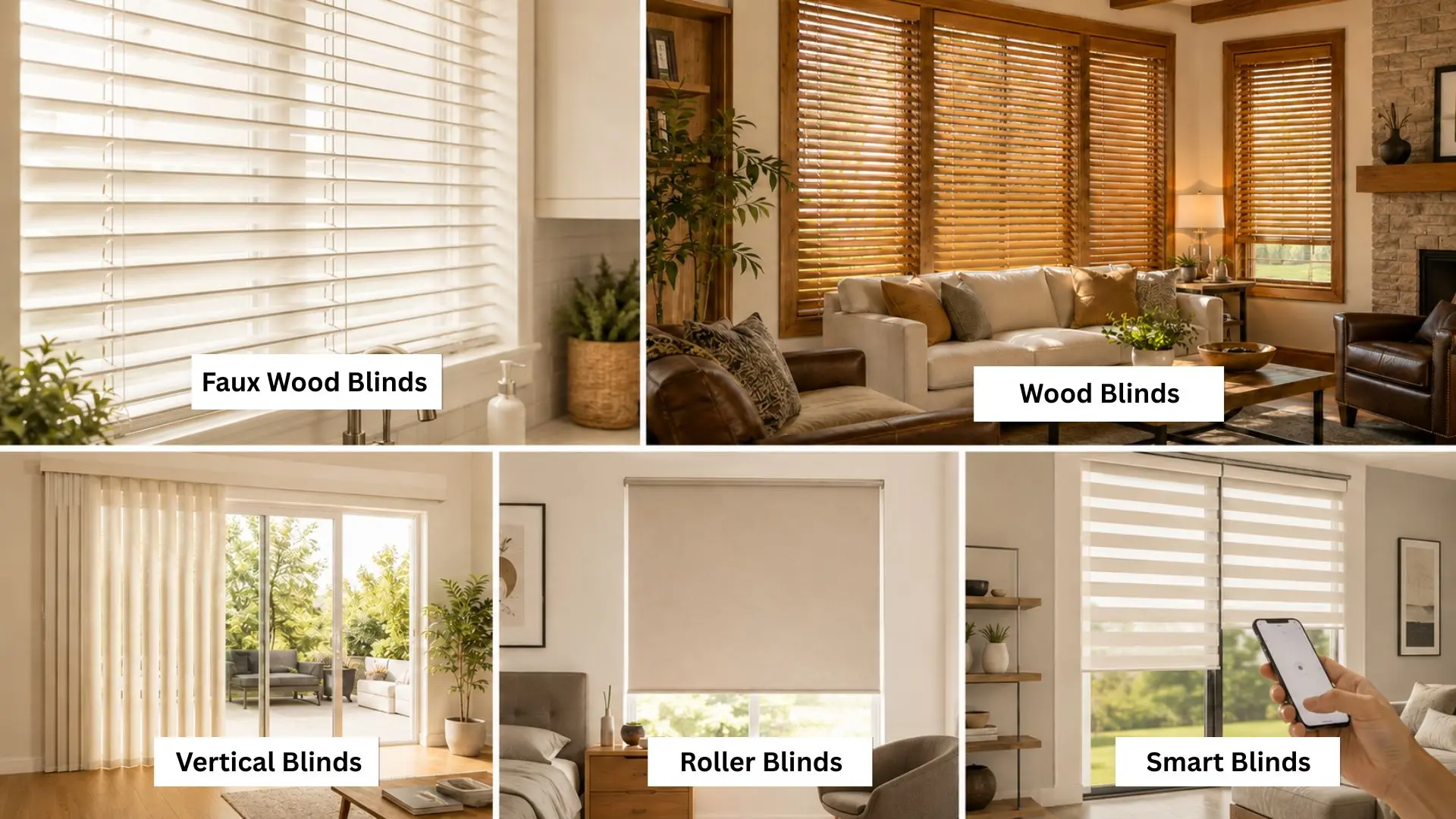
Some blind styles show up in homes far more than others. Below are the ones buyers reach for most.
1. Faux Wood Blinds
Faux wood blinds top the popularity list for good reason. They give the warm look of timber but shrug off moisture and heat.
A person cleans them with a quick wipe, so grease and steam never leave a mark. This makes them a common pick for kitchens, bathrooms, and busy family homes.
2. Wood Blinds
Real wood blinds stay a favorite in living rooms and dens. The natural grain adds warmth that faux versions can only mimic.
Each slat carries its own pattern, so no two sets look quite the same. Buyers who want a rich, high-end feel often pay more for the real thing.
3. Vertical Blinds
Vertical blinds remain the go-to for wide windows and patio doors. The slats slide sideways, so they cover large spans with ease.
A person opens just part of the window or the whole thing in one pull. Many homes with sliding glass doors reach for these first.
4. Roller Blinds
Roller blinds have climbed in popularity for their clean, simple look. A single panel rolls up and down with no bulky slats.
The fabric comes in sheer, light-filtering, or blackout, so light control is easy to set. They suit modern rooms where a fuss-free finish is desired.
5. Smart Blinds
Smart blinds are the fastest-growing style right now. A person raises or lowers them using the app, a remote, or voice.
Many set a schedule, so the blinds open at sunrise and close at dusk on their own. They cost more, but the hands-free control keeps pulling in buyers each year.
Common Types of Shades
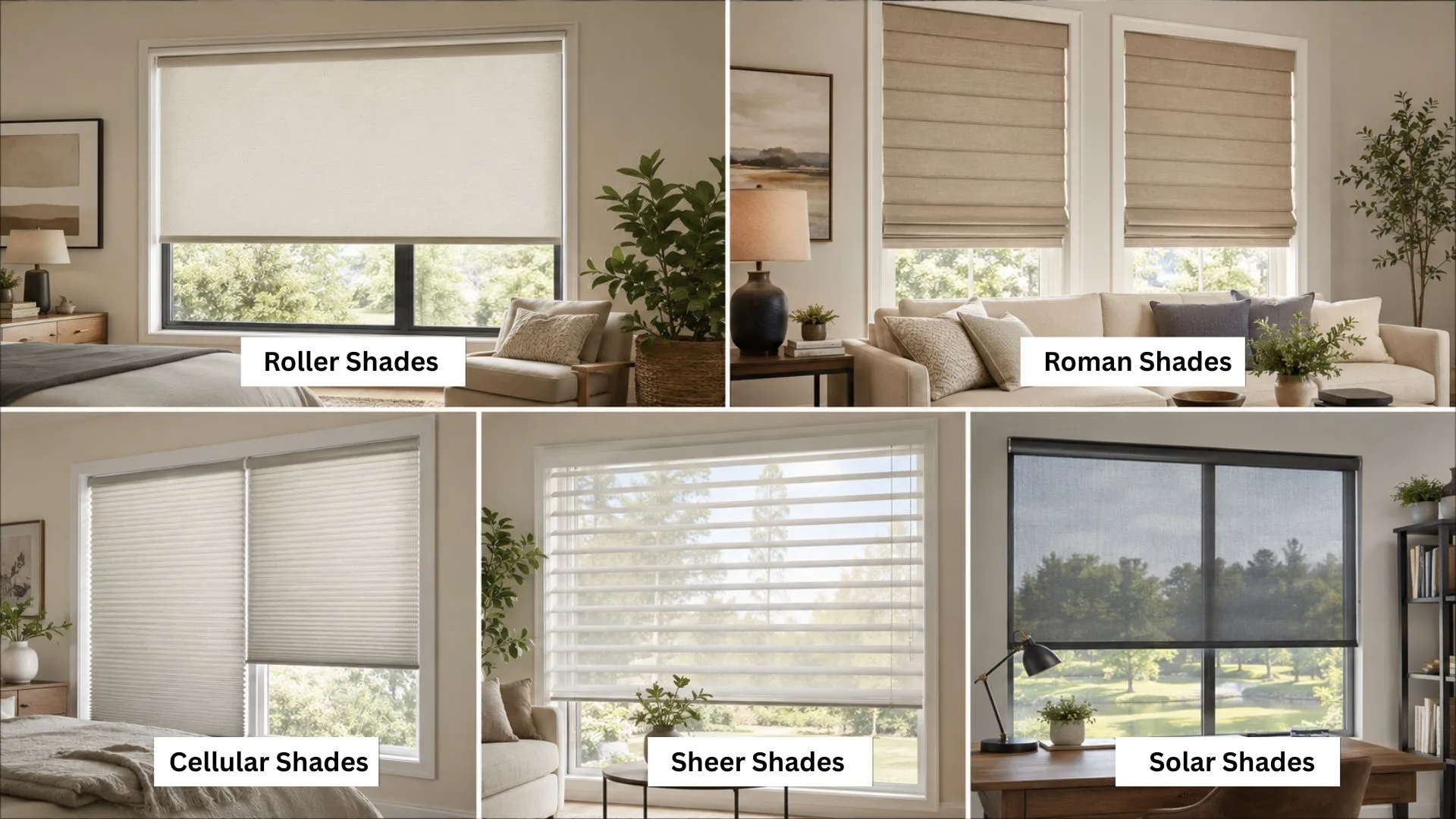
Shades come in more styles than most people expect. Each one handles light, privacy, and warmth in its own way.
These are the most common types and where each fits best.
1. Roller Shades
Roller shades wrap around a tube at the top of the window. A person pulls them down to cover the glass or lets them roll back up.
They come in many fabrics, from sheer to blackout, so light control is easy to match to a room.
2. Roman Shades
Roman shades fold into flat, even pleats as they rise. The fabric stays smooth when lowered, which gives a soft, dressed look.
These suit living rooms and bedrooms where a warmer feel is desired.
3. Cellular Shades
Cellular shades use pockets of air along their length. These pockets trap heat and keep rooms comfortable through hot and cold months.
The honeycomb design holds warm air at the window before it slips into the room. For lower energy bills, cellular shades are the strongest pick of the group.
4. Sheer Shades
Sheer shades pair soft fabric with adjustable vanes. A person tilts the vanes to filter daylight or lets them lie flat for a clear view.
They soften the harsh sun without shutting a room off from the outside.
5. Solar Shades
Solar shades block heat and glare while keeping the outside view. The tight fabric cuts UV rays that fade furniture over time.
A person stays connected to the yard or street without the harsh sun. These work well in sunrooms, home offices, and rooms with big windows.
Conclusion
Both blinds and shades do their job well, just in different ways.
Blinds offer easy light control and quick cleaning. Shades offer softer light, more warmth, and a calm feel.
The choice between blinds vs shades, or cellular shades vs blinds, really comes down to what each room needs and what you’re willing to spend.
My advice would be to think about light, privacy, and comfort, then go with the option that fits best for you.
Frequently Asked Questions (FAQ’s)
1. Which Gives More Privacy, Blinds or Shades?
Blackout shades offer the most privacy because they cover the entire window in a single solid piece with no gaps.
2. Which Lasts Longer, Blinds or Shades?
Blinds usually last longer because their hard slats resist bumps and wear better than most fabrics.
3. What is the Trend in Blinds in 2026?
Natural materials like wood and woven grass, plus motorized smart blinds and softer light-filtering fabrics, lead the 2026 trends.
4. Are Blinds Cheaper Than Shades?
Basic aluminum blinds cost less than most shades, though faux wood blinds and cellular shades can run higher.