Granite countertops represent a major investment, so it can be incredibly frustrating when they begin to look dull, cloudy, or streaked.
The problem rarely stems from a lack of cleaning. Instead, it usually happens because people unknowingly use products that break down the stone’s protective seal.
Fortunately, fixing cloudy granite is straightforward. You can easily restore the original gloss without paying for professional resurfacing.
This guide covers cleaning methods, ranging from an affordable homemade solution to specialty retail products.
Why Your Granite Countertops Look Dull
Granite countertops gradually lose their shine because of a few common factors. Soap residue from daily cleaning can build up on the surface, leaving a cloudy layer that dulls the natural gloss.
Over time, the sealant that protects the stone can wear down, letting moisture, oils, and food particles seep into the porous material.
Using acidic cleaners, such as lemon juice, vinegar, or strong detergents, can damage the surface and create a hazy or etched appearance.
These issues expose the bare stone to friction and oils from regular use, which further reduces its smoothness and brightness.
What NOT to Do While Cleaning Granite Countertops
Granite is tough, but the wrong products and habits can wear it down fast.
- Acidic substances: Vinegar, lemon juice, wine, soft drinks, and bleach-based cleaners eat through the sealant and dull the stone’s finish over time.
- Oils and grease: Cooking oils, butter, and oily skincare products soak into unsealed or poorly sealed stone, leaving dark stains.
- Abrasive tools: Steel wool, scrubbing powders, and melamine sponges scratch the polished surface and strip the sealant layer.
- Heavy impacts: Dropping heavy pots or pans chips the stone, especially along edges and around sink cutouts.
- Thermal shock: Placing a hot pan straight from the stove onto cold granite can cause hairline cracks.
- Cutting directly on stone: It won’t destroy granite, but it dulls knives fast and wears down the finish over time
What You’ll Need to Clean Granite Countertops
Key tools and materials for safe, effective granite cleaning!
| Tool/Material | Purpose |
|---|---|
| Mild dish soap (Dawn or Castile) | Gently cleans without harming the granite seal |
| Warm water | Dissolves dirt and activates soap |
| 70% Isopropyl alcohol | Disinfects while safe for granite |
| Microfiber cloth or soft sponge | Wipes without scratching; absorbs water |
| Spray bottle | Holds alcohol solution for easy application |
| Bucket | Mixes soap and water for cleaning |
| pH-neutral granite cleaner (Granite Gold, Simple Green) | Cleans, polishes, and protects in one step |
| Clean dry cloth | Removes moisture and residue to prevent spots |
How to Clean Granite Countertops: Step-by-Step
These simple approaches keep granite countertops clean, shiny, and protected using safe ingredients and everyday tools!
Method 1: Warm Water + Mild Dish Soap
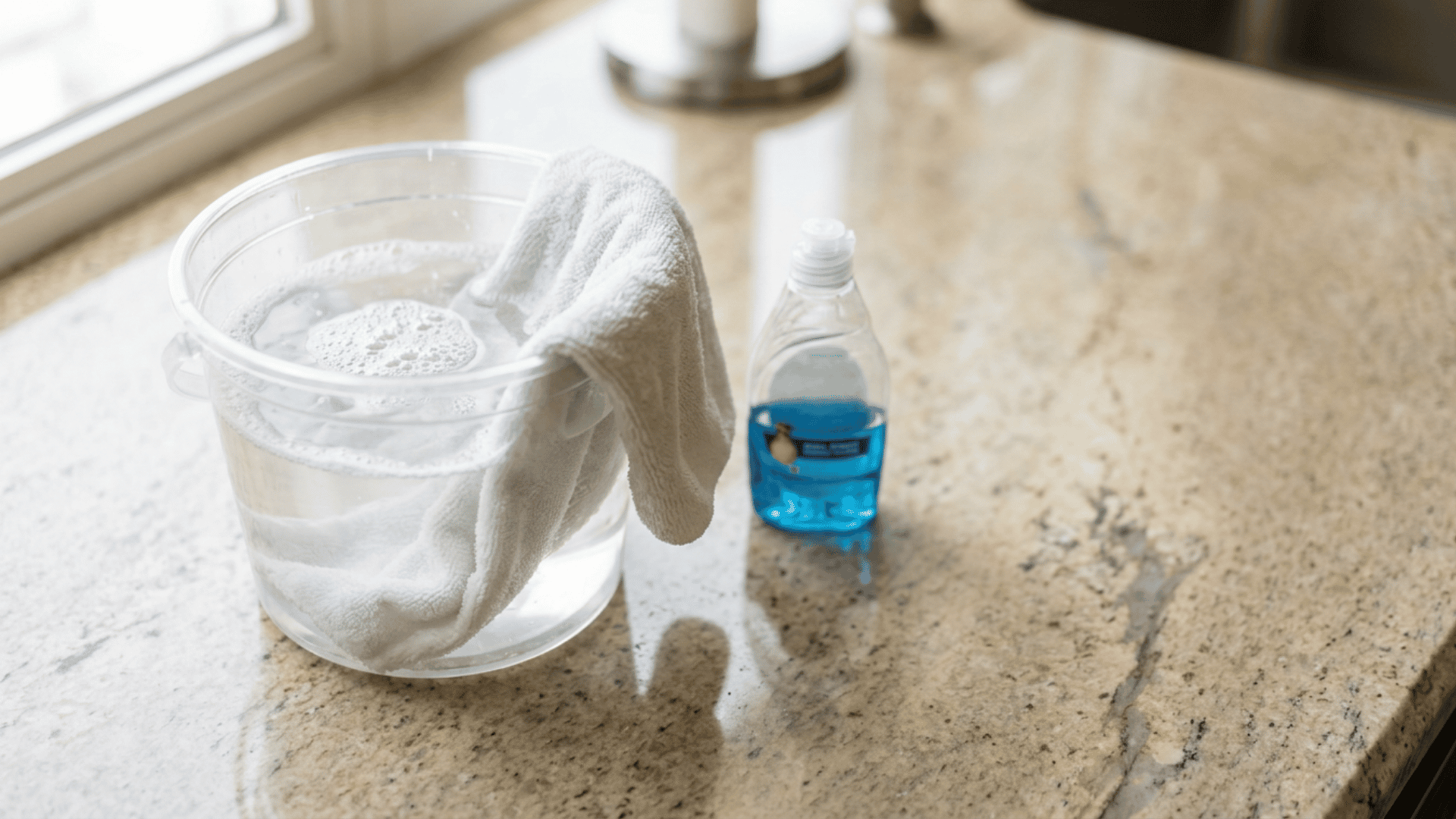
Using warm water with mild dish soap gently cleans granite, removing dirt and spills while keeping the surface safe, streak-free, and ready for everyday use.
- Mix one tablespoon of mild dish soap (like Dawn) with a bucket of warm water.
- Wipe countertops using a damp microfiber cloth in circular motions, focusing on spills.
- Dry thoroughly with a clean cloth to prevent water spots and residue.
Method 2: Isopropyl Alcohol + Water
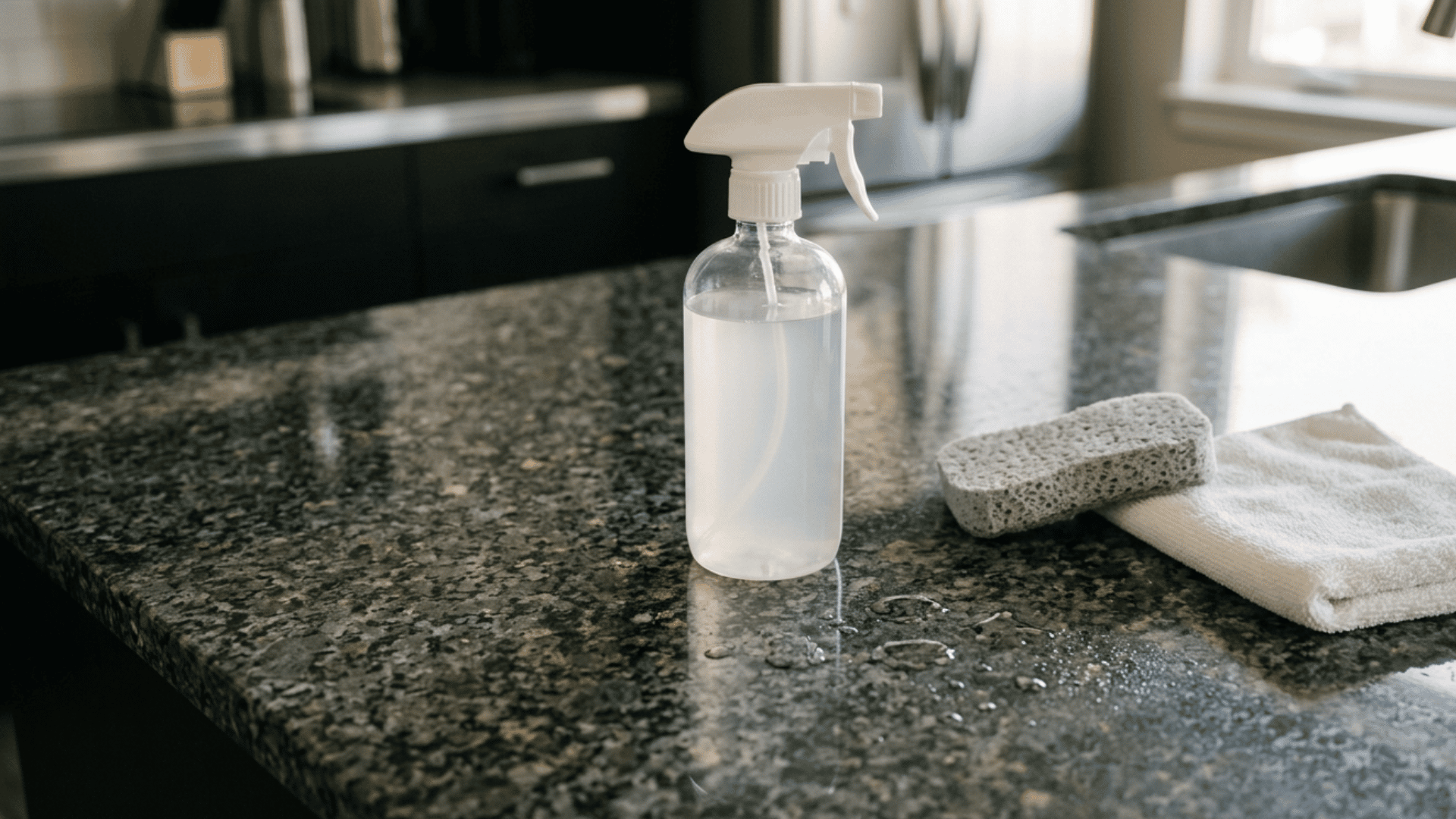
A combination of isopropyl alcohol and water cleans and disinfects granite, eliminating germs and leaving a polished surface without harming the stone or leaving leftover residue.
- Combine four tablespoons of 70% isopropyl alcohol with four drops of dish soap in a spray bottle.
- Spray the mixture on countertops and let it sit for 3–5 minutes to disinfect.
- Wipe with a soft sponge or cloth, then dry fully with a clean towel.
Method 3: Granite-Specific Cleaner
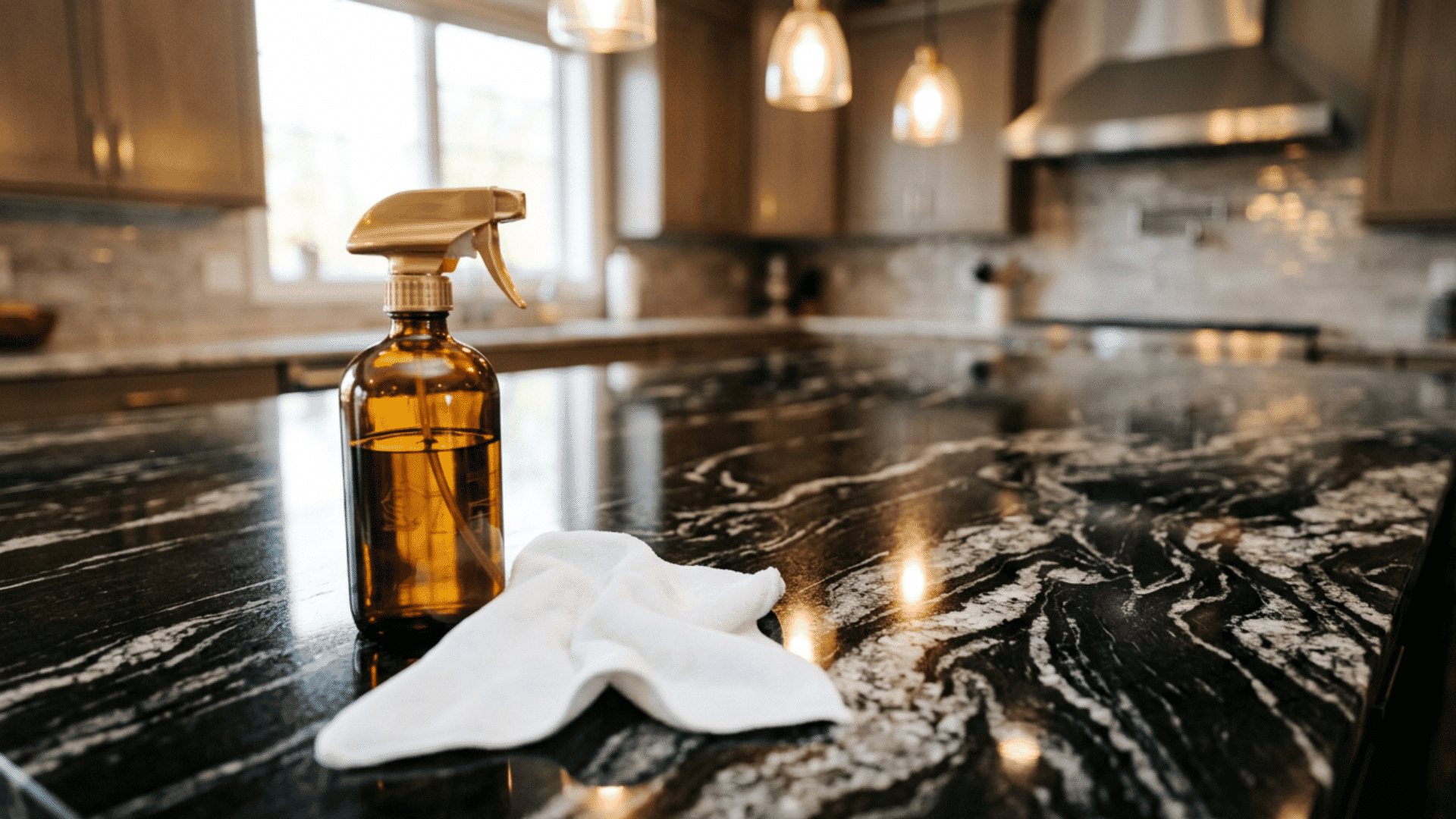
A pH-neutral granite cleaner maintains shine, protects the surface, and simplifies cleaning, leaving countertops smooth, polished, and streak- and residue-free.
- Spray a pH-neutral granite cleaner (like Granite Gold or Simple Green) evenly across the surface.
- Wipe gently with a soft microfiber cloth in circular motions.
- Buff with a dry cloth to restore shine and remove any remaining cleaner.
Tips to Maintain the Shine on Your Granite Countertop
A simple routine keeps granite looking its best for years. See what to do:
- Wipe spills right away: Wine, coffee, and oil soak into the stone fast and can leave permanent marks.
- Use mild soap and warm water: A few drops of dish soap on a soft cloth handle daily cleaning well.
- Rinse after washing: A damp wipe after soaping removes residue that dulls the surface over time.
- Polish with a granite-specific product: Weiman or Granite Gold Polish restores shine and guards against water spots.
- Try a quick DIY buff: Apply a small amount of mineral oil to a microfiber cloth for a fast, glossy finish.
- Reseal every 1 to 2 years: Drop water onto the surface. If it soaks in instead of beading up, it’s time to reseal.
How Often Should You Clean & Seal Granite?
Clean granite daily with warm water and a small amount of mild, pH-neutral dish soap, or use a specialized granite cleaner.
Avoid vinegar, ammonia, lemon, or abrasive pads, as these can damage the sealant and dull the stone’s finish.
For deep stains, use a baking soda paste for oil-based stains or hydrogen peroxide for water-based stains, then cover with plastic wrap overnight.
Granite sealing depends on color and density: lighter stones (white, beige, yellow) usually need sealing every 6–12 months, while denser dark granite (black, dark grey, deep green) can last 3–5 years.
To check, perform the 15-minute Water Drop Test: Place a tablespoon of water on the surface, wait, then wipe. If it darkens, the stone is absorbing moisture and needs to be sealed. High-traffic areas require more frequent attention than low-use surfaces.
Common Mistakes That Damage Granite Countertops
Avoid these common mistakes to keep granite surfaces safe and polished.
- Avoid acidic or abrasive cleaners. Vinegar, bleach, and harsh scrubs break down the sealant and dull the surface over time.
- Do not let spills sit. Coffee, wine, and oils soak into granite fast. Wipe them up right away.
- Never cut directly on stone. It dulls knives and scratches the surface. Always use a cutting board instead.
- Never place hot pans without protection. Sudden heat can crack the stone or damage the sealant. Use a trivet every time.
- Avoid heavy weight on unsupported edges. Pressure near overhangs causes chips and cracks. Keep heavy items centered on the counter.
To Conclude
Proper maintenance for granite countertops protects both the look of your kitchen and your home’s financial investment, helping you avoid expensive professional repairs.
You use a budget-friendly soap mixture or a specialized commercial spray; the most crucial factor is avoiding acidic chemicals that strip away the protective coating.
Leave a comment below to share how the mild soap method worked on your counters.
For more details on protecting your kitchen surfaces, refer to the troubleshooting guide to determine exactly when your stone needs a fresh layer of protection.
Frequently Asked Questions
Does WD-40 Clean Granite?
No. WD-40 is an oil that can soak into granite, leaving dark stains and damaging the seal. It should never be used on stone.
Is Granite out of Style in 2026?
Granite remains popular in 2026. Early 2000s styles with busy patterns or orange tones are outdated, while modern, subtle granites have regained appeal.
What Backsplash to Avoid?
Avoid highly porous materials like limestone or cement, busy mosaics, and peel-and-stick tiles. They are hard to clean, moisture-prone, and age quickly.