I once left a single unwashed cup on the counter before bed. By 7 am, ants had found it, formed a trail, and were halfway up the cabinet’s wall.
My first instinct was to grab whatever spray was under the sink and hope for the best.
It never really worked. That was when I stopped relying on quick fixes and started thinking about how to get rid of ants, which took me back to what my mother and grandmother had been using for years.
Turns out, the most effective ways to get rid of ants were already sitting in my kitchen cabinet.
What Attracts Ants Indoors?
Ants do not wander into your home by accident. They come in because something is drawing them there.
Food is the biggest reason. Even the tiniest crumb under the toaster or a sticky spot on the counter can signal a meal to a foraging ant.
Open fruit bowls, uncovered pet food, and trash cans without lids are common triggers.
Sweet foods attract the most common ant species, but some ants go after proteins and fats too, so do not just blame the sugar jar.
Moisture is another big pull. Ants need water to survive, and they can sense damp areas. Leaky pipes under the sink, wet sponges left on the counter, or even a dripping faucet can be enough to bring them in.
Common Entry Points Around the House
Once ants find a reason to come in, they find a way in.
The most common ones I’ve seen:
- Gaps around door frames and window sills.
- Cracks in baseboards or walls.
- Spaces around utility pipes where they enter the house.
- Gaps under doors, especially older exterior doors.
- Torn window screens.
Sealing these spots can make a real difference before you even try any remedy. A line of ants along a baseboard usually means there is a crack nearby worth checking.
Are fruit flies taking over your kitchen, too? Looking for a simple solution? Click here to learn how to make a fruit fly trap.
Signs of an Ant Infestation
I thought I saw a few random ants here and there. Turns out, they had been quietly setting up inside my kitchen wall for weeks.
That is the thing about ants, they grow in numbers secretly, and by the time you notice them, they have formed a million colonies!
Some signs you should watch for:
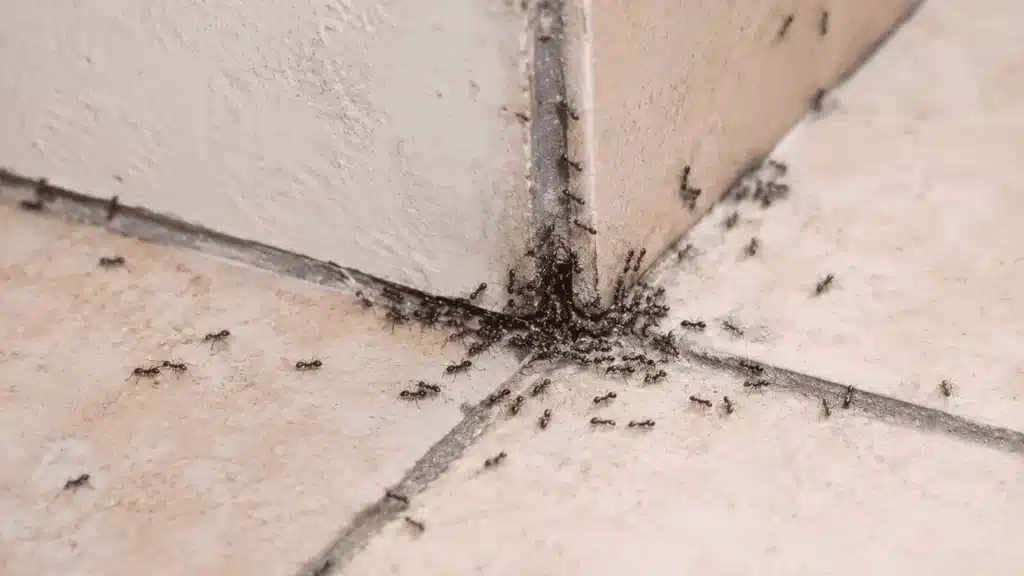
- You see a thin moving line on your wall or floor: Ants move in trails, and if you see a line of them going from one spot to another, they have found a food source.
- You spot ants near food, even sealed food: Ants can get into packaging even when it’s sealed. If you find ants inside a cereal box or near a sugar container, that is a clear sign.
- You find small piles of fine dirt or dust: These tiny mounds often appear near walls, windowsills, or floorboards. Ants push debris out as they build their paths.
- You hear a faint rustling inside your walls: Carpenter ants especially make soft sounds as they move through wood.
- You see winged ants indoors: This is a serious sign. Winged ants indicate the colony is growing and looking to expand into new areas of your home.
Which is the Fastest Way to Get Rid of Ants?
The fastest way to stop ants is to wipe out their trail first, since ants leave a scent path for others to follow.
And if you break that path, the incoming crowd gets confused.
All you have to do is wipe the trail with white vinegar.
The acetic acid in vinegar disrupts ant scent trails, which is how they communicate and find their way back to food sources.
Wipe it along a trail, and they scatter – the chemical signal is gone, and they can’t find their way back.
Mix equal parts of white vinegar and water, spray it on counters, along trails, and near entry points, and let it dry.
The smell goes away within minutes, but it lingers long enough to do its job. I use it as part of my regular counter wipe down now, not just when ants show up.
Avoid using it on natural stone surfaces, such as marble or granite, as vinegar can dull the finish over time.
5 Home Remedies to Get Rid of Ants (Tested, Not Just Listed)

Before I tried anything from a store, I went through a few things that were already in my kitchen.
Some of these I tested myself, and a few were passed down from my mother and grandmother, who swore by them.
1. Essential Oils
Peppermint oil is the one I use most often. Ants rely heavily on scent trails to navigate, and strong essential oils disrupt that.
- Add 10 drops of peppermint oil to a small spray bottle filled with water.
- Shake it well before each use.
- Spray along windowsills, door frames, baseboards, and anywhere you have noticed ant activity.
- Let it dry naturally. No need to wipe it off.
Tea tree oil and clove oil work in a similar way. Reapply every few days, especially after cleaning or if the area gets wet.
If you have sensitive surfaces like unsealed wood or painted walls, test a small spot first because some oils can leave a mark.
2. Cinnamon and Cayenne
This one came straight from my grandmother. She kept a small jar of ground cinnamon near the kitchen window and would dust it along the sill whenever ants showed up.
Cinnamon contains compounds that ants find irritating, and they tend to avoid crossing a line of them.
Cayenne pepper works the same way. Use it near baseboards and behind the fridge, where you cannot spray liquids easily.
One thing to be careful about is if you have pets or young children at home, since cayenne can cause irritation if touched or sniffed directly.
It is not a permanent fix, but it is quick and cheap.
3. Ant Baits
This is probably the most effective method used for getting rid of a full colony, not just the ants you can see.
Ant baits work because the worker ants carry the bait back to the nest, which eventually affects the whole colony. You can make a simple bait at home using borax and sugar or use a store-bought bait station.
The sugar draws them in, and the borax is harmful to them once ingested. This method is more suitable for kitchens or areas where you want to avoid any kind of chemical.
The key with baits is patience. Do not kill the ants you see when using bait because those are the ones carrying it back. It can take a few days to a couple of weeks to see a real reduction.
Place bait near active trails but away from food prep areas.
4. Caulk
This one is more of a prevention step than a remedy, but it is one of the most effective things you can do.
Sealing gaps with caulk cuts off the entry points ants use to get inside in the first place. No gap, no ants.
My mother used to run a line of caulk along the bottom of the back door frame every summer before ant season picked up. Check around windowsills, baseboards, utility pipes, and door frames for small cracks or gaps.
A basic tube of silicone or acrylic caulk from any hardware store is all you need.
5. Lemon Juice and Citrus-Based Remedies
Lemon juice is another scent disruptor. The acidic nature of citrus masks ant trails, and the smell keeps them from settling in an area.
Squeeze fresh lemon juice along windowsills and wipe counters with diluted lemon juice after cleaning.
Citrus peels are also useful. Leaving a few orange or lemon peels near entry points can act as a mild deterrent. They dry out quickly, though, so replace them every day or two.
This works better as a prevention step than a fix for an existing infestation.
For a stronger effect, you can simmer citrus peels in water, let them cool, and use that liquid as a spray. It smells a lot better than vinegar and works in a similar way.
Can You Get Rid of Ants Permanently?
See, you can permanently get rid of ants, but only if you deal with two things at once – the colony and the reason they came in.
Killing the ones you see is not enough. The ants on your counter are just workers. The queen sits deep in the colony, laying eggs every single day.
You spray twenty ants. She produces a hundred more.
And the most reliable fix is slow-acting bait. Workers carry it back to the queen. The colony collapses from the inside. It takes a few days, but it works on the source.
That is as close to permanent as it gets.
Conclusion
Start by sealing the obvious entry points and cutting off whatever is drawing them in — that alone stops a lot of repeat infestations.
Then pick one or two methods and give them a few days.
You don’t need to try everything at once. Vinegar spray handles the ants you can see right now; bait handles the colony you can’t.
Between those two, most stubborn ant problems do get resolved.
Getting rid of ants at home isn’t complicated. It just requires not skipping the boring parts: wiping down surfaces, checking for gaps, replacing citrus peels.
Consistency does most of the work.
Frequently Asked Questions (FAQ’s)
1. What Scent Will Keep Ants Away?
Peppermint, cinnamon, clove, and citrus work well. Peppermint oil is the easiest to apply and lasts the longest.
2. What Gets Rid of Ants Immediately?
White vinegar spray works fast on contact. Diluted dish soap is another quick option that stops ants right away.
3. Why Should You Not Squish Ants?
Squishing ants releases a chemical, “alarm pheromones,” that attracts more ants to the same spot.
4. What Month do Ants Go Away?
Ants slow down in late October and November when temperatures drop. They go dormant in winter but return in March or April.