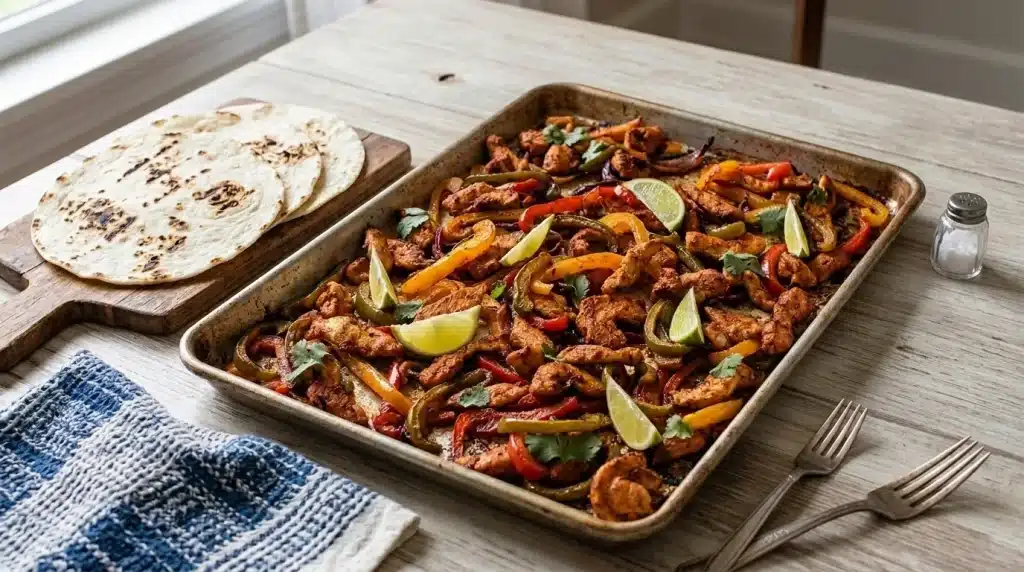
Fajita night used to mean chaos in the kitchen. Three pans, two burners, and a mess everywhere. But there’s a trick that changes everything. One sheet pan, one oven, and almost no cleanup afterward. That’s what makes this recipe so good. Chicken, peppers, and onions get tossed together, seasoned well, and popped in the oven to do the rest of the work. Go through this sheet pan chicken fajitas Recipe to make tender chicken, charred veggies, and that smoky fajita taste, all in under 30 minutes.
Ingredients You’ll Need
- 2 pounds boneless, skinless chicken breasts, sliced into strips
- 3 bell peppers (any colors), sliced
- 1 large onion, sliced
- 3 tablespoons olive oil
- 2 tablespoons fajita seasoning (chili powder, cumin, smoked paprika, garlic powder, salt, pepper)
- 1 lime, juiced
- 8 small tortillas, warmed
- Fresh cilantro, chopped, for garnish
Let’s Make Sheet Pan Chicken Fajitas
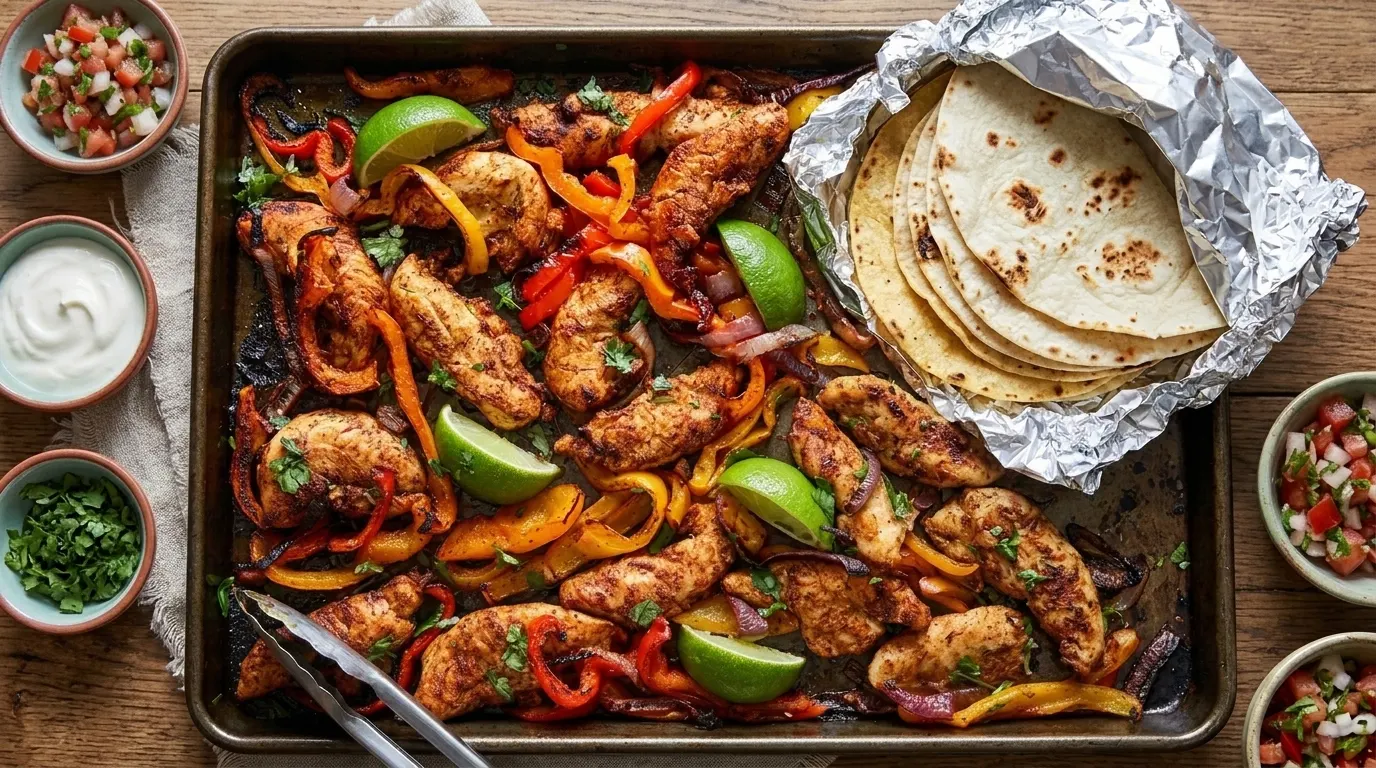 This recipe is easy, and it barely takes any real effort. Just follow these steps, and dinner is ready in no time.
Step 1: Prep the Oven and Pan
Preheat the oven to 425°F. While it heats up, line a large sheet pan with foil or parchment paper. This little step saves so much scrubbing later.
Step 2: Season Everything
Lay the chicken strips, peppers, and onion right on the sheet pan. Drizzle olive oil over the top, then sprinkle on the fajita seasoning. Using your hands or a spatula, toss everything together directly in the pan. That way, every piece gets coated evenly, and there’s no extra bowl to wash.
Step 3: Spread and Bake
Spread the chicken and veggies out in a single, even layer. This part is important because if everything’s piled up, it steams rather than roasts. Once it’s spread out, slide the pan into the oven and bake for 20 to 25 minutes. Halfway through, give everything a quick toss so it browns evenly on all sides.
Don’t overcrowd the pan. A packed pan steams the veggies instead of roasting them.
Step 4: Add the Lime and Serve
Once the chicken is cooked all the way through and the veggies have a little char on the edges, pull the pan out. Squeeze fresh lime juice over the whole thing while it’s still hot. That burst of citrus wakes up all the flavors. Then pile everything into warm tortillas and finish with a sprinkle of chopped cilantro.
Variations You Can Try
This fajita mix isn’t just for tortillas. Below are a few other ways to serve it:
Fajita Quesadillas
Lay a tortilla flat and sprinkle shredded cheese over half of it. Add a scoop of the chicken-and-veggie mix on top, then fold the tortilla over. Grill it in a dry pan for 2 to 3 minutes per side, until golden, and the cheese melts. Slice into wedges and serve with salsa or sour cream.
Veggie Fajita Rice Bowl
Skip the chicken this time and load the pan with extra peppers and onions instead. Once roasted, spoon them over a bowl of warm rice. Add black beans, corn, and a squeeze of lime. Top with avocado slices for extra creaminess.
Fajita Salad
Start with a bed of chopped lettuce or mixed greens. Pile the warm chicken and veggies right on top, so they slightly wilt the greens. Add shredded cheese, a few tortilla strips for crunch, and a drizzle of ranch or lime dressing to finish.
Make This Your Go-to Recipe
Sheet pan chicken fajitas turn a busy weeknight into an easy, low-mess meal. One pan does all the work, from the seasoned chicken to the charred veggies, while the oven handles the rest. That’s what makes this recipe worth keeping on hand for busy weeknights. Beyond the classic tortilla route, this mix also works for quesadillas, rice bowls, and salads with minimal extra effort. So the next time chicken and peppers are sitting in the fridge, skip the multiple pans and reach for just one. Try the fajita mix a different way this week.
Frequently Asked Questions (FAQs)
1. How Do I Store Leftover Fajitas?
Store leftovers in an airtight container in the fridge for up to 3 days. Reheat in a skillet or microwave until warmed through.
2. What Sides Go Well with Sheet Pan Fajitas?
Mexican rice, refried beans, or a simple corn salad all pair nicely. A side of chips and salsa works well for a casual meal, too.
3. Can I Use Frozen Chicken for This Recipe?
Fresh chicken works best for even cooking. If using frozen chicken, thaw it completely first, as it releases extra water that affects roasting.