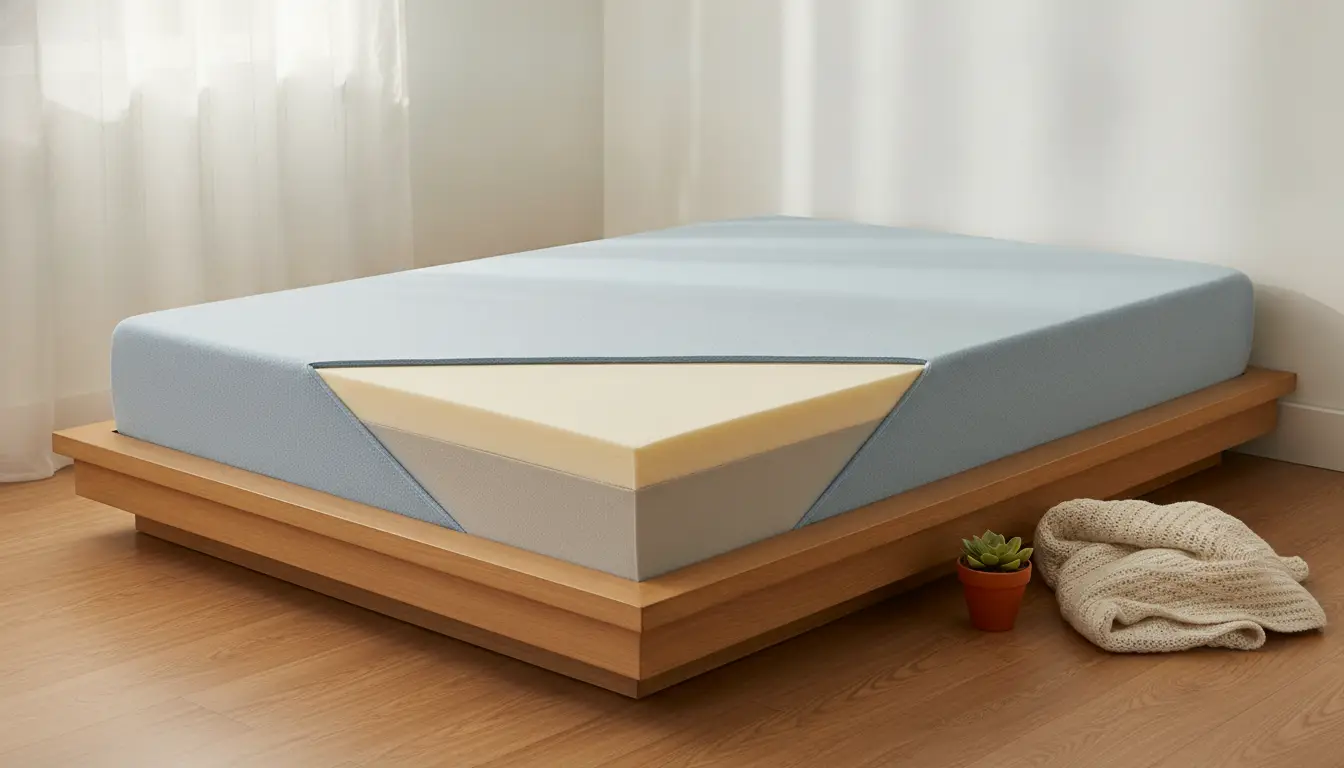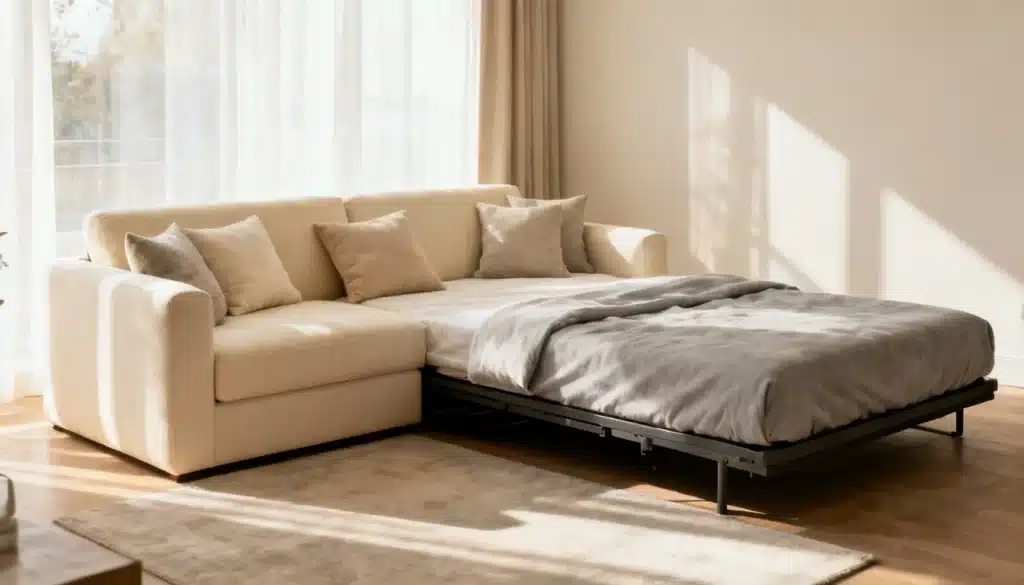
Tight on space but need room for guests? You’re not alone; many people deal with the same problem. That’s where a sofa bed steps in.
A sofa bed gives you comfortable seating by day and a proper sleeping spot by night. No extra room needed. No second mattress to store.
If you’ve ever wondered what a sofa bed really is, how it works, and whether it’s right for your home, this blog covers all of it.
What is a Sofa Bed?
A sofa bed is a piece of furniture that works as both a couch and a bed.
By day, it gives people a comfy spot to sit. By night, it folds or pulls out into a sleeping surface. That’s why so many call it a hybrid piece.
This kind of furniture suits homes with tight space. One piece does the job of two, so a living room can double as a guest room. Studios, small flats, and spare rooms all benefit from it.
The Main Components of a Sofa Bed:
- Frame
- Mattress
- Seating cushions
- Support system
- Conversion mechanism
Features of a Sofa Bed
A few key features of a sofa bed:
Fold-out mattress: The main feature is a mattress that tucks inside the frame. A person pulls it out for sleeping and folds it back for seating.
Sturdy frame: A solid metal or wood frame holds the weight and takes the daily folding. The stronger the frame, the longer the sofa bed lasts.
Dual-function: It serves as both a couch and a bed. One piece does two jobs, which saves space and money.
Removable cushions: The seat cushions lift off to reach the bed. Many can be washed or swapped, so the sofa stays fresh.
Easy-open mechanism: Most models open with a simple pull or push. Some fold flat, while others slide out from under the seat.
Range of sizes: Sofa beds come in single, double, and queen widths. This lets a person match the bed to the room and the sleeper.
Storage space: Some models hide a compartment under the seat. It’s a handy spot for sheets, pillows, and blankets.
Where Can You Use a Sofa Bed in Your Home?
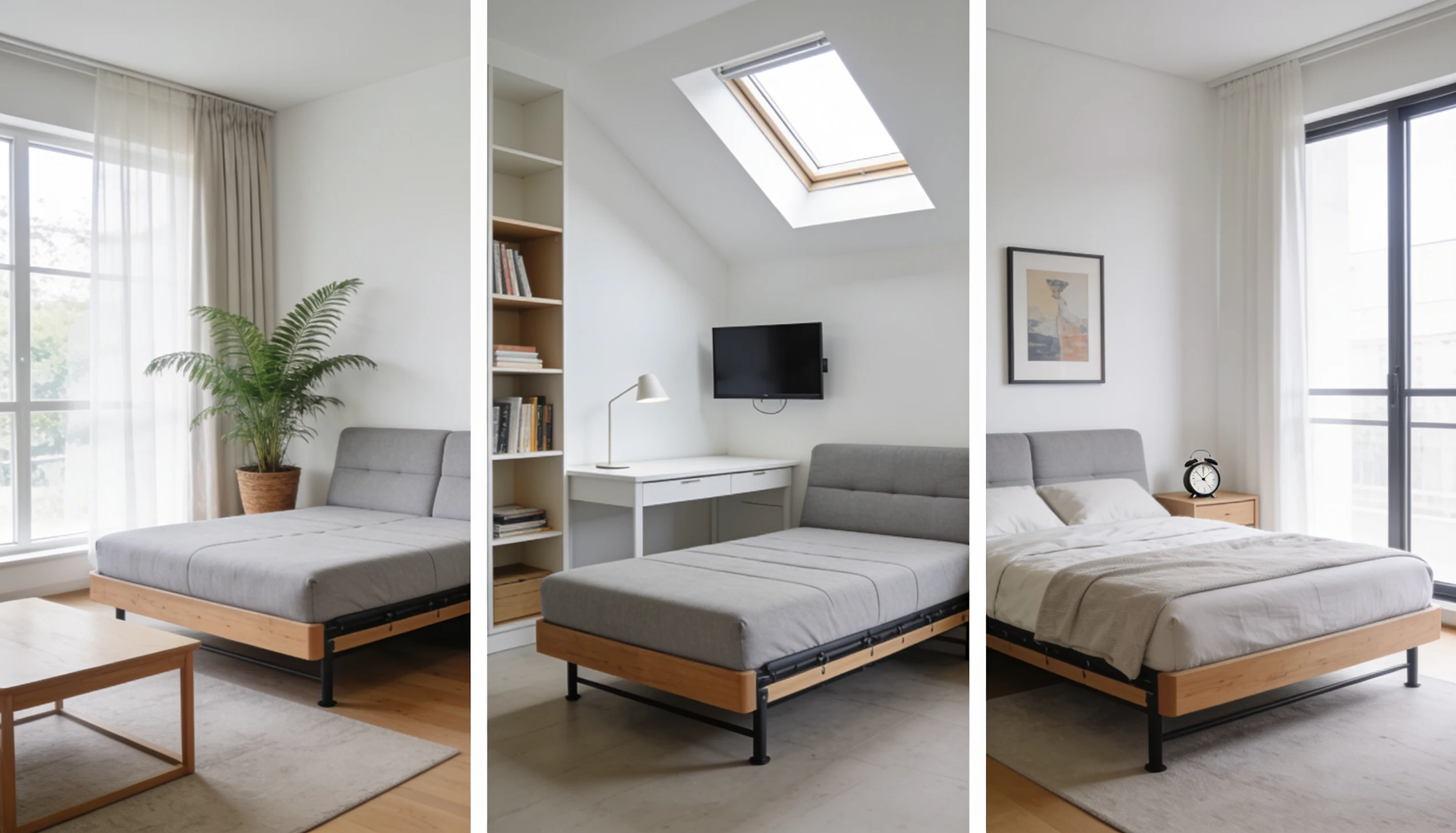
The most common places where people put a sofa bed:
Living Room
The living room is the most common spot for a sofa bed. It serves as a couch for daily use and turns into a bed when guests stay over.
This way, one room handles both jobs without the need for a spare bedroom.
Since the living room sees the most traffic, a quick vacuum each week keeps the cushions and folds free of dust and crumbs.
Home Office
A home office often sits empty at night, so a sofa bed makes good use of it.
People can work at the desk by day and offer a guest a place to sleep after hours. It’s a smart fix for rooms that pull double duty.
Because the bed stays folded most of the time here, it helps to pull the mattress out now and then so it can breathe and stay fresh.
Guest Room
A small guest room gains space with a sofa bed. Rather than a full bed that sits unused, the sofa gives a seat for reading or relaxing.
When visitors arrive, it folds out in a moment.
A thin mattress cover is worth using in this room, as it guards against dust between visits and washes easily before guests come.
Studio Apartment
In a studio, every piece has to count. A sofa bed lets a single space serve as both a lounge and a bedroom.
It keeps the room open during the day and turns cozy at night.
And with the bed opening and closing daily, a little oil on the hinges and joints keeps the frame moving smoothly and reduces squeaks.
The Kids’ Room
A sofa bed works well in a child’s room when friends come to stay. It gives them a comfy place to sleep, then folds back to free up floor space for play.
Kids can be rough on furniture, so it pays to remind them not to jump or stand on it, as excessive weight can strain the frame and springs.
Common Sizes and Mattress Types of a Sofa Bed
Sofa beds come in a few standard sizes, and the right one depends on who will sleep there and how much room you have.
Common Sizes
- Single (Twin): This is the smallest size and fits one person. It suits kids’ rooms, studios, and tight corners.
- Double (Full): A double gives more width for one adult or a snug fit for two. It’s a common pick for guest rooms.
- Queen: The queen is the largest common size. It sleeps two adults in comfort and works best in larger living rooms.
Types of Mattress
- Foam mattress: Foam is light and folds easily. It works well for now-and-then use, though it can feel thin over long nights.
- Innerspring mattress: This type uses coils for support. It feels more like a regular bed but adds weight to the frame.
- Memory foam mattress: Memory foam shapes to the body and eases pressure. It’s a good pick for nightly sleep and aching backs.
- Air-filled mattress: Some models pump up with air. A person can set the firmness, and it folds down flat when not in use.
Different Types of Sofa Beds
Sofa beds mostly fall into groups based on the way they can be converted:
Pull-Out Sofa Bed
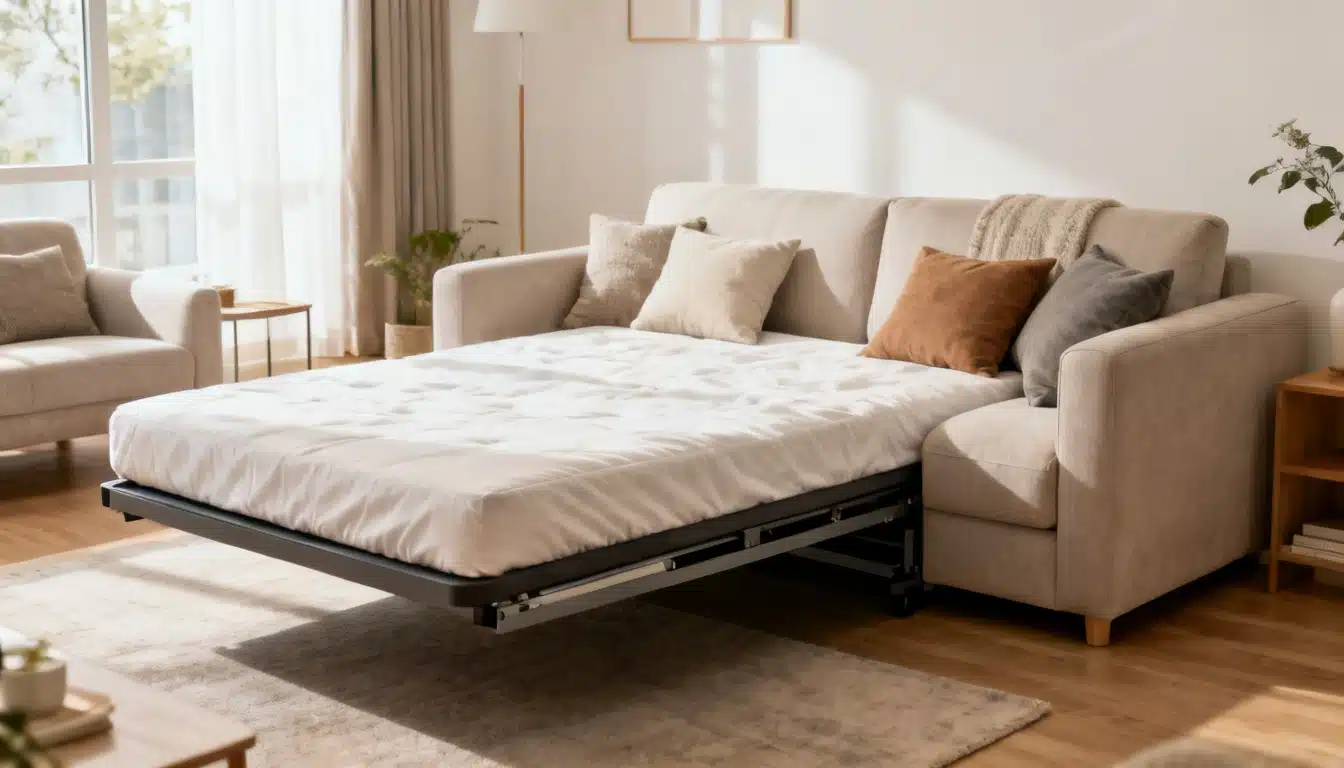
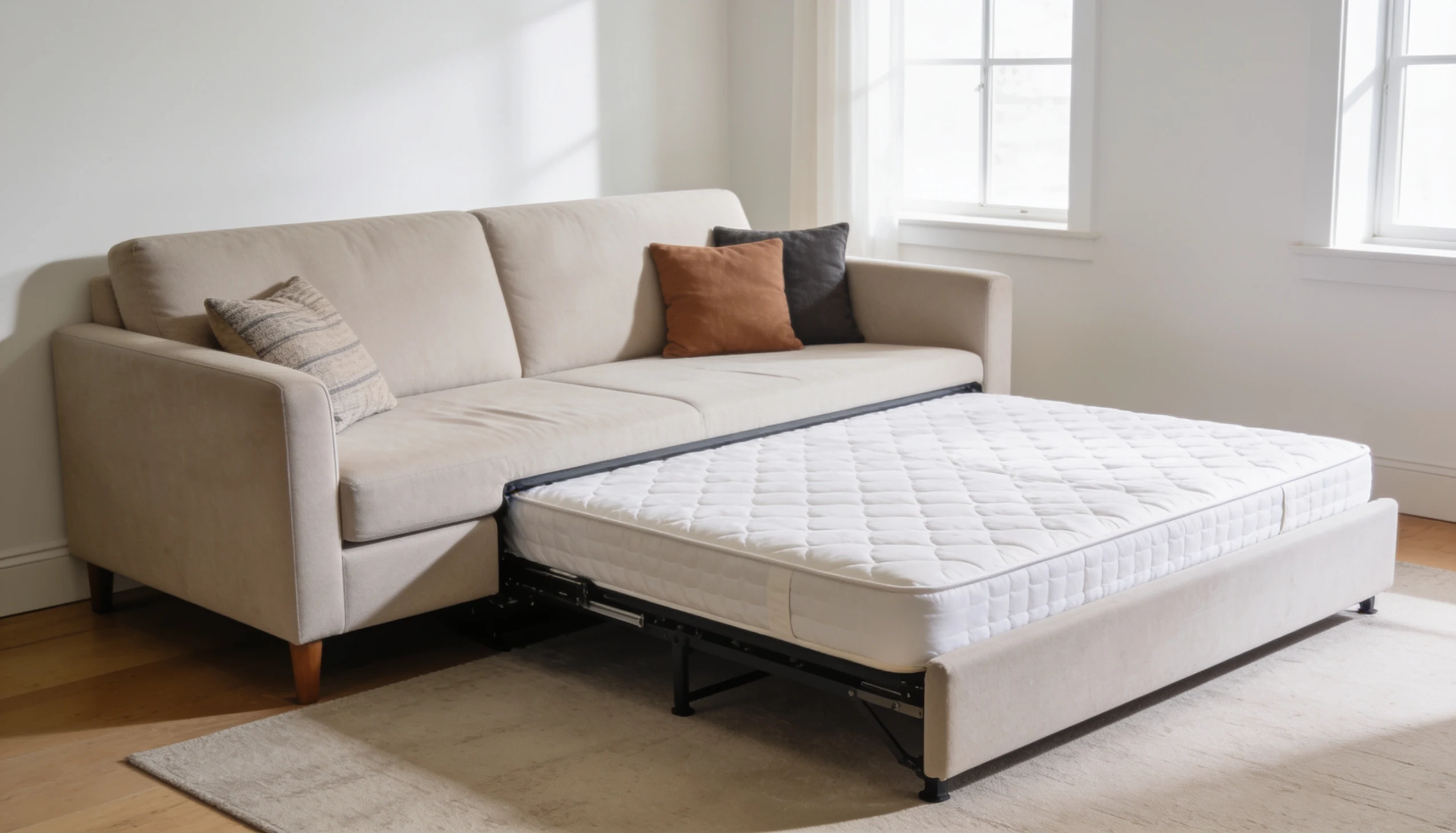
This style hides a folding mattress inside the frame. A person lifts off the cushions and pulls the mattress out. It sleeps well but tends to be heavier than other types.
Futon
The futon lies flat for sleeping or sits up for seating. The frame bends in the middle, so one quick move changes its shape. It works well in studios and dorm rooms.
Daybed
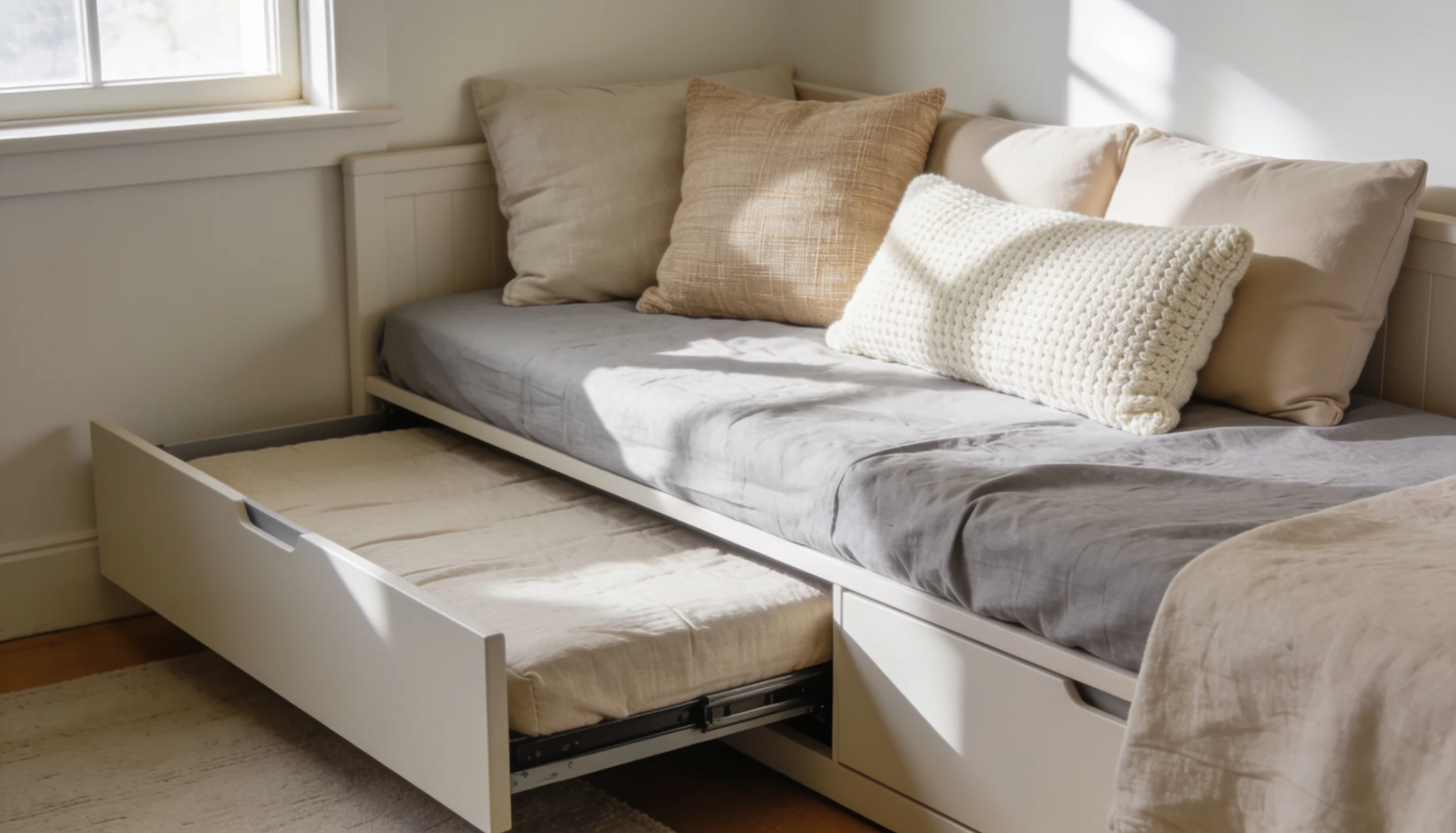
The daybed is slim and fits along a wall. It seats people like a couch but offers a single sleeping spot. Some come with a trundle that slides out for a second bed.
Click-Clack Sofa Bed
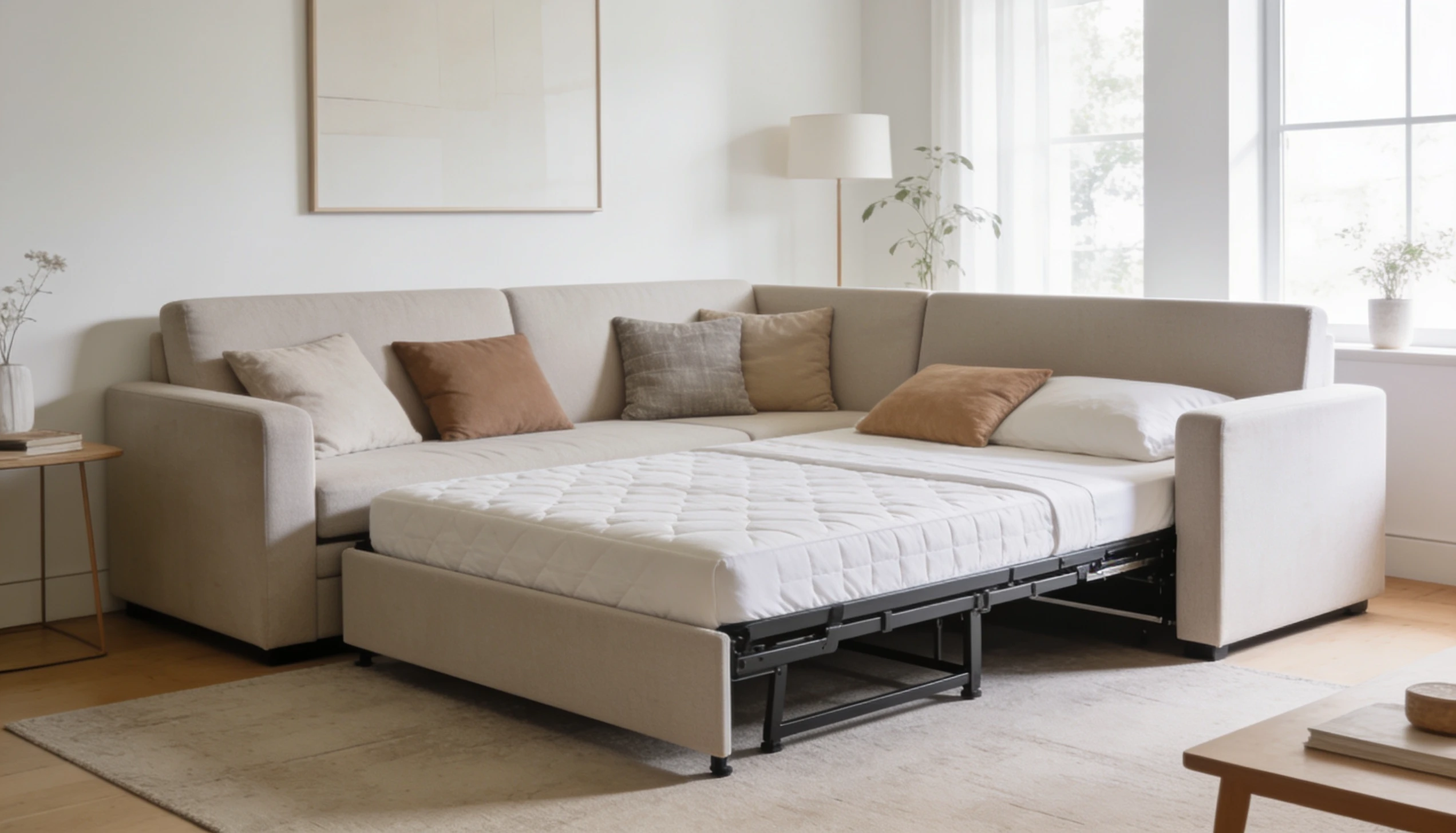
This type gets its name from the sound it makes. The back clicks down flat to form a bed, then clacks back up into a couch. It’s simple and quick to use.
Sectional Sofa Bed
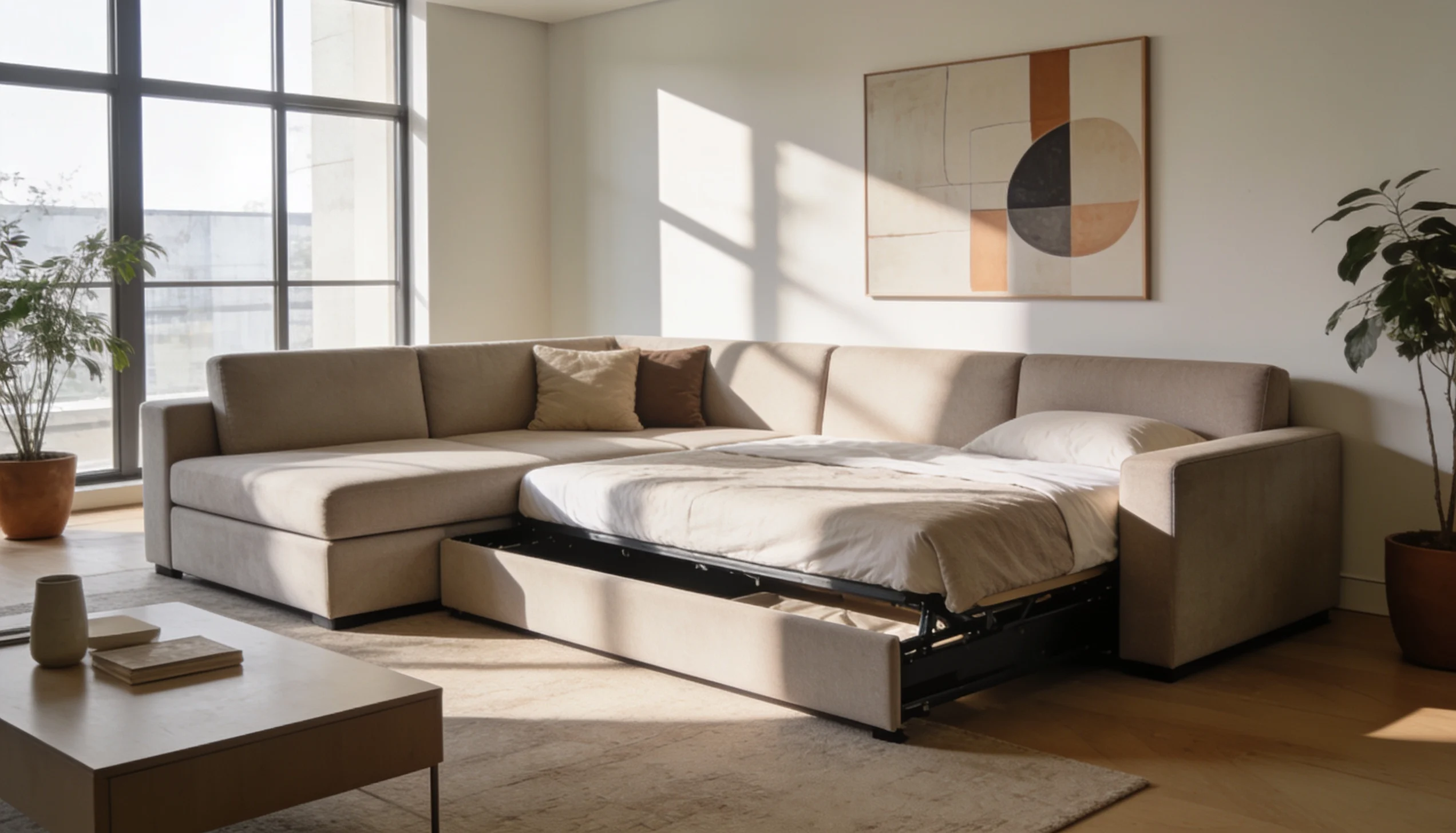
This larger style joins seating with a hidden bed. It suits bigger rooms and families. One section often holds the pull-out mattress.
Sofa Bed vs Sleeper Sofa vs Futon vs Murphy Bed
| Feature | Sofa Bed | Sleeper Sofa | Futon | Murphy Bed |
|---|---|---|---|---|
| What it is | A couch with a fold-out bed | A couch with a mattress hidden in the frame | A frame that bends flat for sleeping | A bed that folds up into a wall or cabinet |
| Main use | Seating and sleeping | Seating and sleeping | Seating and sleeping | Sleeping, with no seat |
| How it converts | Pull the mattress out | Pull the mattress out from under the seat | Fold the back down flat | Pull the bed down from the wall |
| Comfort for sleep | Good, based on the mattress | Good, often thicker mattress | Firmer and thinner | Best uses a full mattress |
| Space saved | High | High | High | Highest |
| Best for | Guest rooms, living rooms | Living rooms, regular guests | Studios, dorms, budget homes | Studios, home offices |
Conclusion
So now you know what a sofa bed is and why it’s such a smart pick for a home that’s short on space.
It serves as a couch by day and folds out into a bed by night, so a single piece handles the work of two, saving you valuable space.
We’ve walked you through the main types, the features to look for, and maintenance tips. And I hope you now feel ready to choose one with confidence.
If you ask me, the sofa bed is one of the most useful pieces you can own, mainly when every square foot counts.
Frequently Asked Questions (FAQs)
1. Which Type of Sofa is Best for Back Pain?
A firm sofa bed with a supportive mattress and a sturdy frame tends to be the easiest on the back.
2. What is the 2/3 Rule Sofa Bed?
The 2/3 rule says a sofa should take up about two-thirds of the wall or space it sits against, so the room stays balanced.
3. Can I Sleep on a Sofa Bed Every Night?
Yes, a person can sleep on a good sofa bed nightly, though a thicker mattress makes it far more comfy for daily use.
4. What is the Outdated Sofa Trend in 2026?
The ultra-low, minimalist low-profile sofa is on the way out in 2026, along with cool mid-tone greys.