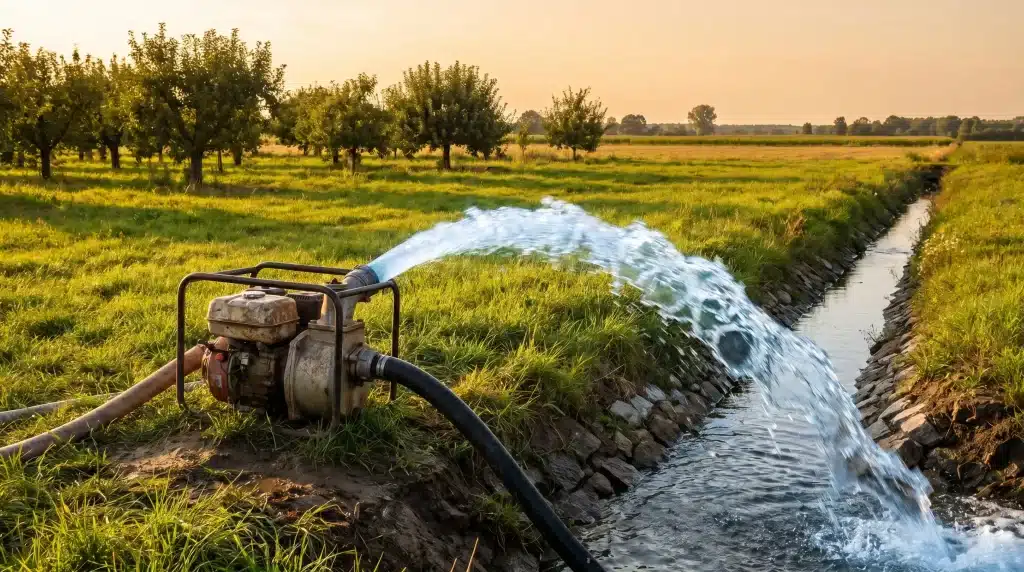
Farm and garden jobs demand steady water flow, strong pressure, and gear that handles tough conditions. A petrol water pump gives off-grid power, which suits paddocks, orchards, tanks, and dams. However, not every pump fits every task, so the right choice depends on the work at hand.
The best portable water pump for farm and garden jobs matches the water source, distance, and volume needed for each task. Some pumps suit light transfer jobs, while others move high volumes for irrigation or handle dirty water with debris. This guide helps narrow the field so they can choose a pump that fits their land, workload, and budget.
Lightweight Portable Petrol Transfer Pumps
Lightweight portable petrol transfer pumps suit farm and garden jobs that need fast water transfer. They weigh less than larger units and use compact four-stroke engines. As a result, one person can lift and place them without extra help.
Many landholders compare petrol water pumps from Jono & Johno alongside brands like Davey, Onga, and Aussie Pumps when they want small units that still deliver a steady flow for tanks, troughs, and irrigation lines. Pumps like these often come in 1- to 2-inch sizes, which work well for short hose runs and general water transfer around sheds and paddocks.
In addition, portable petrol pumps suit remote areas where power points are not available. A simple pull start lets the operator move water from dams, rainwater tanks, or shallow pools with little setup time. However, users should check head height and flow rate before purchase. A lightweight frame helps with transport, but the pump still needs to match the job size.
Self-Priming Petrol Water Pumps
Self-priming petrol water pumps suit farm and garden jobs where the pump sits above the water source. They remove air from the suction line on start-up, so the operator does not need to fill the hose each time.
This design helps in setups where the tank stands below ground level or at a distance from the pump. It also works well if the suction pipe has bends or rises before it reaches the pump. As a result, the pump can restart after short stops without extra manual work.
Many models use a built-in water chamber that holds enough water to create suction fast. Therefore, the pump can draw from dams, tanks, or shallow wells with less delay. Farmers often choose this type for irrigation, water transfer, and stock watering.
However, users still need to check seals and valves on a regular basis. Good maintenance keeps the pump ready for daily farm use.
Semi-Trash Petrol Pumps for Dirty Water
Semi-trash petrol pumps suit farm and garden jobs that involve dirty water with small solids. They handle water from dams, trenches, pits, and livestock areas where mud and debris mix with the flow.
These pumps use open or semi-open impellers that allow small solids, often up to about 15 mm, to pass through. As a result, they reduce blockages compared to standard clean water pumps. Many 3-inch models move high volumes of water, which helps clear flooded areas faster.
Most units run on 4-stroke petrol engines and provide strong suction lift, often up to around 7 meters. In addition, they can push water over moderate head heights, which suits irrigation transfer or drainage across uneven ground.
However, they do not handle large solids or heavy sludge like full trash pumps. Therefore, they work best for dirty water with sand, silt, and light debris rather than thick waste.
High-Volume Petrol Irrigation Pumps
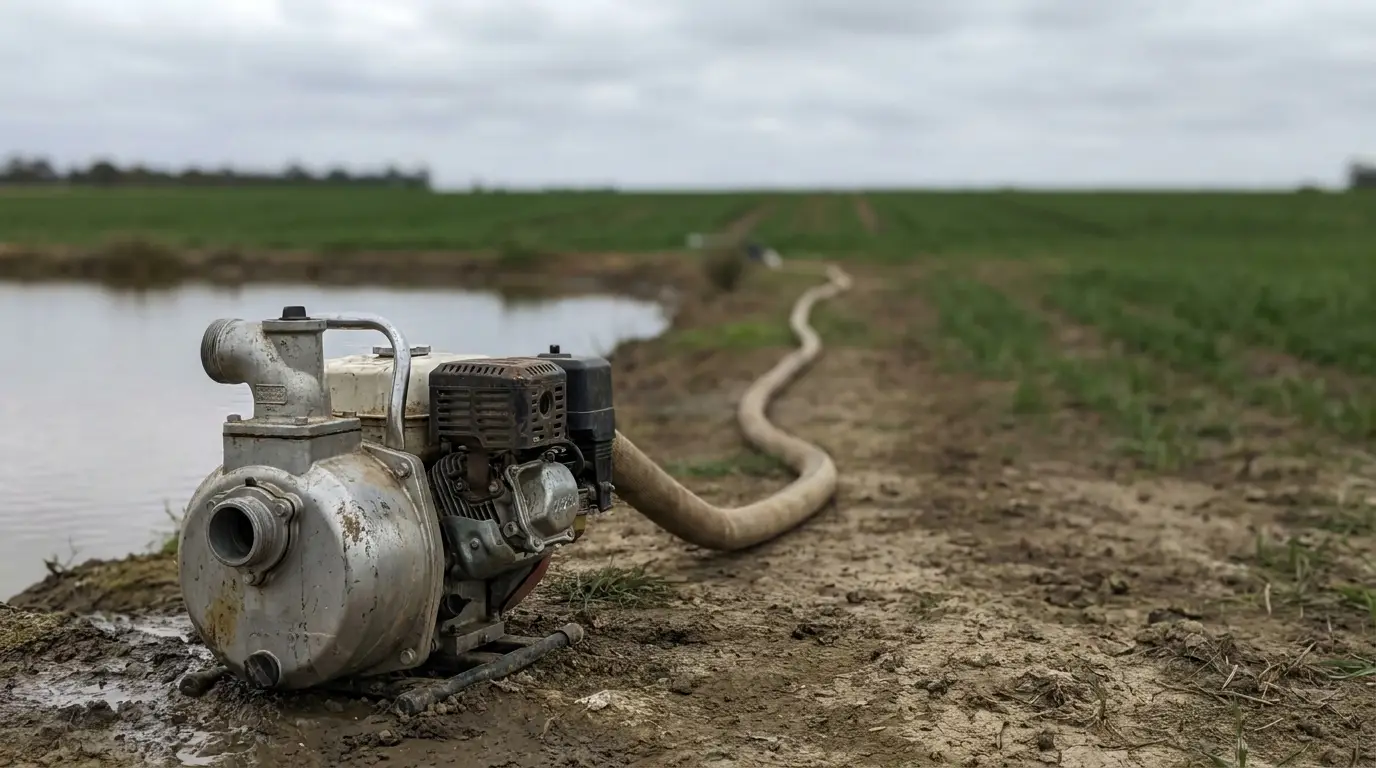
High-volume petrol irrigation pumps suit large farms and wide garden blocks. They move large amounts of water from dams, rivers, or tanks to paddocks and crop rows. As a result, they support sprinkler and drip systems that need a steady flow.
Most high-volume models use a centrifugal design. An impeller spins inside the pump and pushes water out under pressure. Therefore, these pumps deliver strong flow over flat or gently sloped land.
Many units use 4-stroke petrol engines with 2-inch or 3-inch ports. Some high-flow models can shift hundreds of litres per minute, which helps fill tanks or flood-irrigate quickly. In addition, farmers can choose standard transfer pumps or high-head versions if they need more pressure.
Petrol power suits remote areas without mains power. It also allows quick setup near a dam or creek. However, users must check fuel use, hose size, and total head to match the pump to the job.
Multi-Purpose Petrol Pumps With Extended Fuel Tanks
Multi-purpose petrol pumps suit farms and large gardens that need long work periods. Many 8HP models deliver high flow rates and strong pressure, so they can fill tanks, support irrigation, or supply fire hoses. As a result, one pump can cover several common jobs around a property.
An extended fuel tank allows longer use between refuels. Some models feature tanks around 4.5 litres, which can support up to five hours of operation on a single fill. Therefore, the operator spends less time stopping and more time completing tasks.
These pumps often include a 4‑stroke engine and a durable housing that resists wear and corrosion. In addition, quality seals and solid impellers help reduce discharge loss and keep water flow steady. This design suits water transfer, tank filling, spray rigs, and general farm use.
Property owners who manage irrigation, livestock areas, and wash-down tasks benefit most from this flexible setup.
Conclusion
The best petrol water pump for farm and garden jobs depends on clear facts such as flow rate, head height, fuel use, and build quality. A small garden may suit a compact pump with moderate output, whereas large irrigation or flood water removal calls for higher capacity and a stronger engine.
He or she should match the pump to the exact task, check fuel tank size for longer use, and confirm that parts can handle dirty or clean water as required. A careful choice based on real workload and property size leads to better performance, lower fuel cost, and fewer problems over time.