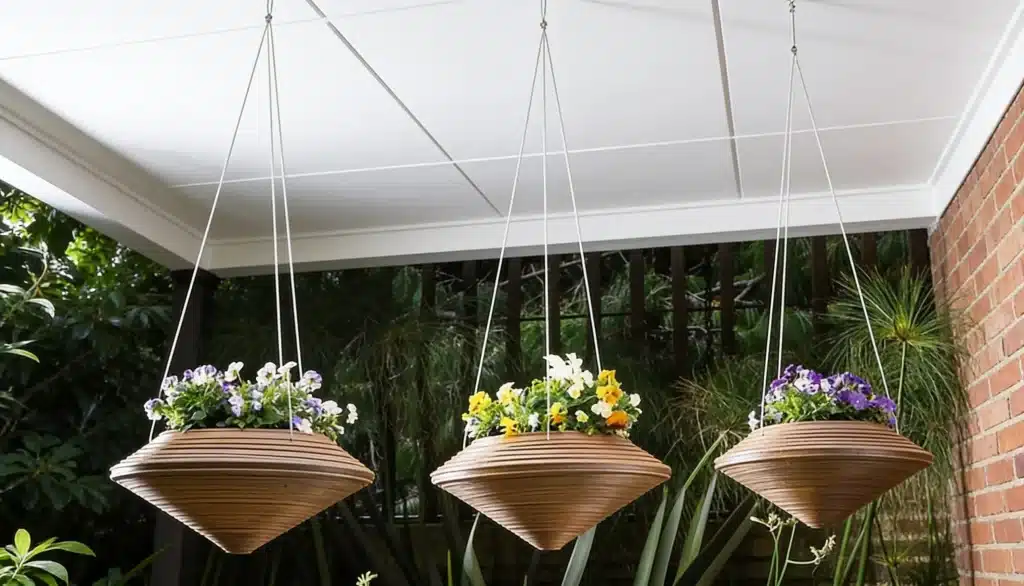
Hanging plants from your ceiling looks so beautiful.
But the hanging part is a little confusing to start with. What hooks do you use? Will your ceiling hold the weight? And many more questions, but don’t worry.
This blog will walk you through how to hang plants from the ceiling in the safest, easiest way.
Before you hang plants from the ceiling, it’s very important to find the right spot. Always look for a ceiling joist that holds the most weight.
Use a stud finder to locate it. Avoid drywall-only spots.
Pick a place near a window so your plant gets enough light.
Tools and Materials You Need to Hang Your Plants
Having the right tools makes the job much easier and safer. Before you start, gather everything on this list so it is easier when you’re assembling it!
- Stud finder
- Drill
- Ceiling hooks or swag hooks
- Screw-in plant hangers
- Wall anchors
- Measuring tape
- Pencil or marker
- Pliers
- Ladder
- Hanging basket or macramé hanger
- S-hooks or carabiner clips
- Toggle bolts
How to Hang Plants from the Ceiling: Step-By-Step
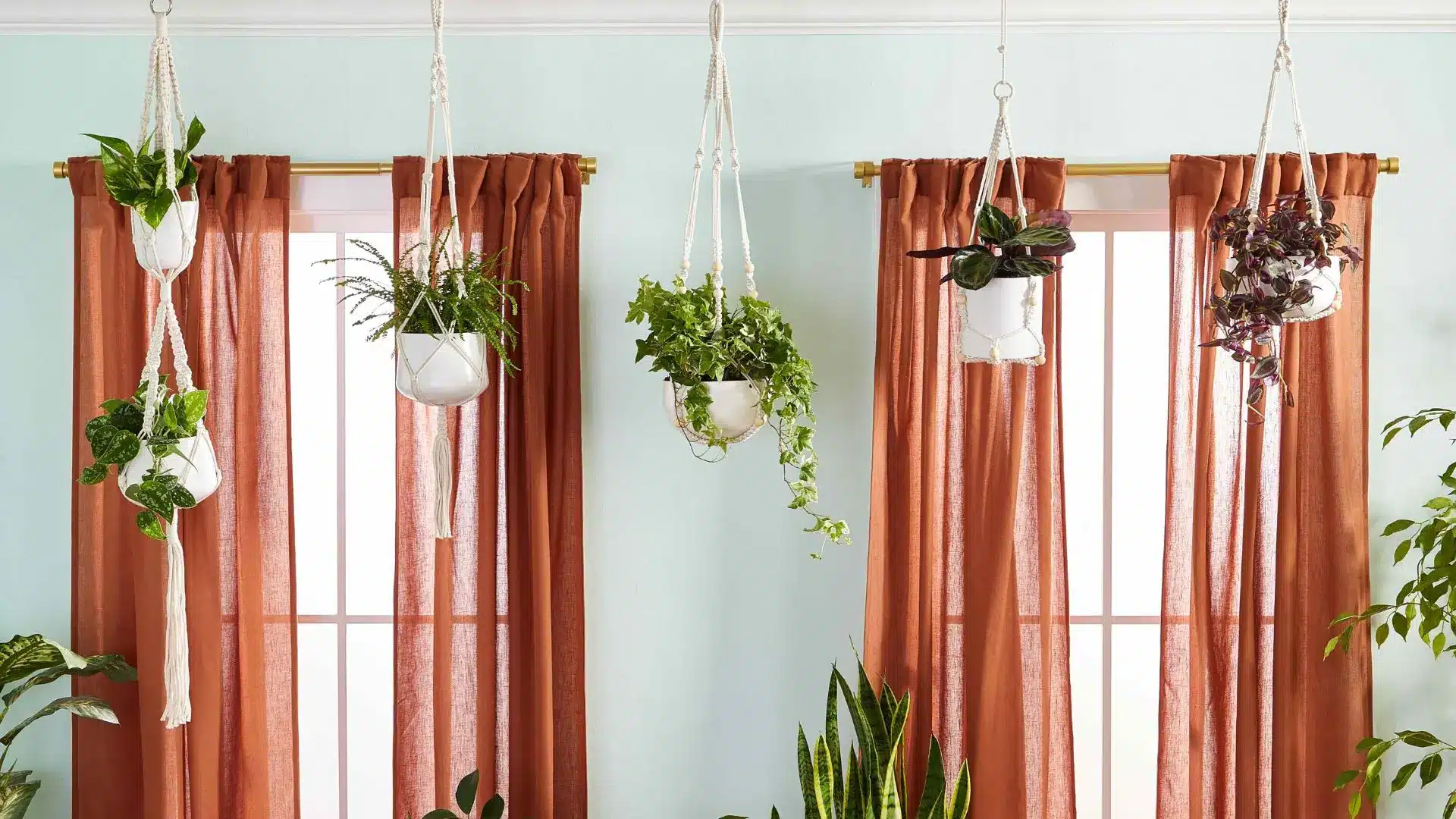
Hanging a plant from your ceiling is not as hard as it looks. Just follow these simple steps, and you will get it right the first time.
Step 1: Find the Ceiling Joist
Start by using a stud finder to locate a ceiling joist.
This is the strongest part of your ceiling. Drilling into drywall will not hold the weight of your plant. Mark the spot clearly with a pencil once you find it.
Step 2: Mark the Drilling Spot
Hold your hook or hanger up to the marked joist. Use a pencil to mark the exact spot where you will drill.
Double-check your measurement before you start drilling. A small mistake here can mean a crooked hook or a plant that doesn’t hang straight.
Step 3: Drill a Pilot Hole
Take your drill and make a small pilot hole at the marked spot. This makes it easier to screw the hook in.
Use a drill bit that is slightly smaller than your hook size. Go slow and steady.
Do not drill too deep into the joist.
Step 4: Screw in The Ceiling Hook
Now screw your ceiling hook into the pilot hole by hand or with pliers.
Turn it clockwise until it sits firm and tight. Give it a gentle tug to check if it holds. If it feels loose, do not hang your plant yet. Fix it first.
Step 5: Hang Your Plant
Attach your hanger or hanging basket to the hook using an S-hook or carabiner clip. Make sure the connection is secure before letting go.
Check the weight limit of your hook before hanging.
Step back and confirm the plant hangs straight and looks stable.
Alternate Methods to Hang Plants Without Drilling
If you live in a rented apartment, you should know how to hang plants from the ceiling without using a drill.
1. Tension Rods

A tension rod is one of the easiest no-drill options. Place it between two walls near a window or in a corner.
Make sure the rod is tight and secure. Hang your plants from the rod using s-hooks. This works best for lightweight plants and small hanging baskets.
2. Adhesive Hooks
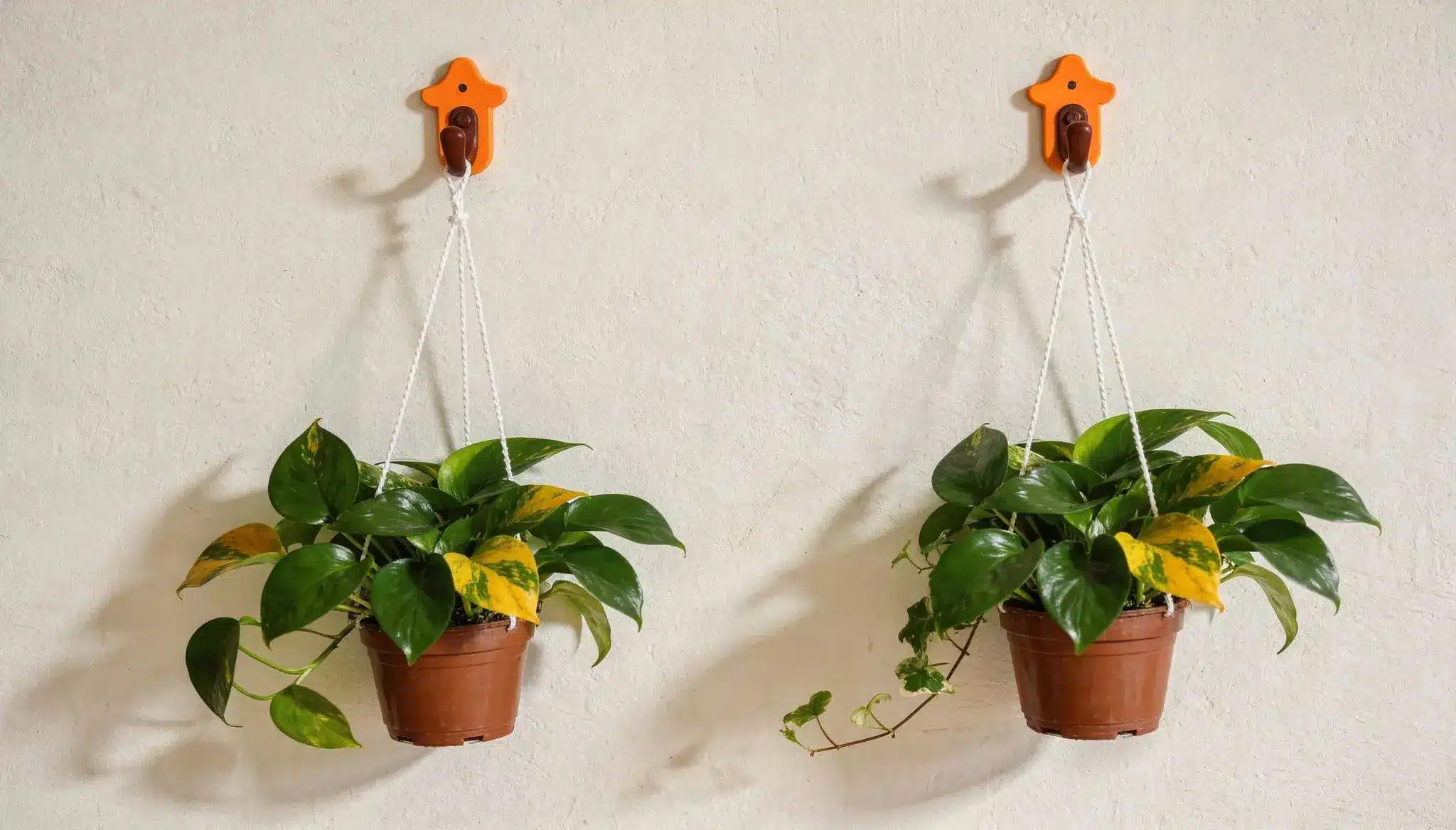
Adhesive hooks are a great option for renters.
Stick them directly onto your ceiling without any tools. Make sure the surface is clean and dry before applying.
Always check the weight limit on the packaging, as these hooks are best for small, light plants only. Remove them carefully to avoid surface damage.
3. Freestanding Plant Stands with Hanging Arms
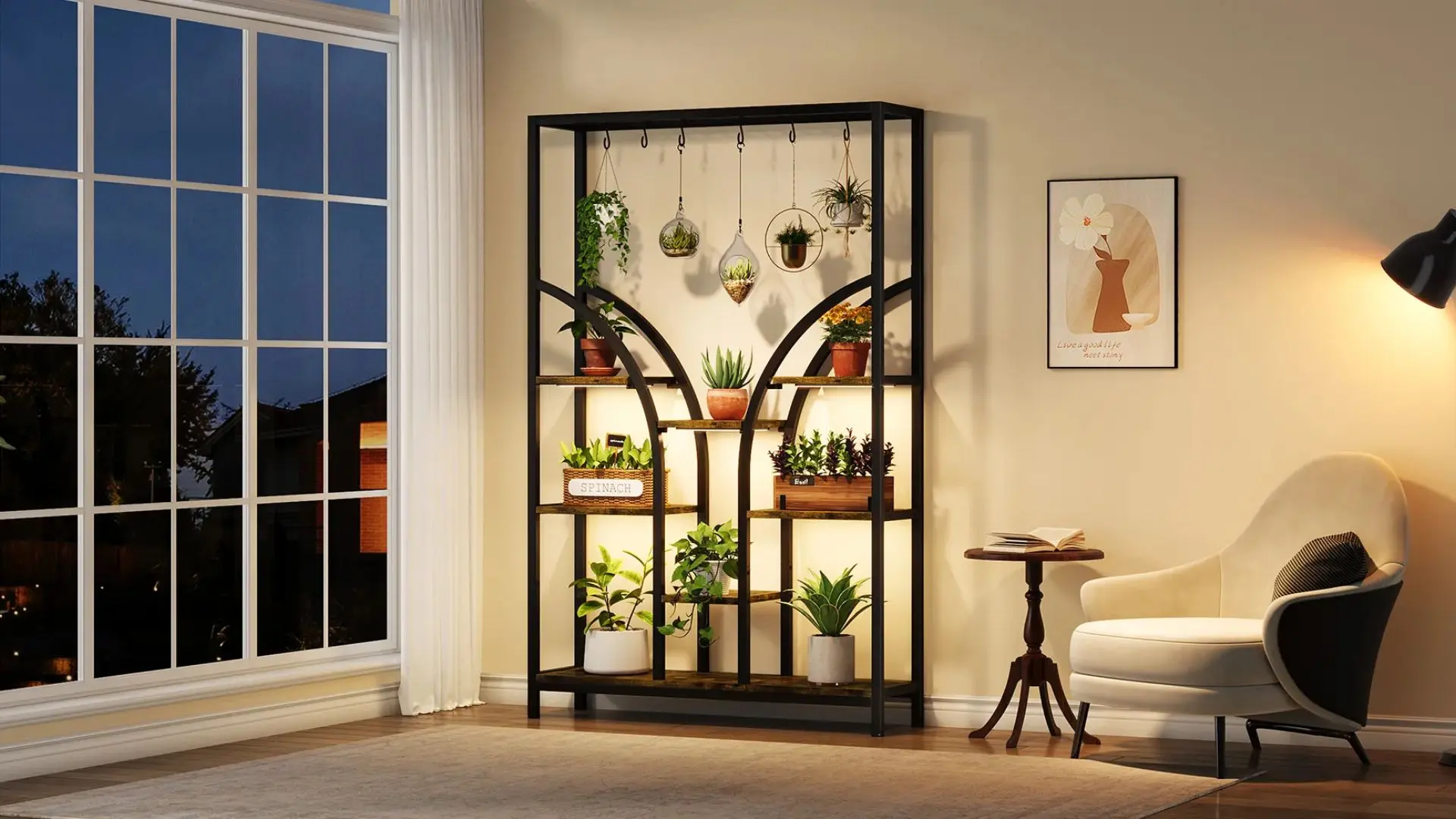
A freestanding plant stand with a hanging arm gives you the look of a ceiling plant without touching your ceiling at all.
Simply place the stand in any corner of your room. Hang your plant from the arm. You can move it around easily whenever you want.
How to Keep Your Hanging Plants Healthy?
Once your plant is up, regular care keeps it looking fresh and full of life.
- Check the soil every few days because hanging plants dry out faster than potted ones on the floor.
- Water them consistently, but do not overdo it.
- Make sure your plant gets enough light by placing it near a window.
- Rotate your plant every week so all sides get equal light.
- Trim dead leaves as soon as you spot them to keep your plant growing well.
Conclusion
Now you know how to hang plants from the ceiling safely and the right way.
Follow the steps carefully, use the right tools, and check your hooks regularly. A well-hung plant not only looks great but also stays safe.
Take your time and do it right.
Frequently Asked Questions
1. How Much Weight Can a Ceiling Hook Hold?
Most ceiling hooks hold between 15 to 30 pounds. Always check the weight limit on the packaging before hanging any plant.
2. Can I Hang Plants from the Ceiling without a Stud Finder?
Yes. You can knock on the ceiling to find a solid spot. A hollow sound means no joist. A firm sound means there is one.
3. Will Adhesive Hooks Damage My Ceiling?
Good quality adhesive hooks should not damage your ceiling. Remove them slowly and carefully. Avoid pulling them off fast as that can peel the paint.