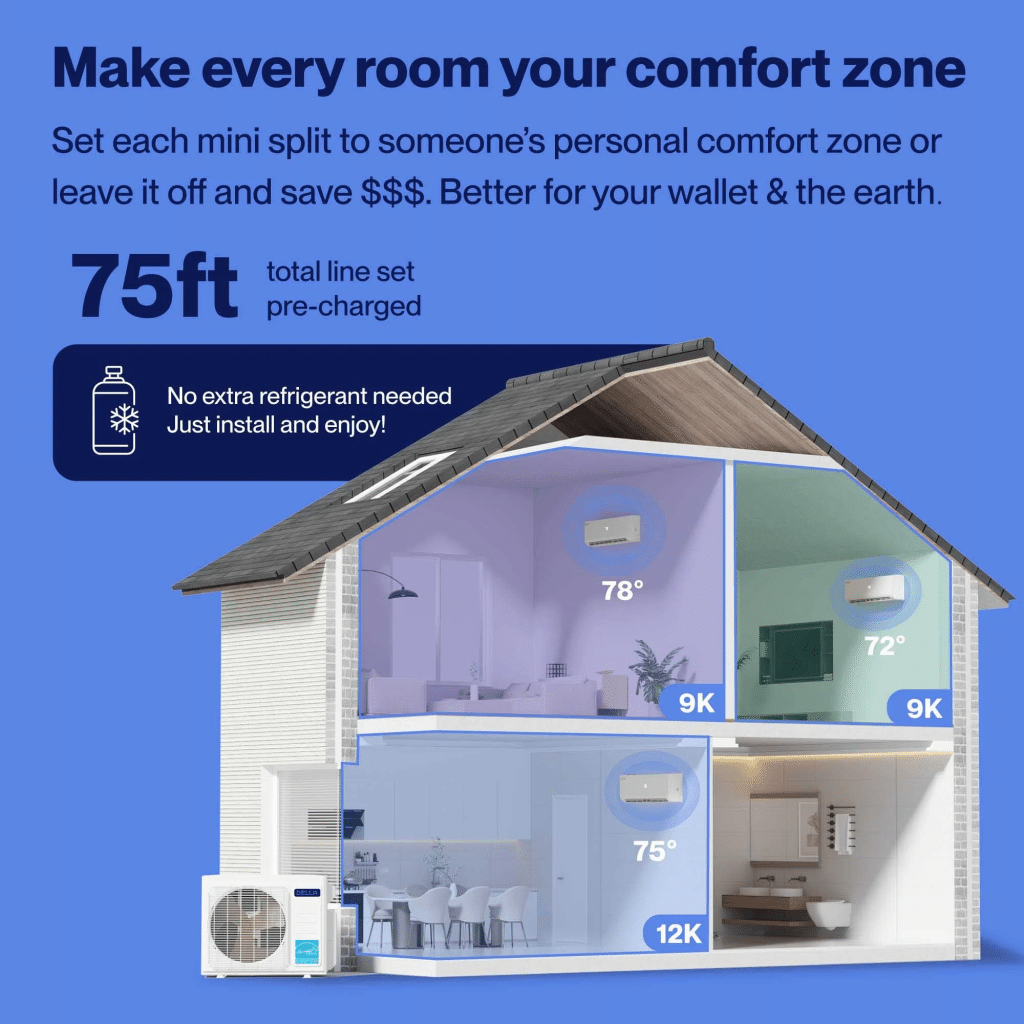
High energy bills are a common frustration for homeowners who rely on traditional HVAC systems to cool their entire home, even when most rooms are empty. A 3 zone mini split system provides a more efficient solution by allowing precise temperature control in specific areas. This targeted approach reduces wasted energy, lowers utility costs, and improves comfort throughout the home. Beyond just cost savings, zoning systems also allow faster adjustments to temperature changes, making each room more comfortable when you need it. In this article, we’ll explore why conventional systems are inefficient, how a 3 zone mini split works, and practical strategies to maximize energy savings.
Why Traditional HVAC Systems Waste Energy on Unused Rooms
Conventional HVAC systems often treat the entire house as a single zone, which means energy is used in rooms that are rarely occupied. Bedrooms, guest rooms, or storage areas continue to consume electricity even when no one is present, driving up utility bills unnecessarily. Long duct runs in central air systems also contribute to energy loss: cool air can lose up to 20% of its efficiency before reaching distant rooms. In addition, older systems may struggle to maintain consistent airflow, leading to uneven temperatures and overworked compressors. Recognizing these inefficiencies highlights why smarter, zone-based systems are increasingly popular among energy-conscious homeowners.
How 3 Zone Mini Split Systems Target Specific Rooms Efficiently
A 3 zone mini split system allows independent temperature control for three separate zones or rooms. Each indoor unit has its own thermostat, enabling precise cooling only where it is needed. For example, you can maintain a comfortable living room and home office during the day while leaving bedrooms untouched until evening. Some systems also integrate with smart home apps, allowing homeowners to adjust settings remotely or automate schedules. Because energy is concentrated only on the areas in use, mini splits use significantly less electricity compared to whole-home central air, sometimes reducing energy usage by hundreds of dollars annually depending on home size and climate.
The Energy-Saving Benefits of Zoned Cooling
By cooling only the rooms that are occupied, a 3 zone mini split can reduce overall energy consumption by 30–40% in many households. Zoned cooling improves comfort as rooms reach the desired temperature faster, and it minimizes temperature swings between different areas of the home. Additionally, running only the necessary zones reduces wear and tear on the system, potentially extending the lifespan of the equipment. Homeowners also report improved indoor air quality because filters in each zone can be cleaned or replaced individually, keeping airflow cleaner and more consistent.
Practical Tips to Optimize Your 3 Zone Mini Split for Maximum Efficiency
To maximize efficiency, consider these strategies:
- Program your thermostats: Use timers or smart thermostats to cool rooms only when they are occupied.
- Close unused doors: Prevent cooled air from escaping into empty areas.
- Regular maintenance: Clean filters and inspect units seasonally to maintain performance.
- Strategic placement: Position indoor units where airflow covers the zone evenly for faster and more consistent cooling.
- Leverage smart controls: Integrate with apps or voice assistants to create automated schedules based on daily routines.
Comparing Costs: 3 Zone Mini Split vs Whole-Home Cooling Solutions
While a 3 zone mini split may have a higher upfront cost compared to a single-zone or traditional system, the energy savings and lower operating costs typically offset this over time. Central HVAC systems often require extensive ductwork and maintenance, which adds to installation costs and long-term expenses. For homes with multiple rooms that aren’t always in use, a 3 zone mini split provides targeted comfort and efficiency, making it a more cost-effective and energy-conscious choice for modern households. Over several years, the combination of lower energy bills and reduced wear on the system can result in substantial savings, making the initial investment worthwhile.