While natural light is a major selling point with any glazed roof, there are real obstacles to overcome if that glass is going to sit flat. The awkward truth is that any horizontal plane will collect dirt over time, and this is as true of a flat rooflight as it is of a conservatory roof or your car’s windscreen.
The Deep-Plan Darkness Problem
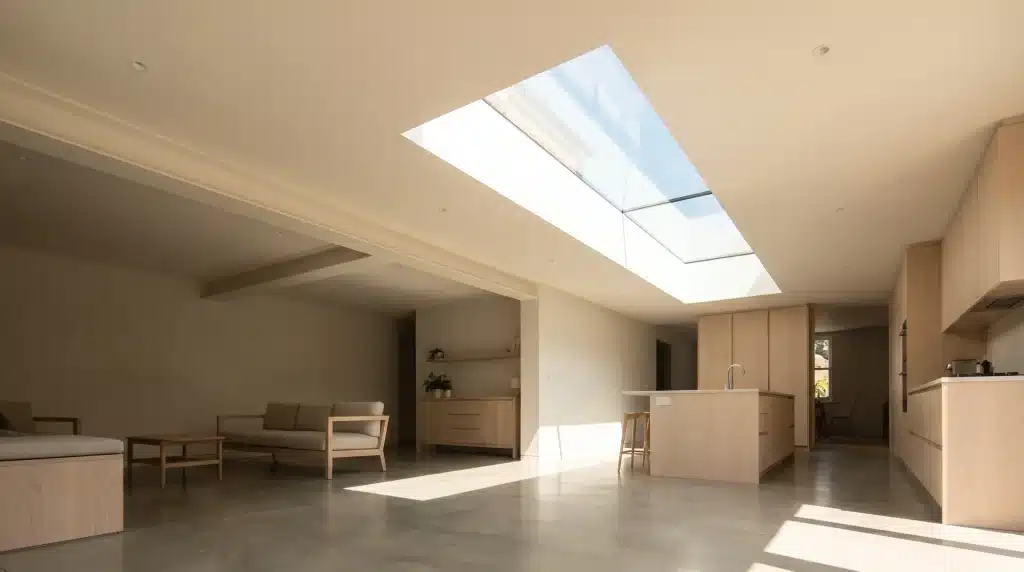
When a flat roof extension extends several metres into a garden, the rooms at the back of the original house lose direct access to natural light. This is what architects call deep-plan living, and it’s one of the most common complaints about rear extensions that weren’t designed with daylighting in mind from the outset.
Overhead skylights are the most direct fix, and not just in a modest way. According to research by the Active House Alliance, roof windows admit up to twice as much natural light as vertical windows of the same size. That difference matters when you’re trying to bring light into the core of a floor plan rather than just illuminating a perimeter wall.
Managing Solar Heat Gain
An overhead glass doesn’t act like a window in a wall. It directly faces the sky, meaning it is exposed to direct sunlight much longer each day compared to a vertical surface. This situation may cause substantial solar heat gain in summer which is the thermal load that accumulates within a glazed structure as the sun heats the surface hour by hour.
The consequence in any given building extension might be a space that is uninhabitable for roughly five months of the year.
The solution lies in the glass itself. Solar-control films, and low-emissivity (low-E) coatings restrict the volume of infrared radiation that can pass through the glass while still transmitting visible light. The overall U-value of the complete assembly, a measure of how much heat can pass through, must comply with building regulations concerning the energy performance of new and refurbished openings. In reality of course, many products exceed the minimum requirements.
This is where the roof light manufacturer’s choice comes in. Producers who design products for flat roof installations in extension projects such as sunsquareskylights.com/ know that solar gain and insulation performance should be considered at an early design stage as a single, inter-related performance criterion, not as two separate afterthoughts.
Water Pooling and Why the Angle Matters
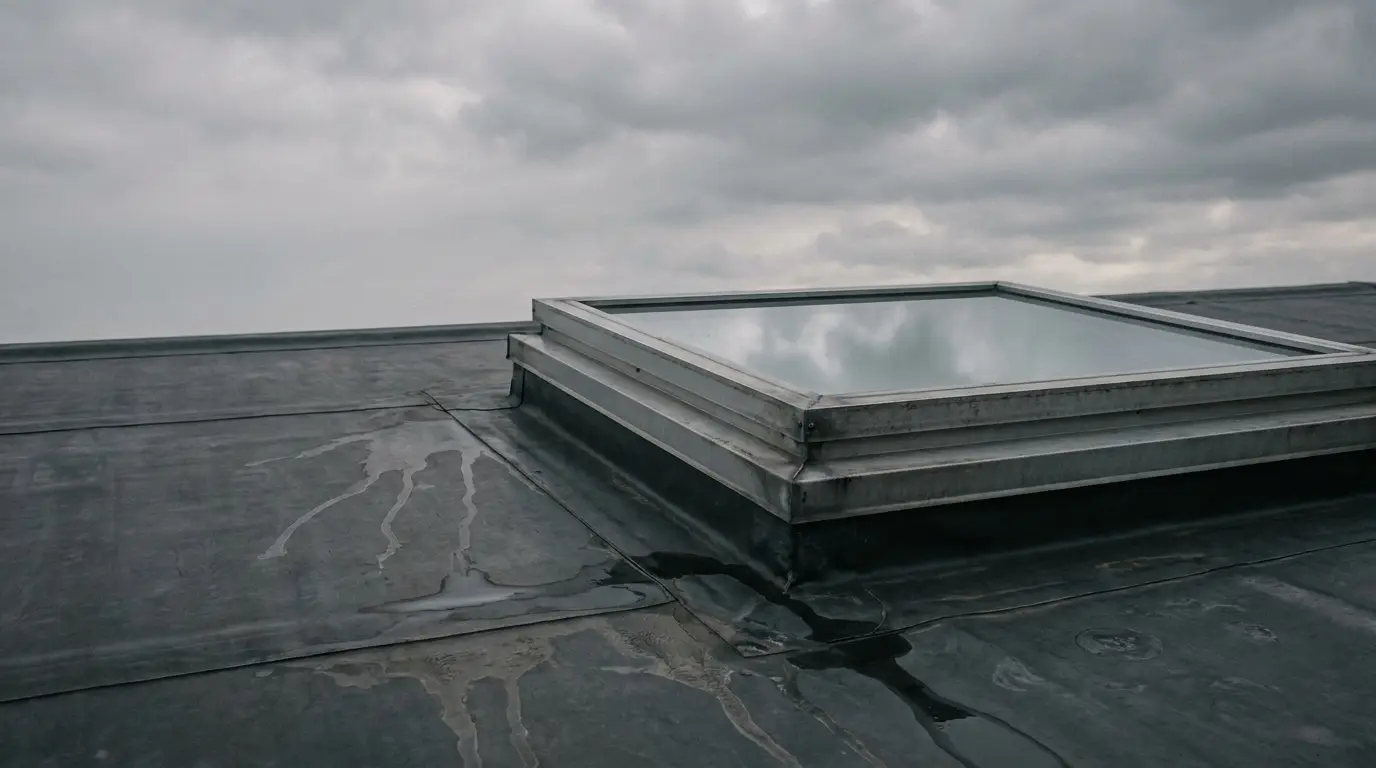
A flat roof is never entirely flat. Likewise, a skylight installed on one can never be truly level either.
The pooled water is the greatest foe of any flat roof system. Its ponding, however minor the area, would hasten the degradation of the membrane and overload the glazing seals. A flat roof’s ability to optimally drain water and dirt requires a skylight to be installed on a weathered upstand; i.e., a raised curb posed at least 3 to 5 degrees. This isn’t arbitrary. It’s a critical safety standard that determines the skylight products that can even be considered for a certain space.
The height of the upstand has a similar function; it helps lift the glazing unit over any standing water which might accumulate at the roof level before it’s drained. Next, it provides a fixing point which isolates the structural roof make-up from the glazing mechanism.
The joist spacing beneath the roof presents the next consideration. Standard skylight widths are designed to fit into typical joist centres. If you move beyond that without enhancing the structure, you sacrifice the roof’s ability to bear loads.
Thermal Breaks and Condensation Risk
Since aluminium isn’t the most insulating material, without correctly specifying the thermal break area, you could still face the problem of cold transferring through the frame and condensation forming on the inside. Insist on detailed technical information around materials, dimensions, and the type of thermal break (this varies too) so you can make a genuinely informed choice.
Safety Standards for Overhead Glazing
The way glass breaks overhead is not the same as on a wall. Shattered glass falls. The safety requirements for overhead glazing know this and demand toughened glass to resist impact and thermal stress for the outer pane, and laminated, bonded layers that hold together when broken, so to minimize the risk of a major falling hazard.
It is easy to see how an extension, particularly one down the side return that is flanked on either side by the neighbors, hampered by eaves, and now has the loss of light from the new extension to contend with, deserves a roof light. How else will it see any daylight? That glass is far more complex than an element of the building that is purely aesthetic.