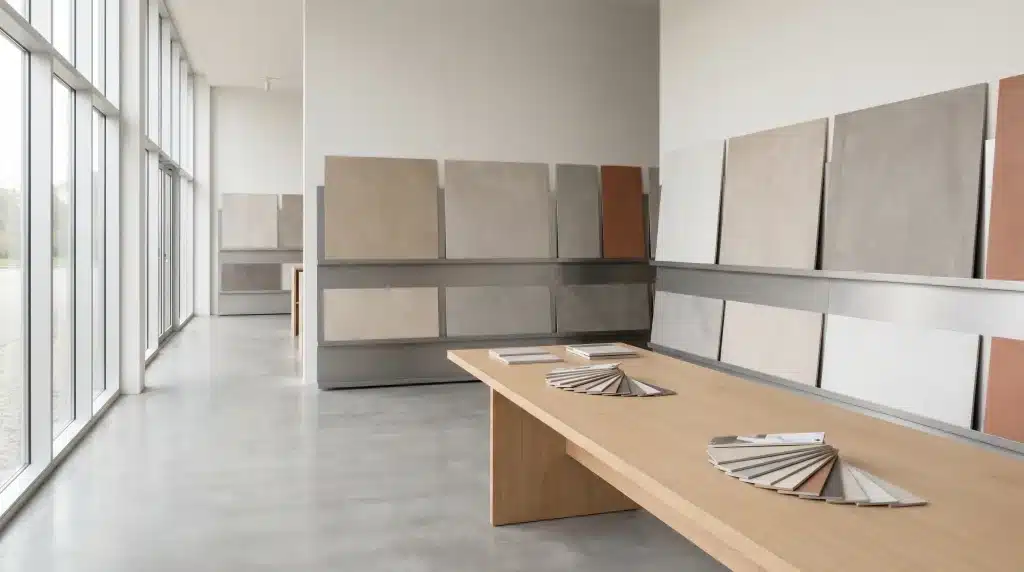
Here’s an uncomfortable truth for tile distributors in the U.S.: your inventory isn’t your competitive advantage anymore. In an oversaturated home improvement market where dozens of competitors stock similar products from similar manufacturers, what separates the thriving showroom from the struggling one isn’t what’s on the shelves — it’s how the space itself makes people feel, decide, and buy.
A well-designed showroom functions as a high-performance sales ecosystem. Inspiration flows naturally. Customers move through the space with confidence rather than confusion. The dreaded “analysis paralysis” that kills deals in cluttered environments gets replaced by something far more valuable — a fluid, professional, and genuinely exciting creative journey.
And here’s the thing that makes this more than just a design conversation: your floor space is almost certainly your most expensive asset. Every square foot that isn’t actively contributing to a sale is a square foot costing you money. Optimising that space isn’t an aesthetic indulgence. It’s a financial imperative.
These ten strategies will show you exactly how to make it happen.
1. Minimalist Visual Architecture — Let the Tile Do the Talking
The instinct to fill every available surface with product is understandable. More options means more chances to match what the customer wants, right? In theory, perhaps. In practice, visual clutter overwhelms people and slows decisions to a crawl.
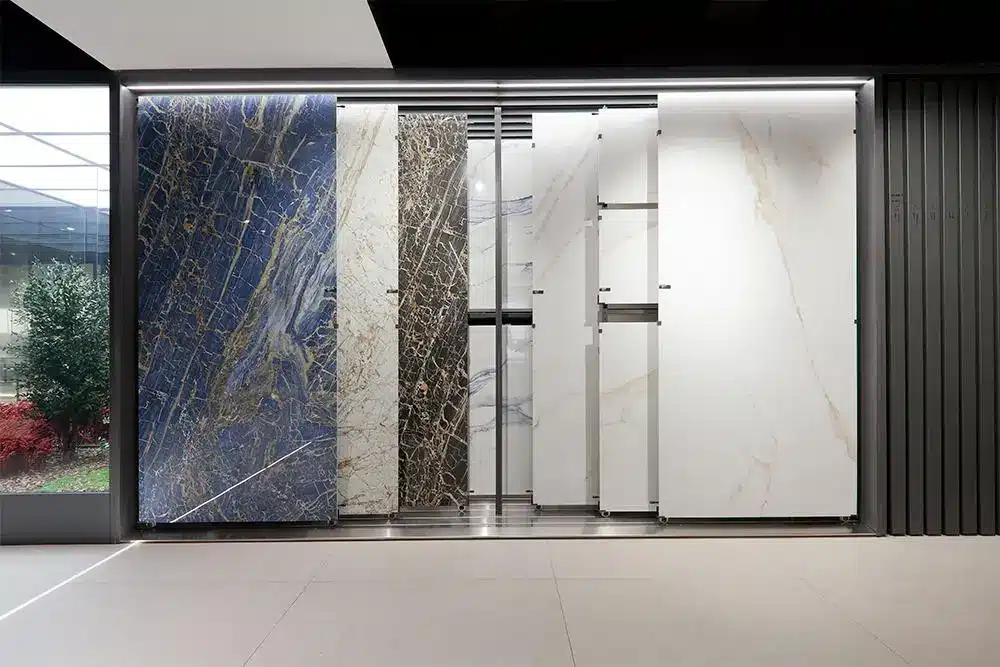
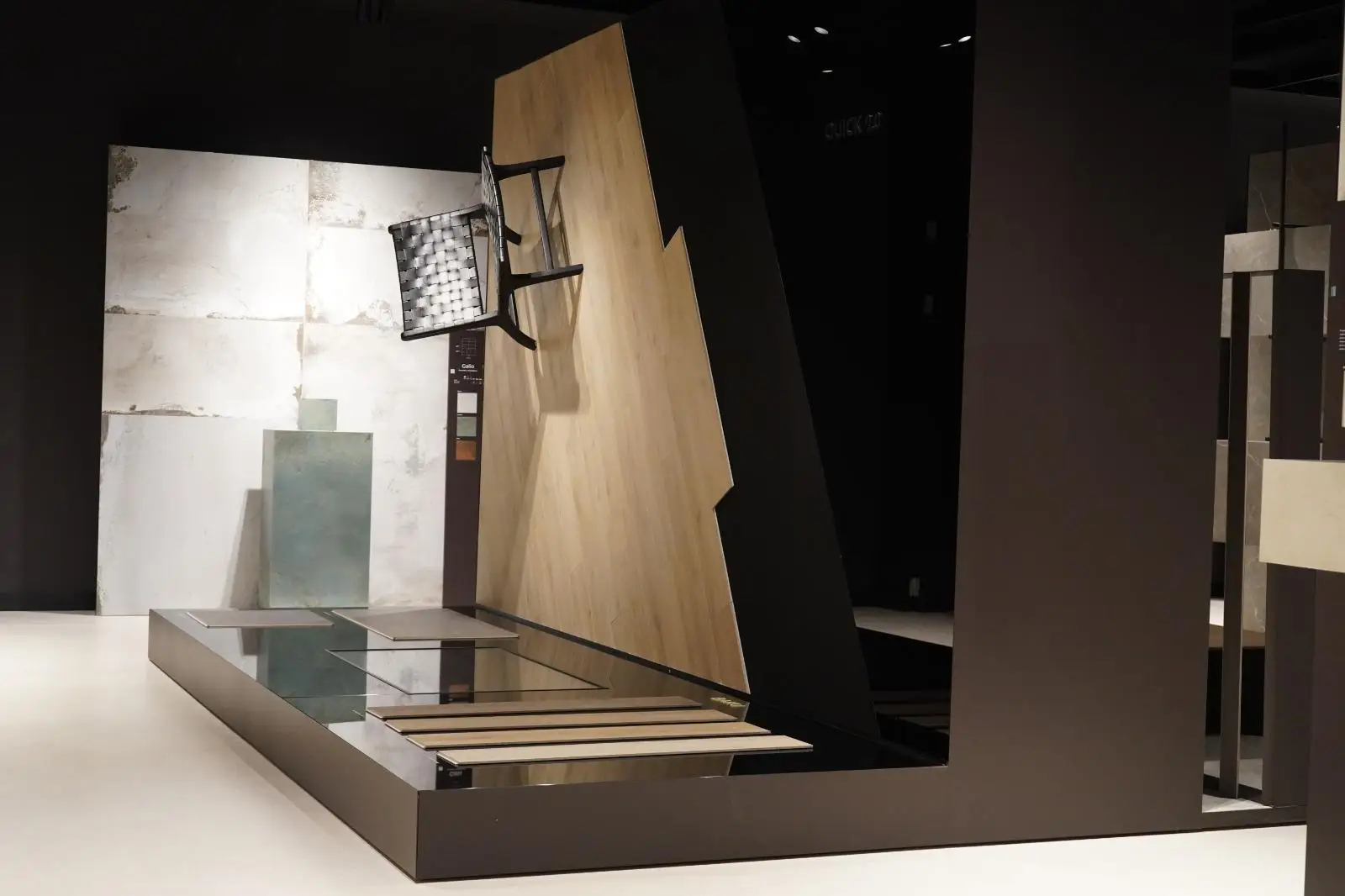
The “less is more” principle isn’t just a design cliché — it’s a proven retail strategy. Sleek, low-profile tile showroom displays keep the ceramic itself as the undisputed centre of attention. No heavy frames competing for the eye. No noisy structures distracting from the material’s natural beauty.
When the infrastructure disappears visually, something powerful happens: the product’s quality speaks for itself. Customers stop noticing the display and start experiencing the tile. That shift in perception is worth more than most retailers realise.
2. High-Engineered Extraction Systems — Quality You Can Feel
There’s a moment in every showroom visit that most distributors overlook — the instant a customer physically interacts with a sample for the first time. That moment shapes everything that follows.
If pulling out a panel requires effort, sticks halfway, or makes an unpleasant sound, the subconscious message is clear: this isn’t a premium environment. But when even the heaviest, most oversized samples slide out effortlessly on precision-engineered mechanisms, the message flips completely. Luxury. Technical excellence. Attention to detail.
Customers instinctively associate that smoothness with the quality of the material itself. It’s not rational — it’s psychological. And it works every single time. The engineering behind the display becomes an invisible but powerful sales tool that elevates the perceived value of your entire catalogue.
3. Dedicated XL Format Showcases — Go Big Without Going Wrong
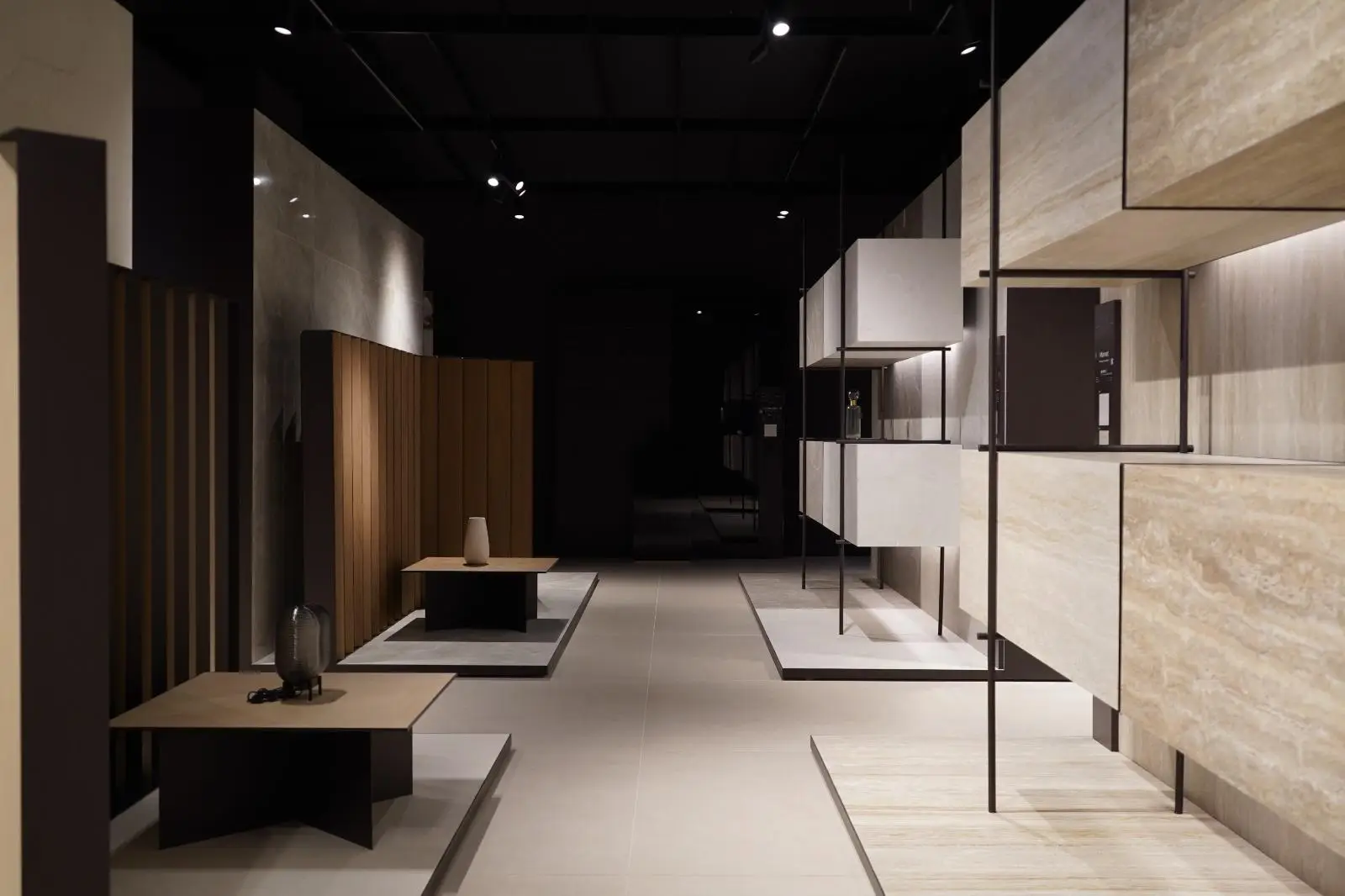
Large-format porcelain slabs have moved from niche luxury into mainstream demand. Ten-foot pieces are now standard specifications for high-end residential and commercial renovations across the country. But presenting them properly remains a genuine challenge for most showrooms.
The stakes are high — literally. A poorly secured XL slab is a safety hazard, a liability risk, and a confidence killer. No client is going to commit to a premium material if the display makes them nervous.
Robust support systems with invisible fastenings solve this completely. They allow these massive pieces to be displayed with absolute stability while keeping the visual presentation clean and unobstructed. The client experiences the seamless beauty and design continuity of the slab without distraction from visible hardware or bulky frames.
That uninterrupted visual experience is often the deciding factor on high-budget architectural projects where material selection happens in person.
4. Tactile Sample Libraries — The Emotional Bridge to a Sale
Online shopping can show customers what a tile looks like. Only a physical showroom can show them what it feels like. That distinction is your most powerful advantage — but only if your space is designed to encourage touch.
Organising samples in easy-access, interactive systems invites customers to physically engage with textures, finishes, and surfaces. This isn’t a casual nice-to-have. The tactile connection between a person’s fingers and a material’s surface creates an emotional response that no screen can replicate.
Think of it as a bridge. On one side, there’s casual browsing interest. On the other, there’s a finalised sale. The physical act of touching, comparing, and holding samples is what carries the customer across. Showrooms that make this process effortless convert at dramatically higher rates than those that keep samples locked behind glass or stacked in hard-to-reach corners.
5. Full-Spectrum LED Lighting — Stop Losing Sales to Colour Surprises
Few things damage a distributor’s reputation faster than a colour complaint after installation. The customer chose a warm beige in the showroom, but it looks grey at home. The showroom lighting was flattering; the reality wasn’t. Now you’ve got a return, a frustrated client, and a review that hurts.
This is entirely preventable. Full-spectrum LED lighting that mimics natural daylight ensures that the tile’s appearance in the showroom matches what the customer will see in real-world conditions. No artificial warmth distorting hues. No cool-toned overheads washing out richness.
The investment in proper lighting pays for itself through reduced returns, fewer complaints, and — perhaps most importantly — the confidence customers feel when they know they’re seeing the true colour. That confidence accelerates purchase decisions significantly.
6. Collaborative Design Hubs — From Supplier to Strategic Partner
The most profitable tile distributors in America aren’t just selling materials. They’re positioning themselves as creative partners in the design process. And the physical environment of the showroom is what makes that positioning credible.
Ergonomic worktables where architects, designers, and homeowners can sit down, spread out samples, and mix and match materials transform the store from a transactional space into a professional design studio. Projects come to life at these tables. Decisions get made. Relationships deepen.
For architects especially, having a dedicated space to work with materials under proper conditions is enormously valuable. It saves them time, gives them confidence in their selections, and creates loyalty that translates into repeat specification business — the kind of recurring revenue that sustains a showroom year after year.
7. Dynamic Inventory Rotation — Freshness Sells
The American market thrives on novelty. Seasonal trends shift quickly, new collections launch constantly, and customers who visit regularly expect to see something new. A showroom that looks identical every time someone walks in starts feeling stagnant — and stagnant environments don’t inspire purchases.
Modular display systems solve this brilliantly. Your team can swap out collections in minutes, refreshing the visual presentation without construction, without contractors, and without downtime. The showroom stays current. New arrivals get immediate visibility. And your brand maintains its reputation for innovation and relevance.
A good rule of thumb: if a regular customer can visit three times and see the same layout each time, your rotation cycle needs attention.
8. Lifestyle-Based Zoning — Help Customers See the Finished Room
Most showrooms organise tiles by manufacturer, format, or material type. It makes perfect logistical sense — and it’s completely wrong from a customer psychology perspective.
People don’t think in terms of porcelain versus ceramic or 60×60 versus 30×60. They think in terms of outcomes. “I want my bathroom to feel like a spa.” “I want my kitchen to look modern and clean.” “I want something warm and rustic for the living room.”
Organising your space by lifestyle or design style — Modern, Farmhouse, Transitional, Industrial — allows customers to visualise complete applications rather than staring at isolated pieces of ceramic wondering how they’d work together. This intuitive navigation dramatically shortens the decision-making process and increases average order values because customers buy coordinated schemes rather than individual tiles.
9. Phygital Synchronisation — Bridging the Physical and Digital
The physical showroom experience is irreplaceable. But that doesn’t mean digital tools can’t enhance it powerfully.
Integrating QR codes or interactive screens alongside physical displays creates a complementary layer of information and inspiration. A customer holding a sample can scan a code and immediately see that exact tile applied in a digital render of a modern bathroom, a commercial lobby, or an outdoor terrace. They see context. They see possibility. And that context provides the confidence many buyers need to commit.
This “phygital” approach — physical product supported by digital visualisation — doesn’t replace the tactile experience. It amplifies it. And for younger buyers especially, who expect seamless digital integration in every retail environment, it signals that your business is forward-thinking and technologically competent.
10. Private Comfort Zones for Closing — Where Deals Get Done
The browsing phase is exciting. The comparison phase is stimulating. But the final decision — the moment a customer commits to a significant purchase — requires something different entirely: calm, comfort, and a sense of personal attention.
A private advisory area with comfortable seating, refreshments, and a quieter atmosphere humanises the transaction. It eases the psychological transition from inspiration to commitment. The customer isn’t standing in an aisle under fluorescent lights making a decision that could cost thousands of dollars. They’re sitting comfortably, being looked after, and feeling valued.
Never underestimate this final step. Many showrooms invest heavily in the browsing experience and then lose deals at the finish line because the closing environment feels transactional rather than personal. A dedicated comfort zone fixes that — and the return on a few comfortable chairs and a coffee machine can be extraordinary.
Conclusion: Every Square Foot Should Be Closing Your Next Deal
Transforming a showroom isn’t a vanity project. It’s a direct investment in your brand’s longevity, authority, and profitability. These ten strategies work together as a system — each one reinforcing the others to create an environment where customers move naturally from inspiration through selection to commitment.
Tile distributors who adopt this approach aren’t just upgrading their look. They’re professionalising their service, increasing the perceived value of their entire catalogue, and securing a competitive edge that’s genuinely difficult for rivals to replicate.
The question isn’t whether you can afford to invest in your showroom. In the demanding North American market of 2026, the real question is whether you can afford not to.