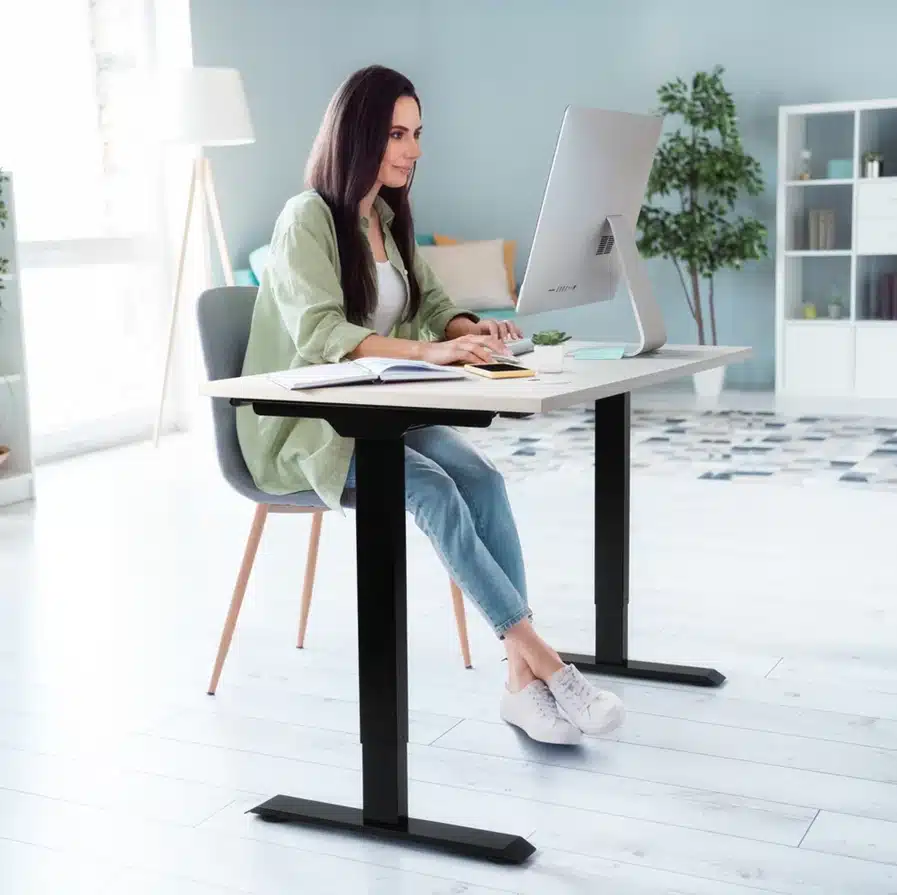
The standing desk category has a reputation for being expensive that it no longer fully deserves. The high end of the market is still expensive. But the middle and lower end have developed enough that genuinely usable sit-stand setups are available at prices that would have bought a mediocre fixed desk a few years ago.
Knowing where the quality floor actually is, and what separates a budget desk worth buying from one that will disappoint within a year, is the useful information. Most buying guides in this category either talk down to the budget end or oversell it. This is an attempt at something more honest.
What the Budget Actually Buys Now
The entry-level standing desk market has improved significantly. Single motor frames that operate quietly, height ranges that cover most adults properly, controllers with memory presets. These were premium features a few years ago and are now available at price points that make sit-stand functionality genuinely accessible.
What the budget doesn’t buy is dual motor stability, premium surface materials, or the frame construction quality that holds up to commercial-level daily use over many years. Those things cost more for real reasons and the gap is worth understanding rather than dismissing.
For home office use, which typically means one person, lighter equipment loads than commercial settings, and a less aggressive duty cycle than a shared office desk, the single motor entry-level frame is adequate for most people. The wobble that becomes significant at full standing height in a commercial setting with heavy equipment is less noticeable with a single monitor and standard peripherals.
The Frame-Only Option
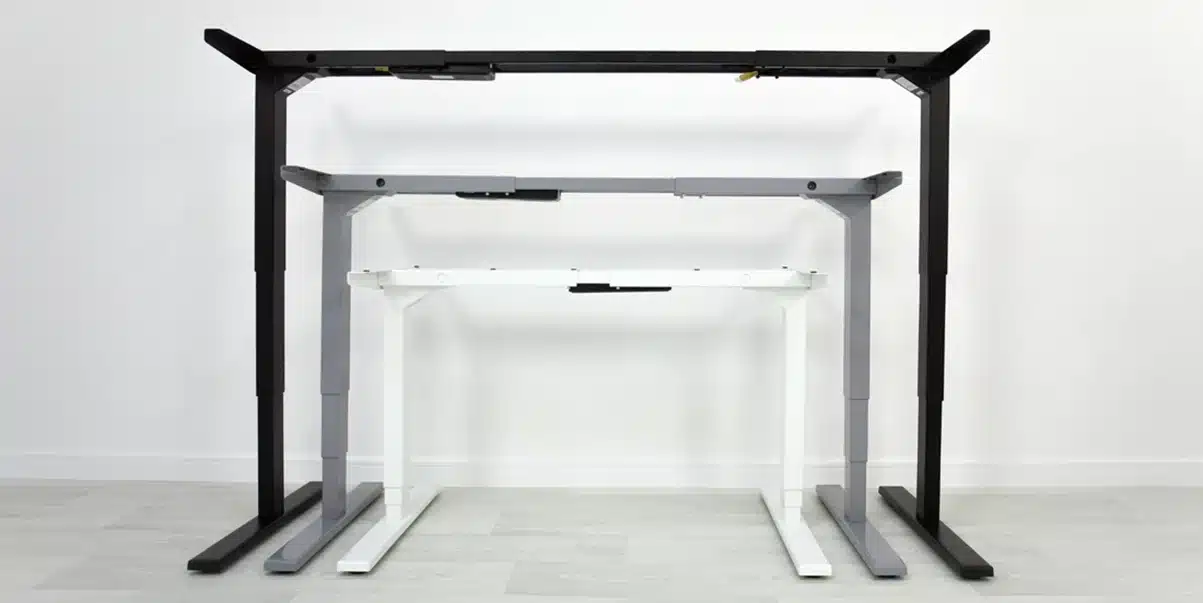
One of the genuinely underused budget strategies is buying a standing desk frame separately from the surface.
Most standing desk packages sell the frame and desktop together, and the desktop is often where the cost is padded. A solid hardwood or butcher block top from a hardware store, cut to the dimensions you need, mounted to a quality motorised frame, produces a desk that outperforms comparably priced all-in-one packages on surface quality while keeping the total cost reasonable.
The frame does the mechanical work. The surface is what you touch every day and what the room sees. Splitting the purchase lets you put more of the budget toward each where it matters rather than accepting whatever surface came bundled with the frame you wanted.
This approach also allows the surface to be personalized. Finish it yourself with an oil or wax to the colour and sheen level that suits the room. A butcher block top with a custom finish in a home office that has been decorated thoughtfully reads entirely differently from a standard laminate desktop in the same frame.
What to Look For at the Budget End
Memory presets on the controller. This sounds like a convenience feature and is actually the feature that determines whether the desk gets used as a sit-stand desk or as an expensive fixed desk. Without presets, finding the right height each time introduces enough friction that most people stop adjusting. With presets, switching positions takes one button press and happens automatically throughout the day.
Height range matters and varies more than product listings make clear. The seated minimum needs to be low enough for shorter users with chairs at the right height. The standing maximum needs to reach a comfortable working height for taller users. Check the actual numbers against your own seated and standing elbow heights rather than assuming the range covers you.
Weight capacity matters more than the numbers suggest. A frame rated for 70 kilograms that’s routinely used at 65 kilograms will wear faster than one rated for 100 kilograms at the same load. If you’re putting two monitors and associated equipment on the desk, add that up honestly and find a frame with meaningful margin above it.
Noise during operation is hard to assess from a listing and easy to notice in daily use. A motor that’s audible to everyone in earshot every time you adjust the desk gets noticed. User reviews that specifically mention motor noise over time, not just initial impressions, are the most reliable indicator of this.
A Cheap Standing Desk vs a Cheap-Looking Standing Desk
A genuinely budget standing desk with a quality motorised frame, a decent height range, and presets on the controller but a basic laminate surface is a good purchase. The laminate will show wear before the frame does, but for many years it’s functionally fine.
A desk that looks cheap in the room because the frame finish is poor, the surface edges are poorly finished, or the proportions are slightly off is a different problem. It’s not about how much was spent. It’s about whether the product was designed with any attention to how it actually reads in a home.
Finish quality is often where this shows up most. A white frame with a clean powder coat that doesn’t chip looks better in a room than a white frame that shows brush marks or small blemishes at the welds. These are manufacturing details that don’t cost significantly more to do well but reflect whether anyone was paying attention.
Making It Look Like It Belongs
The desk is one of the larger pieces of furniture in a home office and probably the most visible during video calls. Getting it to sit comfortably in the room without looking like office equipment dropped into a domestic space is worth some thought regardless of the budget.
Frame colour should relate to other metal finishes in the room. White if other hardware is pale or the room uses light tones. Black or grey if the room has darker or warmer metal finishes. This is a two-minute decision that makes a noticeable difference in how resolved the setup looks.
Surface finish is where a frame-only purchase has the most design flexibility. A stained and oiled butcher block desktop can be matched to the room’s existing wood tones. A painted surface in a colour that picks up something from the wall treatment. These options don’t exist with a standard bundled desktop, but they’re accessible when the surface is chosen separately.
Cable management is the finishing detail that either makes the setup look deliberate or makes it look accumulated. A cable tray under the surface costs very little and keeps the desk looking organised. Skipping it is why so many budget home office setups look worse than the individual pieces deserve.
Budget doesn’t have to mean provisional. The right purchases at the right price points produce a workspace that functions well, holds up over time, and looks like it was put together with intention. The gap between that and a premium setup is smaller than it used to be.