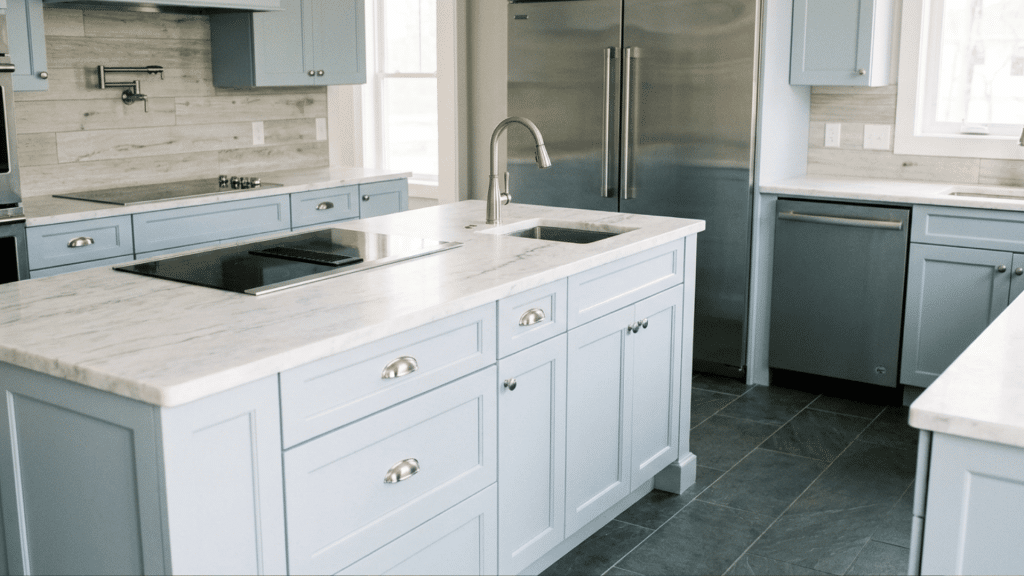
Picking a new countertop is a big decision. There are so many materials, price points, and brands out there. MSI makes that choice a lot simpler.
They offer quartz, natural stone, and porcelain options that suit almost any kitchen or bathroom style. But does MSI actually deliver on quality?
This blog breaks down MSI countertop materials, popular styles, pricing, and MSI’s comparison to other brands.
By the end, you will know which surface fits your home, how to keep it looking good, and whether MSI is worth your money.
What are MSI Countertops?
MSI Surfaces is one of North America’s largest countertop distributors. Their most popular product is Q Premium Natural Quartz, an engineered stone made of about 93% natural quartz crystals bound with resins and pigments.
It is non-porous, scratch-resistant, and never needs sealing.MSI also carries natural stone options like granite, marble, quartzite, and travertine.
For outdoor kitchens, they offer weather-resistant porcelain slabs. Butcher block wood surfaces round out their lineup.
What makes MSI stand out? Low upkeep. No waxing, no sealing, just a quick wipe-down.
The quartz is hard enough to resist chips and scratches from daily use. Plus, many MSI quartz products carry GREENGUARD, LEED, and NSF certifications for air quality and food safety.
MSI Countertop Materials: Complete Breakdown
MSI offers three main countertop materials, each of which performs differently depending on how a kitchen or bathroom is used.
Quartz Countertops
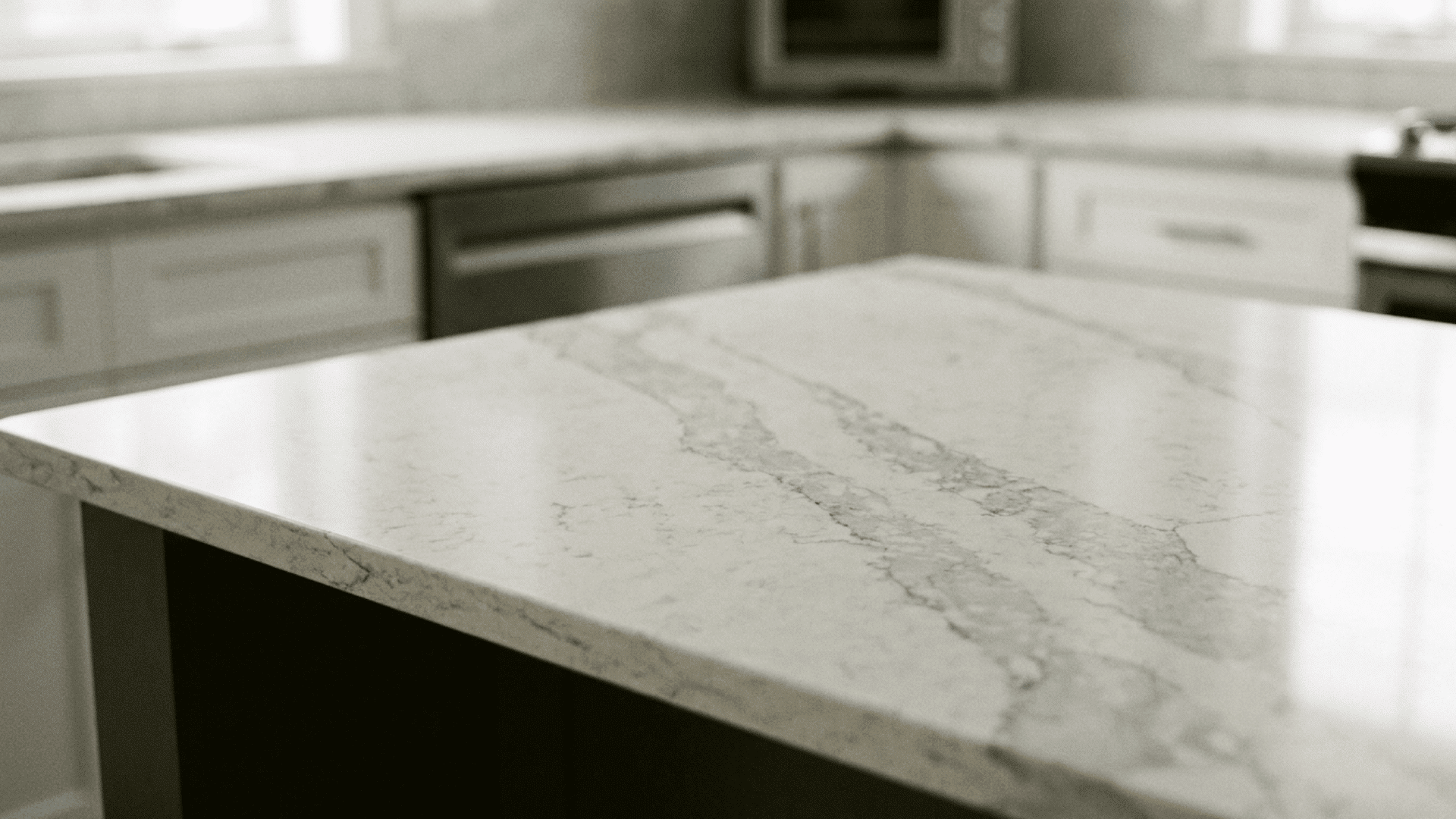
MSI quartz is built from natural quartz crystals bonded with resin and pigments. The surface is hard, non-porous, and never needs sealing.
It resists stains, scratches, and chips from daily use. Colors stay consistent across slabs, making installation easier.
- Pros: no sealing, stain-proof, scratch-resistant, low maintenance, works in kitchens and bathrooms.
- Cons: damaged by direct heat, not for outdoor use, higher cost than tile or laminate.
- Best for: busy families and low-maintenance homes.
- Skip: If you cook with high heat or need an outdoor surface.
Natural Stone: Granite, Marble & Quartzite
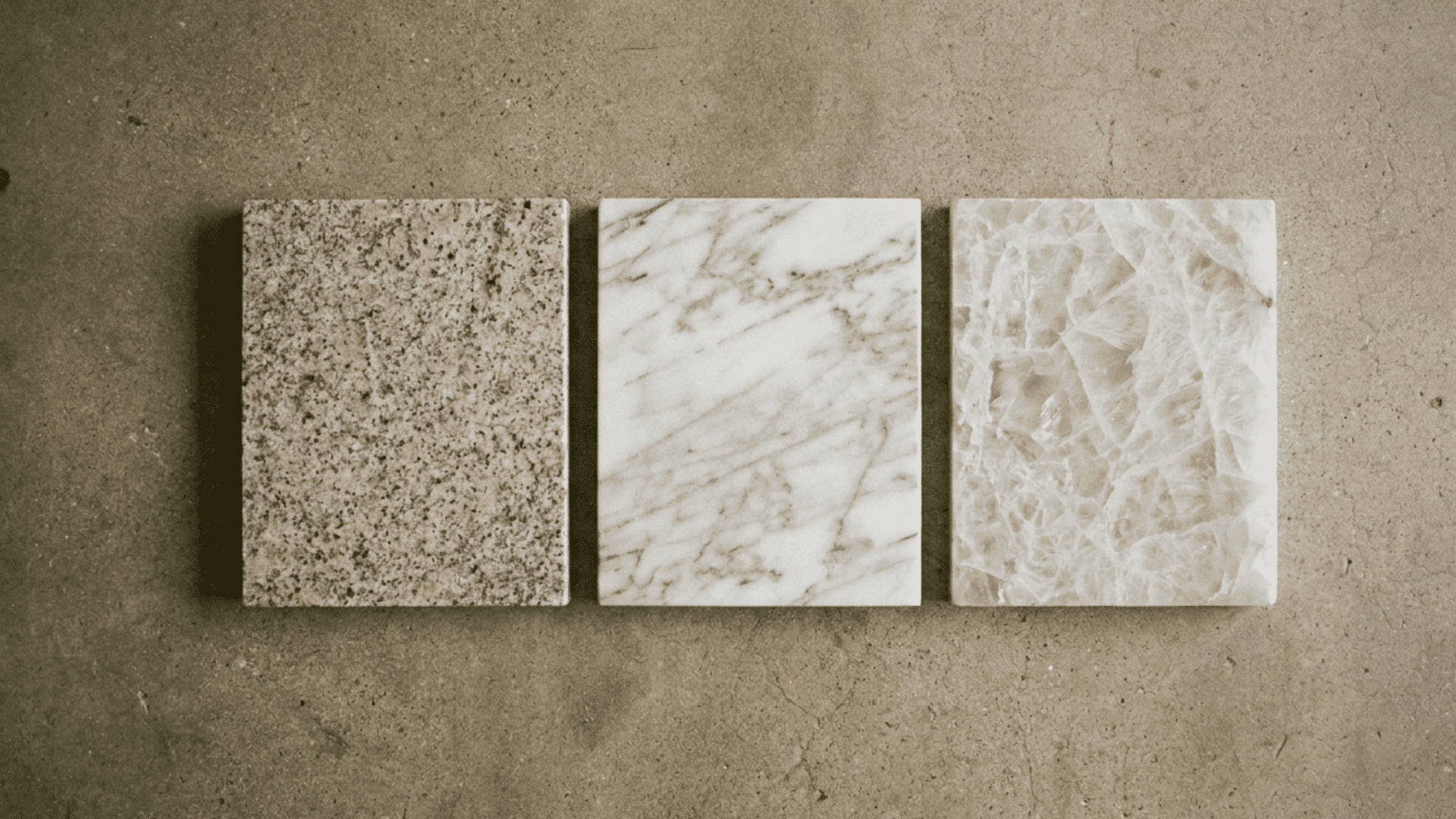
Granite, marble, and quartzite each have their own personality. Since all three come straight from the earth, every slab looks a little different. No two kitchens end up with the same surface.
Granite
Granite is tough, handles heat well, and holds up in busy kitchens.
- Pros: heat-resistant, very hard, low sealing frequency, ages well.
- Cons: heavy, porous without sealing, limited color range.
- Best for: high-traffic kitchens, home cooks, households with kids.
- Skip it: If you want a uniform, consistent look across slabs.
Marble
Marble gives a softer, high-end look but needs regular sealing to stay stain-free.
- Pros: high-end appearance, cool to the touch, great for baking surfaces.
- Cons: scratches and stains easily, needs sealing every 6–12 months, reacts to acids.
- Best for: low-traffic areas, decorative use, baking stations.
- Skip it: If your kitchen sees heavy daily use, red wine, or citrus regularly.
Quartzite
Quartzite lands in the middle; it looks like marble but cuts harder.
- Pros: looks like marble, harder than marble, more stain-resistant than marble.
- Cons: still needs sealing, costs more than granite, harder to find.
- Best for: people who want marble looks without marble’s upkeep headaches.
- Skip it: If the budget is tight or a wide color variety matters to you
MSI Porcelain Countertops
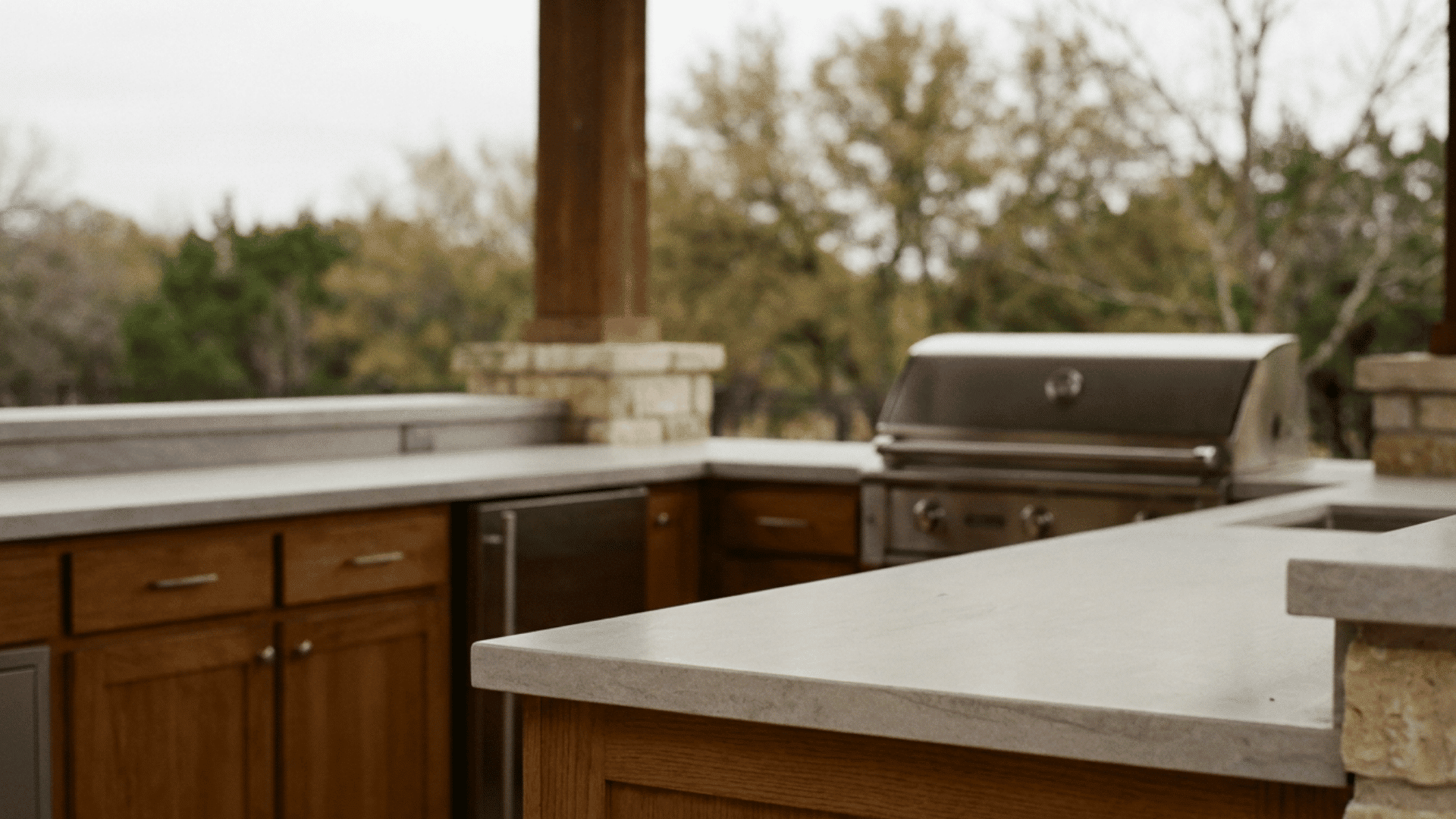
MSI porcelain is fired at high temperatures, making it one of the hardest countertop options available. It blocks heat, UV rays, and moisture, with no sealing needed, indoors or outdoors.
- Pros: no sealing, heat- and UV-resistant, weather-ready, scratch- and fade-resistant.
- Cons: chips at edges on heavy impact, harder to install, costs more than tile.
- Best for: outdoor kitchens, coastal homes, zero-maintenance households.
- Skip it: If you drop heavy pots often or need a budget-friendly option.
Community Reviews of MSI Countertops
Opinions on MSI quartz are mixed, but most users agree on one thing: you get what you pay for. The general community feeling is that MSI is a budget-friendly option, not a premium one.
One user was direct about it:
“With MSI quartz you get what you pay for, they are definitely not known for their quality.”
That said, not everyone had a bad experience. A newer owner shared,
“I’ve left some drops of black tea on it for a full day and no issues,” which gave some relief to first-time buyers.
Manufacturing origin came up often. One user confirmed
, “Perla White is made in Turkey,” while another noted MSI sources from over 20 countries, adding, “Less than 7% of MSI’s 7,500 SKUs are made in China.”
The overall takeaway from the community is simple: MSI works fine for everyday use, but do your research on the specific color before committing.
Popular MSI Countertop Styles
MSI offers a wide range of quartz styles that mimic the look of high-end marble without the upkeep. Five styles stand out for their popularity and design range:
- Calacatta Laza: Features a white base with bold, sweeping veins that work well on kitchen countertops and large islands.
- Carrara Marmi: Goes the other way with soft gray veining on a lighter background, making it a go-to for bathrooms and smaller kitchens.
- Calacatta Alto: Brings a dramatic feel with a bright white base and gold-touched veining, best suited for statement kitchens that need a strong focal point.
- Carrara Breve: Keeps things classic with fine gray lines on a clean white surface, fitting naturally into traditional kitchen designs.
- Calacatta Miraggio Gold: Rounds out the group with warm white tones and a mix of gold and gray veining that pairs well with modern farmhouse styles.
MSI Countertop Pricing: What to Expect
MSI countertops are priced across four tiers, ranging from basic solid-color slabs to high-end designer styles with complex veining.
For an average kitchen requiring 40 to 60 square feet, total project costs generally range from $1,600 to $5,100, covering both materials and installation.
The slab itself is only part of the final bill. Edge upgrades, sink cutouts, and faucet holes all add to the total.
Standard edges are usually included, but specialty profiles like ogee or waterfall styles cost extra per linear foot. Cutouts for sinks and cooktops add more on top.
How to Buy MSI Countertops
MSI sells only through dealers and fabricators, not directly to homeowners. To get a quote, find a local MSI dealer to view slabs in person, then work with a fabricator who will order the material and handle installation.
MSI vs. Competitor Brands
Comparing popular countertop brands helps you choose the right balance of price, style, and durability for your home
| Brand | Installed Price | Warranty | Colors | Best Use |
|---|---|---|---|---|
| MSI Q Premium | $55–$80/sq ft | 10 yrs | 180+ | Budget or rentals |
| Silestone | $55–$120/sq ft | 25 yrs | 150+ | Antimicrobial, eco-friendly |
| Caesarstone | $65–$95/sq ft | Lifetime | 100+ | Modern design, consistent slabs |
| Cambria | $75–$120/sq ft | Lifetime | 200+ | Premium quality, American-made |
| Hanstone | $60–$85/sq ft | 15 yrs | 80+ | Mid-range, installer-friendly |
| LG Viatera | $55–$80/sq ft | 15 yrs | 70+ | Budget-friendly, reliable |
| Dekton | $75–$120/sq ft | 25 yrs | 100+ | Outdoor/heat-proof applications |
Care & Maintenance Tips
Keeping MSI countertops in good shape does not take much effort, but using the right products and avoiding the wrong ones makes a real difference.
- Wipe down with warm water and a soft microfiber cloth. A small amount of mild dish soap handles most messes without any fuss.
- Gentle cleaners like 409 or Simple Green work well. Apply with a soft cloth and rinse clean.
- Non-abrasive powders like Bar Keepers Friend or Bon Ami lift dried residue safely. These are quartz-safe and will not scratch the finish.
- Skip drain cleaners, paint strippers, and anything with hydrofluoric acid or methylene chloride. Abrasive pads like Scotch-Brite will dull the polished surface over time.
- MSI quartz is non-porous, so liquids and stains cannot soak in. Just clean and go.
Conclusion
MSI countertops give homeowners a solid mix of style, strength, and choice.
Pick quartz for low upkeep. Go with natural stone for a high-end look. Choose porcelain for tough outdoor use.
Knowing the material, style, and cost upfront helps buyers decide with confidence. With the right care, these countertops stay in great shape for years. Most reviewers agree the value is hard to beat at this price point.
Check out MSI’s full collection and find the surface that works best for your space. A countertop worth keeping is closer than most homeowners think.
Frequently Asked Questions
Can You Put a Hot Cup of Tea on Quartz?
Placing hot items directly on quartz countertops can cause thermal shock, leading to cracks or discoloration. Always use a trivet or heat pad.
What are Fake Quartz Countertops Called?
Man-made quartz countertops are usually referred to as engineered quartz or engineered stone. They combine natural quartz with resins and pigments to create durable surfaces.
Is Quartz a Natural Stone?
Engineered quartz is not a fully natural stone. It mixes crushed natural quartz with resins, unlike pure granite or marble, but it contains real quartz particles.
What Does Vinegar Do to Quartz?
Vinegar can damage engineered quartz countertops by etching or dulling the surface. Avoid acidic cleaners; use mild soap and water instead.