If your upstairs rooms feel hotter than the rest of the house every summer, the attic is usually part of the story. On a sunny day, roof surfaces can absorb a huge amount of solar energy, and that heat doesn’t just stay in the shingles. It radiates downward into the attic, warms insulation, heats ductwork, and eventually pushes your cooling system to work harder.
That’s where attic radiant barrier foil comes in. Unlike traditional insulation, which slows conductive heat transfer, radiant barrier foil is designed to reduce radiant heat gain. It addresses a different part of the problem, and in the right home, that distinction matters.
Understanding Where Attic Heat Comes From
Most homeowners think of heat as something that simply “builds up” in the attic. In reality, there are three ways heat moves: conduction, convection, and radiation.
In summer, radiation is a major factor. Sunlight heats the roof deck, and that hot surface emits radiant energy into the attic space. If that energy is absorbed by insulation, framing, or HVAC equipment, attic temperatures climb quickly. In some regions, attics can reach 130°F to 150°F or more.
Why Traditional Insulation Isn’t the Whole Answer
Fiberglass and blown-in insulation are important, but they mainly resist conductive heat flow. They don’t reflect radiant energy. So even a well-insulated attic can still become extremely hot if the roof is constantly radiating heat downward.
That’s why homeowners sometimes add more insulation and still notice hot ceilings, uncomfortable second floors, or high cooling bills. The missing piece may be controlling radiant heat before it gets absorbed.
How Radiant Barrier Foil Actually Works
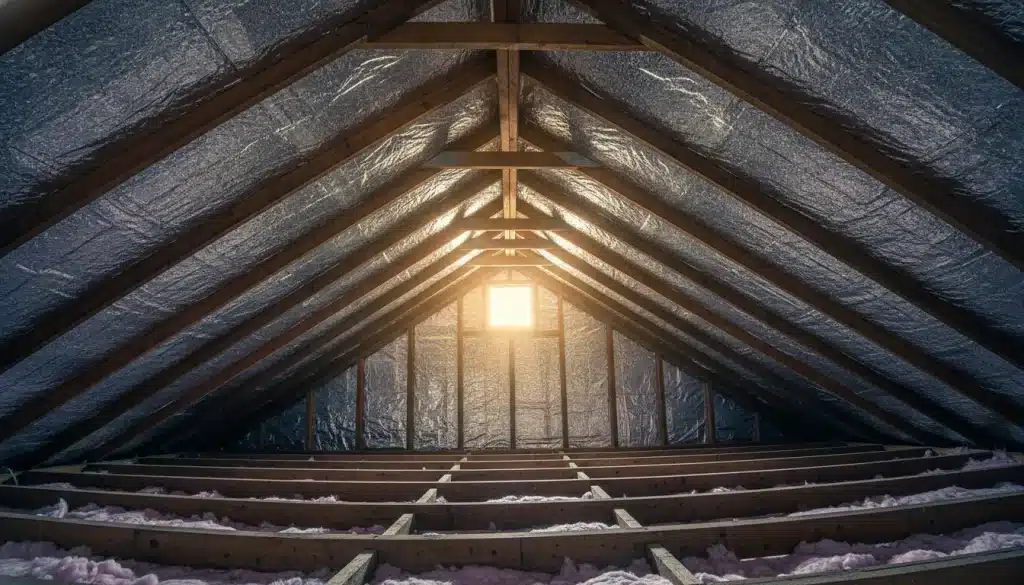
Radiant barrier foil has a highly reflective surface, typically aluminum-based, that reflects a large portion of radiant heat rather than allowing it to pass into the attic materials below. When installed properly, it can reduce the amount of heat the attic absorbs during peak sun exposure.
Reflection, Not Absorption
A useful way to think about it is this: dark, dense materials tend to absorb heat, while reflective surfaces send more of it away. Radiant barrier foil works because it has low emissivity, meaning it emits and absorbs less radiant energy than ordinary building materials.
That doesn’t mean it “cools” the attic by itself, and it’s not a replacement for insulation or ventilation. Instead, it reduces the heat load entering the space in the first place. For homeowners researching options, seeing a real example of thermal reflective foil for improved energy efficiency can make the concept much easier to visualize.
Where the Benefits Show Up in a Home
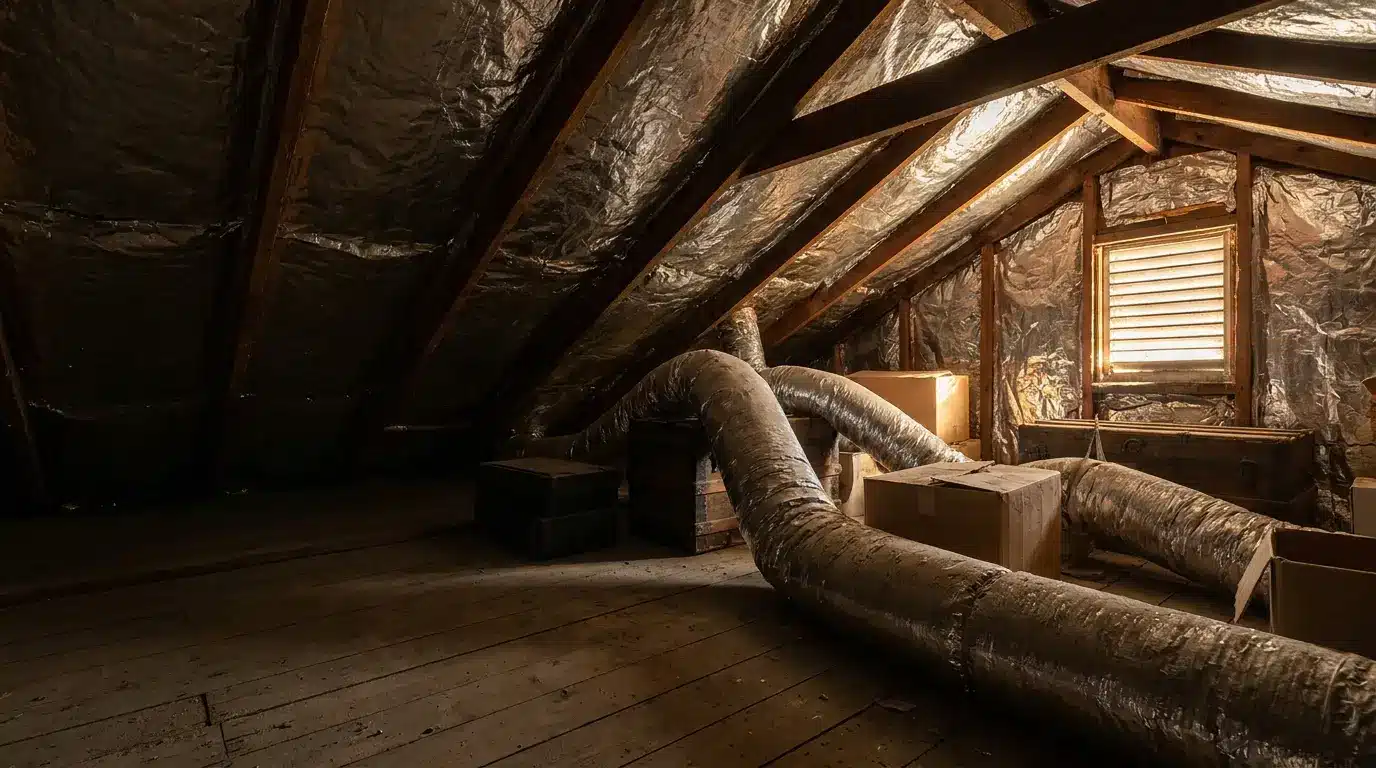
The biggest gains usually appear in homes where the attic has significant sun exposure and where HVAC equipment or ductwork runs through that attic. If your air handler and ducts sit in a superheated space, every degree matters.
Lower Attic Temperatures
By reflecting radiant energy, foil can help reduce peak attic temperatures. That can lessen the thermal burden on insulation and reduce the amount of heat migrating into living spaces below.
Less Strain on Cooling Systems
When ducts in the attic are surrounded by extreme heat, cooled air can warm up before it reaches your rooms. Radiant barrier foil helps limit that heat exposure, which may improve HVAC performance and reduce how often the system cycles.
Better Comfort Upstairs
One of the most noticeable effects is often comfort rather than utility savings alone. Bedrooms on the top floor, bonus rooms over garages, and finished attic-adjacent spaces may feel more stable during hot afternoons.
Best Results Depend on Climate and Installation
Radiant barrier foil tends to deliver the strongest value in hot climates, especially where air conditioning runs for long stretches and solar gain is intense. In those conditions, reducing radiant heat can make a meaningful difference.
Hotter Regions Usually See More Impact
Homes in Texas, Florida, Arizona, and other warm-weather states often benefit the most because attic heat is a prolonged seasonal issue. In milder or heavily shaded climates, the improvement may still be real, but typically less dramatic.
Installation Details Matter
A radiant barrier performs best when it faces an air space. If it’s installed in a way that eliminates that air gap or allows the reflective surface to become ineffective, performance can drop. Placement also matters: stapled to the underside of rafters, attached along roof decking in some assemblies, or used in other attic-specific configurations depending on the home.
A few practical considerations often shape results:
- The attic should still be properly ventilated.
- Existing insulation should remain in good condition.
- Duct sealing can amplify the benefit.
- Moisture issues need to be addressed before installation.
In other words, radiant barrier foil works best as part of a broader attic strategy, not as a standalone miracle fix.
Common Misunderstandings About Radiant Barriers
One reason homeowners get mixed messages is that radiant barriers are sometimes discussed too broadly. They are neither useless nor magical. They’re simply designed for a specific type of heat transfer.
It’s Not the Same as Bulk Insulation
Adding more attic insulation increases resistance to conductive heat flow. Adding a radiant barrier reduces radiant heat gain. These are complementary approaches, not competing ones.
Energy Savings Aren’t Identical in Every Home
A house with poor ductwork in a blazing hot attic may see more noticeable improvement than a tightly sealed home with deep insulation and shaded roofing. The age of the roof, orientation of the house, attic layout, and local climate all influence outcomes.
Should Homeowners Consider It?
If your home overheats in summer, especially on the upper floor, radiant barrier foil is worth considering as part of an attic assessment. The key is to approach it realistically. Start by asking a few straightforward questions: Is the attic vented properly? Is insulation adequate and evenly distributed? Are ducts leaking? Does the roof receive heavy direct sun?
When those basics are in place, radiant barrier foil can be a smart addition because it targets a form of heat transfer that standard insulation doesn’t address very well. That’s the real reason it remains relevant: not because it replaces other upgrades, but because it fills a gap.
For homeowners trying to cut heat gain without overcomplicating the solution, that can be a practical step. A cooler attic won’t solve every comfort problem in a house, but reducing the amount of solar heat entering from above can make your home feel more manageable, your HVAC system less stressed, and summer a little easier to live with.