Quartz countertops look great, until they don’t. A smudge here, a stain there, and suddenly that polished surface starts looking dull and worn.
Most people assume any cleaner will do the job, but that’s where things go wrong. Harsh chemicals and rough scrubbing pads can dull the surface and void the warranty faster than expected.
The upside? Keeping quartz looking sharp doesn’t take much; just the right products, a consistent routine, and knowing what to skip.
This blog covers the most effective cleaning methods for quartz countertops, the products that actually work, and the common mistakes that cause long-term damage, so the countertops stay looking new for years.
Why Clean Quartz Countertops Regularly?
Quartz is tough, but it’s not invincible. It’s an engineered stone made from crushed quartz bound with resin, non-porous and resistant to most stains.
But that resin binder is sensitive to chemicals and prolonged exposure to grime. Skip regular cleaning, and the surface can dull, discolor, or develop sticky buildup in high-use spots.
Kitchens are busy places. Grease, juice, and soap residue all add up and can slowly break down the resin.
There’s a hygiene angle too. Quartz isn’t self-cleaning. Food prep surfaces need proper wiping down, especially after handling raw meat or produce.
Dos and Don’ts of Cleaning Quartz Countertops
Quartz countertops look their best when cleaned properly. Following a few simple dos and don’ts helps prevent stains, dullness, and long-term surface damage.
Dos:
- Use mild dish soap and warm water.
- Clean with a microfiber cloth or soft sponge.
- Wipe spills immediately.
- Use trivets for hot cookware.
Don’ts:
- Avoid bleach, ammonia, and acidic cleaners.
- Don’t use abrasive pads or steel wool.
- Don’t place hot pans directly on the surface.
- Don’t use harsh solvents like acetone.
How to Clean Quartz Countertops?
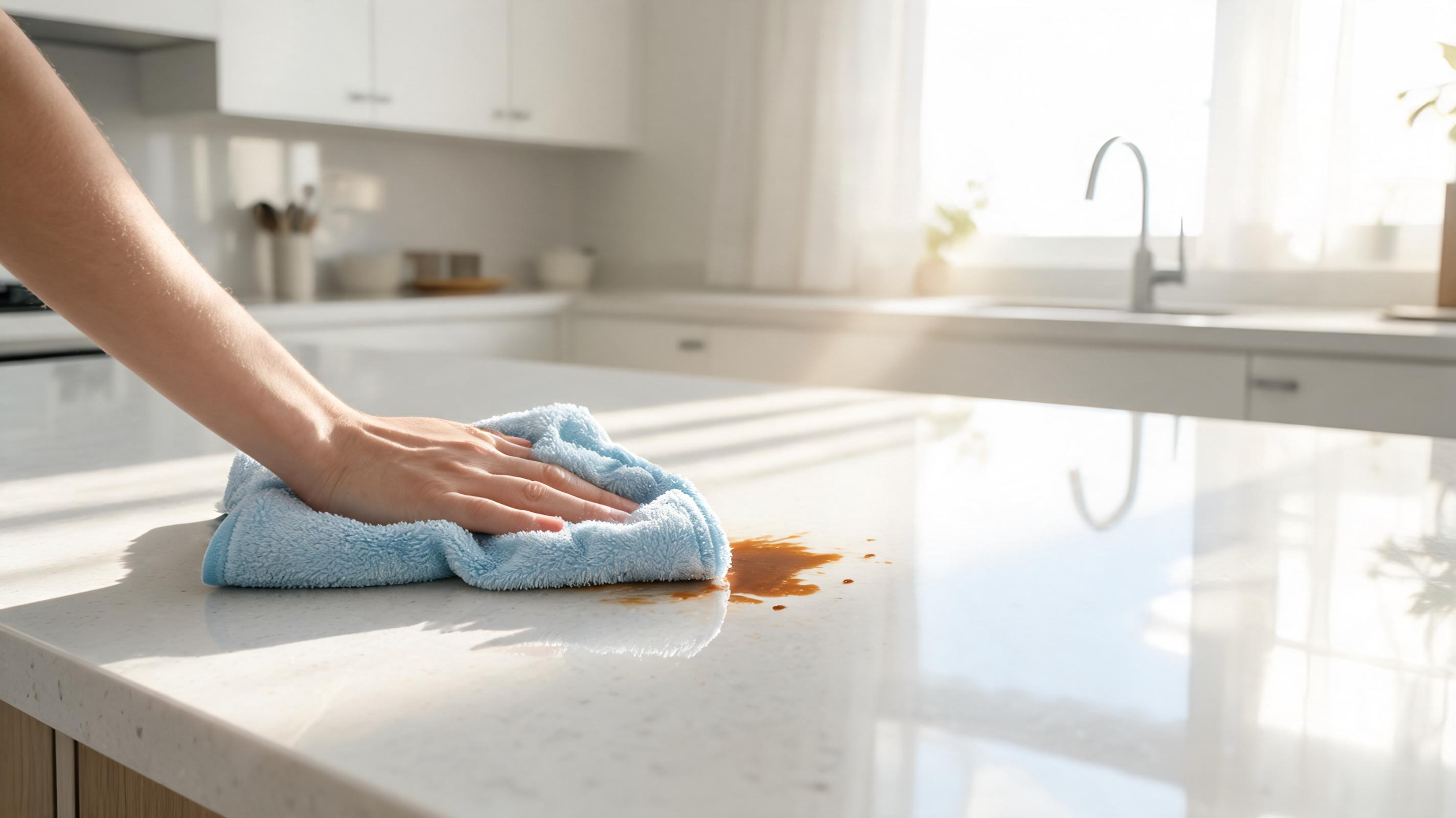
Most people overcomplicate quartz cleaning. The right products, a simple routine, and knowing what to skip make all the difference.
1. Daily Cleaning Routine (Best Practice)
The daily cleaning routine for quartz countertops is simple, but consistency is important.
After cooking or food preparation, wipe the surface using a soft microfiber cloth or a non-scratch sponge dampened with warm water and a small drop of mild dish soap.
Clean in gentle circular motions, then rinse and dry with a fresh cloth to prevent streaks. Regular wiping prevents buildup and staining.
2. Removing Sticky Spills & Light Stains
Sticky spills such as honey, jam, dried juice, or candle wax should be treated gently on quartz countertops.
First, place a soft cloth soaked in warm water over the spill to loosen it. Once softened, carefully lift the residue using a plastic scraper or old credit card, avoiding metal tools.
Clean the area with mild dish soap, rinse well, and dry. For light stains, warm soapy water works well, while a diluted isopropyl alcohol solution helps with tougher marks.
3. Dealing with Tough Stains (Coffee, Wine, Oils)
Tough stains on quartz require gentle but targeted cleaning. For coffee and tea stains, apply Bar Keepers Friend with a damp cloth, let it sit briefly, then rinse thoroughly.
Wine and juice stains should be blotted quickly, then cleaned with warm water and dish soap; dried marks respond to diluted isopropyl alcohol.
Grease and oil can be treated with degreasing dish soap, left for 30 seconds before light scrubbing. Ink or marker stains lift effectively using rubbing alcohol on a cotton pad.
4. Sanitizing Quartz Safely
Sanitizing quartz countertops requires caution because strong disinfectants can damage the resin binder.
Safe options include diluted isopropyl alcohol (70% solution), quartz-specific disinfectant sprays, or mild dish soap mixed with warm water.
These clean effectively without harming the surface. Avoid bleach, even when diluted, as it can discolor quartz and weaken the resin.
5. Deep Clean Checklist (Weekly/Monthly)
A deep cleaning routine helps remove buildup that daily wiping may miss on quartz countertops. Weekly, clear the surface and wipe edge to edge using warm soapy water.
Treat dried spills, sanitize with a diluted isopropyl alcohol solution, and dry thoroughly. Monthly cleaning repeats these steps, followed by a light polish with a quartz-specific cleaner.
Also inspect seams, fixtures, and caulking for hidden buildup. A full monthly clean takes about 15 minutes and keeps the surface looking fresh and well-maintained year-round.
How Often to Clean Quartz Countertops
Quartz countertops should be cleaned daily to prevent grease, food residue, and spills from building up on the surface.
A quick wipe with warm water, mild dish soap, and a soft microfiber cloth is usually enough for everyday maintenance.
In addition to daily cleaning, perform a more thorough wipe-down once a week, paying attention to edges, seams, and areas around sinks and fixtures where residue tends to collect.
A deeper monthly clean using a quartz-safe cleaner or diluted isopropyl alcohol helps maintain the countertop’s shine, prevent buildup, and keep it looking fresh and well-maintained for years.
Common Mistakes People Make When Cleaning Quartz
Quartz is tougher than it looks, but the bad habits cause damage that’s hard to fix.
Chemicals to avoid:
- Bleach breaks down resin and discolors the surface
- Ammonia-based cleaners degrade the binding agent
- Oven cleaners are too caustic for quartz
- Nail polish remover (acetone) strips the finish
- Paint thinners, or turpentine, dulls and discolors permanently
- Highly acidic cleaners, vinegar, and lemon-based sprays eat into the surface
Tools that Damage Quartz: Steel wool, abrasive scrubbing pads, stiff-bristle brushes, rough sponges
Heat Sources to Avoid: Boiling water, handheld steam cleaners, and hot pans placed directly on the surface
What People on Forums Say About Cleaning Quartz
Real quartz owners and trade pros share some honest, no-filter advice on Reddit.
Most agree that simple soap and water handle daily cleaning just fine. As one user put it,
“soap and water on a sponge is all you’ll need 99% of the time.”
A stone trade veteran with over 30 years of experience warned,
“Don’t use baking soda. I’ve seen it ruin the finish on marble tops.”
That same pro confirmed bleach spray and white erasers are safe options most people overlook. Heat came up as a big concern, too. One user was direct:
“Quartz hates heat. You’ll get resin burn and thermal shock.”
New quartz owners worry most about yellowing and water stains, which is fair. As one first-time buyer shared,
“This is our first kitchen reno, and the last.”
The bottom line is to stick to the manufacturer’s care guide, skip the harsh DIY experiments, and your quartz will stay looking great for years.
Tips for Maintaining Quartz Countertops
Simple maintenance habits can help preserve quartz countertops, keeping them stain-free, glossy, and durable for years of daily use.
- Wipe spills as soon as they occur.
- Use mild dish soap for routine cleaning.
- Clean with microfiber cloths or soft sponges only.
- Always use trivets under hot pots and pans.
- Use cutting boards to prevent scratches.
- Avoid harsh chemicals and abrasive cleaners.
- Dry the surface after cleaning to prevent streaks.
- Inspect seams and edges regularly for buildup.
- Follow the manufacturer’s care recommendations.
Conclusion
Quartz countertops are built to last, and keeping them that way doesn’t require much effort.
Daily wipe-downs with dish soap and warm water handle most situations. Tougher stains respond well to diluted isopropyl alcohol or Bar Keepers Friend.
The biggest threat isn’t heavy use; it’s the wrong products. Bleach, vinegar, ammonia, and abrasive pads cause far more damage than years of cooking ever would.
Soft cloths, gentle cleaners, and quick spill cleanup. That’s the whole playbook. Got a tip that works on quartz? Share it in the comments; other homeowners would love to hear it.
Frequently Asked Questions
What is the Lifespan of Quartz Countertops?
Quartz countertops are durable, typically lasting 15–25 years with proper care, and effectively resisting stains, scratches, and daily kitchen wear.
What Does Cheap Quartz Look Like?
Cheap quartz may appear dull, have inconsistent patterns, visible seams, and a less refined texture compared to premium, polished quartz surfaces.
Can You Put a Coffee Cup on Quartz?
Yes, you can place a coffee cup on quartz; it’s heat-resistant, though using a coaster prevents potential discoloration or damage.